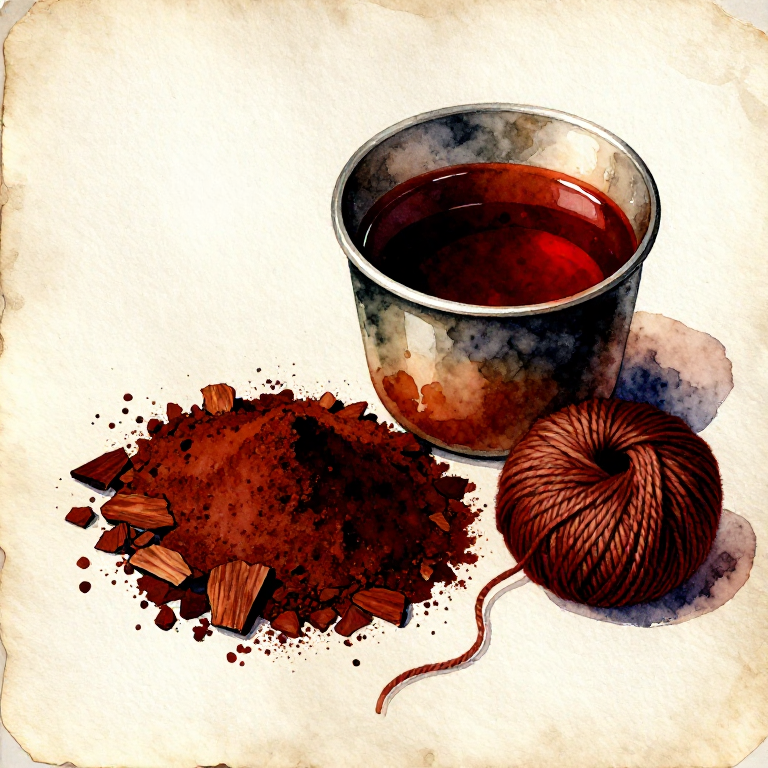


Dyeing Red-Brown with Quebracho — The Industrial Tannin of South American Hardwood
Quebracho (Schinopsis balansae and S. lorentzii) is a massive hardwood tree native to the Gran Chaco region of South America — the dry subtropical forests of northern Argentina, Paraguay, and western Brazil. The name comes from the Spanish 'quiebra-hacha' — axe-breaker — reflecting the extraordinary hardness and density of the wood. Quebracho heartwood contains 20-30% tannins by weight, among the highest concentrations found in any tree. These condensed tannins (proanthocyanidins) produce rich red-brown to deep burgundy on wool.
Quebracho became one of the most important industrial tanning and dyeing materials of the late 19th and early 20th centuries. Quebracho extract — concentrated tannin sold as a dense, dark block — was exported from Argentina and Paraguay in enormous quantities for leather tanning, textile dyeing, and ink manufacture. The Argentine quebracho industry peaked in the early 1900s, employing thousands of workers in the Chaco forests. Overexploitation has reduced wild quebracho populations, but the trees are now managed more sustainably and quebracho extract remains commercially available.
For the natural dyer, quebracho extract is one of the easiest and most rewarding tannin dyes to use. It is sold as a concentrated powder or block by dye suppliers. The colour is a warm, deep red-brown — redder and more vivid than most tannin dyes (oak bark, cutch, alder) due to the distinctive chemistry of quebracho's condensed tannins. No mordant is needed — the tannins bond directly to protein fibres.
Instrucciones
Weigh the quebracho extract
Weigh the quebracho extract
Use 15-30% WOF of quebracho extract. For 100 g of wool, weigh out 15-30 g of extract. Quebracho extract is sold as a concentrated powder or dark red-brown block. It is far more concentrated than raw bark — a little goes a long way. The extract should be a deep, dark red-brown. If using a block, shave or grate it into small pieces for faster dissolving.
Materiales para este paso:
 Extracto de quebracho25 g
Herramientas necesarias:
 Báscula digital de cocina
Dissolve the extract in hot water
Dissolve the extract in hot water
Add the quebracho extract to 4 litres of hot water (80°C) and stir vigorously until fully dissolved. Quebracho extract dissolves readily in hot water — much easier than working with raw bark. The liquid will turn a deep, vivid red-brown within minutes. If using block extract, it may take 10-15 minutes of stirring and soaking to dissolve completely. No overnight soaking is needed.
Herramientas necesarias:
 Olla alta
 Cuchara de madera para remover
Dye wool at 80°C for 45-60 minutes
Dye wool at 80°C for 45-60 minutes
Pre-wet wool in lukewarm water for 15 minutes, squeeze gently, and lower into the quebracho dye bath at room temperature. Slowly raise to 80°C and hold for 45-60 minutes. Turn gently every 10 minutes. No mordant is needed — quebracho tannins bond directly to protein fibres with excellent permanence. The wool will develop a rich, warm red-brown — deeper and redder than cutch or oak bark. For burgundy tones, use a higher concentration (30% WOF). For lighter rust-red, use less (15% WOF).
Materiales para este paso:
 Madeja de lana100 g
Herramientas necesarias:
 Termómetro de cocina
Cool overnight, rinse, and dry
Cool overnight, rinse, and dry
Turn off the heat and let the wool cool in the dye bath overnight — the colour deepens significantly during cooling. Remove, squeeze gently, and rinse in lukewarm water until the runoff is mostly clear. The final colour is a warm, rich red-brown to burgundy — the most vivid red achievable from any tannin dye. Washfastness is excellent — tannin-fibre bonds are among the most permanent in natural dyeing. Lightfastness is good. Iron modification shifts the colour toward dark chocolate-brown to near-black. Quebracho also serves as an excellent tannin pre-mordant for cotton and linen. Dry in shade.
Materiales
2- Marcador de posición
- 100 gMarcador de posición
Herramientas requeridas
4- Marcador de posición
- Marcador de posición
- Marcador de posición
- Marcador de posición
Materiales de Blueprints conectados
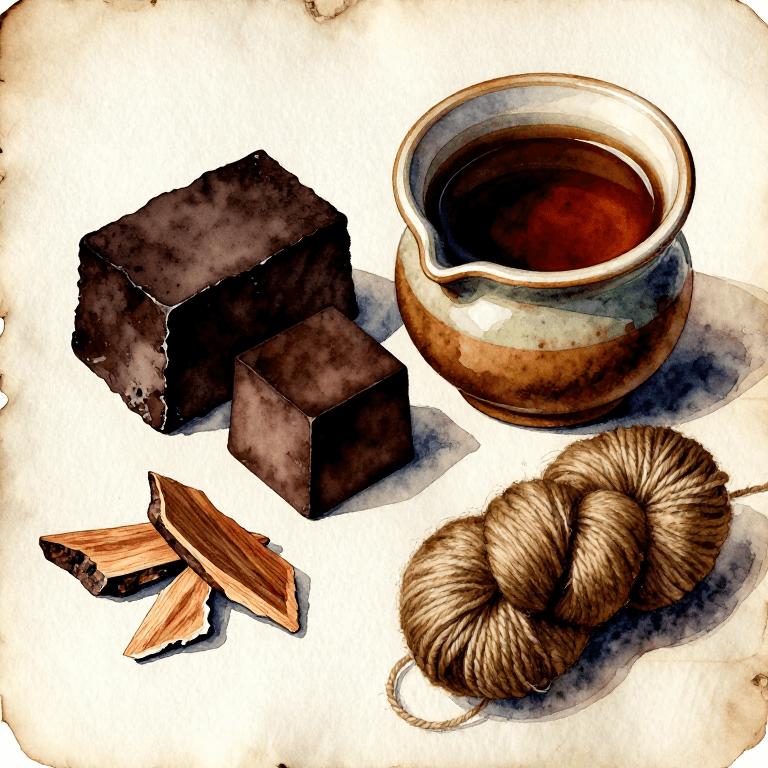
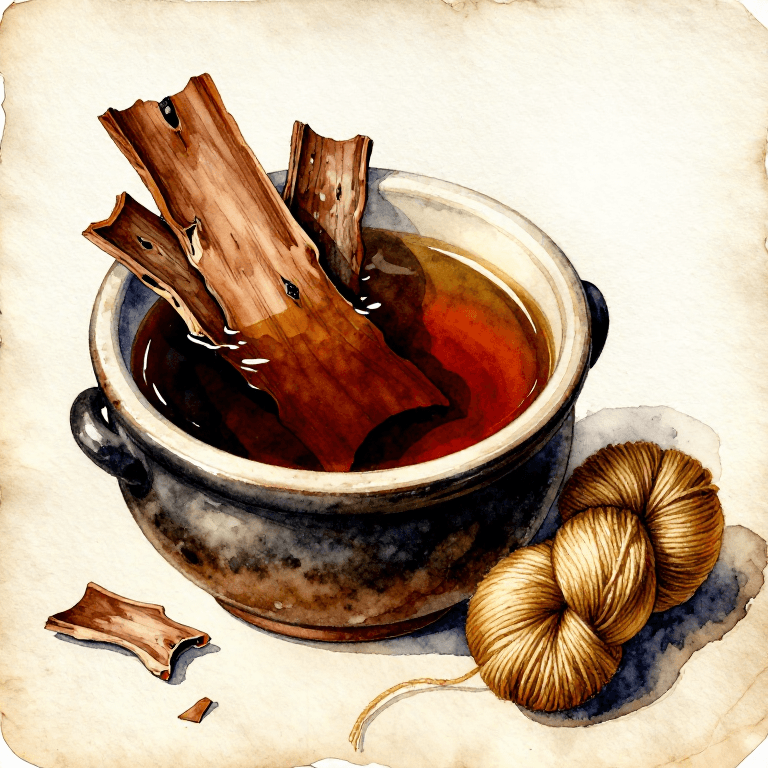
Este plano hace

Blueprints relacionados
Estos blueprints comparten conocimiento — técnicas, materiales o principios
CC0 Dominio público
Este Blueprint se publica bajo CC0. Eres libre de copiar, modificar, distribuir y usar este trabajo para cualquier propósito, sin pedir permiso.
Apoya al Maker comprando productos a través de su Blueprint, donde gana una Comisión del Maker establecida por los vendedores, o crea una nueva iteración de este Blueprint e inclúyela como conexión en tu propio Blueprint para compartir ingresos.