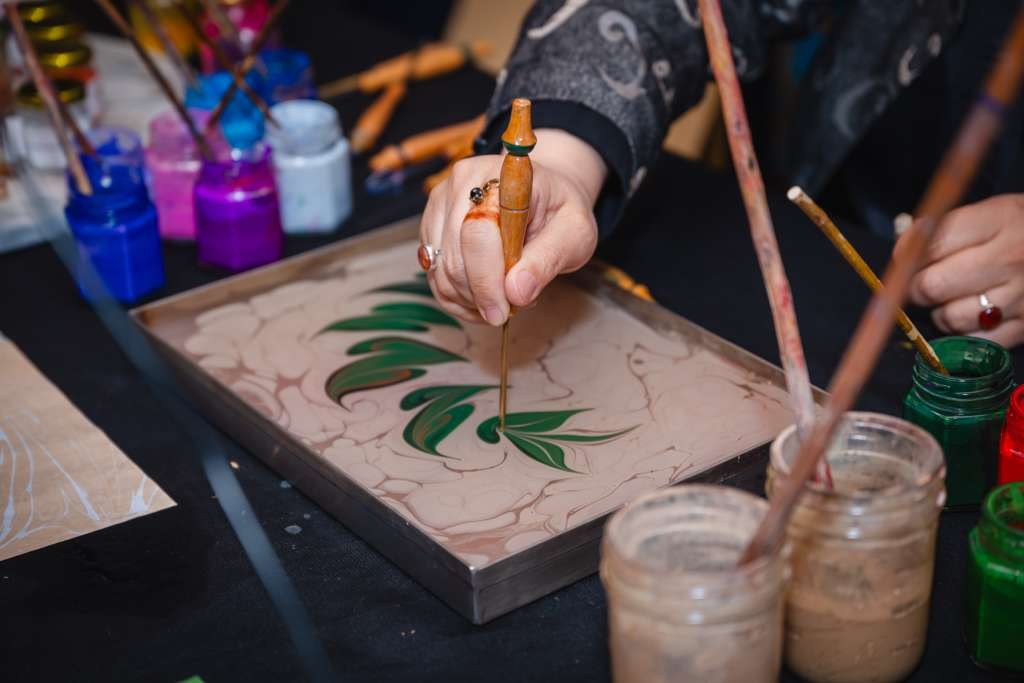

Ebru — Teknede Kağıt Ebrusu
Ebru, suyun üstüne boya serpip o boyayı kağıda alma sanatıdır. Ama düz suya boya serperseniz boya dibe çöker. İşin sırrı iki maddede: kitre ve öd.
Kitre suyu koyulaştırır, jöle kıvamına getirir. Boya artık batmaz, üstte durur ve saatlerce orada bekler — istediğiniz kadar oynarsınız. Öd ise boyanın yüzey gerilimini düşürür, damla suya değince açılıp yayılır. Ödü koymazsanız boya yayılmaz, toplanıp dibe iner. İkisi birbirinin tersini yapar, ikisi birden lazımdır.
Her ebru tektir. Kağıdı bir kere koyarsınız, deseni alır, o desen biter. Aynısını bir daha yapamazsınız — fotokopisi yok. Bu yüzden acele etmeyin, teknenin başında sabırlı olun.
Instrucciones
Kitreyi suda beklet
Kitreyi suda beklet
20 gram kitreyi 5 litre suya koyun ve bir gece bekletin. Kitre yavaş çözünür — aceleye gelmez, karıştırmakla hızlanmaz.
Materiales para este paso:
 Goma tragacanto (kitre)20 g
Süzün
Süzün
Ertesi gün ince bir bezden süzün. Çözünmemiş parçalar teknede boyanın altına girer ve deseni bozar.
Kıvamı kontrol edin
Kıvamı kontrol edin
Kıvam ince bal gibi olmalı. Parmağınızı daldırıp çıkarın: su ipliksiz akıyorsa çok sulu, tel tel uzuyorsa çok koyu. Sulandırarak veya bekleterek ayarlayın.
Tekneyi doldurun
Tekneyi doldurun
Kitreli suyu tekneye boşaltın, derinlik 5 santim olsun. Tekne kağıttan her kenardan 5 santim büyük olmalı.
Herramientas necesarias:
 Cubeta de ebru
Kabarcıkları alın
Kabarcıkları alın
Bir gazete kağıdını yüzeye yatırıp hemen kaldırın. Toz ve kabarcık kağıda yapışır, yüzey tertemiz kalır. Her ebruden önce bunu yapın.
Boyayı ezin
Boyayı ezin
Toprak boyayı havanda suyla ezin, pürüzsüz bir çamur olana kadar. İri tanecik yüzeyde durmaz, dibe iner.
Materiales para este paso:
 Juego de pigmentos minerales en polvo1 juego
Herramientas necesarias:
 Mortero y mano de mortero
Öde katın
Öde katın
Her renge 5-10 damla öd katıp karıştırın. Öd boyanın yüzeyde açılmasını sağlar. Ödsüz boya yayılmaz, toplanır ve batar.
Materiales para este paso:
 Hiel de buey líquida20 ml
Öd miktarını deneyerek bulun
Öd miktarını deneyerek bulun
Bir damla serpip bakın. Az açılıyorsa öd ekleyin. Çok açılıp diğer renkleri kenara itiyorsa ödü fazla kaçmış — o renge biraz boya ekleyin. Her renk farklı öd ister.
İlk rengi serpin
İlk rengi serpin
Fırçayı boyaya batırın, teknenin üstünde parmağınıza veya bir çubuğa hafifçe vurarak serpin. Fırçayı suya değdirmeyin — değerse çukur açar.
Herramientas necesarias:
 Pincel de ebru
Diğer renkleri serpin
Diğer renkleri serpin
Sırayla diğer renkleri serpin. Sonra serpilen renk öncekini kenara iter ve halka halka açılır. Sıra önemlidir — en son serptiğiniz renk en canlı durur.
Herramientas necesarias:
Pincel de ebruDeseni biz ile çekin
Deseni biz ile çekin
Bizi yüzeye batırıp yavaşça çekin. Önce bir yönde paralel çizgiler, sonra ters yönde — taraklı desen çıkar. Yavaş çekin; hızlı çekerseniz renkler birbirine karışıp çamur olur.
Herramientas necesarias:
 Punzón de ebru
Kağıdı yatırın
Kağıdı yatırın
Kağıdı iki köşesinden tutun, önce bir kenarını değdirin, sonra ortadan kenara doğru yavaşça yatırın. Düz bırakırsanız altında hava kalır ve orası boş çıkar.
Materiales para este paso:
 Papel de acuarela1 hoja
Kağıdı çekip alın
Kağıdı çekip alın
Bir köşeden tutup teknenin kenarına sürterek çekin. Kenara sürtmek fazla kitreyi sıyırır. Dümdüz yukarı kaldırmayın — boya akar.
Kurutun
Kurutun
Düz bir yere serip kurutun. Yıkamayın — boya kitreyle beraber kağıda tutunmuştur, su değerse gider.
Tarih ve arka plan
Tarih ve arka plan
İki maddenin çekişmesi. Ebrunun bütün fiziği kitre ile ödün ters yönde çalışmasıdır. Kitre suyu koyulaştırıp yüzey gerilimini artırır, böylece yağ esaslı boya batmaz ve saatlerce üstte durup şekil almaya razı olur. Öd ise tam tersini yapar: boyanın yüzey gerilimini düşürür, damla suya değince açılır ve yayılır. Öd olmadan renkler dibe çöker; öd fazla olursa bir renk diğerlerini kenara sürer. Ustalık bu dengeyi her renk için ayrı ayrı tutturmaktır.
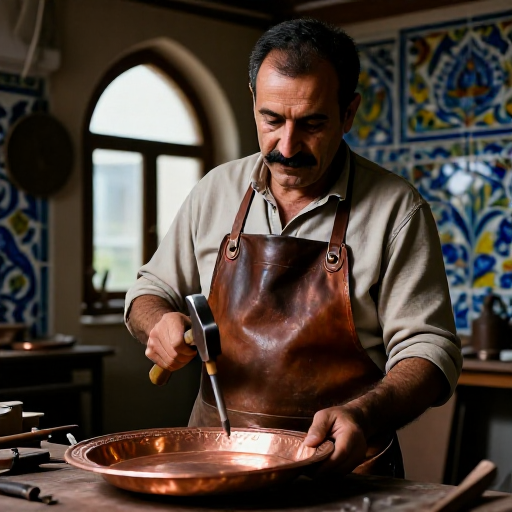
Aletler. Geleneksel fırça at kılının gül dalına bağlanmasıyla yapılır — gül dalı reçine salmadığı ve suya tat vermediği için seçilir. Tekne budaksız çam tahtasındandır; budak reçine sızdırır ve su yüzeyini bozar. Boyalar toprak ve mineral kökenlidir: aşı boyası, oksitler, lapis lazuli, malahit — hepsi havanda elle ezilir.
Öd neden kaynatılır. Sığır ödü organik bir maddedir ve olduğu gibi bırakılırsa bozulur. Kaynatmak onu dayanıklı hale getirir. Eski ustalar ödü bekletirdi; beklemiş öd daha iyi çalışır derler.
Kökeni tartışmalıdır. Tarihi kesin bilinen en eski Türk ebru örnekleri 16. yüzyıla aittir; sanatın kendisi büyük ihtimalle daha eskidir ve Orta Asya ile İran üzerinden gelmiştir. Japon suminagashi'si de su üstüne boya yüzdürür ama farklı bir yoldan — o mürekkep ve farklı bir yüzey kimyası kullanır, ayrı bir gelenektir. "Ebru şuradan çıkmıştır" diyen kesin bir kaynağa temkinli yaklaşın.
Neden belge kağıdı olarak kullanıldı. Osmanlı'da ebrulu kağıt sadece süs değildi. Her desen tek olduğu için resmi belgelerin ve senetlerin arkasına ebru yapılırdı — deseni taklit etmek mümkün olmadığından sahteciliği zorlaştırırdı. Yani ebru, güzelliğinden önce bir güvenlik önlemidir.
Bir kere. Kağıdı yüzeye koyduğunuz an desen kağıda geçer ve teknede o desen biter. Aynı deseni bir daha kuramazsınız. Ebrunun "her biri tektir" sözü bir reklam cümlesi değil, işin fiziğidir.
Materiales
4- Marcador de posición
- Marcador de posición
- 20 mlMarcador de posición
- 1 hojaMarcador de posición
Herramientas requeridas
4- Marcador de posición
- Marcador de posición
- Marcador de posición
- Marcador de posición
Este plano hace
CC0 Dominio público
Este Blueprint se publica bajo CC0. Eres libre de copiar, modificar, distribuir y usar este trabajo para cualquier propósito, sin pedir permiso.
Apoya al Maker comprando productos a través de su Blueprint, donde gana una Comisión del Maker establecida por los vendedores, o crea una nueva iteración de este Blueprint e inclúyela como conexión en tu propio Blueprint para compartir ingresos.