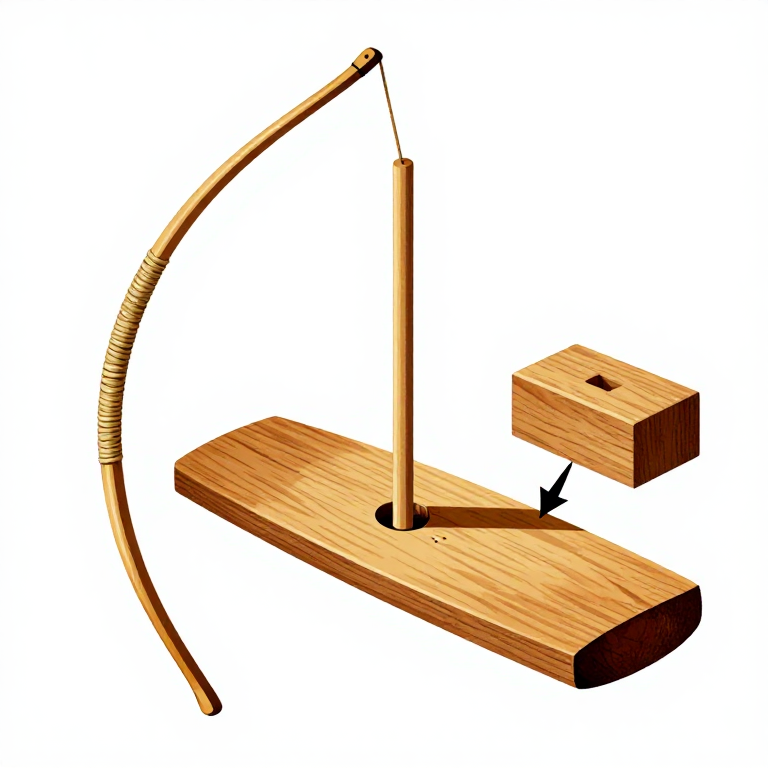


Egyptian Bow Drill — Making an Egyptian Bow Drill for Fire and Drilling
Instrucciones
Shape the Bow and String It
Shape the Bow and String It
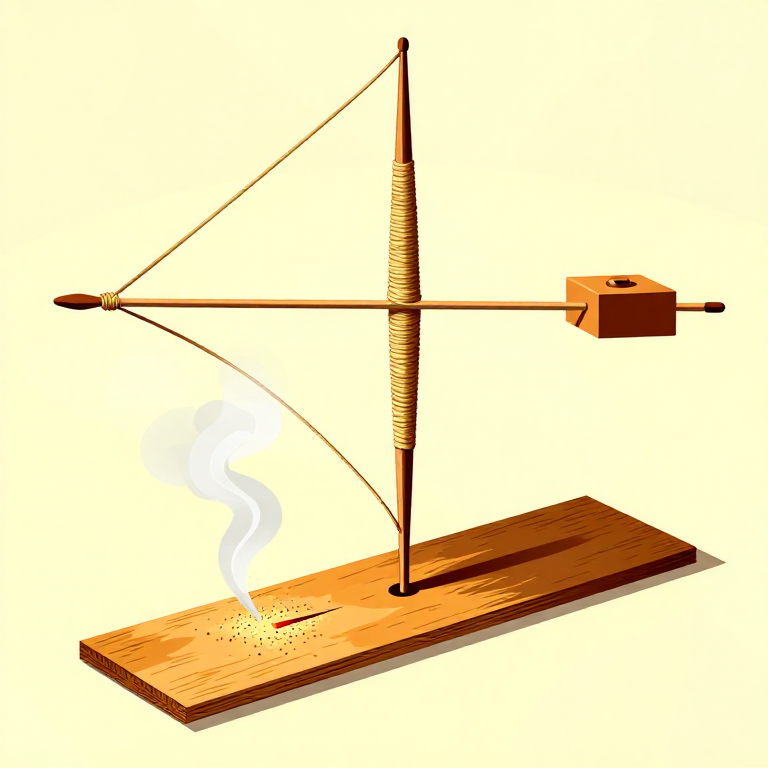
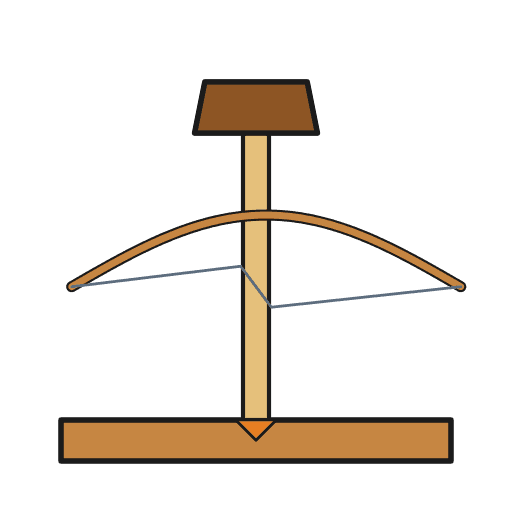
Select a slightly curved stick approximately 50-60 cm long and 2 cm in diameter — a natural curve like that of a small branch works well, or a straight stick can be bent by warming over steam. Carve small notches near both ends to anchor the cord. Tie a strong cord (leather thong, twisted plant fiber, or sinew) between the two ends with enough slack that it hangs slightly loose when the bow is at rest. The cord must be tight enough to grip the spindle when wrapped around it but loose enough to allow the spindle to turn freely. Egyptian tomb paintings at Saqqara (5th Dynasty, circa 2400 BCE) show bow drills being used by craftsmen to drill holes in stone vessels and wooden furniture.
Carve the Spindle
Carve the Spindle
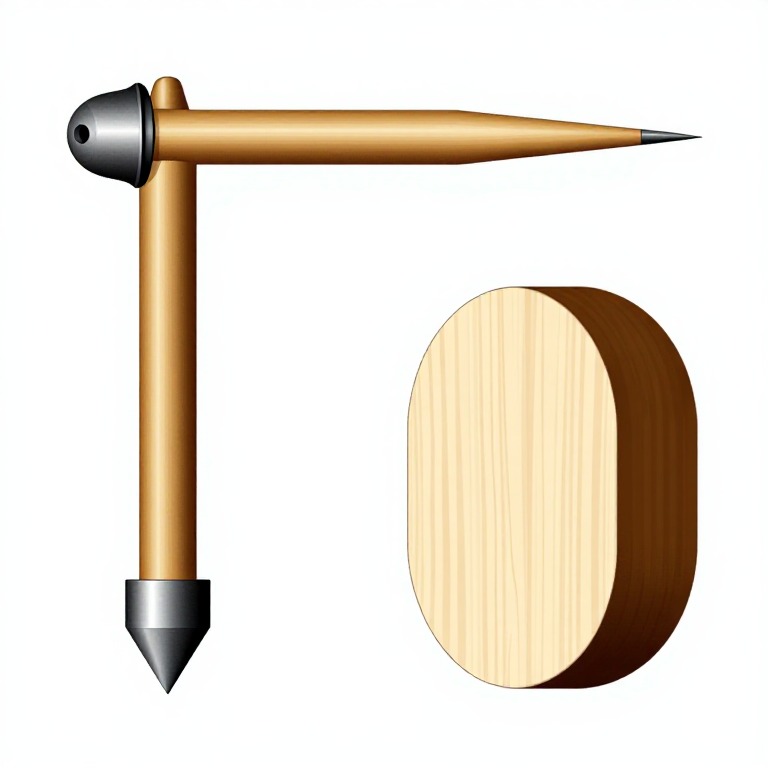
Select a straight, dry hardwood shaft approximately 20-25 cm long and 2 cm in diameter. Carve one end to a rounded point (for fire-starting) or a sharp point (for drilling holes). The other end should be rounded smooth to fit into the bearing block socket without excessive friction. The spindle must be straight and round so it spins true without wobbling. For fire-starting, the best spindle woods are those that are slightly softer than the fireboard — for example, a willow spindle on a cedar or poplar fireboard, or sycamore on sycamore. Egyptian craftsmen used acacia, sycamore fig (Ficus sycomorus), and tamarisk for drill components.
Prepare the Fireboard
Prepare the Fireboard
Select a flat piece of dry softwood approximately 30 cm long, 5 cm wide, and 2 cm thick. Carve a shallow depression (socket) approximately 1 cm from one edge to seat the spindle tip. Cut a V-shaped notch from the edge of the board into the socket — this notch collects the hot wood dust (ember) generated by friction and allows air to reach it for ignition. The notch should extend to the center of the socket but not beyond it. Place a small piece of bark, dried leaf, or thin flat stone under the notch to catch the ember. The fireboard must be dry — moisture in the wood absorbs heat energy and prevents the wood dust from reaching its ignition temperature of approximately 260 degrees Celsius.
Assemble the Bearing Block
Assemble the Bearing Block
The bearing block is a palm-sized piece of hardwood, bone, or stone with a socket drilled into one face to hold the top of the spindle. The socket must be smooth and low-friction — lubricate it with a drop of animal fat, beeswax, or green plant material to prevent heat buildup at the top bearing. You want all the friction-generated heat concentrated at the bottom of the spindle (where it contacts the fireboard for fire-starting) and minimal friction at the top. A stone bearing block with a natural depression works excellently, as stone is naturally harder and lower-friction than wood-on-wood contact.
Materiales para este paso:
 Rama curvada (arco)1 pieza
 Palo recto y seco (husillo)1 pieza
 Tabla de madera blanda seca1 piece, 30x5x2 cm pieza
 Cabo resistente70-80 cm cm
 Mango de madera dura1 piece, fits in palm pieza
Operate the Bow Drill
Operate the Bow Drill
Loop the bow cord once around the spindle. Place the spindle tip in the fireboard socket and press down on the top with the bearing block. Move the bow back and forth in long, steady strokes, which spins the spindle rapidly in alternating directions. Start with moderate speed and pressure, increasing both as the socket heats up and wood dust begins to accumulate in the V-notch. Dark brown to black dust and wisps of smoke indicate you are approaching the ignition temperature. When a glowing ember forms in the notch dust pile, carefully lift the spindle, transfer the ember to a tinder bundle of dry grass or shredded bark, and blow gently to coax it into flame. The bow drill was used in Egypt not only for fire but as a precision drilling tool — ancient Egyptian stone vessel interiors were hollowed using copper-tipped bow drills fed with abrasive sand, as evidenced by the characteristic spiral drill marks visible inside unfinished vessels.
Materiales
5- 1 piezaMarcador de posición
- 1 piezaMarcador de posición
- 1 piece, 30x5x2 cm piezaMarcador de posición
- 70-80 cm cmMarcador de posición
- 1 piece, fits in palm piezaMarcador de posición
Herramientas requeridas
2- Marcador de posición
- Marcador de posición
Este plano hace
CC0 Dominio público
Este Blueprint se publica bajo CC0. Eres libre de copiar, modificar, distribuir y usar este trabajo para cualquier propósito, sin pedir permiso.
Apoya al Maker comprando productos a través de su Blueprint, donde gana una Comisión del Maker establecida por los vendedores, o crea una nueva iteración de este Blueprint e inclúyela como conexión en tu propio Blueprint para compartir ingresos.