ARTE
BELLEZA Y BIENESTAR
ARTESANÍA
CULTURA E HISTORIA
ENTRETENIMIENTO
MEDIO AMBIENTE
COMIDA Y BEBIDAS
INGENIERÍA INVERSA
CIENCIAS
DEPORTES
TECNOLOGÍA
TECNOLOGÍA VESTIBLE

Fat Over Lean: Why the Order of the Layers Decides Whether It Cracks
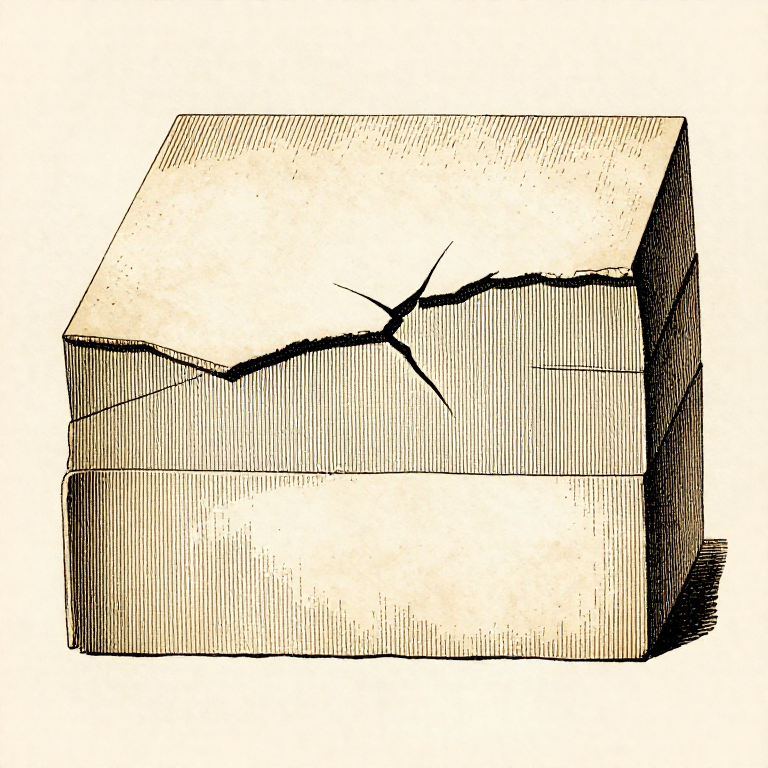
An oil paint film keeps moving for years after it feels dry. It continues to take up oxygen, continues to cross-link, and continues to shrink slightly — and how much depends on how much oil is in it.
A FAT layer has more oil: it dries slower, stays more flexible, and shrinks less. A LEAN layer has more solvent and less oil: it dries faster, ends up more brittle, and shrinks more.
So a lean layer over a fat one is a fast-drying brittle skin stretched over something still moving underneath. It cracks, usually within months, and there is no repair. Fat over lean is the rule and it is simply the mechanics of the situation.
Intermedio
3 hours
Instrucciones
1
1
What makes a layer fat or lean
What makes a layer fat or lean
Adding SOLVENT — turpentine or white spirit — makes paint leaner, because the solvent leaves and the remaining film has less binder relative to its pigment.
Adding OIL or an oil-rich medium makes it fatter. So does using a pigment that needs a lot of oil to wet it, which is why some colours are inherently fatter than others straight from the tube.
Which means the practical rule is about the sequence of your mediums: start with paint thinned by solvent, and increase the proportion of oil in each successive layer. The traditional phrasing is 'each layer slightly fatter than the last', and slightly is the operative word — large jumps have their own problems.
Materiales para este paso:
 Aceite de linaza1 pieza
 Trementina1 pieza
 Juego de pigmentos minerales en polvo1 pieza
Herramientas necesarias:
 Vaso de precipitados de vidrio
 Varilla agitadora
 Balanza de precisión
2
2
The mechanism, and why it fails so reliably
The mechanism, and why it fails so reliably
A drying oil film does not dry by losing something. It GAINS oxygen and cross-links, which initially makes it swell slightly and then contract as the network tightens — a process that runs for years.
A lean upper layer completes that process quickly and then has no give left. The fat layer beneath is still contracting and still moving. The brittle skin above cannot follow it, so it cracks — and because the cracks follow the stress they usually appear as a wide net over the whole surface.
That is distinguishable from other cracking. Drying cracks from fat-over-lean violations are wide, open, and appear within months to a few years. Age cracks are fine, follow the support's movement, and take decades.
Materiales para este paso:
Aceite de linaza1 piezaTrementina1 piezaHerramientas necesarias:
 Lupa de relojero
 Juego de pinceles de artista
3
3
Thick over thin, and slow over fast
Thick over thin, and slow over fast
The same logic gives two more rules that are often confused with the first. THICK over THIN: a thick layer takes far longer to dry through, so a thick layer underneath will still be moving long after a thin one on top has set.
SLOW over FAST: pigments dry at very different rates. Umbers and lead white dry in a day or two; ivory black, alizarin and titanium white can take a week or more. A fast drier over a slow one is the same trap as lean over fat.
So a fast-drying underpainting in earth colours is not just tradition — it is choosing the pigments whose drying behaviour suits being underneath. The traditional palette encodes a great deal of this.
Materiales para este paso:
Juego de pigmentos minerales en polvo1 piezaAceite de linaza1 piezaHerramientas necesarias:
Juego de pinceles de artistaLupa de relojero4
4
Let each layer dry, and test rather than guess
Let each layer dry, and test rather than guess
Touch-dry is not dry. An oil layer is touch-dry in days and still moving for months, so the meaningful question is whether it has moved enough that the next layer will not be stretched.
Paint a test strip alongside the work with the same paints and mediums, and keep it. A strip that has been through a year tells you far more about your materials than any rule of thumb, and it costs a few centimetres of canvas — which is the test-tile habit from the glaze and print batches.
Where a painting must be finished quickly, use a medium designed for it or change medium entirely. Acrylic underpainting with oil over it is a legitimate modern answer; oil under acrylic is not, for the reason the ground rung gives.
Materiales para este paso:
 Lienzo de artista (montado en bastidor)1 piezaAceite de linaza1 piezaJuego de pigmentos minerales en polvo1 pieza
Herramientas necesarias:
Juego de pinceles de artistaLupa de relojeroMateriales
4- 4 piezasMarcador de posición
- 2 piezasMarcador de posición
- Marcador de posición
- Marcador de posición
Herramientas requeridas
5- Marcador de posición
- Marcador de posición
- Marcador de posición
- Marcador de posición
- Marcador de posición
Blueprints relacionados
Estos blueprints comparten conocimiento — técnicas, materiales o principios
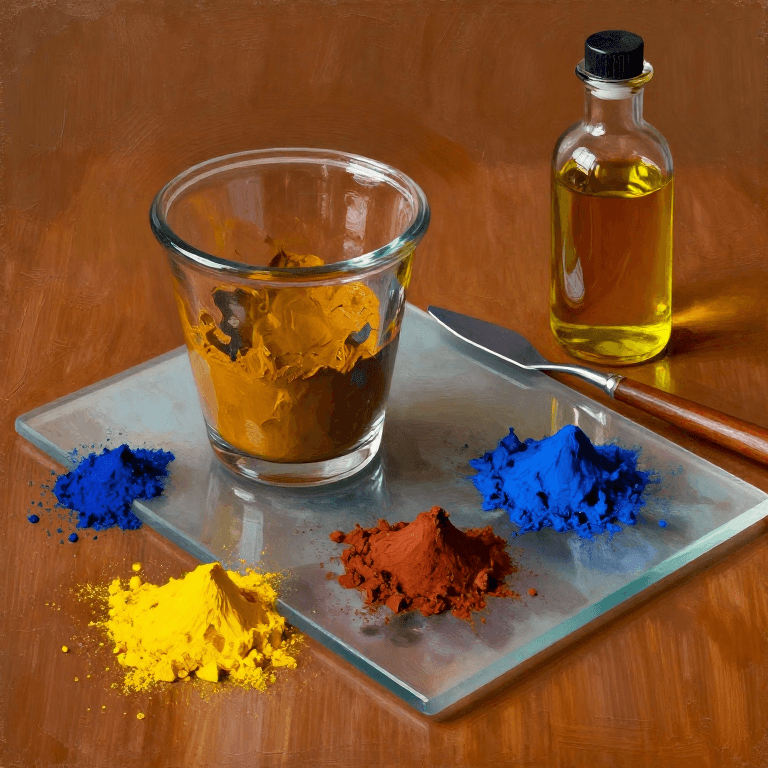
Making Oil Paint from Raw Pigments — Grinding Pigments in Linseed Oil
por Charlie
ARTE
155
0
0
0
5
0
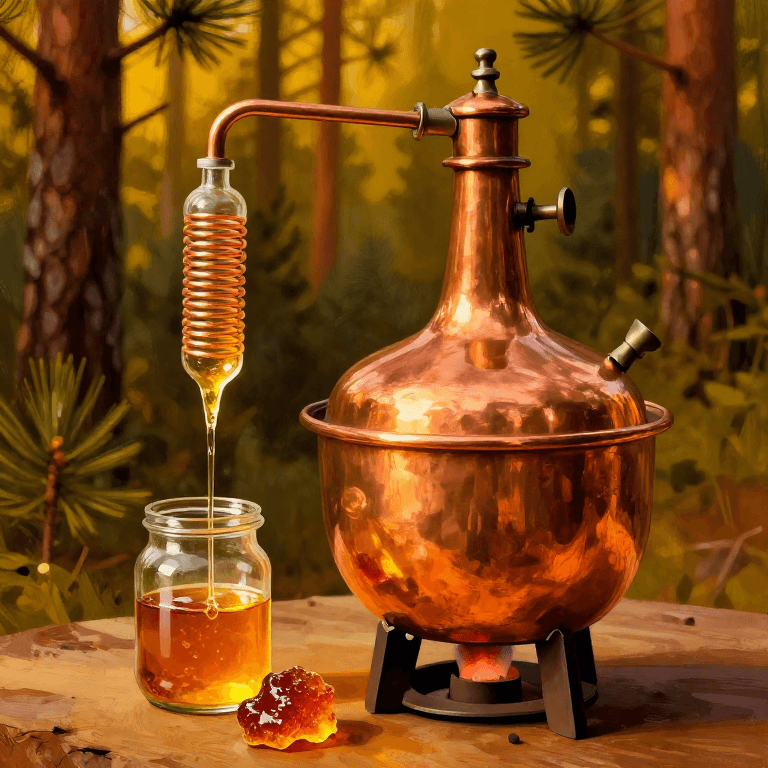
Distilling Turpentine from Pine Resin — The Essential Solvent of Oil Painting
por Charlie
ARTE
77
0
0
0
2
0
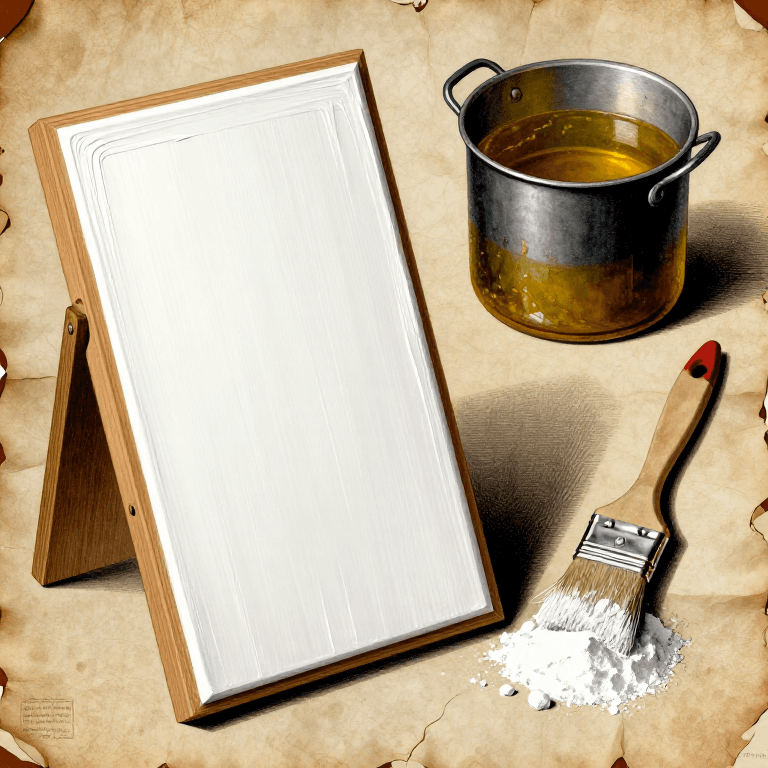
Making Traditional Gesso — The White Ground That Prepared Every Panel Painting in History
por Charlie
ARTE
70
0
0
0
8
0
CC0 Dominio público
Este Blueprint se publica bajo CC0. Eres libre de copiar, modificar, distribuir y usar este trabajo para cualquier propósito, sin pedir permiso.
Apoya al Maker comprando productos a través de su Blueprint, donde gana una Comisión del Maker establecida por los vendedores, o crea una nueva iteración de este Blueprint e inclúyela como conexión en tu propio Blueprint para compartir ingresos.