ARTE
BELLEZA Y BIENESTAR
ARTESANÍA
CULTURA E HISTORIA
ENTRETENIMIENTO
MEDIO AMBIENTE
COMIDA Y BEBIDAS
INGENIERÍA INVERSA
CIENCIAS
DEPORTES
TECNOLOGÍA
TECNOLOGÍA VESTIBLE
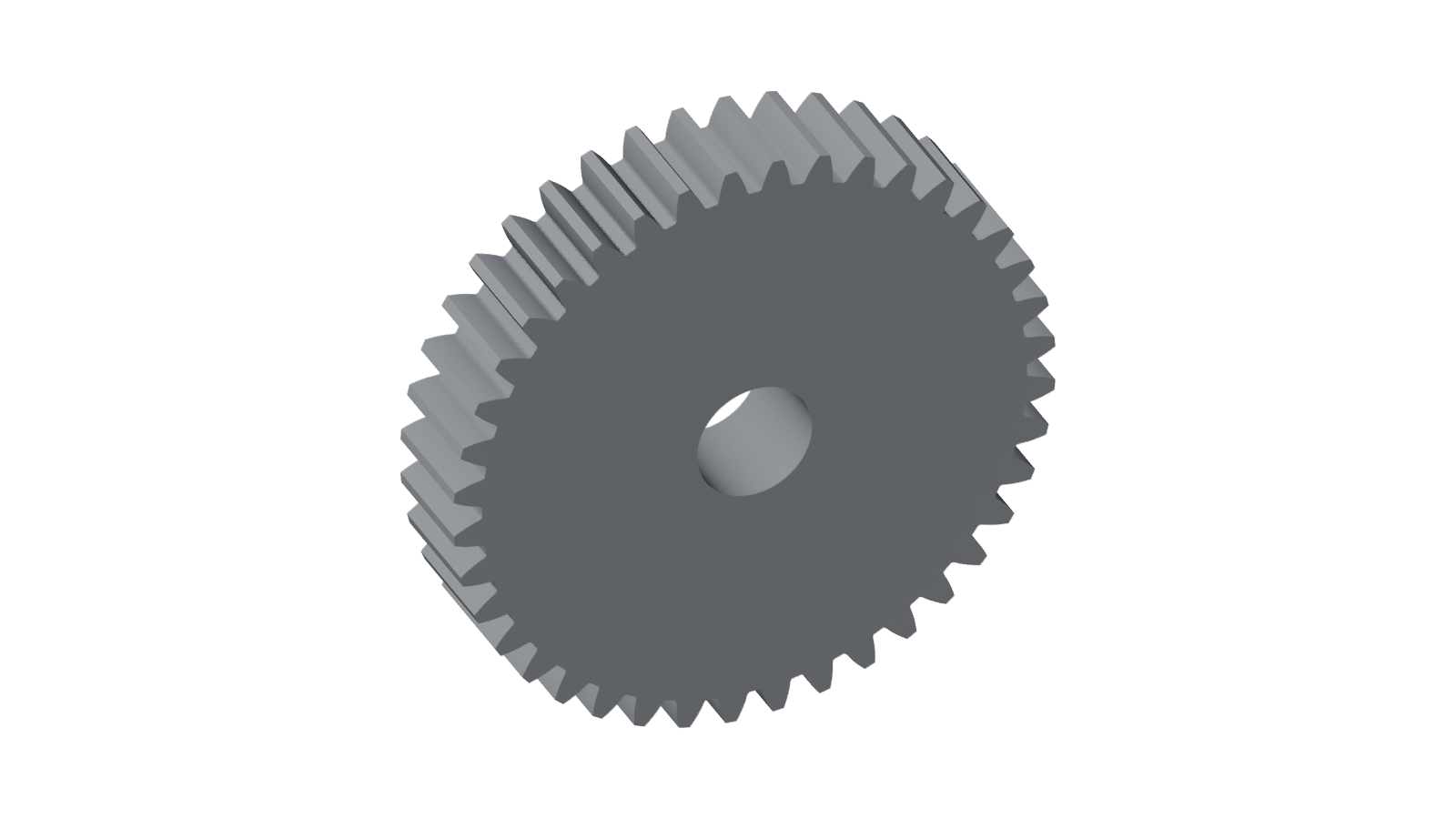


A Gear Cut by the Fellows Cutter: 40 Teeth Generated, Not Drawn
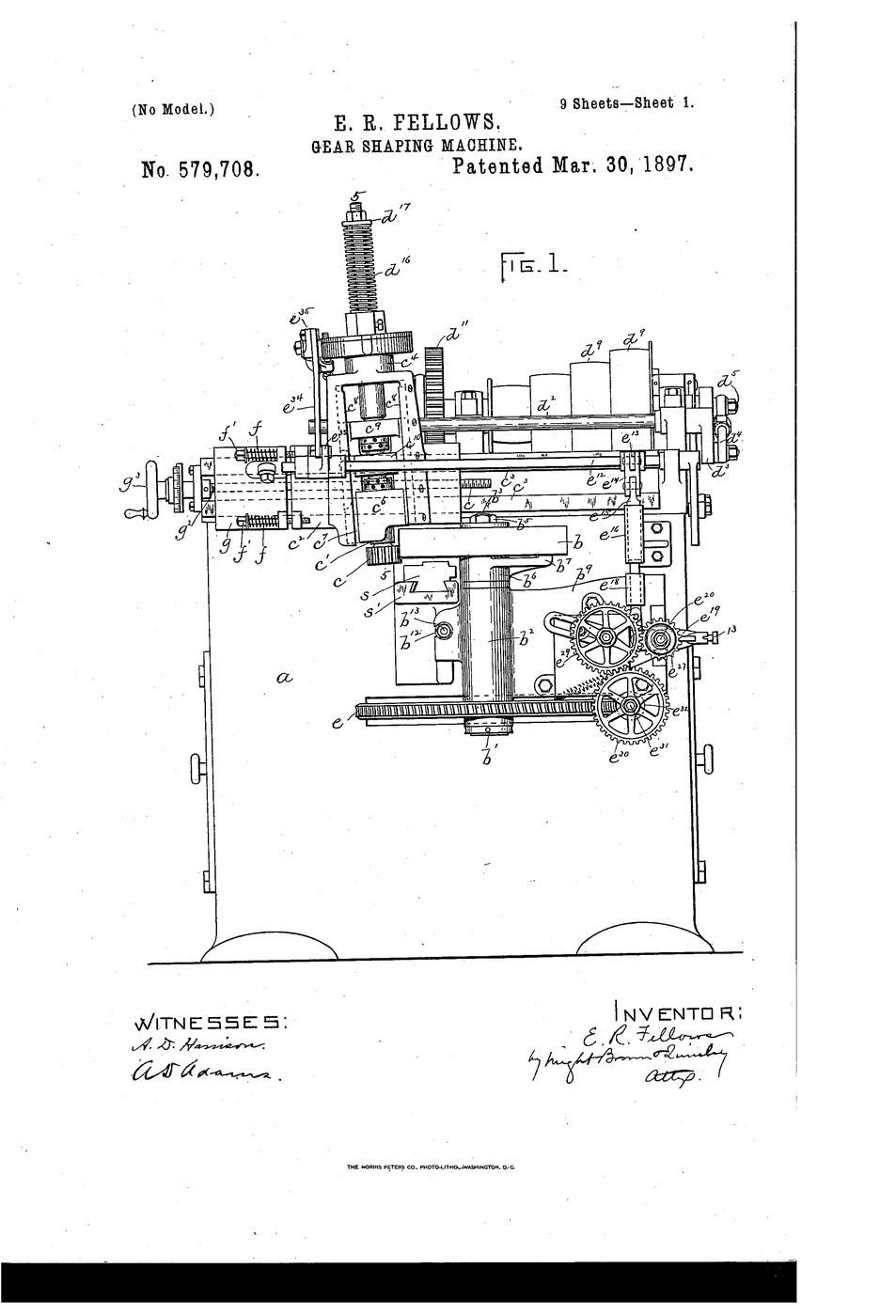
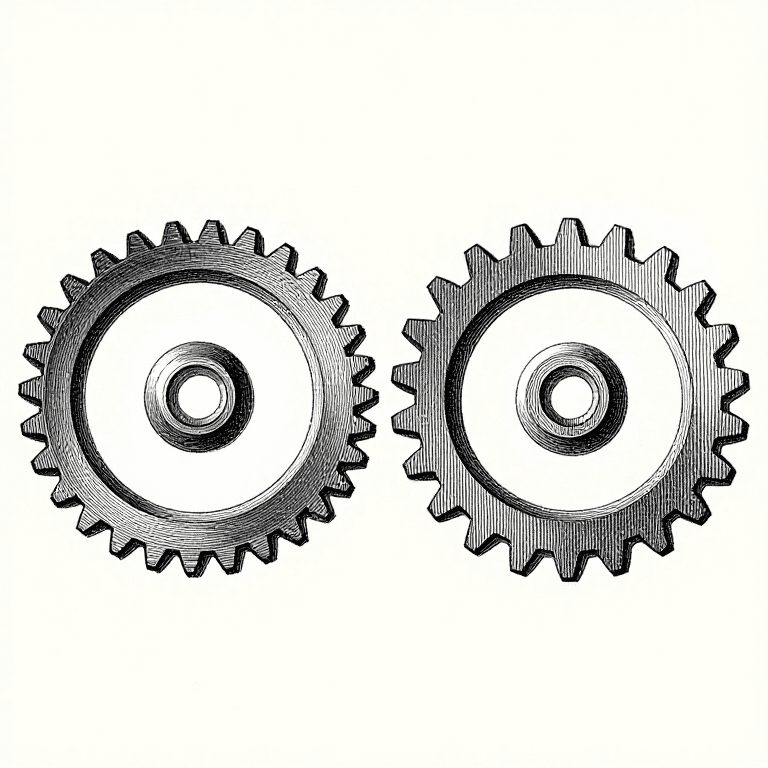
A 40-tooth spur gear whose teeth were made the way Edwin R. Fellows's gear-shaping machine (US 579,708, 1897) makes them. The published Fellows cutter was rolled against a blank as if the two were meshing gears, and every position of the cutter was cut away. What remained is this gear.
No tooth was drawn by hand. The flanks came out as true involutes, and the cutter's tips left a curved fillet at the root, as on a real shaped gear. The tooth count, face width and bore are stated choices; the patent gives no dimensions.
Principiante
Several hours of printing; the slicer reports the exact time
Instrucciones
1
1
How the cutter made these teeth
How the cutter made these teeth
In Fellows's machine the blank "is rotated step by step in unison with the cutter" while the cutter reciprocates across it, and each stroke planes away a little metal. His specification lists the result: "The cutter generates the form of the curve of each gear-tooth cut on the blank, so that each tooth cut is theoretically correct," and "One size of cutter for any given pitch will cut any size of gear." This model was made the same way. The 24-tooth cutter was rolled one full turn around a 105 mm blank in 2,400 positions, and each position was subtracted from the blank.
2
2
The model in 3D
The model in 3D
Spin the gear in the viewer and look at the curve where each flank meets the root. The cutter's tips made that curve, and no one drew it. It was built in FreeCAD and saved as one joined .blend mesh, editable in free Blender.
Herramientas necesarias:
 Ordenador de sobremesa
3
3
Print it
Print it
Lay it flat on one face. It needs no supports. PLA is fine for a display model. Two copies at 100 mm centres have no tip clearance and no backlash, which leaves no room for printing tolerance, so a printed pair is for studying the tooth form.
Materiales para este paso:
 Filamento de PLA - negro1 kit
Herramientas necesarias:
 Impresora 3D
Materiales
1- Marcador de posición
Herramientas requeridas
2- Marcador de posición
- Marcador de posición
Materiales de Blueprints conectados

Blueprints relacionados
Estos blueprints comparten conocimiento — técnicas, materiales o principios

CC0 Dominio público
Este Blueprint se publica bajo CC0. Eres libre de copiar, modificar, distribuir y usar este trabajo para cualquier propósito, sin pedir permiso.
Apoya al Maker comprando productos a través de su Blueprint, donde gana una Comisión del Maker establecida por los vendedores, o crea una nueva iteración de este Blueprint e inclúyela como conexión en tu propio Blueprint para compartir ingresos.