ARTE
BELLEZA Y BIENESTAR
ARTESANÍA
CULTURA E HISTORIA
ENTRETENIMIENTO
MEDIO AMBIENTE
COMIDA Y BEBIDAS
INGENIERÍA INVERSA
CIENCIAS
DEPORTES
TECNOLOGÍA
TECNOLOGÍA VESTIBLE
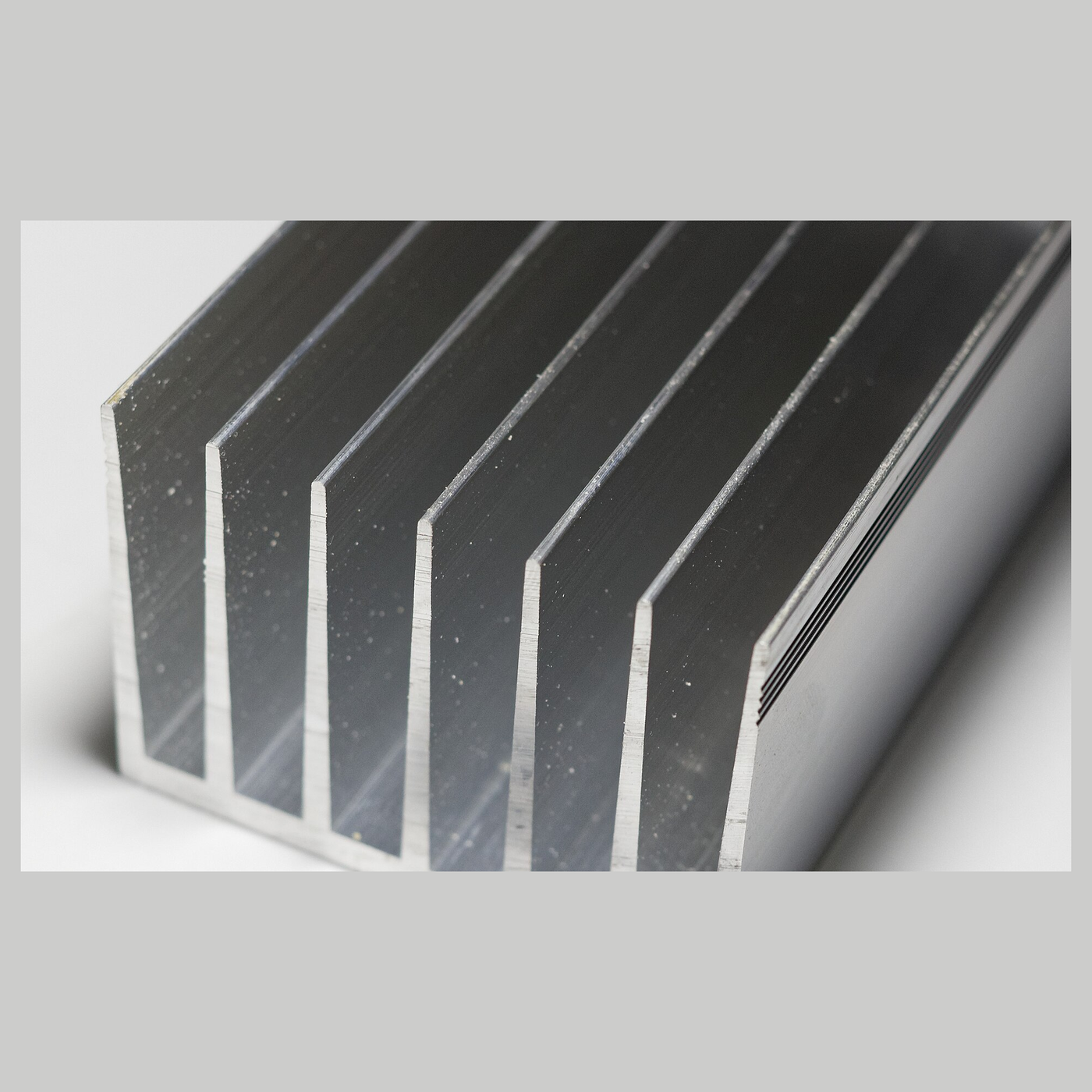

Fins and the Heat Sink: A Fin That Is Too Long Does Nothing
Every heat exchanger in this batch is limited by its gas side: air takes heat from a surface reluctantly. The answer is more surface — fins on a motorcycle cylinder, on a car radiator's tubes, on an air-conditioner's coil, on the aluminium block clipped to a computer chip.
But a fin is not free surface. Heat has to be conducted out along it, so its tip is cooler than its root, and past a certain length the extra metal does almost nothing. Fin efficiency is the idea that decides what fins are made of and how long they are.
This rung works out fin efficiency for four metals and two air speeds, then measures real heat sinks on a hot power resistor, with and without a fan, in kelvin per watt.
Principiante
About 3 hours
Instrucciones
1
1
Fin efficiency, and where a fin stops helping
Fin efficiency, and where a fin stops helping
Cargando el cuaderno de Jupyter…
2
2
Measure thermal resistance in kelvin per watt
Measure thermal resistance in kelvin per watt
Take a 10 W power resistor. Run it from the bench power supply at a known power — for example 5 W: set the voltage to √(5 × R) — and read the current to confirm.
Tape a waterproof temperature probe to the resistor body and log its temperature until it stops rising, for four arrangements:
1. bare, lying on a wooden block;
2. clipped to a small heat sink with a thin layer of thermal paste;
3. on the largest heat sink in the assortment;
4. on the same large sink with a small fan blowing across it.
For each, **thermal resistance = (resistor temperature − air temperature) ÷ power**, in K/W. Expect the bare resistor to be many times worse than the fan-cooled sink. Try the large sink without paste: the rise shows how much a dry contact adds.
Materiales para este paso:
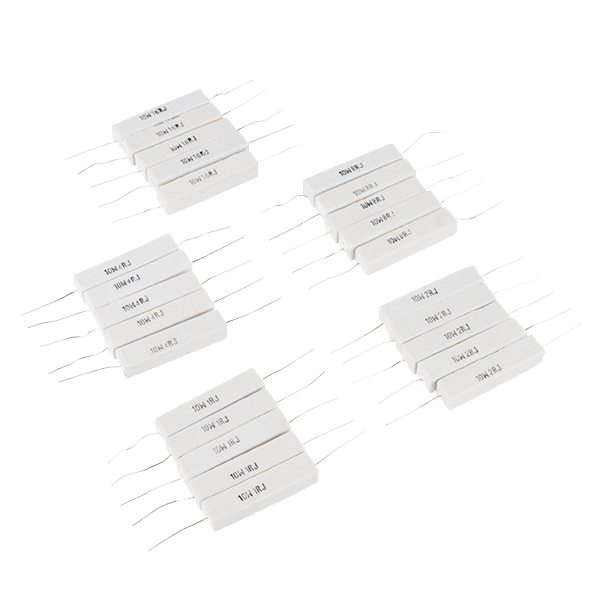 Power Resistor Kit - 10W (25 pack)1 paquete
 Surtido de disipadores (de aluminio)1 juego
 Pasta térmica (Arctic Silver)1 pieza
 Cables de puente1 juego
Herramientas necesarias:
 Fuente de alimentación de corriente continua
 Sensor de temperatura
 Termómetro de cocina
 Ventilador de refrigeración (PWM)
 Cronómetro
3
3
Read a heat sink
Read a heat sink
Look at the heat sinks you just measured. The fins are short, closely spaced and made of aluminium — exactly what the notebook's tables recommend. Closer spacing adds surface, but in still air the fins' own warm boundary layers merge and choke each other; with a fan they can be closer. That is why sinks designed for fans have many thin fins, and passive sinks have fewer, wider-spaced ones, standing vertically so the warm air can rise out between them.
The thick base spreads the heat from a small hot component across all the fins. Where the source is far from the fins, a heat pipe (the previous rung) carries it there.
4
4
It still runs too hot: find out why
It still runs too hot: find out why
The usual reasons a component on a heat sink overheats, in order.
Flow
Loading...
5
5
Context
Context
A practice rung: extended surfaces appear in this catalogue on the steam engine's cylinder, the Seebeck thermocouple's cold junction and every air-cooled machine. The fin equation used in the notebook is standard heat-transfer theory.
**Honest limits of the numbers.** The convection coefficients are assumed round values; real ones depend on spacing, orientation and air speed, which is why step 2 measures rather than calculates. The fin model assumes a uniform coefficient and an insulated tip, both simplifications.
Materiales
4- Power Resistor Kit - 10W (25 pack)10% de comisión1 paqueteMX$107.66
- Surtido de disipadores (de aluminio)10% de comisión1 juegoMarcador de posición
- Marcador de posición
- Marcador de posición
Herramientas requeridas
5- Marcador de posición
- 6 vendors sell this, none ship to you yetMarcador de posición
- Marcador de posición
- Marcador de posición
- Marcador de posición
Total estimado
Lo que compró quien lo hizo. Los materiales sin precio se consiguen donde tú los compres.
Blueprints relacionados
Estos blueprints comparten conocimiento — técnicas, materiales o principios
The Fire-Tube Boiler: Surface, Not Fire, Makes Steam
por Martin
Mecánica
46
0
0
0
0
0
The Radiator: Mostly Convection, and Why Temperature Is Everything
por Emma
Mecánica
33
0
0
0
0
0
The Heat Pipe: Evaporation, Condensation and a Wick That Pumps
por Emma
Mecánica
45
0
0
0
0
0
Cooling Is a Process Too: Still Air, Insulated, or Quenched
por Penny
Cerámica y Arcilla
42
0
0
0
0
0
Seebeck Thermocouple
por Ed
TECNOLOGÍA
51
0
0
0
0
0
CC0 Dominio público
Este Blueprint se publica bajo CC0. Eres libre de copiar, modificar, distribuir y usar este trabajo para cualquier propósito, sin pedir permiso.
Apoya al Maker comprando productos a través de su Blueprint, donde gana una Comisión del Maker establecida por los vendedores, o crea una nueva iteración de este Blueprint e inclúyela como conexión en tu propio Blueprint para compartir ingresos.