ARTE
BELLEZA Y BIENESTAR
ARTESANÍA
CULTURA E HISTORIA
ENTRETENIMIENTO
MEDIO AMBIENTE
COMIDA Y BEBIDAS
INGENIERÍA INVERSA
CIENCIAS
DEPORTES
TECNOLOGÍA
TECNOLOGÍA VESTIBLE
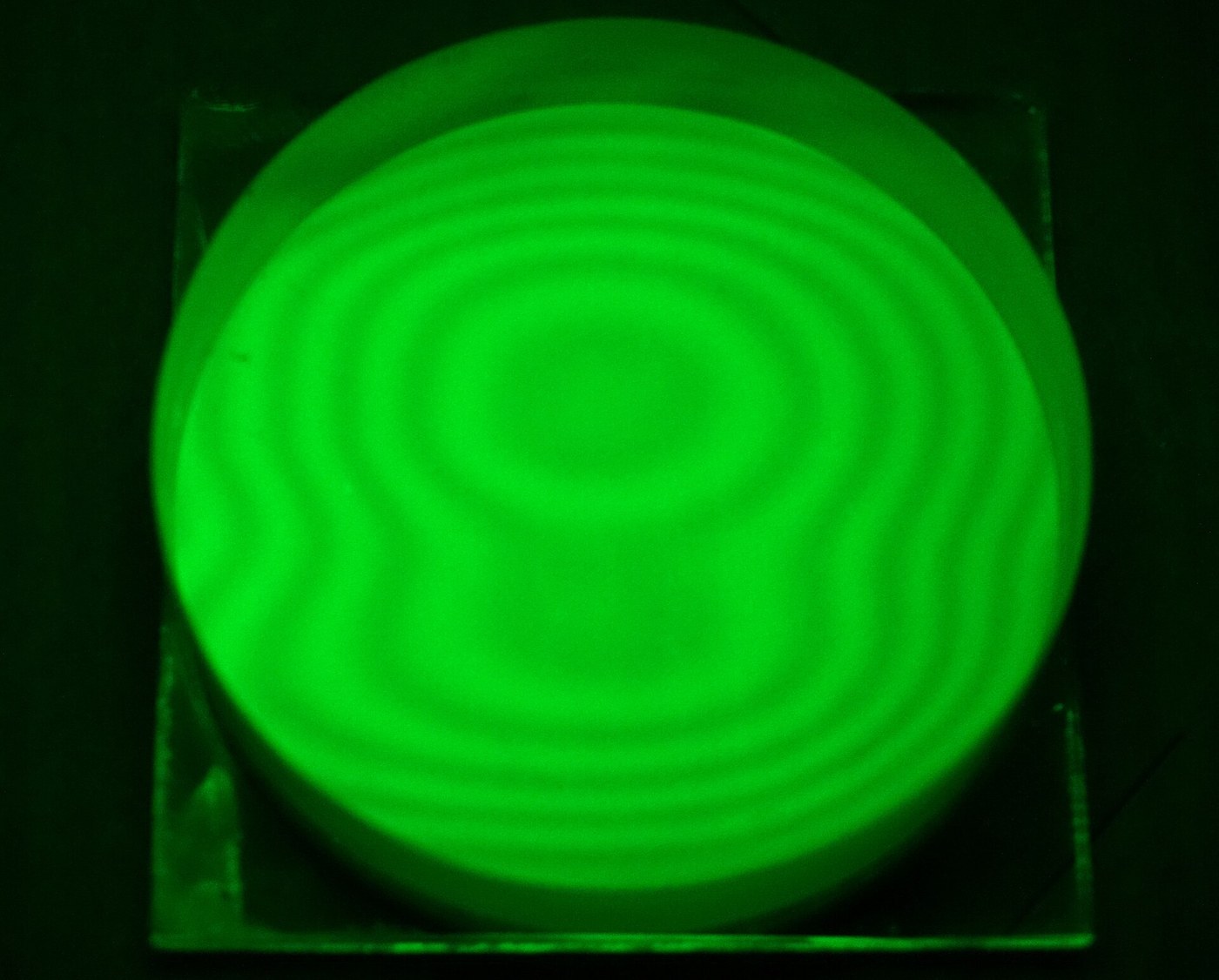


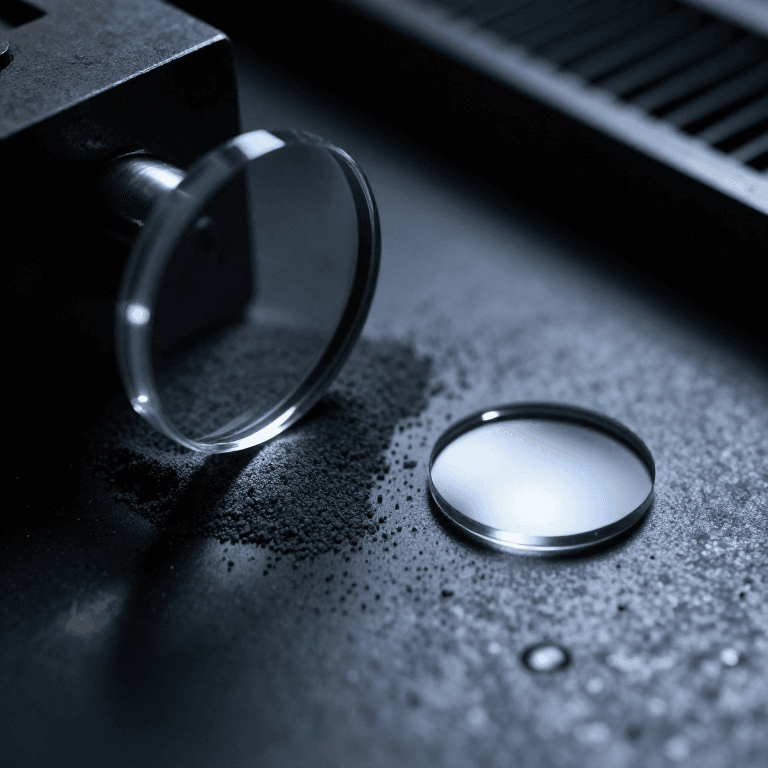
The Fizeau Wedge and the Optical Flat
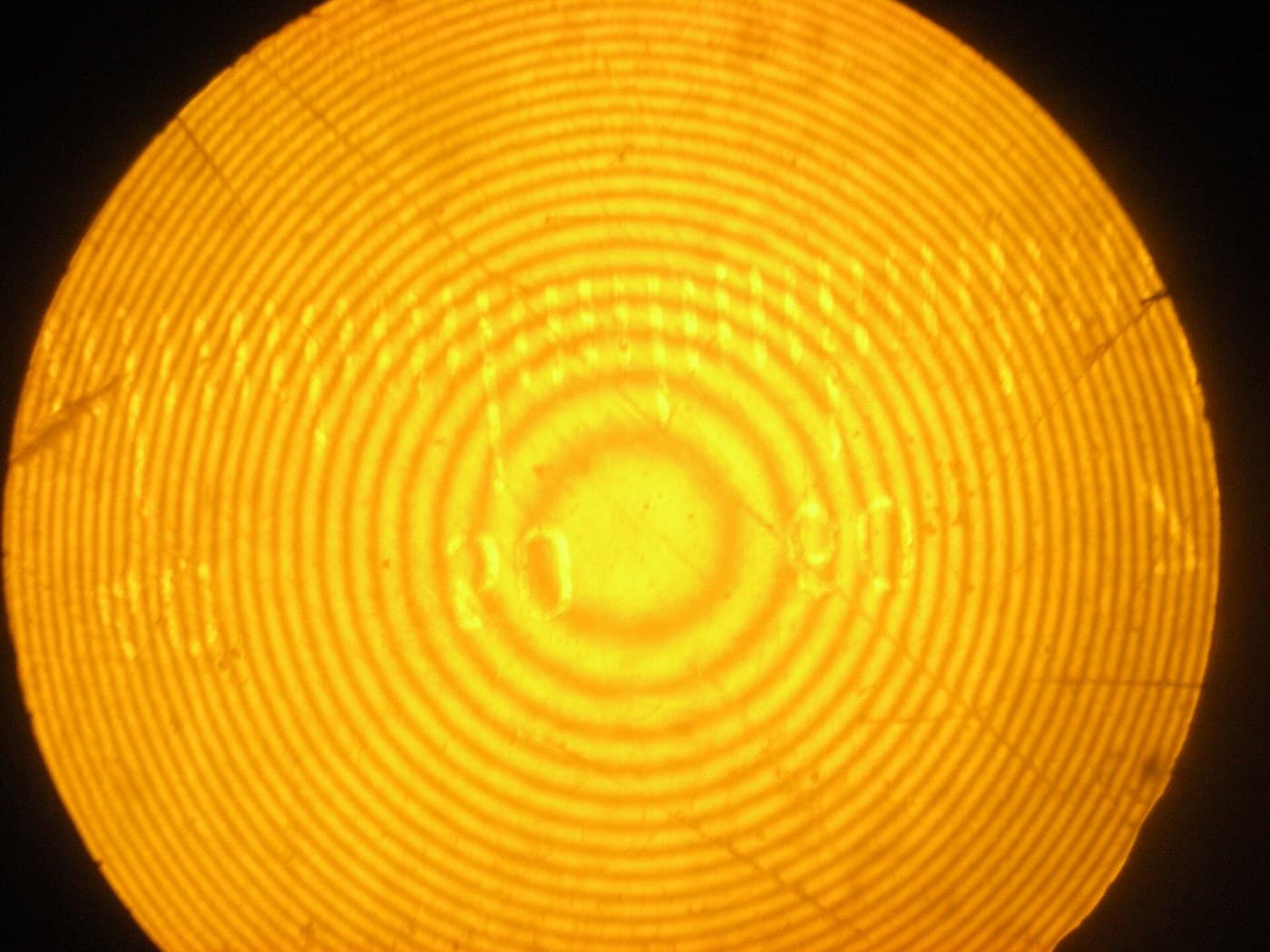
Newton's rings happen between a curve and a flat. Put two nearly FLAT surfaces together instead, with a hair's tilt between them, and the fringes become straight lines — one for every half wavelength of gap. Hippolyte Fizeau formalised this in 1862, and it turned interference from a philosophical demonstration into a shop-floor instrument.
What makes it useful is that a fringe is a CONTOUR LINE. The pattern is a height map of the gap, drawn in steps of about three hundred nanometres, and you read the surface directly: straight fringes mean flat, curved fringes mean the surface bows, and the amount they curve measured against their own spacing IS the departure from flat.
That last point is the whole reason it survives. You are not measuring against a ruler that could be wrong — you are measuring the fringes against each other. The tilt you introduced cancels out, and what remains is the surface.
Every gauge block, seal face, mirror blank and lens surface made anywhere is checked this way, and the apparatus is two pieces of glass and a monochromatic lamp. It is the cheapest thing in metrology that produces a NUMBER rather than an opinion.
Principiante
2 hours
Instrucciones
1
1
Make the wedge
Make the wedge
Clean both flats with isopropyl alcohol. Rest the reference flat on the test surface and press one edge very lightly to introduce a slight tilt.
Illuminate with the sodium lamp or a filtered LED from directly above and look straight down. A set of dark bands appears. Press harder and they widen; press elsewhere and they rotate. That responsiveness is how you know you are seeing interference and not a reflection.
Herramientas necesarias:
 Fuente de luz LED
 Lupa de mano 10x
 Guantes de nitrilo
 Papel de cocina
 Alcohol isopropílico al 99 %
 Plano óptico (patrón)
2
2
Read the bow, not the tilt
Read the bow, not the tilt
Photograph the fringes square-on. Lay a straightedge along one dark band in the image and measure two things: the spacing between adjacent bands, and the greatest departure of a band from the straightedge.
Divide the second by the first. That ratio, in fringe widths, is your surface error — multiply by half a wavelength for nanometres. The tilt cancels because it affects both numbers equally.
Herramientas necesarias:
 Regla
Regla Ordenador de sobremesa
3
3
Convert to nanometres, and pick your instrument
Convert to nanometres, and pick your instrument
Cargando el cuaderno de Jupyter…
Herramientas necesarias:
Ordenador de sobremesa4
4
Compendium: wringing, and what a flat is worth
Compendium: wringing, and what a flat is worth
WRINGING, AND WHY IT IS NOT GLUE. Two surfaces flat to a fraction of a wavelength and scrupulously clean will ADHERE when slid together, strongly enough to hang a weight from. Nobody is entirely certain of the mechanism — molecular attraction, a residual film of moisture, and air pressure all contribute — but the effect is what makes a stack of gauge blocks behave as one block of the summed length. It is also why a flat left resting on a surface overnight can be difficult and expensive to separate.
THE LIMIT THAT SENDS YOU TO BLUEPRINT 7. Fringes of equal thickness need the two surfaces nearly in contact, so a Fizeau tests flats against flats and cannot look at a lens, a prism or an assembled telescope at all. Putting the test optic into one ARM of an interferometer removes the constraint entirely — that is Twyman and Green's 1916 change, and it costs about two orders of magnitude more money.
Herramientas requeridas
8- Marcador de posición
- Marcador de posición
- Marcador de posición
- Marcador de posición
- Marcador de posición
- Marcador de posición
- Marcador de posición
- Marcador de posición
Blueprints relacionados
Estos blueprints comparten conocimiento — técnicas, materiales o principios


CC0 Dominio público
Este Blueprint se publica bajo CC0. Eres libre de copiar, modificar, distribuir y usar este trabajo para cualquier propósito, sin pedir permiso.
Apoya al Maker comprando productos a través de su Blueprint, donde gana una Comisión del Maker establecida por los vendedores, o crea una nueva iteración de este Blueprint e inclúyela como conexión en tu propio Blueprint para compartir ingresos.