ARTE
BELLEZA Y BIENESTAR
ARTESANÍA
CULTURA E HISTORIA
ENTRETENIMIENTO
MEDIO AMBIENTE
COMIDA Y BEBIDAS
INGENIERÍA INVERSA
CIENCIAS
DEPORTES
TECNOLOGÍA
TECNOLOGÍA VESTIBLE
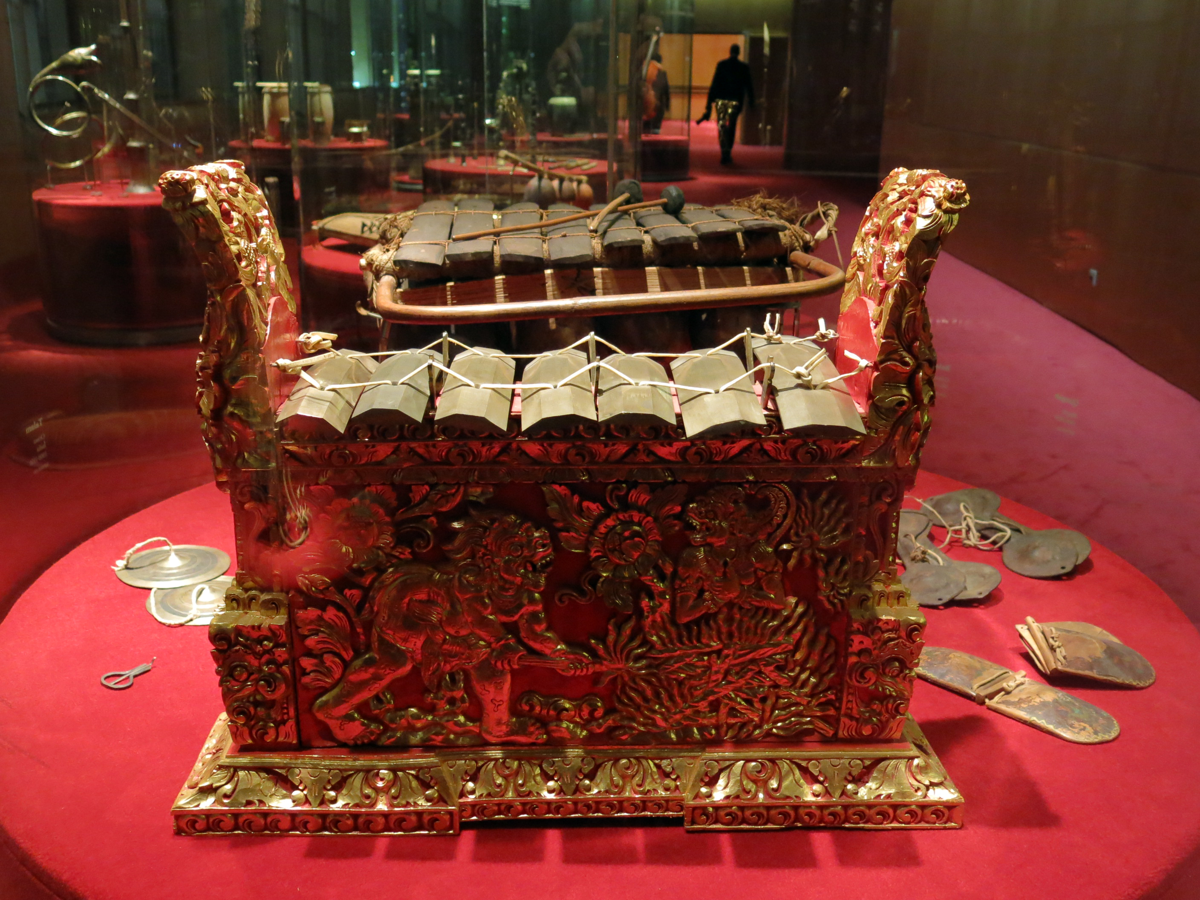


Building a Saron — A Gamelan Metallophone of Tuned Bronze Bars
Build a saron, the bronze-bar metallophone at the heart of Indonesian gamelan: a row of tuned metal bars resting over a wooden trough, struck with a mallet and damped by hand. Cut the bars, find their still points, tune them by filing, and set them to a gamelan scale. A serious maker build in the tuned bar — the physics of every xylophone and glockenspiel.
Intermedio
A few hours over a couple of sessions
Instrucciones
1
1
A row of tuned bronze bars
A row of tuned bronze bars
The saron is a metallophone: a row of thick tuned bronze bars laid over a wooden trough and struck with a mallet. Its bright, ringing shimmer is the heart of Indonesian gamelan.
2
2
Cut the bars
Cut the bars
Cut five to seven bronze bars, each a little shorter than the last. A shorter, thicker, stiffer bar rings higher; a longer one rings lower.
Materiales para este paso:
 Barra de bronce (lámina de metalófono)6 piezas
Herramientas necesarias:
 Sierra para metales
3
3
Find each bar's still points
Find each bar's still points
Sprinkle sand on a bar and tap it. The sand gathers at two still points, about a fifth of the way in from each end. These NODES are where the bar barely moves.
4
4
Build the trough resonator
Build the trough resonator
Build a shallow, open-topped wooden box a little longer than your longest bar. This hollow trough is the resonator that makes the bars ring out loud.
Materiales para este paso:
 Tabla de madera blanda seca1 pieza
 Cola blanca para madera (PVA)1 pieza
Herramientas necesarias:
Sierra para metales5
5
Lay the cushion cords
Lay the cushion cords
Stretch two cords across the top of the box exactly where the bars' nodes will sit, so every bar rests only on its two still points and can ring freely.
Materiales para este paso:
 Cordel de abacá1 pieza
6
6
Rest the bars in order
Rest the bars in order
Lay the bars across the cords, longest to shortest. They should ring cleanly when struck and never buzz against the wood.
7
7
Make a mallet
Make a mallet
Carve a mallet: a short stick with a rounded head. A harder head gives a brighter, pingier tone; a padded one is mellower.
Materiales para este paso:
 Varilla de madera (tarugo)1 pieza
Herramientas necesarias:
 Cuchillo de talla sloyd
8
8
Strike a bar
Strike a bar
Tap a bar over the box with the mallet. The bar rings, and the trough below swells the sound into a full, warm note.
9
9
Tune a bar lower
Tune a bar lower
To LOWER a bar's note, file metal from the MIDDLE of its underside. This makes the bar more flexible, so it bends more slowly and sounds deeper.
Herramientas necesarias:
 Lima para metal
10
10
Tune a bar higher
Tune a bar higher
To RAISE a bar's note, file metal from the ENDS instead. This stiffens the vibrating span, so the bar bends faster and sounds higher.
Herramientas necesarias:
Lima para metal11
11
Tune to a gamelan scale
Tune to a gamelan scale
Tune the bars to a five-note slendro scale (roughly even steps), not a Western scale. Gamelan has its own tunings, and each gamelan set is tuned uniquely to itself.
12
12
Damp and play
Damp and play
Strike a bar, then pinch it silent with your other hand as you hit the next. That crisp catch-and-damp is a signature of gamelan playing.
13
13
Compendium — the tuned bar
Compendium — the tuned bar
A gamelan metallophone is a set of tuned bars, each a struck idiophone that rings from its own metal. A free bar bends when struck, and it does so fastest — highest in pitch — when it is short, thick and stiff; longer or thinner bars bend more slowly and sound lower. Every bar has two 'nodes', still points about a fifth of the way in from each end where it hardly moves; resting the bar there (on cords or pegs) lets it ring on freely, while touching it anywhere else deadens it. You tune a bar by removing metal: file the MIDDLE thinner and the bar becomes floppier and drops in pitch; file the ENDS and the vibrating span stiffens and the pitch rises — the two moves every marimba, xylophone and glockenspiel maker uses. The wooden trough beneath is a resonator: a bare bar moves little air, but the box amplifies it, and on the finest gamelan and marimbas each bar even sits over its own tuned air chamber. Gamelan does not use the Western scale — it has two systems, five-note slendro and seven-note pelog, both with uneven steps — and famously each gamelan set is tuned as a single unit, slightly different from every other, so its instruments belong together and cannot simply be swapped between orchestras. The bronze bars are cousins of every tuned-bar instrument in the world — the xylophone, marimba, glockenspiel and vibraphone — and of every struck idiophone from bells to bone clappers.
Materiales
5- Marcador de posición
- 1 piezaMarcador de posición
- Marcador de posición
- 1 piezaMarcador de posición
- 1 piezaMarcador de posición
Herramientas requeridas
3- Marcador de posición
- Marcador de posición
- Marcador de posición
Este plano hace
Blueprints relacionados
Estos blueprints comparten conocimiento — técnicas, materiales o principios
CC0 Dominio público
Este Blueprint se publica bajo CC0. Eres libre de copiar, modificar, distribuir y usar este trabajo para cualquier propósito, sin pedir permiso.
Apoya al Maker comprando productos a través de su Blueprint, donde gana una Comisión del Maker establecida por los vendedores, o crea una nueva iteración de este Blueprint e inclúyela como conexión en tu propio Blueprint para compartir ingresos.