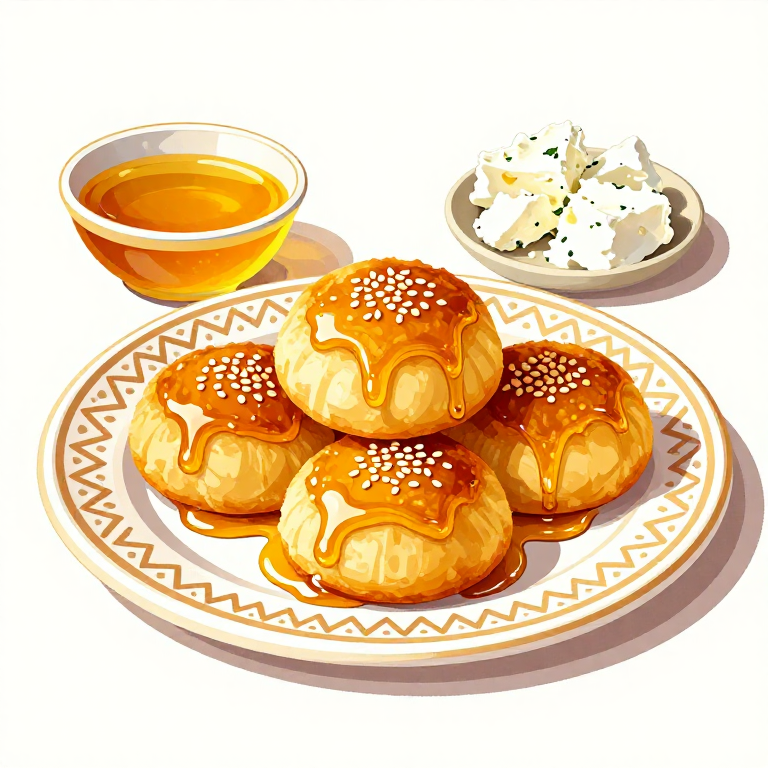


Greek Honey Cakes — Baking Honey Sesame Cakes (Plakous)
Instrucciones
Toast the Sesame Seeds
Toast the Sesame Seeds
Spread the sesame seeds in a single layer on a dry, flat pan and heat over moderate flame, stirring constantly, until they turn golden and begin to release their nutty aroma — approximately 3-5 minutes. Remove immediately from heat as they burn quickly once past the golden stage. Sesame (sesamum) was one of the most important flavoring ingredients in Greek cooking and baking, imported from Egypt and the Near East. The toasted seeds add both flavor and texture to the finished cakes. Reserve some toasted seeds for garnishing the tops of the cakes before baking.
Materiales para este paso:
 Harina integral de trigo200 g g
 Miel100-150 g g
 Semillas de sésamo (crudas)50 g g
 Queso fresco blando (ricotta)100 g g
 Aceite de linaza2 tablespoons pieza
Herramientas necesarias:
 Juego de cuencos para mezclar
 Piedra para hornear pizza
 Sartén plana
Mix the Cake Batter
Mix the Cake Batter
In a mixing bowl, combine the wheat flour, half the honey, the olive oil, and the fresh cheese. Mix until a soft, slightly sticky dough forms. Fold in most of the toasted sesame seeds, reserving some for the tops. The dough should be pliable and cohesive but not as elastic as bread dough. Ancient Greek plakous recipes varied by region — some versions included poppy seeds, nuts, or spiced wine. Athenaeus describes plakous from Crete using local mountain honey, considered the finest in the Greek world. The soft cheese adds moisture, richness, and a slight tang that balances the sweetness of the honey.
Shape and Top the Cakes
Shape and Top the Cakes
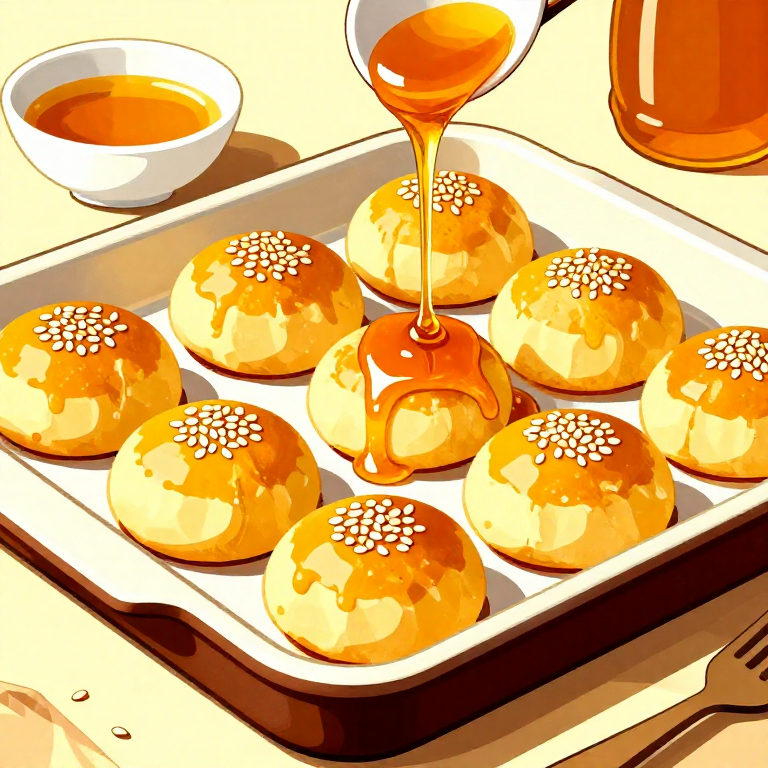
Divide the dough into small portions and shape them into flat round cakes approximately 8-10 cm in diameter and 1.5-2 cm thick. Press the reserved sesame seeds onto the tops of the cakes. Drizzle a small amount of honey over each cake. These small, individually portioned cakes were typical of Greek confections, as they were intended for sharing at symposia, festivals, and religious offerings. Larger flat cakes were cut into wedges for serving. Place the shaped cakes on a lightly oiled baking surface or ceramic tray.
Bake Until Golden
Bake Until Golden
Bake the cakes in a preheated oven or on a hot baking stone at approximately 180-200 degrees Celsius for 15-20 minutes, until golden-brown on top and firm to the touch. The honey will caramelize slightly, creating a glossy, aromatic surface. Greek bakers used both domed clay ovens and flat baking cloches. The cakes should be golden and fragrant when done but not dark brown — overbaking makes the honey bitter. Remove from the oven and allow to cool slightly on the baking surface. The cakes will firm up further as they cool, as the honey sets to a slightly chewy consistency.
Glaze with Honey and Serve
Glaze with Honey and Serve
While the cakes are still warm, drizzle the remaining honey generously over the tops, allowing it to soak into the surface. The warm cakes absorb the honey, creating a moist, intensely sweet outer layer. Serve at room temperature. Plakous was offered to the gods at temples and household shrines, served at wedding banquets and symposia, and sold by street vendors in the Athenian Agora. The philosopher Chrysippus of Tyana wrote an entire treatise on cake-making (now lost), indicating the importance of confectionery in Greek food culture. Well-made plakous is rich, sweet, and nutty — a genuine ancestral dessert that connects modern bakers to over 2,500 years of Mediterranean baking tradition.
Materiales
6- 200 g gMarcador de posición
- 100-150 g gMarcador de posición
- 2 tablespoons piezaMarcador de posición
- 50 g piezaMarcador de posición
- 100 g piezaMarcador de posición
- 2 tablespoons piezaMarcador de posición
Herramientas requeridas
4- Marcador de posición
- Marcador de posición
- Marcador de posición
- Marcador de posición
Este plano hace
Blueprints relacionados
Estos blueprints comparten conocimiento — técnicas, materiales o principios

CC0 Dominio público
Este Blueprint se publica bajo CC0. Eres libre de copiar, modificar, distribuir y usar este trabajo para cualquier propósito, sin pedir permiso.
Apoya al Maker comprando productos a través de su Blueprint, donde gana una Comisión del Maker establecida por los vendedores, o crea una nueva iteración de este Blueprint e inclúyela como conexión en tu propio Blueprint para compartir ingresos.