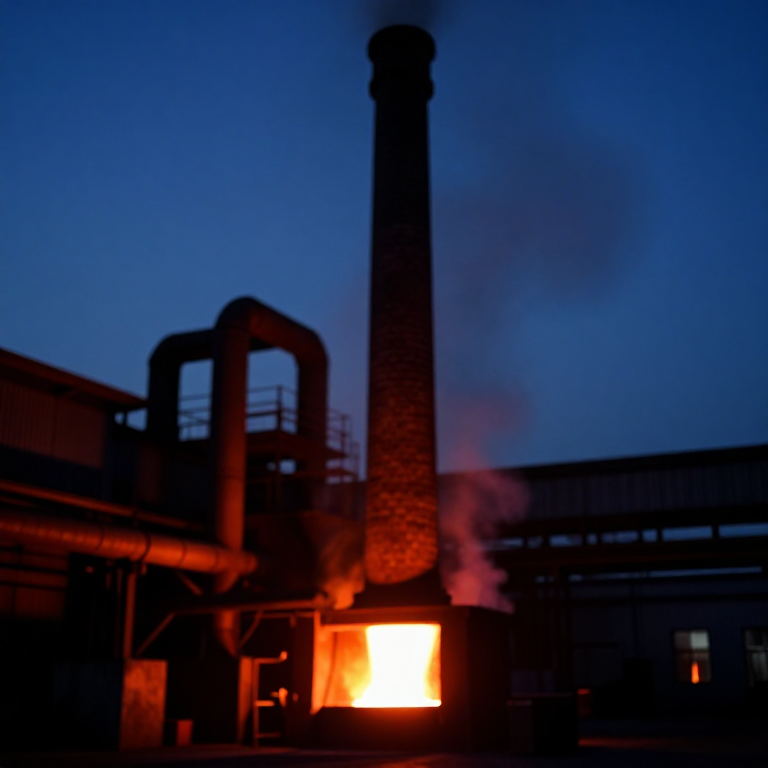


Building a Hot Blast Stove — Preheating the Air That Tripled the Blast Furnace
For centuries ironmasters believed a blast furnace ran best on cold winter air, and blew their furnaces with air at whatever temperature the weather gave. In 1828 the Scottish engineer James Neilson proved the opposite: heating the blast before it entered the furnace slashed the fuel needed and raised the output enormously. The hot blast was one of the great efficiency leaps of the iron age.
The idea seems backwards but the physics is sound. Cold air entering the furnace has to be heated by burning precious fuel before it can do its work; preheating the air outside the furnace, using waste heat that would otherwise escape up the chimney, means far less coke is wasted just warming the blast. Neilson's first stoves cut coke use by a third, and later regenerative stoves did far better still.
A hot blast stove is a chamber of brick or pipe that the blast passes through on its way to the tuyeres, heated by the furnace's own escaping gases. Bolted onto the pig-iron blast furnace, it made iron dramatically cheaper — and cheap iron was the lifeblood of the Industrial Revolution.
Instrucciones
Understand the hot blast
Understand the hot blast
Tap the furnace waste gas
Tap the furnace waste gas
Herramientas necesarias:
 Conductos de ventilación
Build the stove chamber
Build the stove chamber
Materiales para este paso:
 Ladrillos refractarios200 piezas
Herramientas necesarias:
 Desplantador de mano
Heat the stove
Heat the stove
Materiales para este paso:
 Coque metalúrgico20 kg
Pass the blast through
Pass the blast through
Herramientas necesarias:
 Soplador de aire
Alternate the regenerator stoves
Alternate the regenerator stoves
Insulate the hot main
Insulate the hot main
Materiales para este paso:
 Cemento refractario15 kg
Deliver the hot blast
Deliver the hot blast
Herramientas necesarias:
 Barra de sangrado
Control the temperature
Control the temperature
Herramientas necesarias:
 Pirómetro
Measure the saving
Measure the saving
Mind the hazards
Mind the hazards
See the impact
See the impact
Materiales
3- 200 piezasMarcador de posición
- 20 kgMarcador de posición
- 15 kgMarcador de posición
Herramientas requeridas
5- Marcador de posición
- Marcador de posición
- Marcador de posición
- Marcador de posición
- Marcador de posición
Materiales de Blueprints conectados

Este plano hace
Blueprints relacionados
Estos blueprints comparten conocimiento — técnicas, materiales o principios
CC0 Dominio público
Este Blueprint se publica bajo CC0. Eres libre de copiar, modificar, distribuir y usar este trabajo para cualquier propósito, sin pedir permiso.
Apoya al Maker comprando productos a través de su Blueprint, donde gana una Comisión del Maker establecida por los vendedores, o crea una nueva iteración de este Blueprint e inclúyela como conexión en tu propio Blueprint para compartir ingresos.