ARTE
BELLEZA Y BIENESTAR
ARTESANÍA
CULTURA E HISTORIA
ENTRETENIMIENTO
MEDIO AMBIENTE
COMIDA Y BEBIDAS
INGENIERÍA INVERSA
CIENCIAS
DEPORTES
TECNOLOGÍA
TECNOLOGÍA VESTIBLE

Induction Hob
The induction coil already published makes a changing magnetic field, and the induction motor uses one to drive currents in a rotor. The cooking rung uses the same trick to heat the pan itself: no element, no flame, and a cold top - the pan is the only thing that gets hot.
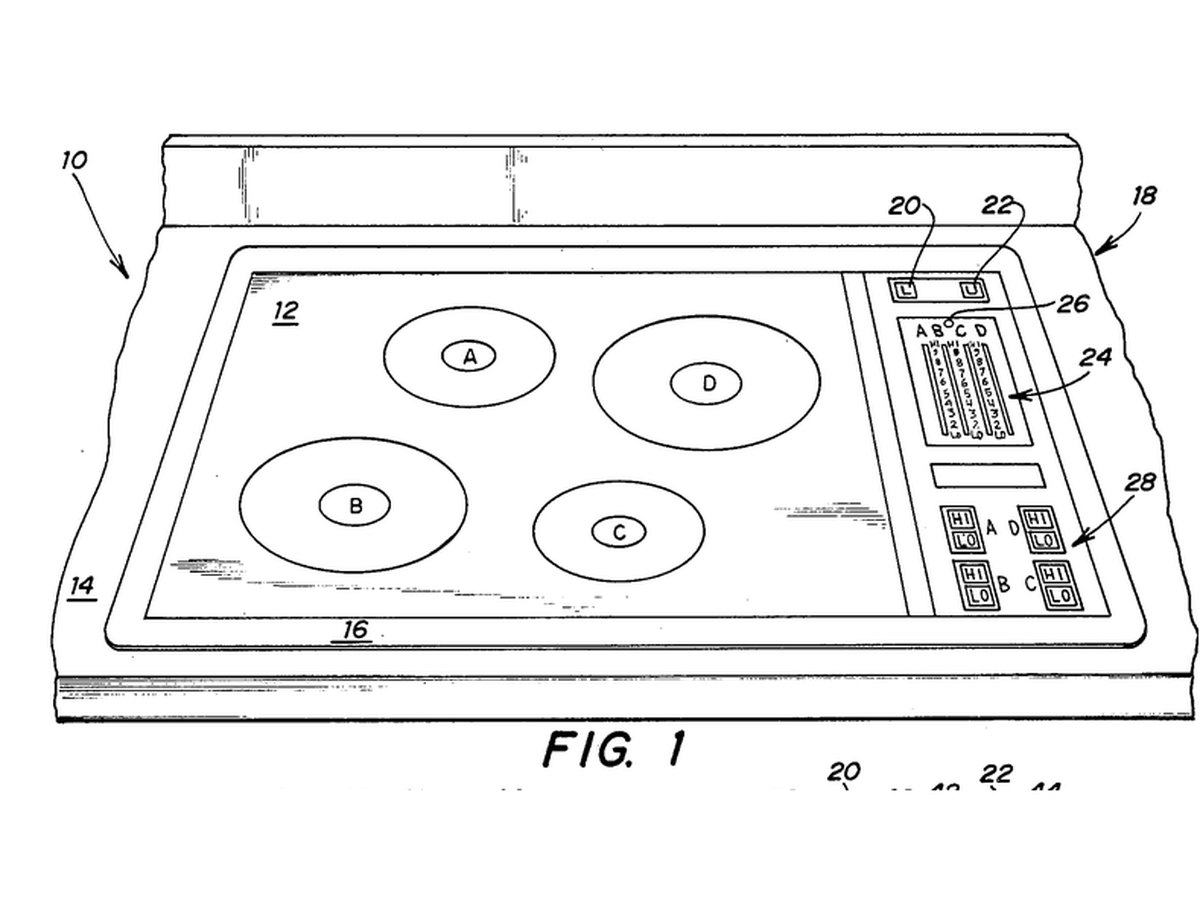
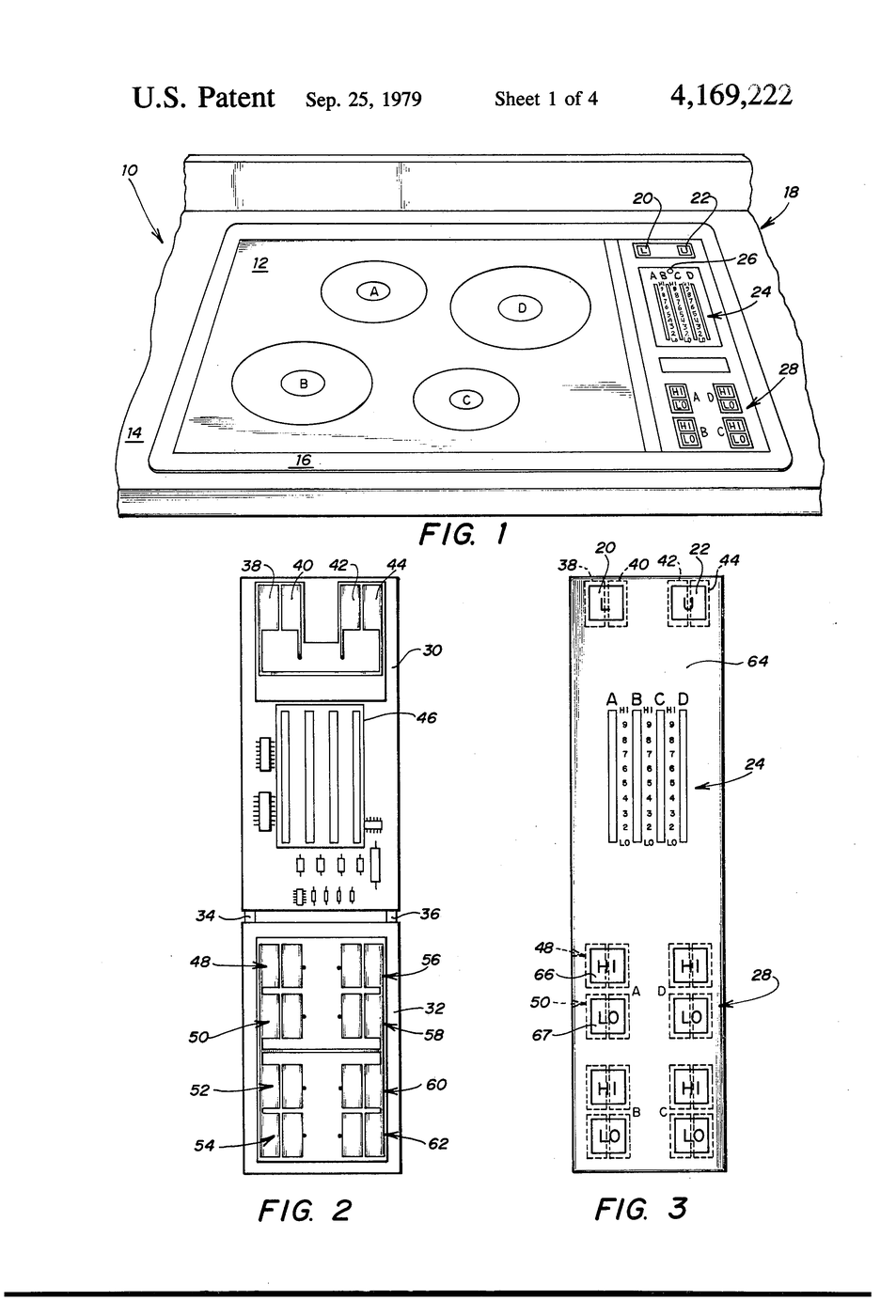
**US 4,169,222**, "Induction cook-top system and control", Raymond M. Tucker, assigned to Rangaire, filed 26. July 1977, granted 25. September 1979: mains rectified to DC, switched into induction heating coils under a non-metallic top, with the power set by the switching.
**A mains hob is never opened or built here.** You build a LOW-VOLTAGE induction heater from a 12–24 V module and measure which metals it can heat - which is exactly why some pans work on a hob and others do nothing.
Intermedio
3 hours
Instrucciones
1
1
Wind a work coil
Wind a work coil
Wind 6 turns of 10 AWG bare copper wire round a 60 mm former into a flat spiral, leaving 80 mm tails. Keep the turns evenly spaced and not touching.
Materiales para este paso:
 Alambre de cobre1 metro
Herramientas necesarias:
 Juego de alicates
 Regla
Regla2
2
Power it safely
Power it safely
Bolt the coil to the ZVS module's terminals. Set the bench supply to 12 V with a 5 A limit; the module draws several amps and its transistors get hot. Never run it with no metal near the coil for more than a few seconds, and keep the supply under 24 V.
Materiales para este paso:
 Módulo calentador por inducción ZVS1 pieza
Herramientas necesarias:
 Fuente de alimentación de banco ajustable
 Gafas de seguridad transparentes
3
3
Cut six discs
Cut six discs
Cut 40 mm discs from mild steel, stainless (both a magnetic and a non-magnetic grade if you have them), aluminium and copper, all the same thickness. Deburr the edges. Try a magnet on each and note which hold it.
Materiales para este paso:
 Chapa de acero dulce1 pieza
 Chapa de acero inoxidable1 pieza
 Chapa de aluminio1 pieza
 Lámina de cobre1 pieza
Herramientas necesarias:
 Tijeras de chapa
 Lima para metal
 Juego de imanes de neodimio
4
4
Sixty seconds each
Sixty seconds each
Rest each disc on a ceramic tile 5 mm above the coil, note its starting temperature, run for 60 seconds at the same supply setting, and read it again. Lift hot discs with pliers and gloves; let the module cool between runs.
Herramientas necesarias:
 Termómetro infrarrojo
 Cronómetro
 Guantes de soldadorJuego de alicates
5
5
The same test on a real hob
The same test on a real hob
If a commercial induction hob is to hand, put a cast-iron skillet on it, then an aluminium saucepan, and see which one it will even acknowledge. Then hold a magnet to each base.
Herramientas necesarias:
 Sartén de hierro fundido
 Cazo altoJuego de imanes de neodimio
6
6
Skin depth and your results
Skin depth and your results
Cargando el cuaderno de Jupyter…
7
7
History & Context
History & Context
**What the patent specifies:** a cook-top with rectifier, gated semiconductor switches and induction heating coils beneath a non-metallic top, with the heat set by how the coils are switched. **Modern build (derived):** a low-voltage ZVS heater and metal discs.
Induction reached kitchens slowly because the electronics were dear; efficiency into the pan is high and the top stays cool enough not to burn spills on. Its limits: the pan must be magnetic (so much old aluminium and copper cookware is useless), the electronics whine, and a pan smaller than the coil couples poorly.
Materiales
6- 1 metroMarcador de posición
- Marcador de posición
- 1 piezaMarcador de posición
- 1 piezaMarcador de posición
- 1 piezaMarcador de posición
- 1 piezaMarcador de posición
Herramientas requeridas
12- Marcador de posición
- Marcador de posición
- Marcador de posición
- Marcador de posición
- Marcador de posición
- Marcador de posición
- Marcador de posición
- Marcador de posición
- Marcador de posición
- Marcador de posición
- Marcador de posición
- Marcador de posición
Blueprints relacionados
Estos blueprints comparten conocimiento — técnicas, materiales o principios

CC0 Dominio público
Este Blueprint se publica bajo CC0. Eres libre de copiar, modificar, distribuir y usar este trabajo para cualquier propósito, sin pedir permiso.
Apoya al Maker comprando productos a través de su Blueprint, donde gana una Comisión del Maker establecida por los vendedores, o crea una nueva iteración de este Blueprint e inclúyela como conexión en tu propio Blueprint para compartir ingresos.