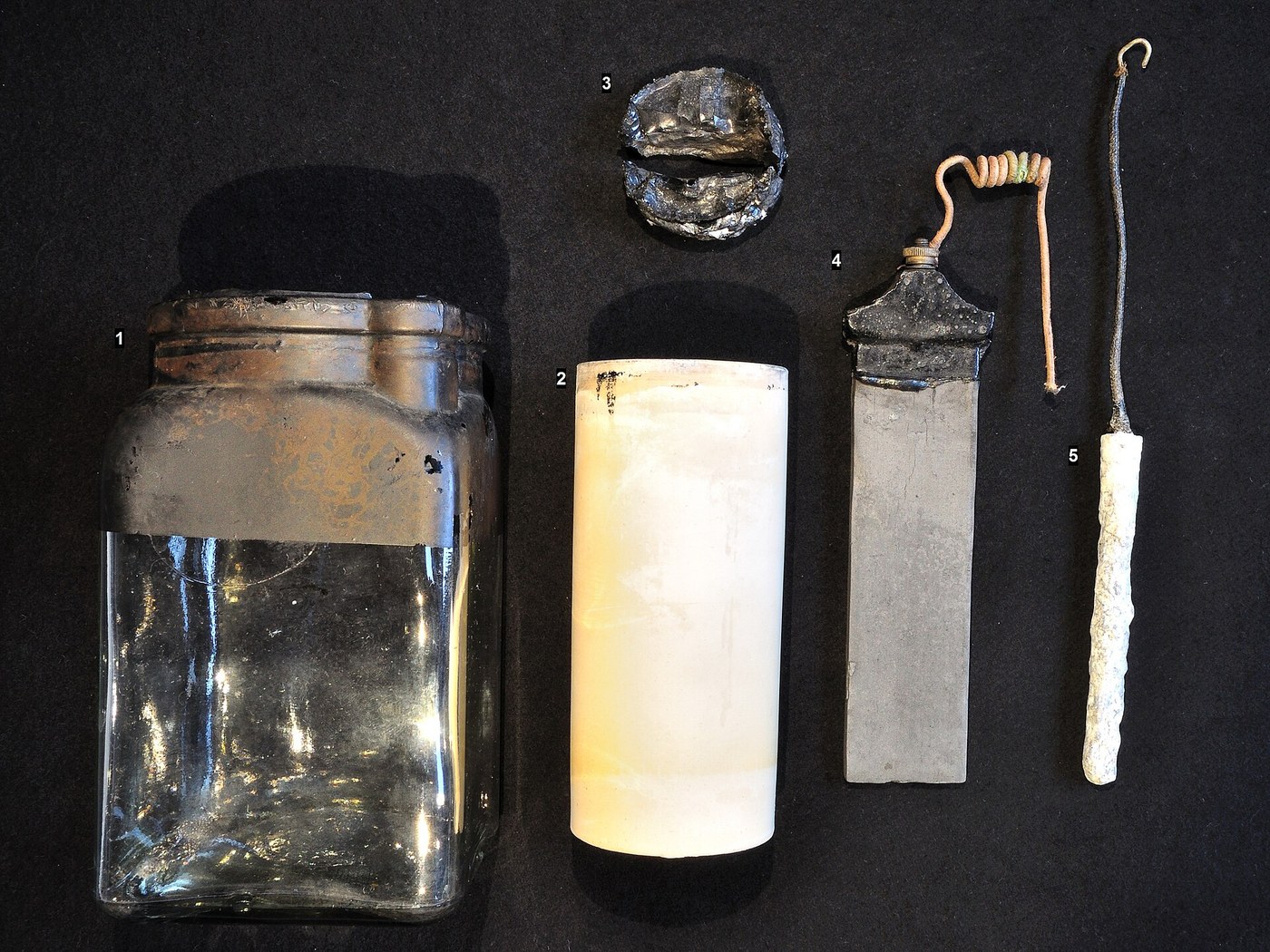


Leclanché Cell
Instrucciones
Mix the electrolyte
Mix the electrolyte
Dissolve ammonium chloride in warm water until saturated, then let it cool.
Ammonium chloride is far kinder to work with than the acids in earlier cells, and that was a large part of why this design spread. It still irritates eyes and skin — wash off splashes.Materiales para este paso:
 Cloruro de amonio (NH₄Cl)1 container
Pack the carbon cathode
Pack the carbon cathode
The carbon rod carries the current; the manganese dioxide around it does the chemical work.
- Mix manganese dioxide with a little powdered graphite to improve conductivity.
- Pack the mixture tightly around the graphite electrode inside a porous bag or perforated tube.
- Keep the top of the rod clean and dry for the connection.
Materiales para este paso:
 Dióxido de manganeso (pirolusita)1 container
 Electrodo de grafito1 pieza
 Polvo de grafito1 container
Assemble the cell
Assemble the cell
Stand the packed carbon assembly and a zinc rod in the jar of electrolyte, not touching each other.
- Zinc is the negative terminal.
- Carbon is the positive terminal.
- Both must stand clear of the bottom so debris cannot bridge them.
Materiales para este paso:
 Lingote de zinc1 pieza
Measure it, then load it hard
Measure it, then load it hard
Read the open-circuit voltage, then watch what a heavy load does.
- Expect about 1.5 V unloaded.
- Connect a low-value resistor and watch the voltage sag within a minute or two.
- Disconnect, wait ten minutes, and read again — it will have largely recovered.
Materiales para este paso:
 Kit de resistencias de 1/4 W1 kit
Herramientas necesarias:
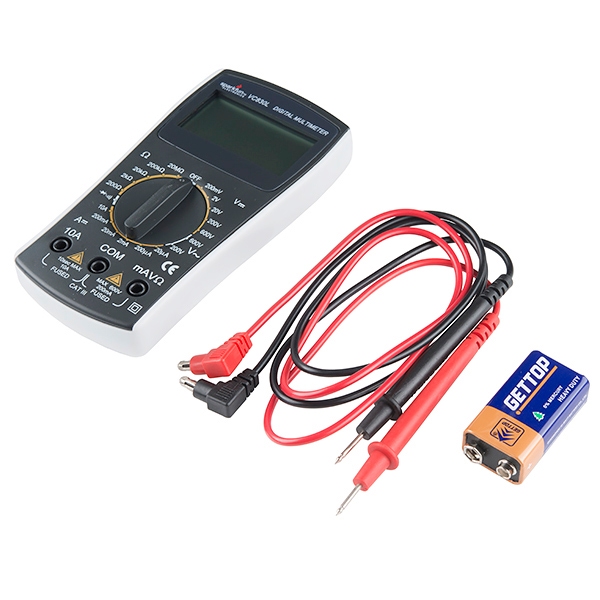 Digital Multimeter - Basic
History and context
History and context
Georges Leclanché, a French engineer, patented this cell in 1866, and the Belgian telegraph service adopted it soon after. Its combination of cheap materials, no acid to spill and no porous pot to maintain beat the Daniell cell for anything that did not need a continuous draw.
Its real descendant arrived when the liquid was replaced by a paste and the zinc became the container itself. That is the dry cell — Carl Gassner patented a version in 1886 — and the ordinary zinc-carbon battery on sale today is still recognisably Leclanché's chemistry: zinc, manganese dioxide, carbon, ammonium chloride.
Being careful with the claim: the modern alkaline cell is not a Leclanché cell. It shares the zinc and manganese dioxide but uses potassium hydroxide, which is what lets it sustain the heavy continuous currents this one cannot.
Materiales
6- 1 containerMarcador de posición
- 1 containerMarcador de posición
- 1 piezaMarcador de posición
- 1 containerMarcador de posición
- 1 piezaMarcador de posición
- Marcador de posición
Herramientas requeridas
1- Digital Multimeter - Basic10% de comisiónMX$269.94
Materiales de Blueprints conectados


Este plano hace

Blueprints relacionados
Estos blueprints comparten conocimiento — técnicas, materiales o principios

CC0 Dominio público
Este Blueprint se publica bajo CC0. Eres libre de copiar, modificar, distribuir y usar este trabajo para cualquier propósito, sin pedir permiso.
Apoya al Maker comprando productos a través de su Blueprint, donde gana una Comisión del Maker establecida por los vendedores, o crea una nueva iteración de este Blueprint e inclúyela como conexión en tu propio Blueprint para compartir ingresos.