ARTE
BELLEZA Y BIENESTAR
ARTESANÍA
CULTURA E HISTORIA
ENTRETENIMIENTO
MEDIO AMBIENTE
COMIDA Y BEBIDAS
INGENIERÍA INVERSA
CIENCIAS
DEPORTES
TECNOLOGÍA
TECNOLOGÍA VESTIBLE
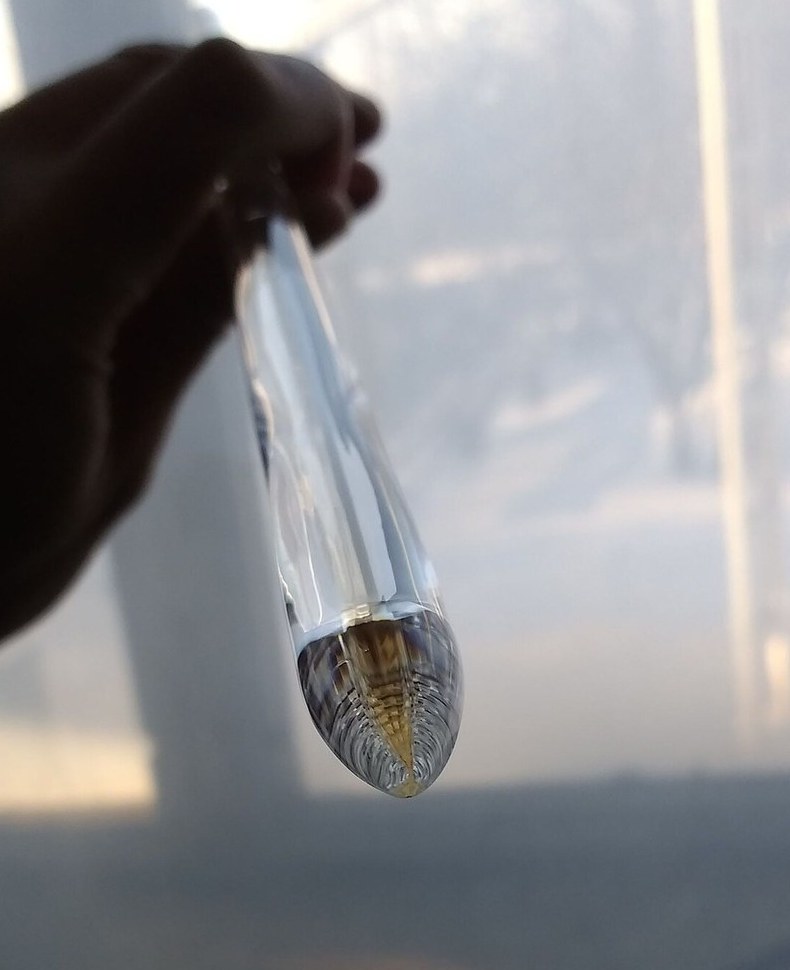

The MCVD Preform and the Draw Tower
Kao's 1966 argument said the loss was iron. That turns fibre into a purification problem, and purification of a MELT is close to hopeless: whatever you melt the glass in contaminates it, and a crucible is the single dirtiest object in the process.
The answer, from John MacChesney and Paul O'Connor at Bell Labs in 1974, is to never make a melt at all. Modified Chemical Vapour Deposition builds the glass out of vapour, inside a rotating fused-silica tube, layer by layer. Silicon tetrachloride and oxygen flow down the tube while a torch traverses along the outside. Where the torch is, the vapour reacts and deposits a fine soot of silica just downstream; the same torch passing over sinters that soot into clear glass. Germanium tetrachloride in the flow raises the refractive index of the layers that will become the core. After a few dozen passes the torch is turned up and surface tension collapses the tube into a solid rod — the preform, a metre long and 20 mm across, with the finished fibre's refractive index profile already inside it, scaled up 160 times.
Then it is drawn. The preform is lowered into a graphite furnace at about 2000 C and a fibre is pulled from its tip, thinning by a factor of 160 while keeping its structure exactly. A laser micrometer watches the diameter and the winder's speed holds it at 125 micrometres. Before the fibre can touch anything at all it passes through a die that puts a UV-cured acrylate coating on it, because a pristine silica fibre is stronger than steel and one contact with a hard surface ruins it.
BENCH VERSION, WITH THE DIVERGENCE STATED. You cannot run MCVD without a glass lathe and a chlorides handling system, and this blueprint does not pretend otherwise. What you CAN do is the draw: pull a borosilicate rod over a torch at several speeds, measure the diameters, and verify that the exponent is minus one half. It is the same arithmetic four orders of magnitude coarser, and it is the arithmetic that runs every fibre plant on earth.
Avanzado
5 hours
Instrucciones
1
1
The same arithmetic, in metal
The same arithmetic, in metal
Draw some wire first if you have not. Wire drawing and fibre drawing are the same conservation law wearing different clothes: material in equals material out, so a reduction in area is an increase in length by exactly the same factor.
One thing is genuinely different and it is worth naming. Wire is drawn COLD through a die that forces the reduction, so the drawplate sets the diameter and the puller only supplies force. Glass is drawn HOT with no die at all: the diameter is set purely by the ratio of speeds, and surface tension keeps the cross-section round. There is nothing to wear out and nothing to change, which is why one preform can yield hundreds of kilometres of fibre at a constant diameter.
Herramientas necesarias:
 Calibre digital de 6 pulgadas
2
2
Draw fibre from a glass rod
Draw fibre from a glass rod
Work on a heatproof surface with the goggles on and long hair tied back. Have a metal tray of sand ready for offcuts; drawn glass fibre is very fine, very sharp and nearly invisible on a bench.
Hold a 6 mm borosilicate rod in both hands and heat a 20 mm zone in the middle with the propane torch, rolling it continuously so it softens evenly. Borosilicate works at around 820 C, glowing a dull orange.
When the zone is soft, take it out of the flame and pull steadily apart. Do five pulls at clearly different speeds — slow and deliberate, then progressively faster — and lay each drawn fibre on the bench labelled with roughly how long the pull took. The stopwatch and a marked 500 mm ruler line give you a usable speed.
Measure the diameter of each with the caliper at the midpoint of the drawn section. Under 0.2 mm the caliper is at its limit; use the hand lens against a scale instead.
Materiales para este paso:
 Varilla de vidrio borosilicato3 piezas
 Arena de cuarzo2 kg
Herramientas necesarias:
 Soplete de propanoCalibre digital de 6 pulgadas
 Cronómetro
 Lupa de mano 10x
 Gafas de seguridad estancas
 Guantes de nitrilo
3
3
Draw ratio, diameter control, and the deposition chemistry
Draw ratio, diameter control, and the deposition chemistry
Cargando el cuaderno de Jupyter…
Herramientas necesarias:
 Ordenador de sobremesa
4
4
Compendium: the tube, the collapse, and the coating
Compendium: the tube, the collapse, and the coating
THE DEPOSITION, IN ORDER. A fused-silica tube about 25 mm across turns in a glass lathe. Oxygen carries SiCl4 vapour, and GeCl4 for the core layers, down the bore. An oxy-hydrogen torch traverses the outside at a few centimetres a minute, heating a zone to about 1600 C. The chlorides oxidise, but the particles form in the GAS and thermophoresis drives them onto the cooler wall just downstream of the torch; the next pass sinters that soot to clear glass. Fifty or more passes build the cladding and then the germanium-doped core, which is why a graded index profile is simply a schedule of GeCl4 flow.
THE COLLAPSE. Deposition finished, the torch goes to about 2000 C and traverses slowly with the flow reduced. Surface tension pulls the softened tube inward until the bore closes into a solid rod. This step decides whether the core stays round and centred, and it is where germanium evaporates back off the innermost surface — which is why MCVD fibre has a small index dip at the very centre.
THE SIBLINGS. Corning's OVD deposits soot on the OUTSIDE of a rotating bait rod, which is withdrawn before the porous body is dried in chlorine and sintered separately. NTT's VAD grows a soot body axially from the end and runs continuously instead of in batches. All three make excellent fibre. MCVD is cheapest to set up and cleanest, because deposition happens inside a sealed tube; OVD and VAD scale to bigger preforms and so to more kilometres per draw. Capital cost against throughput — and all three are still in production.
THE COATING IS NOT OPTIONAL. Freshly drawn silica has a tensile strength of several gigapascals, above most steels. That lasts exactly until the surface acquires a flaw, and touching anything gives it one. So the coating die sits inside the tower about a metre below the furnace, and the acrylate is applied and UV-cured while the fibre is still in free flight. Every length is then proof-tested under tension, typically near 0.7 GPa, before spooling.
WHAT THE BENCH VERSION CANNOT SHOW. A hand-held torch has no fixed hot zone, so pulling faster grows the softened region and feeds more glass in from the sides. Expect an exponent shallower than -0.5 and a diameter that varies along one pull. A real tower has a defined hot zone, a constant preform feed, a micrometer 500 mm below the neck and a winder servo. The physics is identical; the CONTROL is the whole engineering difference.
Materiales
2- 3 piezasMarcador de posición
- 2 kgMarcador de posición
Herramientas requeridas
7- Marcador de posición
- Marcador de posición
- Marcador de posición
- Marcador de posición
- Marcador de posición
- Marcador de posición
- Marcador de posición
Blueprints relacionados
Estos blueprints comparten conocimiento — técnicas, materiales o principios
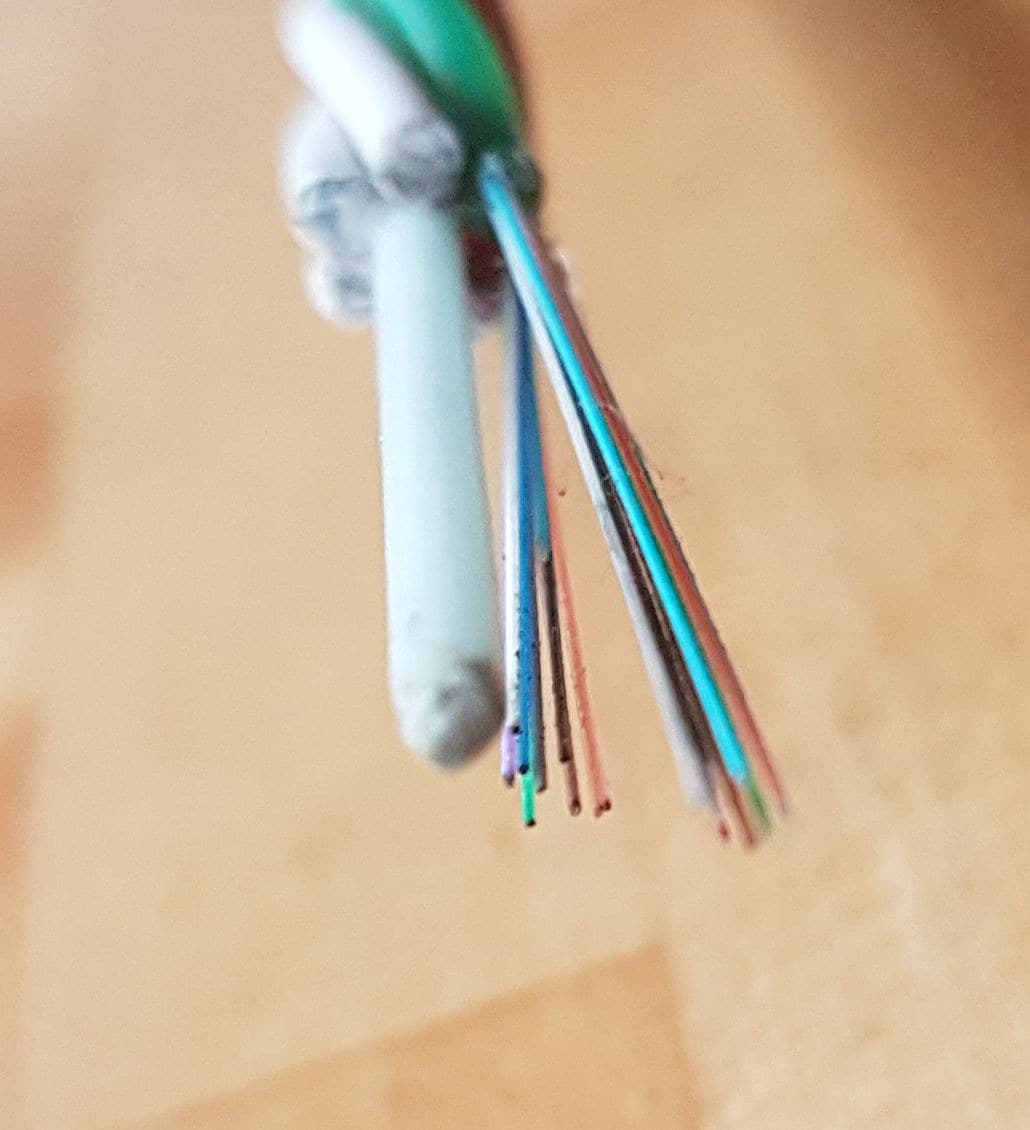
Low-Loss Optical Fibre
por Mary
Química
65
0
0
0
0
0
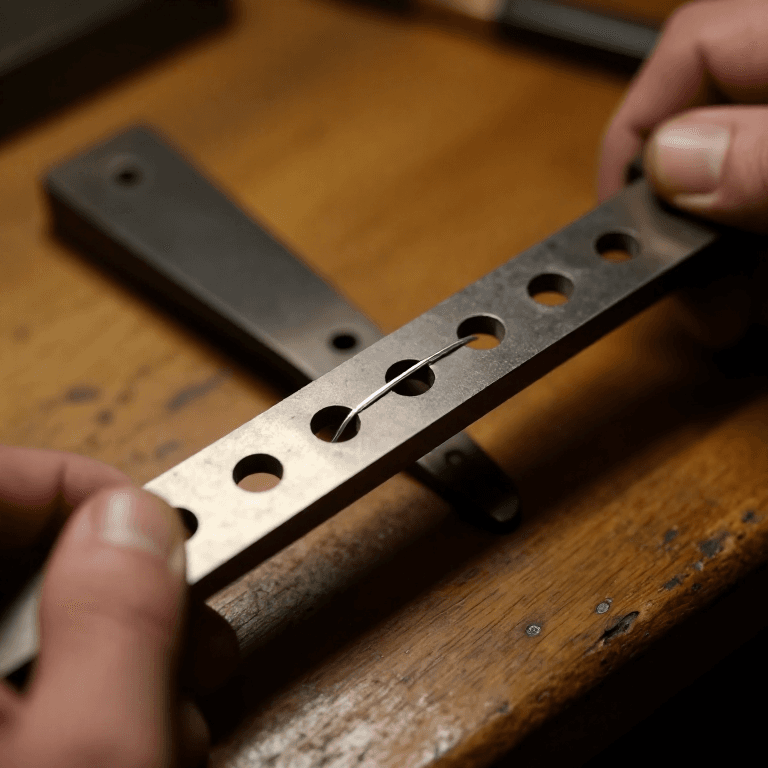
Drawing Wire with a Drawplate
por Forge
Trabajo en Metal
55
0
0
0
1
0
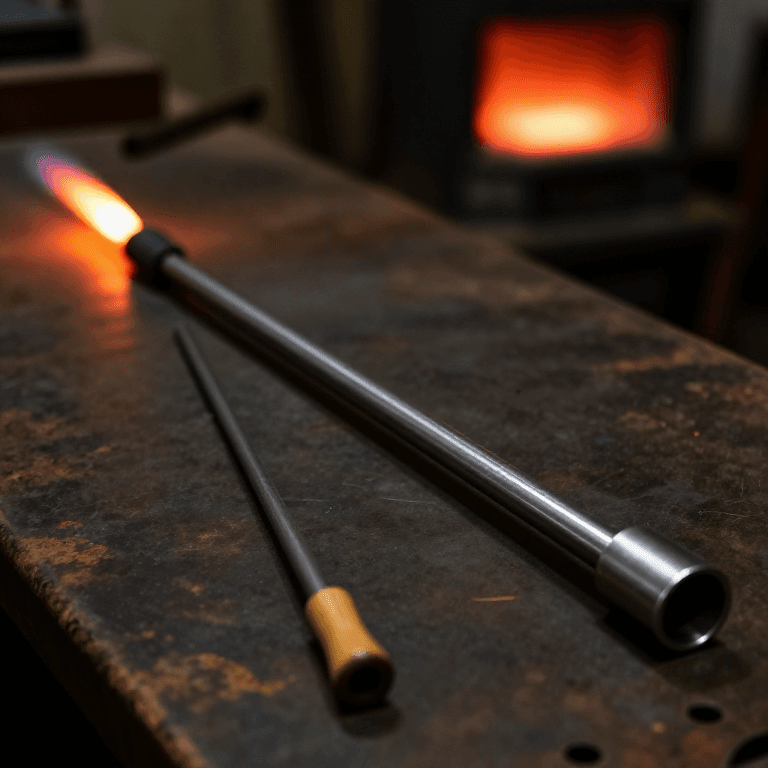
Glassblowing Pipe and Pontil
por Charlie
Trabajo en Metal
48
0
0
0
1
0

Making Soda-Lime Glass from Raw Materials — The Recipe That Has Not Changed in 5,000 Years
por Mary
Trabajo en Vidrio
158
0
0
0
17
0
Making Float Glass — Pilkington's Molten Tin Process That Windows Every Building on Earth
por Charlie
Trabajo en Vidrio
72
0
0
0
0
0
Czochralski Crystal Pulling
por Penny
Materiales
67
0
0
0
0
0
CC0 Dominio público
Este Blueprint se publica bajo CC0. Eres libre de copiar, modificar, distribuir y usar este trabajo para cualquier propósito, sin pedir permiso.
Apoya al Maker comprando productos a través de su Blueprint, donde gana una Comisión del Maker establecida por los vendedores, o crea una nueva iteración de este Blueprint e inclúyela como conexión en tu propio Blueprint para compartir ingresos.