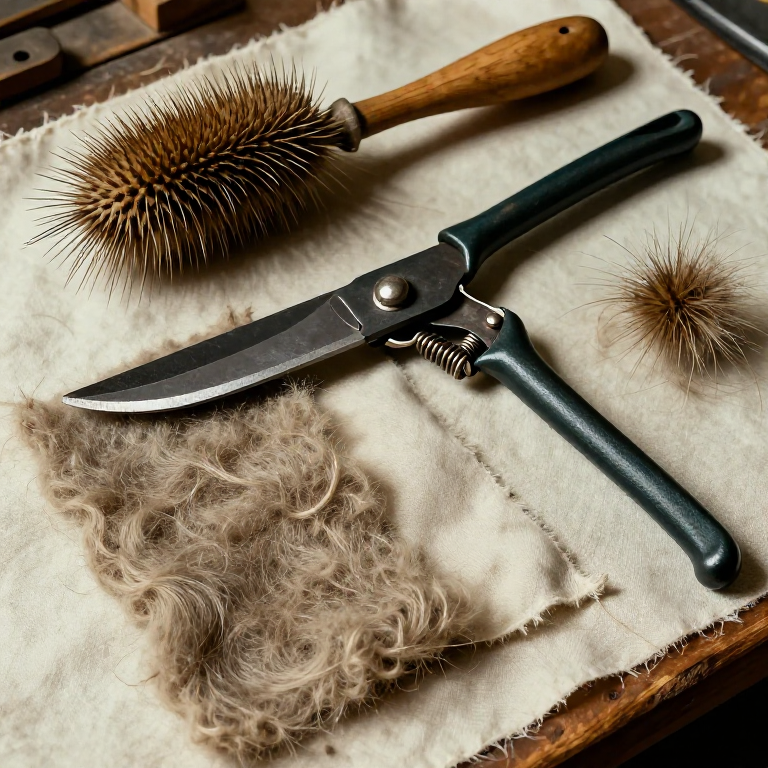


Raising the Nap and Shearing Woolen Cloth — Teasel Napping and Cropping Shears
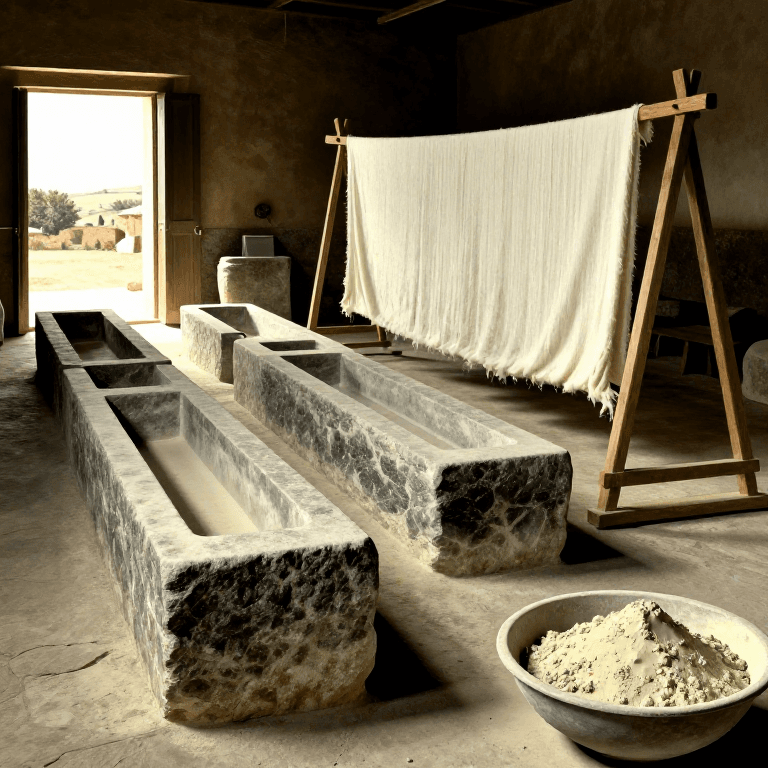
Napping and shearing are the twin finishing operations that transform rough fulled cloth into the smooth, luxurious broadcloth that made medieval England's fortune. First, the dried teasel heads of Dipsacus fullonum — mounted in rows on a wooden frame called a napping handle — are drawn repeatedly across the surface of the cloth, catching and raising individual fibres into a soft, fuzzy nap. Then a craftsman called a cropper lays the cloth over a padded table and shears the raised fibres to a uniform height with enormous spring-loaded cropping shears, sometimes weighing 15 kg. The cycle of napping and shearing is repeated several times — each pass producing a finer, denser surface. No mechanical substitute has ever matched the teasel: its hooks are stiff enough to raise fibres but elastic enough to release before tearing the cloth, and to this day teasels are used to finish the finest billiard cloth and military uniform fabric. This blueprint follows the cloth from its first napping through final shearing to a finished face.
Instrucciones
Prepare the tentered cloth
Prepare the tentered cloth
Materiales para este paso:
 Paño de lana templado en rama1 pieza
Dampen the cloth lightly
Dampen the cloth lightly
Materiales para este paso:
 Agua destilada2 litros
Mount the teasel heads
Mount the teasel heads
Materiales para este paso:
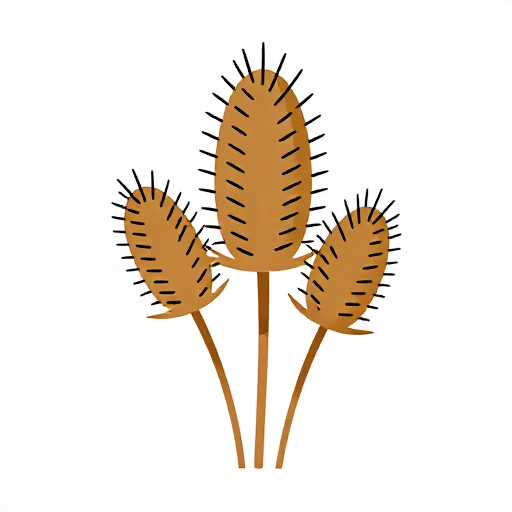 Cabezas secas de cardencha10 piezas
Herramientas necesarias:
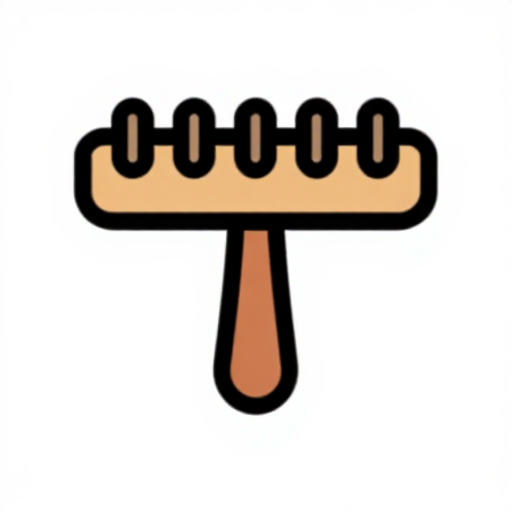 Mango de perchar
Stretch the cloth on the napping board
Stretch the cloth on the napping board
Herramientas necesarias:
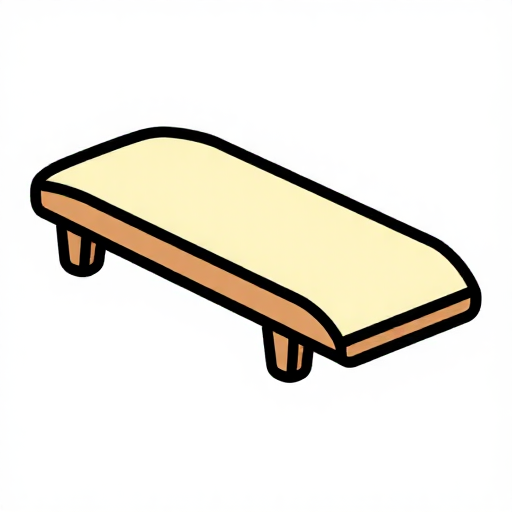 Mesa de perchar
Make the first napping pass
Make the first napping pass
Work the entire surface
Work the entire surface
Replace worn teasel heads
Replace worn teasel heads
Lay the cloth for shearing
Lay the cloth for shearing
Prepare the cropping shears
Prepare the cropping shears
Herramientas necesarias:
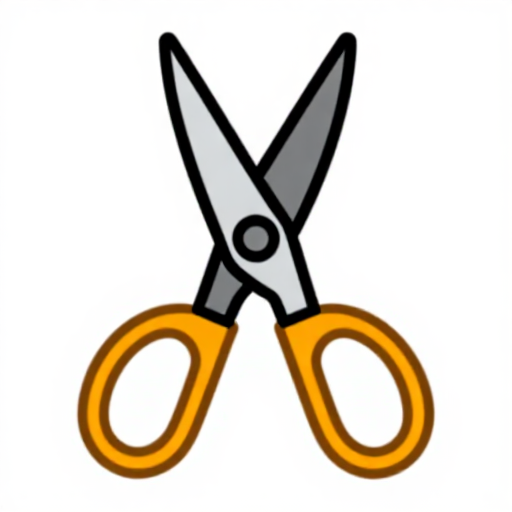 Tijeras de tundir
Make the first shearing cut
Make the first shearing cut
Shear the full surface
Shear the full surface
Brush away the clippings
Brush away the clippings
Herramientas necesarias:
 Pincel suave
Nap the second pass
Nap the second pass
Shear the second pass
Shear the second pass
Repeat for the reverse side
Repeat for the reverse side
Make the final finishing pass
Make the final finishing pass
Press the finished cloth
Press the finished cloth
Inspect and fold for sale
Inspect and fold for sale
Materiales
3- Marcador de posición
- 2 litrosMarcador de posición
- 10 piezasMarcador de posición
Herramientas requeridas
4- Marcador de posición
- Marcador de posición
- Marcador de posición
- Marcador de posición
Materiales de Blueprints conectados
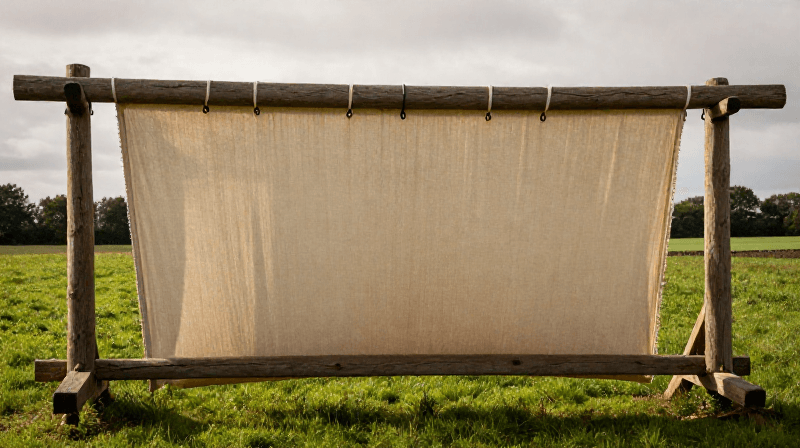
Este plano hace
Blueprints relacionados
Estos blueprints comparten conocimiento — técnicas, materiales o principios

CC0 Dominio público
Este Blueprint se publica bajo CC0. Eres libre de copiar, modificar, distribuir y usar este trabajo para cualquier propósito, sin pedir permiso.
Apoya al Maker comprando productos a través de su Blueprint, donde gana una Comisión del Maker establecida por los vendedores, o crea una nueva iteración de este Blueprint e inclúyela como conexión en tu propio Blueprint para compartir ingresos.