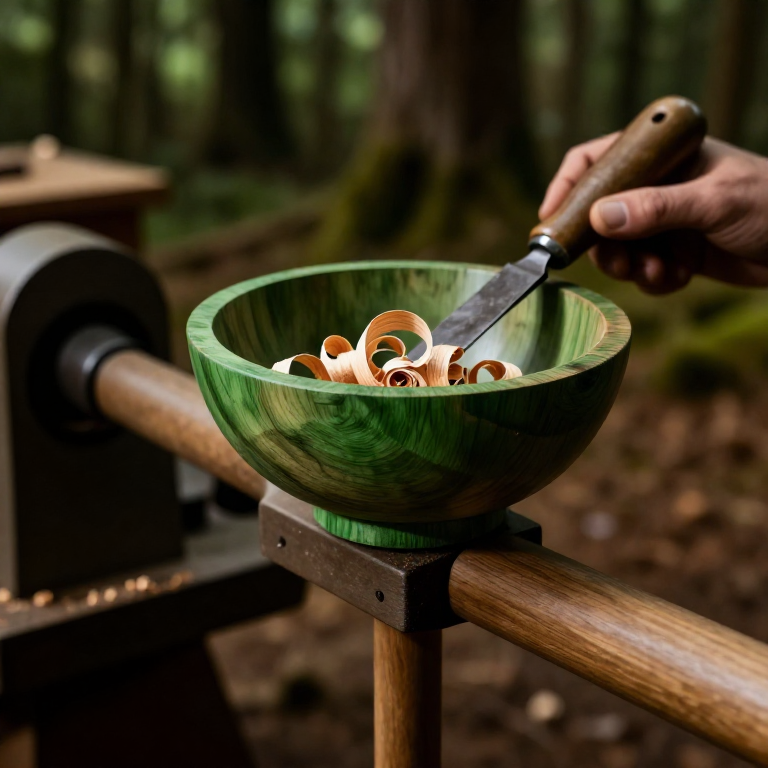


Turning a Bowl on a Pole Lathe — Foot-Powered Green Wood Turning
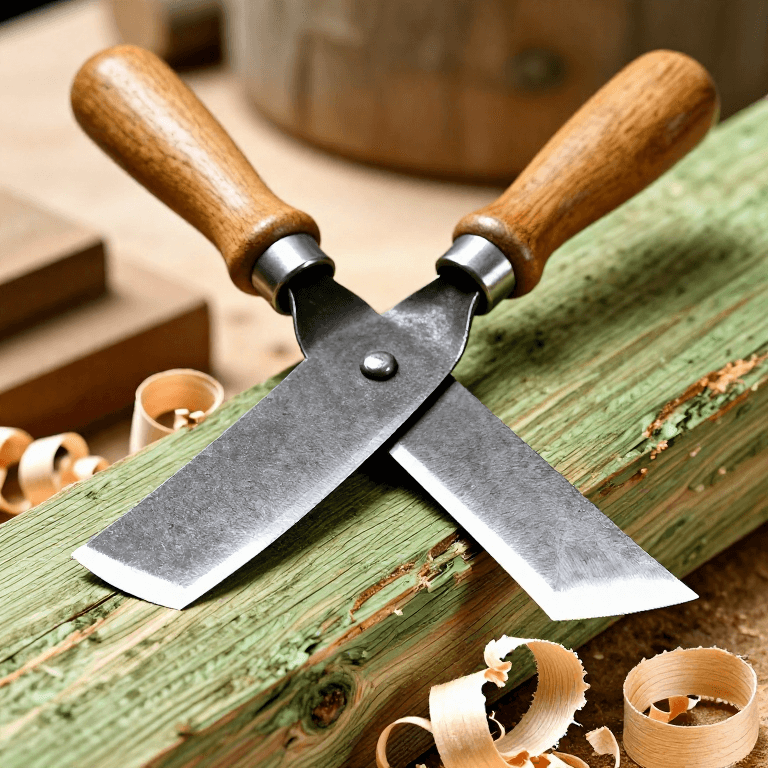
The pole lathe is the oldest form of powered turning — a foot treadle spins the workpiece against a cutting tool, and the spring of a bent pole returns the treadle for the next stroke. It produces work identical in quality to a modern lathe but operates on human power alone. Bowl turning on a pole lathe was a specialist trade in medieval Europe — the bodger (itinerant chair-maker) and the bowl turner worked in the forest where the timber grew, using nothing but a pole lathe, a drawknife, and a set of turning gouges.
Pole lathe turning is intermittent — the workpiece spins toward the tool on the down-stroke (cutting) and reverses on the return stroke (no cutting). This alternating motion means the turner only cuts on half the cycle, but the rhythm becomes natural within minutes. The key advantage is control: the speed is proportional to the foot pressure, so the turner can slow down for delicate finishing cuts and speed up for roughing.
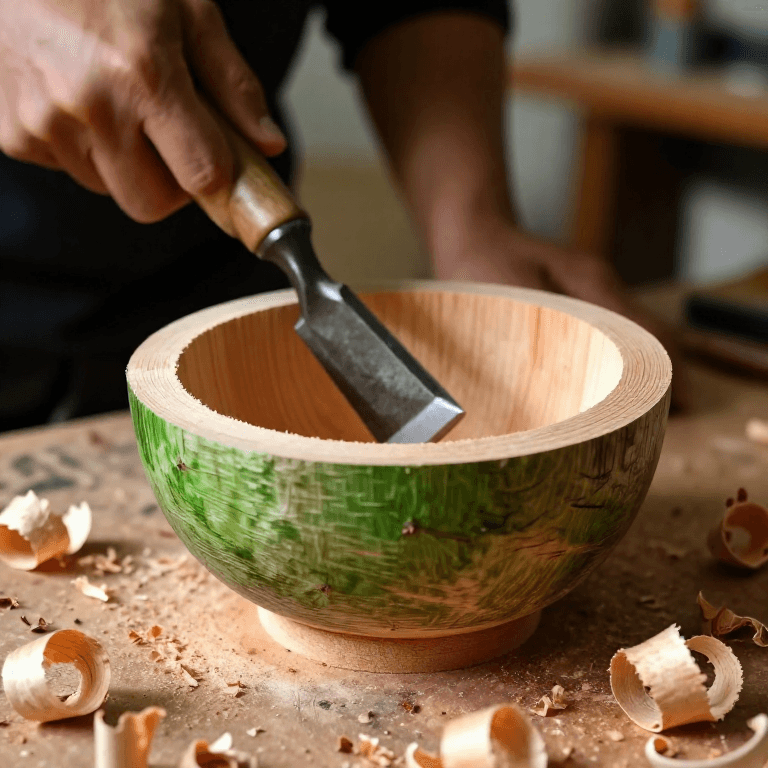
Bowls are turned from a disc-shaped blank cut across the grain of a green log. Green wood turns easily, producing long ribbons of shaving. The finished bowl is removed from the lathe while still damp and left to dry slowly — it will distort slightly into an oval as the grain shrinks unevenly, a characteristic signature of pole-lathe work.
Instrucciones
Prepare a bowl blank from a green log
Prepare a bowl blank from a green log
Materiales para este paso:
 Tronco verde en rollo
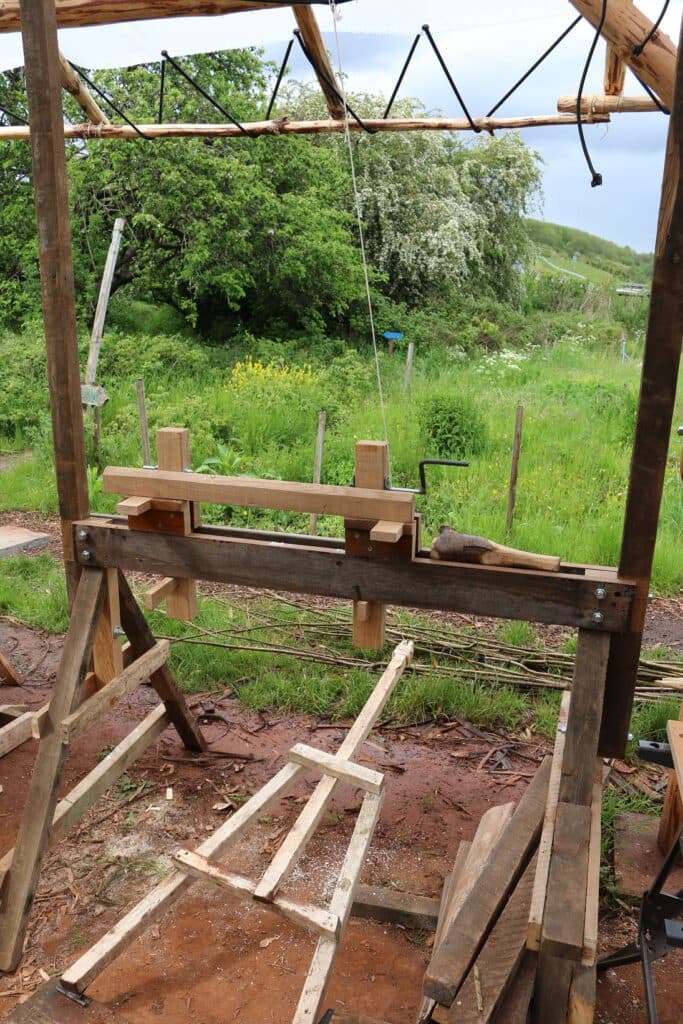
Mount the blank on the pole lathe
Mount the blank on the pole lathe
Herramientas necesarias:
 Torno de pértiga
Rough-turn the outside
Rough-turn the outside
Herramientas necesarias:
 Gubia para madera
 Gubia de torneado
Hollow the inside
Hollow the inside
Finish-turn and smooth
Finish-turn and smooth
Part off and dry the bowl
Part off and dry the bowl
Herramientas necesarias:
 Gubia de tronzar
Materiales
1- 1 piezaMarcador de posición
Herramientas requeridas
4- Marcador de posición
- Marcador de posición
- Marcador de posición
- Marcador de posición
Materiales de Blueprints conectados
Este plano hace
Blueprints relacionados
Estos blueprints comparten conocimiento — técnicas, materiales o principios
CC0 Dominio público
Este Blueprint se publica bajo CC0. Eres libre de copiar, modificar, distribuir y usar este trabajo para cualquier propósito, sin pedir permiso.
Apoya al Maker comprando productos a través de su Blueprint, donde gana una Comisión del Maker establecida por los vendedores, o crea una nueva iteración de este Blueprint e inclúyela como conexión en tu propio Blueprint para compartir ingresos.