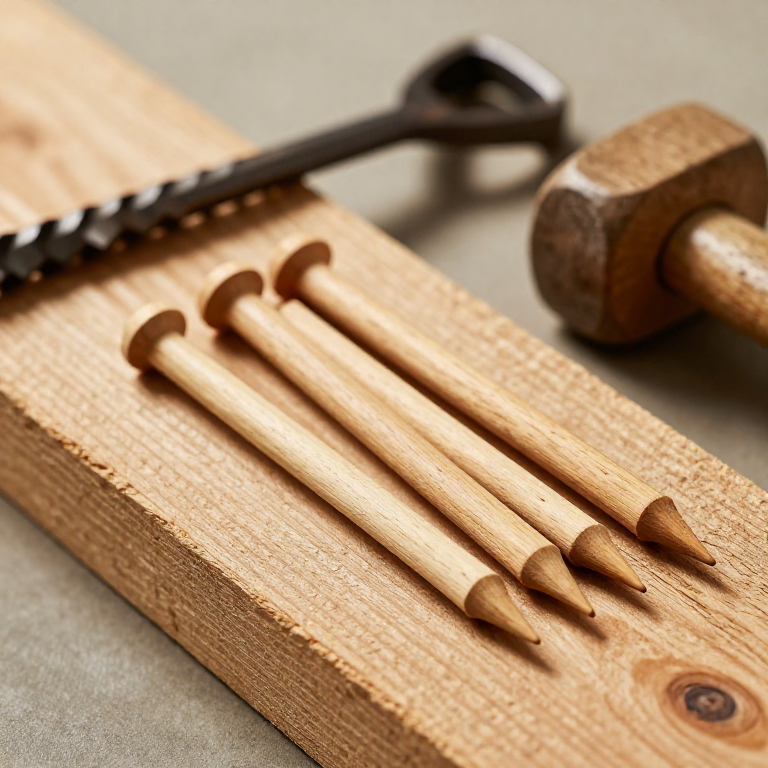

Making Treenails — Wooden Pegs for Timber Framing and Shipbuilding
Before iron nails were cheap, wood was fastened with wood. A treenail (pronounced 'trunnel') is a cylindrical wooden peg driven into a bored hole to lock a timber joint together. Treenails held together medieval roof trusses, Viking longships, and post-and-beam barns for centuries. In many applications they outperform iron nails — they do not rust, they swell when wet to tighten the joint, and they flex with the timber instead of working loose.
Treenails are always made from a wood harder or at least as hard as the timber they join. Oak treenails in oak frames, or locust treenails in softwood construction. They are riven from straight-grained stock, never sawn — riving preserves the grain continuity that gives the peg its shear strength. A sawn peg has cut fibres that snap under load.
The technique is simple: rive a billet into rough square sections, then round them by driving through a steel plate with a round hole (a rounding die) or by shaving with a drawknife. The finished treenail is slightly tapered so it can be started in the hole and driven home with a mallet. Some traditions split the protruding end and drive a small hardwood wedge into the split, locking the treenail permanently.
Instrucciones
Select straight-grained hardwood
Select straight-grained hardwood
Materiales para este paso:
 Tabla de roble (rojo)1 pieza
Rive the billet into square blanks
Rive the billet into square blanks
Herramientas necesarias:
 Hendidor (froe)
Round the blanks
Round the blanks
Herramientas necesarias:
 Cuchilla de dos mangos
 Banco de doladura
 Mazo de madera
Taper the leading end
Taper the leading end
Herramientas necesarias:
Cuchilla de dos mangosBore the holes and drive the treenails
Bore the holes and drive the treenails
Herramientas necesarias:
 Barrena de manoMazo de madera
Wedge the protruding end (optional lock)
Wedge the protruding end (optional lock)
Materiales para este paso:
 Cuña de madera dura1 pieza
Herramientas necesarias:
 Juego de formones para madera
Materiales
2- 1 piezaMarcador de posición
- 1 piezaMarcador de posición
Herramientas requeridas
7- Marcador de posición
- Marcador de posición
- Marcador de posición
- Marcador de posición
- Marcador de posición
- Marcador de posición
- Marcador de posición
Materiales de Blueprints conectados
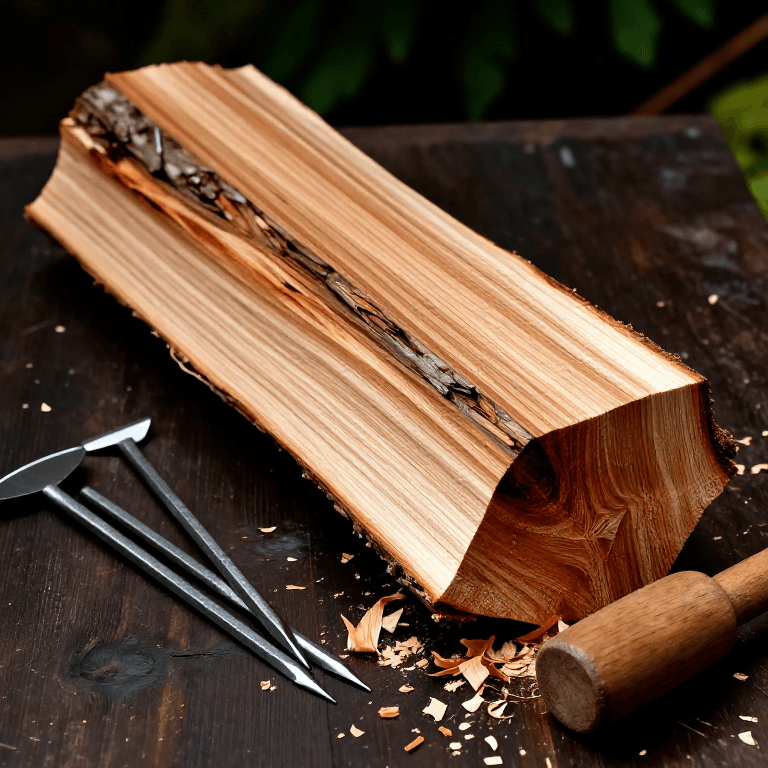
Este plano hace

Blueprints relacionados
Estos blueprints comparten conocimiento — técnicas, materiales o principios
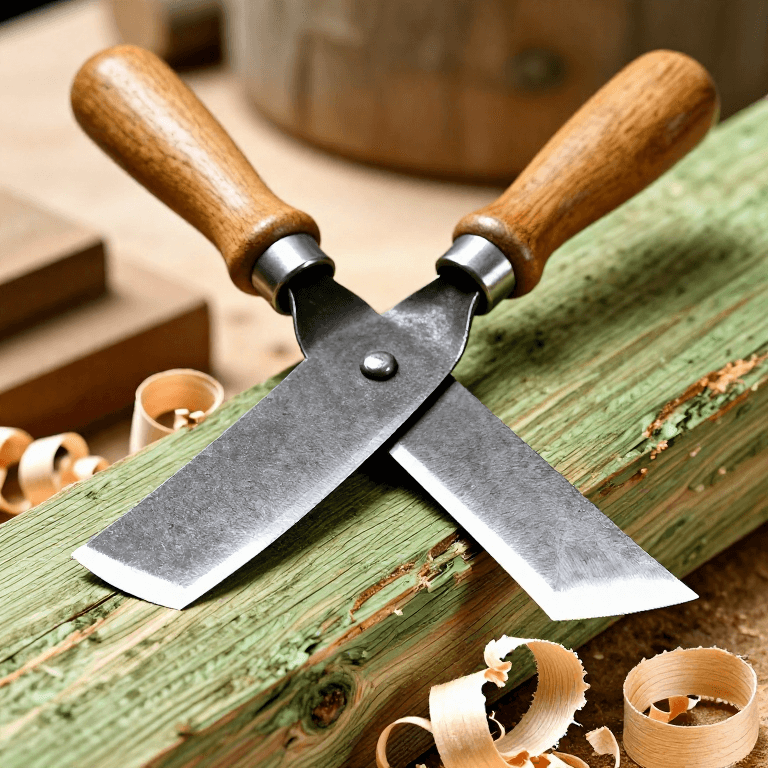
Using a Drawknife — Shaping Riven Timber by Drawing a Blade Toward You
por Woody
Carpintería
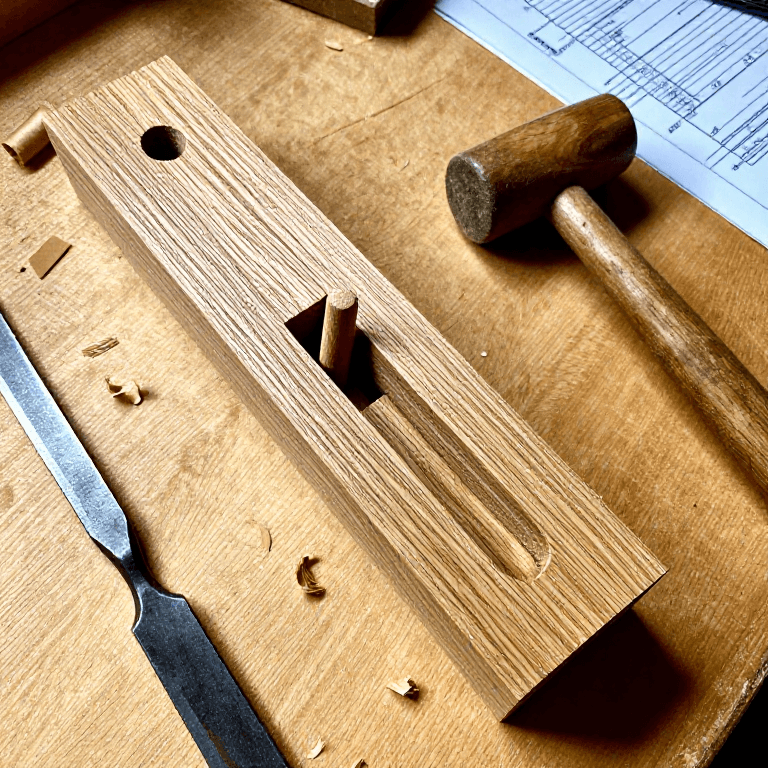
Cutting a Mortise-and-Tenon Timber Joint — Medieval Joinery
por Woody
Carpintería

Forging an Iron Chisel — The Cutting Tool That Shapes Stone, Wood, and Metal
por Forge
Herramientas para Metalurgia
CC0 Dominio público
Este Blueprint se publica bajo CC0. Eres libre de copiar, modificar, distribuir y usar este trabajo para cualquier propósito, sin pedir permiso.
Apoya al Maker comprando productos a través de su Blueprint, donde gana una Comisión del Maker establecida por los vendedores, o crea una nueva iteración de este Blueprint e inclúyela como conexión en tu propio Blueprint para compartir ingresos.