ARTE
BELLEZA Y BIENESTAR
ARTESANÍA
CULTURA E HISTORIA
ENTRETENIMIENTO
MEDIO AMBIENTE
COMIDA Y BEBIDAS
INGENIERÍA INVERSA
CIENCIAS
DEPORTES
TECNOLOGÍA
TECNOLOGÍA VESTIBLE


Para-Xylene by Three-Stage Crystallisation from Xylene
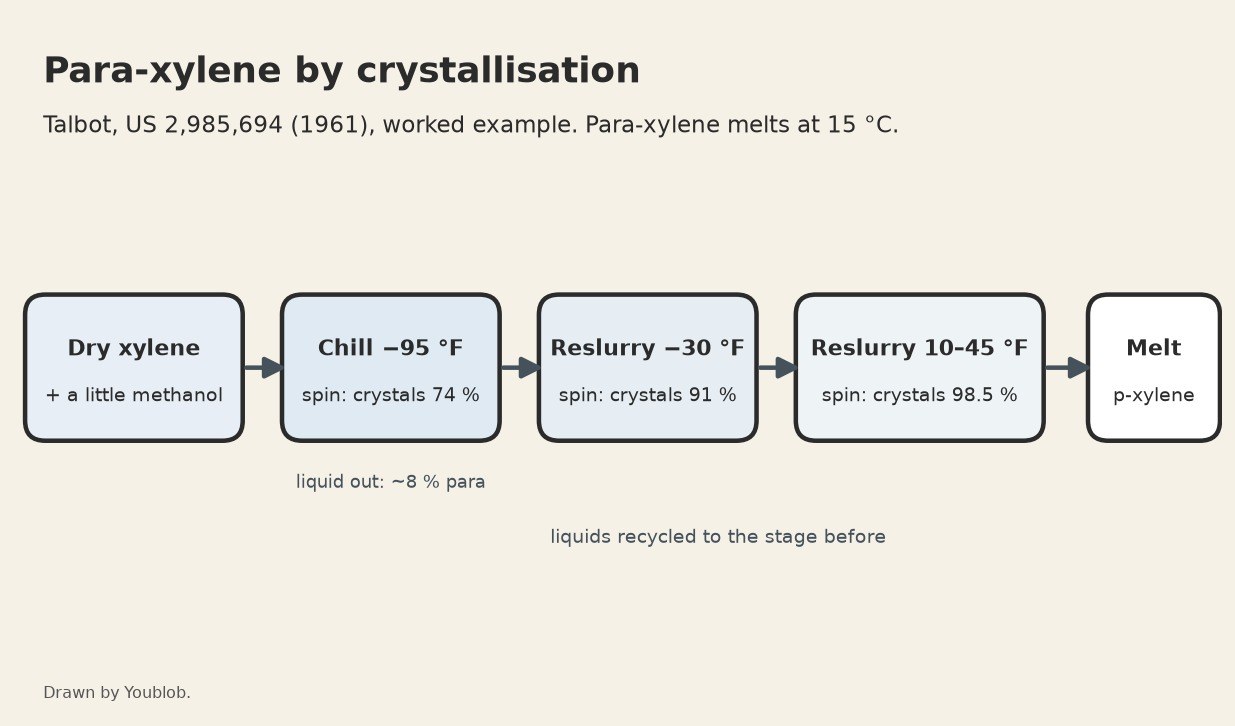
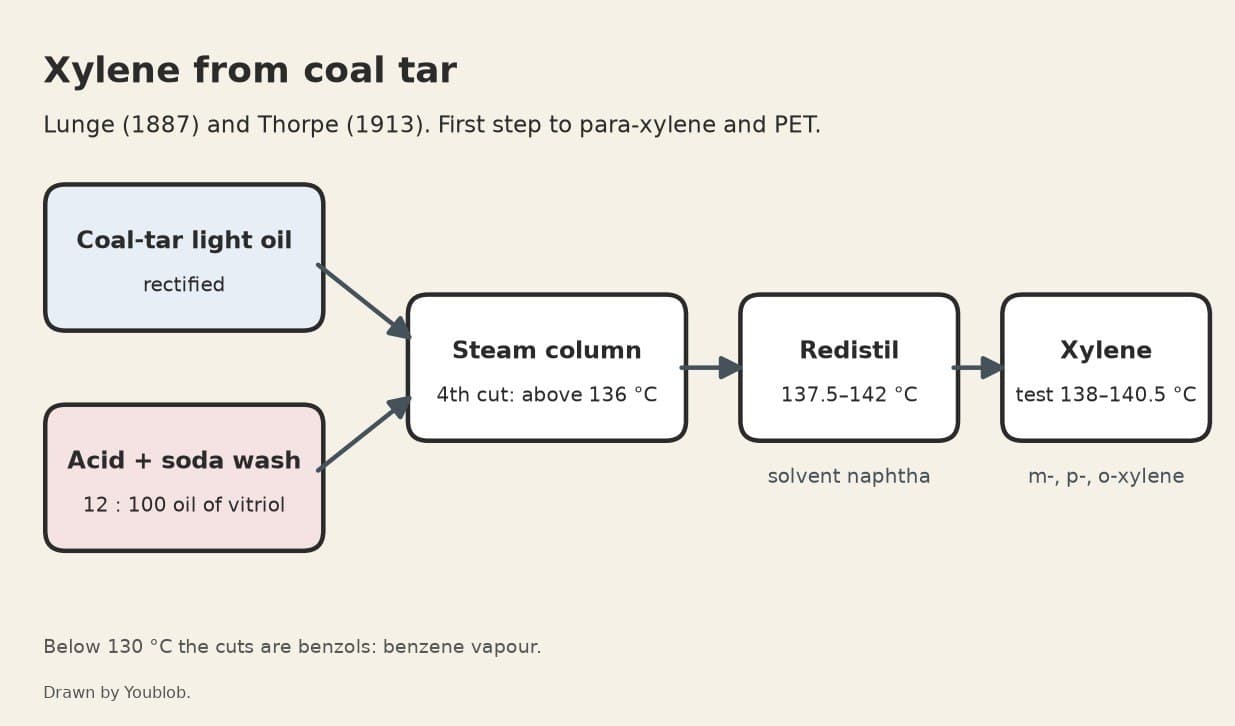
Para-xylene melts at 15 °C (Lunge, 1887), so it crystallises out of mixed xylene when this is chilled hard. This is Talbot's three-stage process (US 2,985,694, 1961): chill the dry feed to about −95 °F and spin off the crystals, then warm them in stages in their own recycled liquor and spin again, until they are 98.5 % para-xylene. Para-xylene is the raw material for terephthalic acid and so for PET.
The picture: our diagram of the three stages.
Avanzado
1 day
Instrucciones
1
1
Take out the ortho-xylene (preferred)
Take out the ortho-xylene (preferred)
If you can, first distil off ortho-xylene as the bottoms of a tall column: more than 35, better about 60, theoretical plates. The patent prefers this but does not require it.
Materiales para este paso:
 Xileno1 as required
Herramientas necesarias:
 Conjunto de columna de destilación
 Caldera de vapor
 Termómetro de laboratorio
2
2
Dry the feed and add a little methanol
Dry the feed and add a little methanol
Remove all water from the xylene (calcium chloride is our choice of drier). Add methanol so ice does not plug the cold equipment: the patent's example uses 49 lb methanol to 13,430 lb feed.
Herramientas necesarias:
 Cloruro de calcio
 Metanol
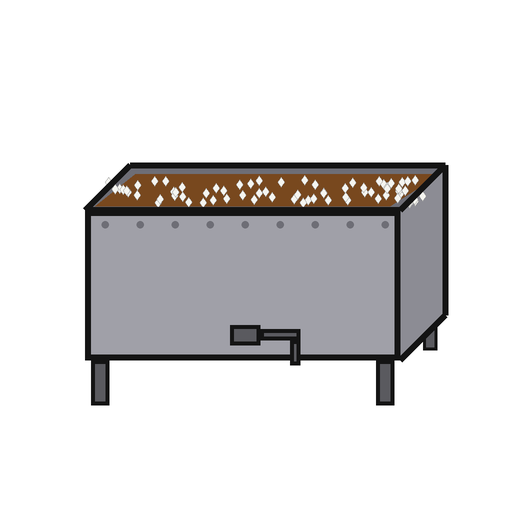 Tanque de cristalización
3
3
Chill to about −95 °F and spin
Chill to about −95 °F and spin
Cool slowly, over about 20 minutes, to between −75 and −120 °F (−59 to −84 °C); the example uses −95 °F (−71 °C). Spin the slurry in a centrifuge: the liquid (about 8 % para) goes out, the crystals are about 74 % para-xylene.
Herramientas necesarias:
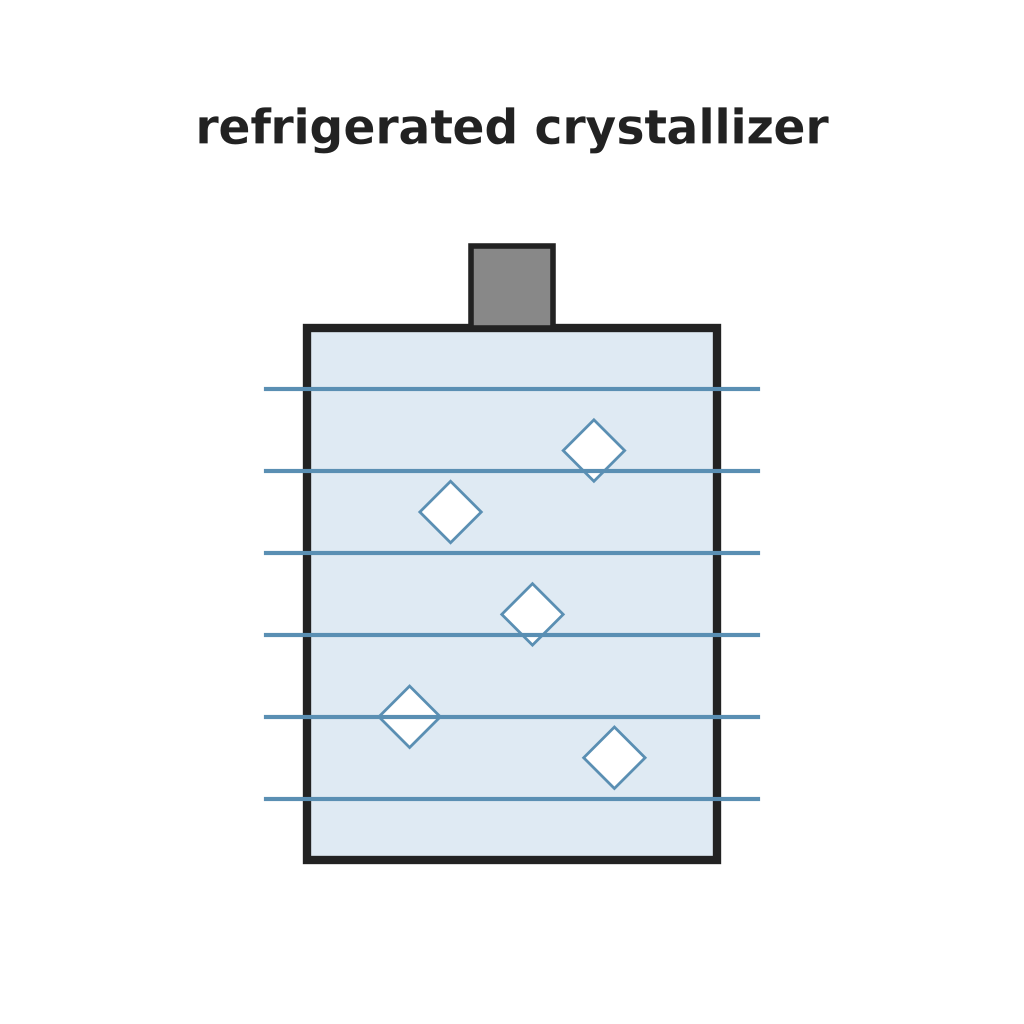 Cristalizador refrigerado
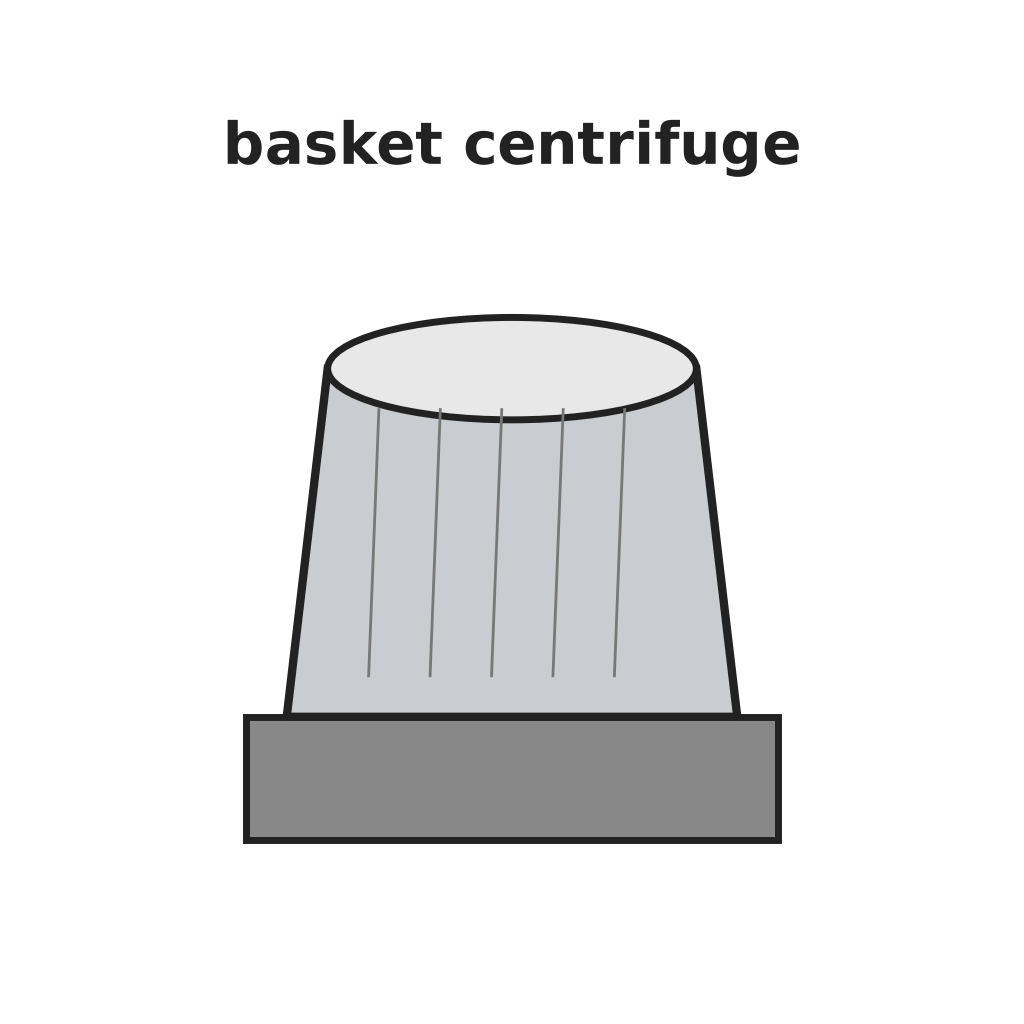 Centrífuga de cestaTermómetro de laboratorio
 Guantes resistentes al calor
 Gafas de protección química
4
4
Reslurry, bring to −30 °F, spin
Reslurry, bring to −30 °F, spin
Stir the crystals into the liquid from the next stage and bring the slurry to between 0 and −30 °F (−18 to −34 °C); the example uses −30 °F. Centrifuge again: the crystals are now about 91 % para-xylene.
Herramientas necesarias:
Tanque de cristalizaciónCristalizador refrigeradoCentrífuga de cestaTermómetro de laboratorioGuantes resistentes al calor5
5
Reslurry warmer, spin and melt
Reslurry warmer, spin and melt
Stir these crystals into the liquid from the last spin and bring to 10–45 °F (−12 to 7 °C). Centrifuge: the crystals are 98.5 % para-xylene. Melt them and bottle. Return the liquids to the earlier stages.
Herramientas necesarias:
Tanque de cristalizaciónCristalizador refrigeradoCentrífuga de cestaTermómetro de laboratorio Botellas de vidrio con tapones
Herramientas requeridas
11- Marcador de posición
- Marcador de posición
- Marcador de posición
- Marcador de posición
- Marcador de posición
- Marcador de posición
- Marcador de posición
- Marcador de posición
- Marcador de posición
- Marcador de posición
- Marcador de posición
Este plano hace
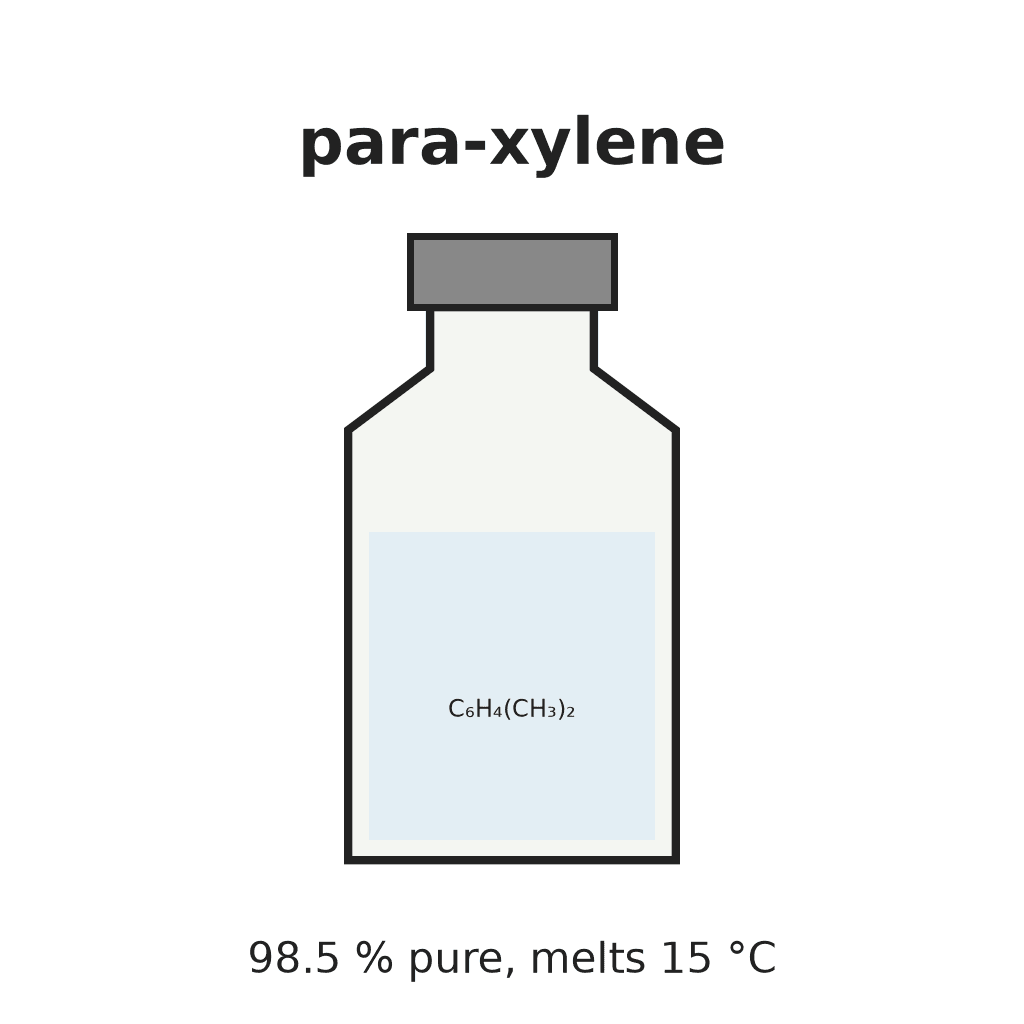
Blueprints relacionados
Estos blueprints comparten conocimiento — técnicas, materiales o principios
CC0 Dominio público
Este Blueprint se publica bajo CC0. Eres libre de copiar, modificar, distribuir y usar este trabajo para cualquier propósito, sin pedir permiso.
Apoya al Maker comprando productos a través de su Blueprint, donde gana una Comisión del Maker establecida por los vendedores, o crea una nueva iteración de este Blueprint e inclúyela como conexión en tu propio Blueprint para compartir ingresos.