
Pasta all'Uovo
La pasta all'uovo non è una ricetta complicata: è farina e uova, e basta. Niente acqua, niente olio, niente sale nell'impasto. La proporzione che si tramanda in Emilia è sempre la stessa — un uovo ogni cento grammi di farina — e regge da secoli perché funziona.
Quello che conta davvero non sono gli ingredienti ma le mani. La sfoglia si tira con il mattarello finché non diventa così sottile da vedere la luce attraverso. Le sfogline di Bologna lo fanno in pochi minuti; a noi ci vorrà molto di più, e va benissimo così.
Qui facciamo la sfoglia a mano e la tagliamo a tagliatelle. Poi cuoce in tre minuti, e questa è la parte in cui si capisce perché ne è valsa la pena.
Instrucciones
Uova fresche e mani pulite
Uova fresche e mani pulite
Si usano uova crude, quindi devono essere fresche e conservate bene. Lavarsi le mani e il piano di lavoro prima di cominciare. Chi è in gravidanza o ha difese immunitarie basse usi uova pastorizzate.
Pesare 300 g di farina di grano tenero tipo 00
Pesare 300 g di farina di grano tenero tipo 00
Pesare la farina, non misurarla a tazze: la differenza tra una tazza colma e una rasa cambia tutto l'impasto. La 00 dà una sfoglia liscia ed elastica.
Materiales para este paso:
 Kit de harina y huevo para pasta (artesanal)1 kit
Herramientas necesarias:
 Báscula digital
Fare la fontana sul tagliere
Fare la fontana sul tagliere
Versare la farina sul tagliere di legno e allargarla a corona, con un buco largo in mezzo e le pareti alte. Il legno è meglio del marmo: è poroso e la sfoglia ci si aggrappa mentre si tira.
Rompere 3 uova nella fontana
Rompere 3 uova nella fontana
Tre uova medie, circa 55-60 g l'uno, per 300 g di farina. Rompere ogni uovo prima in una ciotolina e poi versarlo: un uovo guasto rovina tutto l'impasto.
Sbattere le uova con la forchetta senza rompere le pareti
Sbattere le uova con la forchetta senza rompere le pareti
Sbattere le uova al centro con una forchetta, prendendo un po' di farina dal bordo interno alla volta. Se si rompe la parete l'uovo scappa sul tagliere — succede a tutti la prima volta.
Impastare a mano per 10 minuti
Impastare a mano per 10 minuti
Quando l'impasto sta insieme, lavorarlo col palmo spingendo avanti e ripiegando, per almeno dieci minuti. Deve diventare liscio e sodo, non appiccicoso: qui si forma il glutine che poi terrà la sfoglia.
Far riposare 30 minuti coperto
Far riposare 30 minuti coperto
Fare una palla, avvolgerla nella pellicola e lasciarla stare mezz'ora a temperatura ambiente. Senza riposo la sfoglia si ritira sotto il mattarello e non si riesce a tirarla sottile.
Cominciare a tirare la sfoglia dal centro
Cominciare a tirare la sfoglia dal centro
Schiacciare la palla e passare il mattarello sempre dal centro verso l'esterno, girando l'impasto di poco ogni volta per tenerlo tondo.
Arrotolare la sfoglia sul mattarello e tirarla
Arrotolare la sfoglia sul mattarello e tirarla
Avvolgere la sfoglia attorno al mattarello e farla scorrere avanti e indietro spingendo verso l'esterno con i palmi. È il movimento che allarga davvero la sfoglia, molto più della semplice pressione.
Continuare fino a vedere la mano attraverso
Continuare fino a vedere la mano attraverso
Tirare fino a circa 1 mm o meno. La prova è questa: mettere la mano sotto la sfoglia e vederne l'ombra attraverso. Infarinare pochissimo, solo se attacca.
Far asciugare la sfoglia 15 minuti
Far asciugare la sfoglia 15 minuti
Lasciarla stesa sul tagliere un quarto d'ora, finché non è più umida al tatto ma è ancora flessibile. Troppo umida si incolla nel taglio, troppo secca si spezza.
Arrotolare e tagliare le tagliatelle a 7 mm
Arrotolare e tagliare le tagliatelle a 7 mm
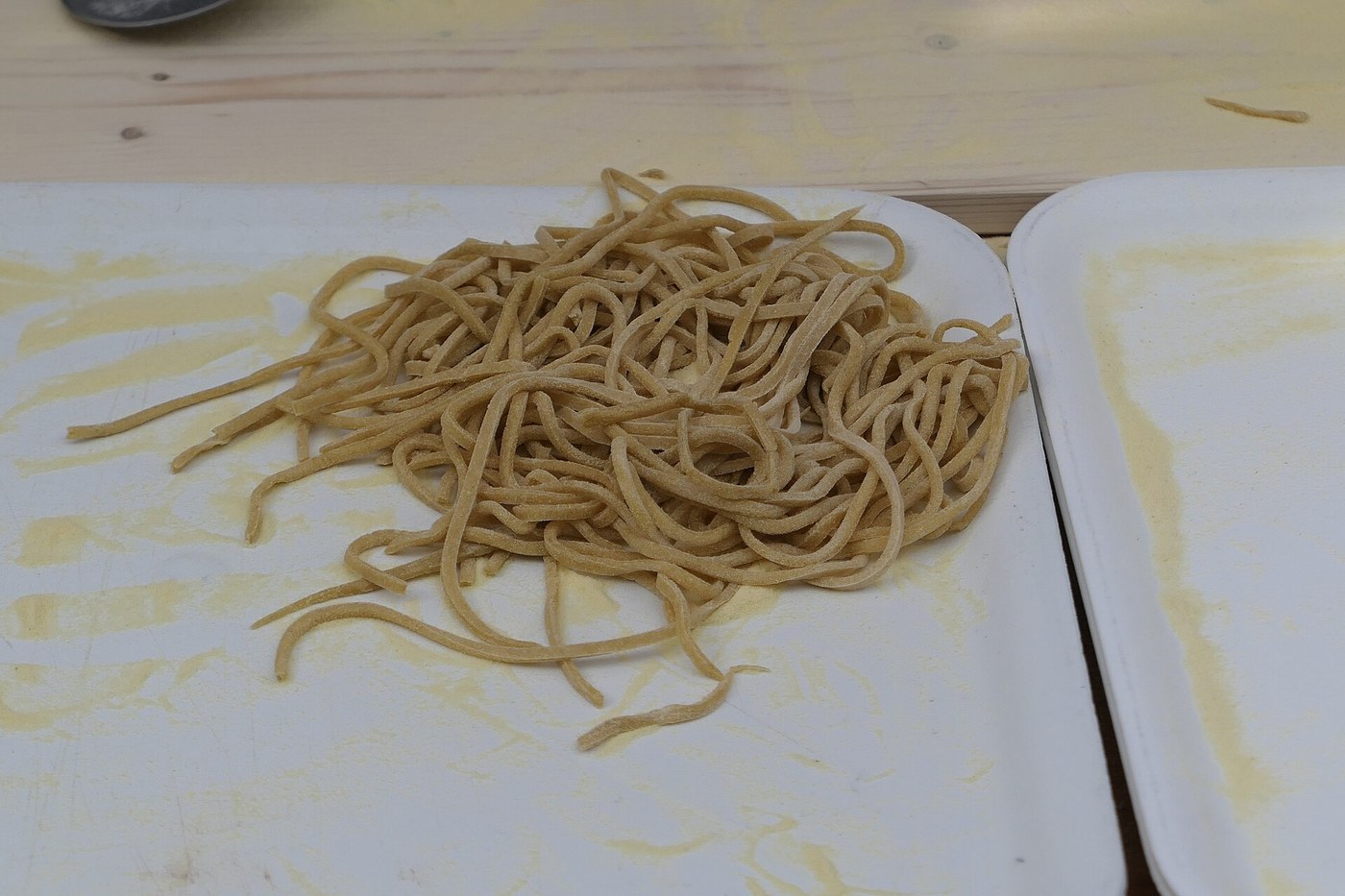
Arrotolare la sfoglia su sé stessa senza stringere e tagliare a fette di circa 7 mm con un coltello largo. Cotte si gonfiano fino agli 8 mm della misura registrata a Bologna.
Herramientas necesarias:
 Regla
ReglaAprire i nidi e infarinare appena
Aprire i nidi e infarinare appena
Srotolare subito le tagliatelle, spolverare con pochissima semola e formare dei nidi morbidi sul telaio o su un canovaccio.
Herramientas necesarias:
 Tendedero de pasta (plegable)
Cuocere 2-3 minuti in acqua salata abbondante
Cuocere 2-3 minuti in acqua salata abbondante
Un litro d'acqua ogni 100 g di pasta, 10 g di sale grosso per litro, acqua a bollore pieno. La pasta fresca cuoce in 2-3 minuti: si assaggia, non si guarda l'orologio. Nell'acqua non si mette olio.
Scolare tenendo da parte un mestolo d'acqua di cottura
Scolare tenendo da parte un mestolo d'acqua di cottura
Scolare le tagliatelle e saltarle in padella col condimento, aggiungendo un po' d'acqua di cottura. L'amido dell'acqua lega il sugo alla pasta — è quello che fa la differenza tra condita e annegata.
Storia e contesto — perché un uovo ogni etto
Storia e contesto — perché un uovo ogni etto
Due Italie, due paste diverse. Al Nord la pasta si fa con farina di grano tenero e uova, al Sud con semola di grano duro e sola acqua. Non è campanilismo: è quello che cresceva. Il grano duro vuole il caldo e la siccità del Meridione, il grano tenero preferisce il clima padano. L'uovo al Nord serve anche a dare struttura, perché il grano tenero da solo non ha la forza del duro. Sono due tecnologie alimentari nate da due agricolture, non due versioni della stessa cosa.
La misura delle tagliatelle esiste davvero. Nel 1972 l'Accademia Italiana della Cucina ha depositato presso la Camera di Commercio di Bologna la misura ufficiale della tagliatella bolognese: 8 mm di larghezza da cotta. Per questo si taglia a 7 mm da cruda — in cottura si gonfia. È una regola nata mezzo per gioco e mezzo sul serio, ma la proporzione che descrive è reale.
Perché il riposo non si salta. Impastando si formano le maglie di glutine, e appena formate sono in tensione: l'impasto tira indietro come un elastico. Mezz'ora di riposo permette a quelle maglie di rilassarsi, e la sfoglia si lascia tirare sottile senza ritirarsi. Chi salta il riposo non sta risparmiando tempo, lo sta spostando sul mattarello.
Due cose che si sentono dire e non sono vere. L'olio nell'acqua di cottura non impedisce alla pasta di attaccarsi: galleggia in superficie e l'unica cosa che fa è rendere la pasta scivolosa, così il sugo poi non aderisce. E il sale non si mette nell'impasto della sfoglia: irrigidisce il glutine e rende la sfoglia più difficile da tirare. Il sale va nell'acqua.
Sulle origini. La leggenda che sia stato Marco Polo a portare la pasta dalla Cina è una storia pubblicitaria del Novecento. La pasta secca era già documentata in Sicilia nel XII secolo, prima che Marco Polo nascesse. Sulla pasta all'uovo la documentazione medievale e rinascimentale è ricca; l'idea che la tagliatella sia stata inventata per i capelli di Lucrezia Borgia è invece un'invenzione del 1931, e va raccontata per quello che è.
Materiales
1- Marcador de posición
Herramientas requeridas
3- Marcador de posición
- Marcador de posición
- Marcador de posición
Este plano hace

Blueprints relacionados
Estos blueprints comparten conocimiento — técnicas, materiales o principios

CC0 Dominio público
Este Blueprint se publica bajo CC0. Eres libre de copiar, modificar, distribuir y usar este trabajo para cualquier propósito, sin pedir permiso.
Apoya al Maker comprando productos a través de su Blueprint, donde gana una Comisión del Maker establecida por los vendedores, o crea una nueva iteración de este Blueprint e inclúyela como conexión en tu propio Blueprint para compartir ingresos.