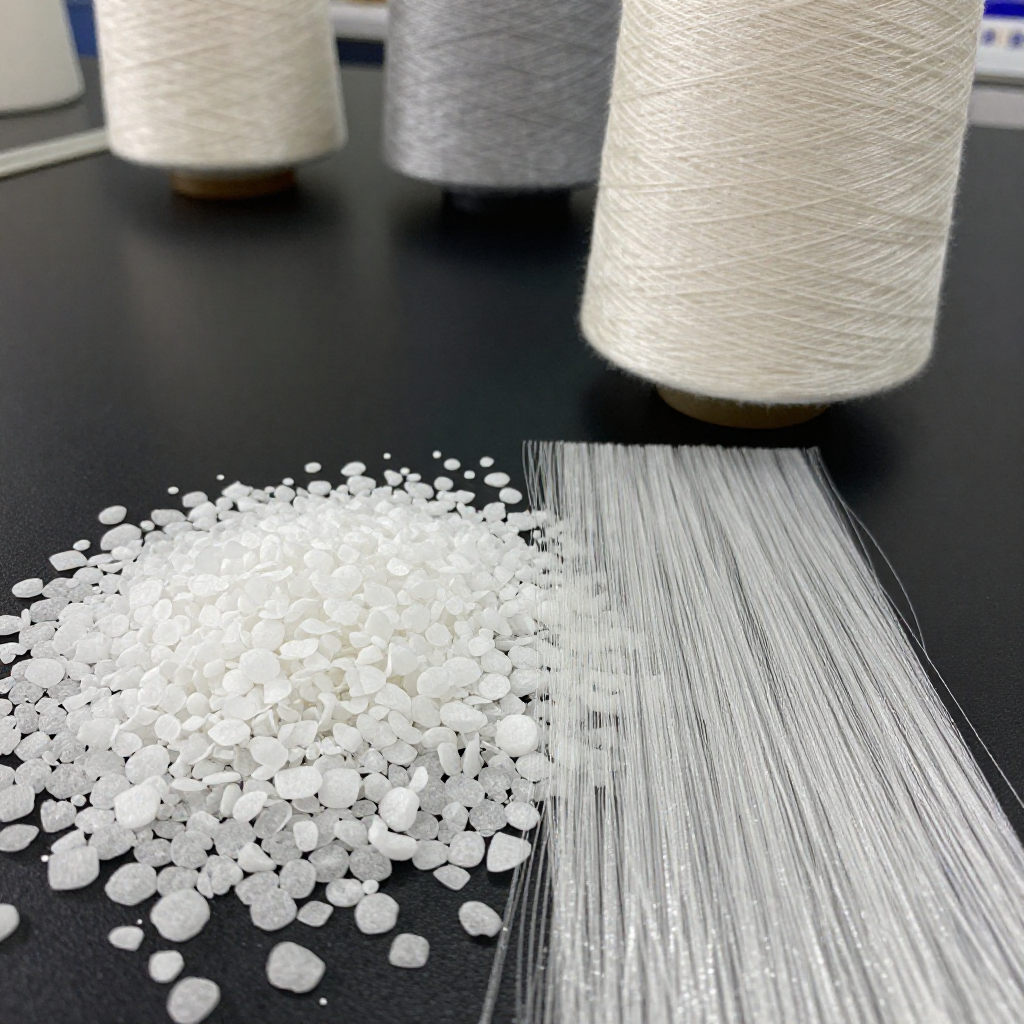


Polyester (PET) — The Fiber That Clothed the World
On March 22, 1941, John Rex Whinfield and James Tennant Dickson, working at the Calico Printers' Association laboratory in Accrington, Lancashire, synthesized polyethylene terephthalate (PET) — the polyester fiber that would become the most produced textile fiber in human history. By 2024, polyester accounts for over 54% of all fiber production worldwide: roughly 60 million tonnes per year, more than cotton, wool, silk, and all other fibers combined.
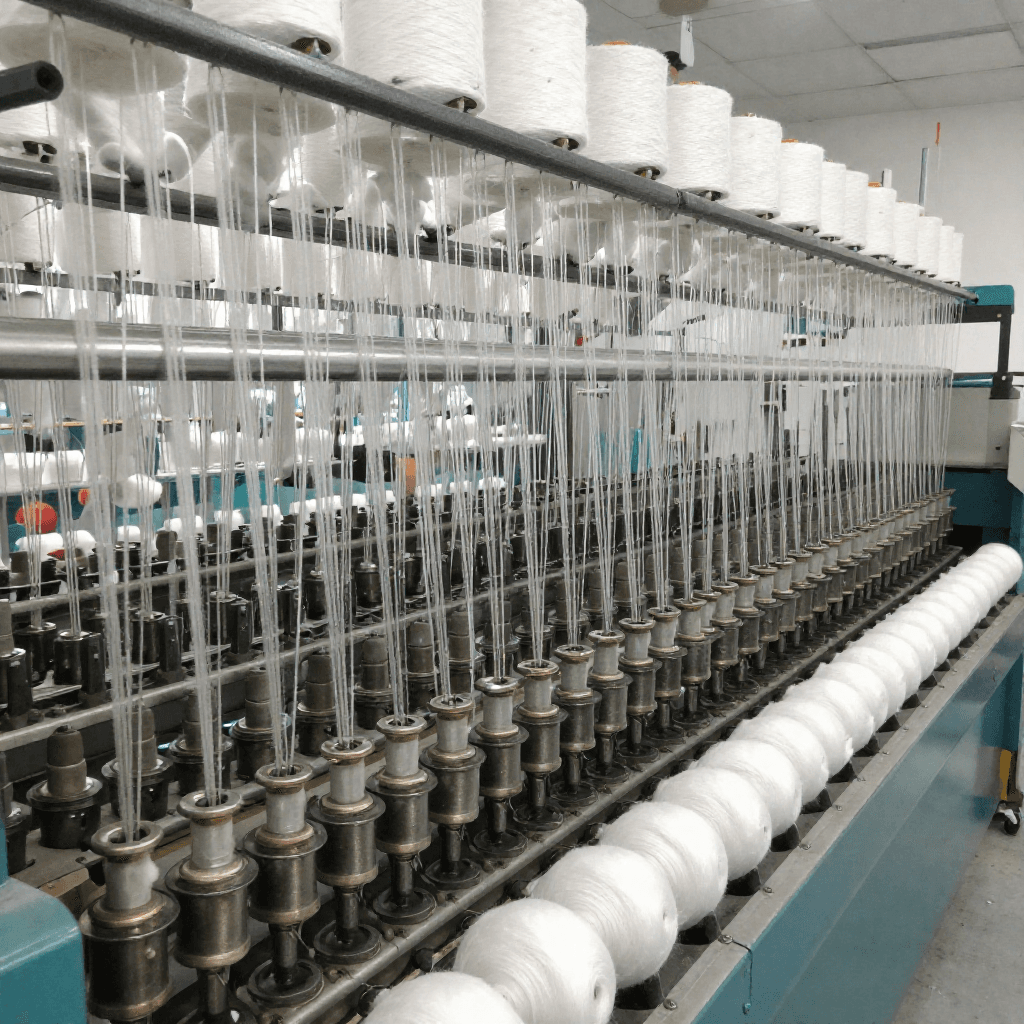
PET is made from two petrochemical monomers: terephthalic acid (or its ester, dimethyl terephthalate) and ethylene glycol. These react via condensation polymerization to form long chains linked by ester bonds (-COO-), hence 'polyester.' The resulting polymer is melt-spun into fibers, just like nylon — but polyester has properties nylon lacks. It resists stretching (high modulus), holds its shape through washing (dimensional stability), resists wrinkling (elastic recovery), and dries quickly (low moisture absorption at only 0.4%).
Whinfield and Dickson's work built directly on Wallace Carothers' polymer research at DuPont. Carothers had actually synthesized polyesters in the early 1930s but abandoned them as inferior to polyamides (nylon) because his polyesters had low melting points. Whinfield realized that using an aromatic acid (terephthalic acid, with its rigid benzene ring) instead of Carothers' aliphatic acids would raise the melting point above 250°C — high enough for textile use. DuPont licensed the patents and commercialized the fiber as Dacron in 1953; ICI launched it as Terylene in Britain. The wash-and-wear revolution of the 1960s and the global fast-fashion industry both depend on Whinfield's insight.
Contenido peligroso
Este blueprint contiene procedimientos peligrosos. Inicia sesión y habilita el contenido peligroso en la configuración de tu cuenta para ver las instrucciones paso a paso.
Iniciar sesiónEste plano hace
Blueprints relacionados
Estos blueprints comparten conocimiento — técnicas, materiales o principios
CC0 Dominio público
Este Blueprint se publica bajo CC0. Eres libre de copiar, modificar, distribuir y usar este trabajo para cualquier propósito, sin pedir permiso.
Apoya al Maker comprando productos a través de su Blueprint, donde gana una Comisión del Maker establecida por los vendedores, o crea una nueva iteración de este Blueprint e inclúyela como conexión en tu propio Blueprint para compartir ingresos.