ARTE
BELLEZA Y BIENESTAR
ARTESANÍA
CULTURA E HISTORIA
ENTRETENIMIENTO
MEDIO AMBIENTE
COMIDA Y BEBIDAS
INGENIERÍA INVERSA
CIENCIAS
DEPORTES
TECNOLOGÍA
TECNOLOGÍA VESTIBLE



Making a Conch Shell Trumpet — A Natural Lip-Reed Horn
Cut the tip off a large conch shell, smooth the hole, and buzz your lips into it to blast a deep note that leaps up the harmonic series. A simple, buildable school project in how a natural trumpet works — the same lip-reed physics as a bugle, shofar or Andean pututu.
Principiante
30 minutes
Instrucciones
1
1
A shell that sings
A shell that sings
A conch trumpet is a natural horn: buzz your lips into a hole cut in a big sea shell and the whole shell rings out with a deep, carrying blast.
2
2
Choose a large shell
Choose a large shell
Find a large conch or whelk shell with a solid, pointed spire at the tip and a wide opening at the other end.
Materiales para este paso:
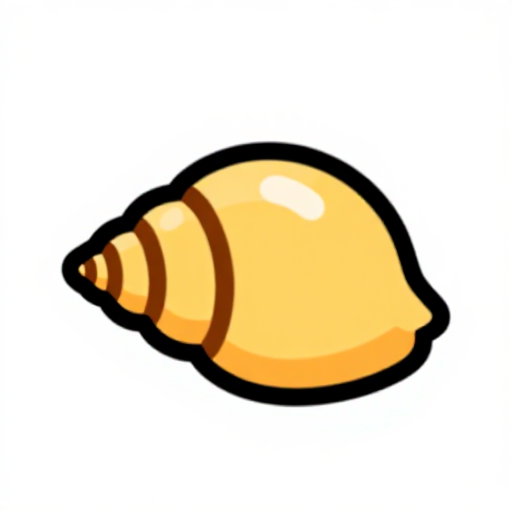 Caracola grande1 pieza
3
3
Mark the blow hole
Mark the blow hole
Mark a spot on the pointed spire about 2 to 3 cm from the very tip, where the shell wall is thick and strong.
4
4
Cut off the tip
Cut off the tip
Saw straight across the spire at your mark, opening a hole through into the hollow inside the shell.
Herramientas necesarias:
 Sierra para metales
5
5
Smooth the mouth hole
Smooth the mouth hole
File the cut edge smooth and slightly rounded, so it is comfortable and seals well against your lips.
Herramientas necesarias:
 Lima para metal
6
6
Clear the bore
Clear the bore
Make sure the hole opens right through the inner whorls into the shell's big cavity. File away any inner wall that blocks the air path.
Herramientas necesarias:
Lima para metal7
7
Add a wax rim (optional)
Add a wax rim (optional)
Press a small ring of beeswax around the hole to form a smooth mouthpiece that seals neatly against your lips.
Materiales para este paso:
 Perlas de cera de abeja1 pieza
8
8
Buzz your lips
Buzz your lips
Press your lips to the hole and buzz them, like blowing a raspberry. The shell turns that buzz into a loud, deep note.
9
9
Find the lowest note
Find the lowest note
Buzz slowly with loose, relaxed lips to find the fullest, lowest note the shell naturally wants to sound.
10
10
Climb the harmonic series
Climb the harmonic series
Now buzz faster with tighter lips. The note jumps UP in steps rather than sliding, because a plain horn can only play the harmonic series.
11
11
Bend the note by hand
Bend the note by hand
Slide a hand into the wide opening to muffle and lower the note a little — the same trick horn players use to shade their sound.
12
12
Compendium — how a shell becomes a trumpet
Compendium — how a shell becomes a trumpet
A conch trumpet is a lip-reed instrument, the ancestor of the whole brass family. There is no string, reed or whistle edge — the sound source is your own lips, buzzing open and shut many times a second like a tiny valve. The hollow, roughly conical shell is a resonator that only reinforces certain frequencies: the harmonic series, meaning a fundamental note and whole-number multiples of it. That is why you cannot slide smoothly between notes — a valveless natural horn can only leap between the notes of that series, exactly like a bugle. Which harmonic you sound depends on how fast your lips buzz, which you set with lip tension, so you 'change notes' by tightening or loosening your lips rather than by covering holes. Cupping a hand in the bell shortens and shades the air column to bend the pitch. Natural trumpets are ancient and worldwide — the Indian shankha, the Andean pututu, Pacific and Mesoamerican conch horns, and the animal-horn shofar and war-horns all work the same way. Add valves or a slide many centuries later and this same idea becomes the trumpet and trombone.
Materiales
2- 1 piezaMarcador de posición
- 1 piezaMarcador de posición
Herramientas requeridas
2- Marcador de posición
- Marcador de posición
Este plano hace

Blueprints relacionados
Estos blueprints comparten conocimiento — técnicas, materiales o principios
CC0 Dominio público
Este Blueprint se publica bajo CC0. Eres libre de copiar, modificar, distribuir y usar este trabajo para cualquier propósito, sin pedir permiso.
Apoya al Maker comprando productos a través de su Blueprint, donde gana una Comisión del Maker establecida por los vendedores, o crea una nueva iteración de este Blueprint e inclúyela como conexión en tu propio Blueprint para compartir ingresos.