ARTE
BELLEZA Y BIENESTAR
ARTESANÍA
CULTURA E HISTORIA
ENTRETENIMIENTO
MEDIO AMBIENTE
COMIDA Y BEBIDAS
INGENIERÍA INVERSA
CIENCIAS
DEPORTES
TECNOLOGÍA
TECNOLOGÍA VESTIBLE
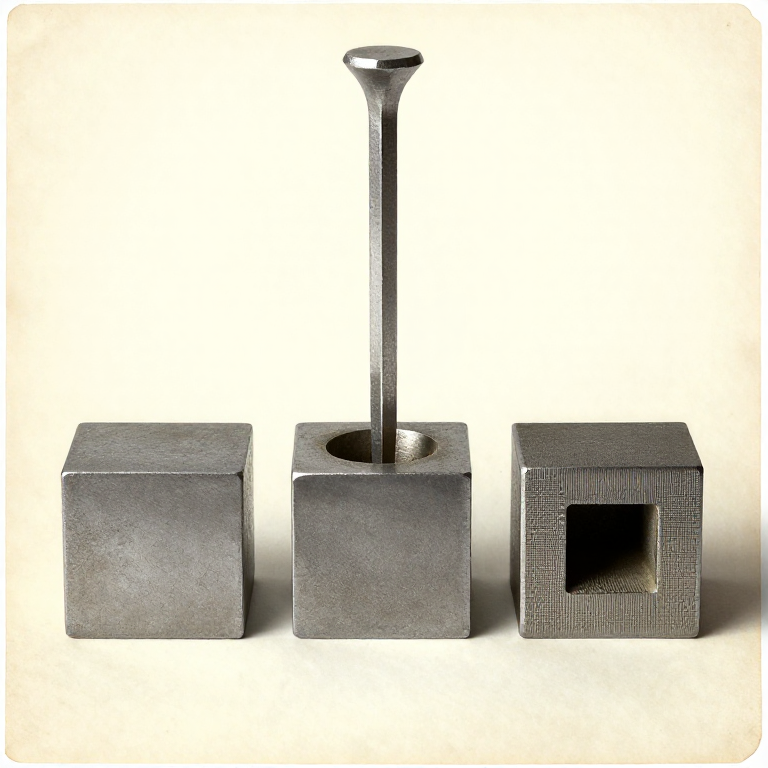


Punching and Drifting: A Hole Without Removing Metal
A drilled hole cuts metal away and severs the fibres running through the bar. A PUNCHED hole pushes the metal aside, so the grain flows around it — which is why a punched eye in a hammer head or an axe is stronger than a drilled one.
It also barely wastes any material. The slug punched out is tiny compared with what a drill turns into swarf, and the displaced metal thickens the area around the hole where the strength is wanted.
Punching makes the hole; DRIFTING opens it to final size and shape. They are two operations and doing the first without the second gives a ragged, undersized hole.
Intermedio
3 hours
Instrucciones
1
1
Punch from both sides, and go halfway each time
Punch from both sides, and go halfway each time
Mark the centre, drive the punch in from one face until you feel it bite deep — about halfway — then turn the work over and punch back through from the other side to meet it.
Punching all the way through from one side pushes a long tapered plug of metal ahead of the punch and bulges the far face badly. Meeting in the middle keeps both faces flat and produces a small neat slug.
You can see where to punch from the second side: the first punch raises a faint dark bulge on the far face. Centre on that and the two holes meet cleanly.
Materiales para este paso:
 Barra de acero dulce1 pieza
 Carbón vegetal1 pieza
Herramientas necesarias:
 Punzón en caliente
 Yunque
 Martillo de herrero
 Tenazas de herrero
2
2
Cool the punch constantly, or you will lose it
Cool the punch constantly, or you will lose it
Dip the punch in water every few blows. A punch buried in hot steel soaks up heat fast, and once it softens it upsets, mushrooms and jams in the hole.
A pinch of coal dust or a drop of oil in the hole helps too: it turns to gas and the pressure helps push the punch back out. A punch that has stuck in hot steel is genuinely difficult to recover.
Work over the PRITCHEL hole or over the hardy hole for the final break-through, so the punch and the slug have somewhere to go. Punching against the solid anvil face damages the face, blunts the punch and refuses to break through.
Materiales para este paso:
 Agua1 piezaBarra de acero dulce1 pieza
Herramientas necesarias:
Punzón en calienteYunqueTenazas de herrero Guantes de cuero de manopla larga
3
3
Then drift it to size and shape
Then drift it to size and shape
The punched hole is small and rough. Drive a DRIFT — a long tapered tool of the finished size and cross-section — through it to open it out, smooth the walls and set the final shape.
A drift is tapered at both ends and widest in the middle, so it passes right through and out rather than jamming. Drive it in from one side, then turn the work and drive it back the other way to even the hole up.
This is where a square or oval hole comes from — a hammer eye, an axe eye — and no drill will make one. Work hot, and expect the hole to close slightly as the piece cools, so drift to the size you want when hot rather than when cold.
Materiales para este paso:
Barra de acero dulce1 piezaHerramientas necesarias:
 Mandril de agrandarYunqueMartillo de herrero
 Regla
Regla4
4
The hole distorts the bar — plan for it
The hole distorts the bar — plan for it
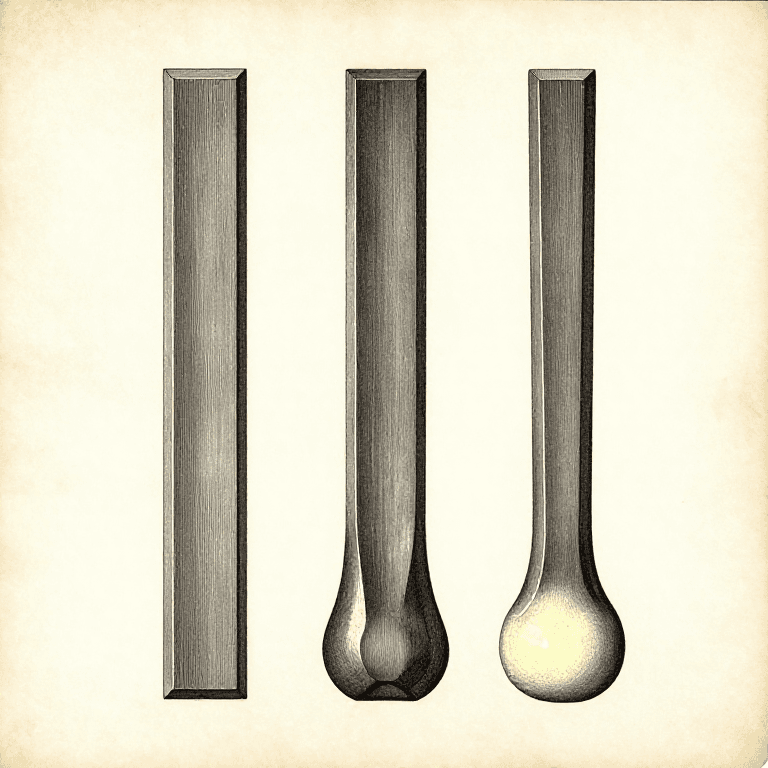
Displaced metal has to go somewhere. Punching a hole in a bar makes that part wider and slightly shorter, and it bulges the edges either side of the hole.
For a neat result, dress the sides back with the hammer after drifting and re-square the section. For a hammer or axe eye, the bulge is wanted — that is the extra material carrying the load around the eye.
Punch before you finish the outside shape, not after. A bar dressed to final size and then punched has to be dressed again, and the second dressing usually leaves it out of true.
Materiales para este paso:
Barra de acero dulce1 piezaHerramientas necesarias:
Martillo de herreroYunque Aplanador de herreroRegla
Materiales
3- 1 piezaMarcador de posición
- 1 piezaMarcador de posición
- 1 piezaMarcador de posición
Herramientas requeridas
8- Marcador de posición
- Marcador de posición
- Marcador de posición
- Marcador de posición
- Marcador de posición
- Marcador de posición
- Marcador de posición
- Marcador de posición
Blueprints relacionados
Estos blueprints comparten conocimiento — técnicas, materiales o principios
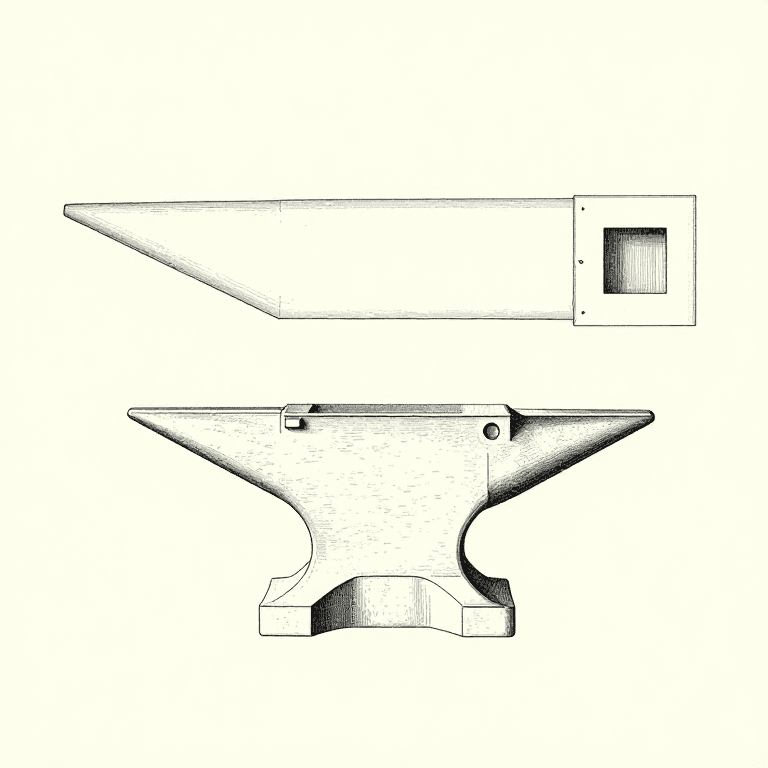
CC0 Dominio público
Este Blueprint se publica bajo CC0. Eres libre de copiar, modificar, distribuir y usar este trabajo para cualquier propósito, sin pedir permiso.
Apoya al Maker comprando productos a través de su Blueprint, donde gana una Comisión del Maker establecida por los vendedores, o crea una nueva iteración de este Blueprint e inclúyela como conexión en tu propio Blueprint para compartir ingresos.