ARTE
BELLEZA Y BIENESTAR
ARTESANÍA
CULTURA E HISTORIA
ENTRETENIMIENTO
MEDIO AMBIENTE
COMIDA Y BEBIDAS
INGENIERÍA INVERSA
CIENCIAS
DEPORTES
TECNOLOGÍA
TECNOLOGÍA VESTIBLE
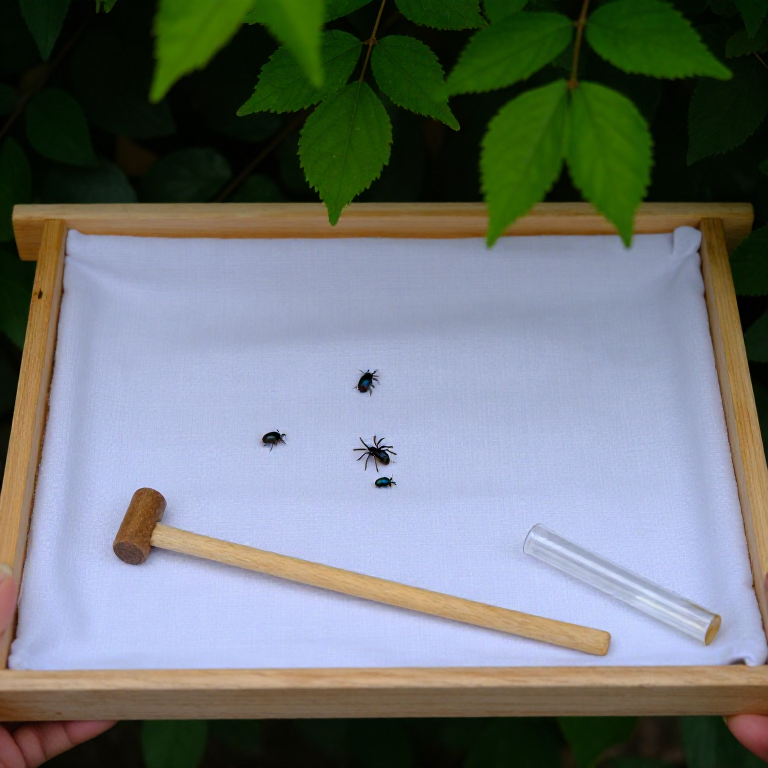


Sampling Invertebrates: Pitfall Traps and the Beating Tray
Most of the animals in any habitat are small, numerous and out of sight. You cannot quadrat them because they move, and you cannot mark-recapture most of them because there are too many — so you sample the ways they move instead.
A pitfall trap is a container sunk level with the soil that ground-active animals fall into as they walk. A beating tray is a pale sheet held under a branch that is struck sharply, so everything clinging to it drops onto a background where it can be seen. Between them they cover most of the invertebrates you will meet.
Neither gives you a population. A pitfall catch measures ACTIVITY-density — how many animals walked past — so a fast-moving beetle is over-represented and a sedentary one barely appears. Knowing exactly what your trap is measuring is the whole difference between a result and a pile of animals.
Principiante
3 days
Instrucciones
1
1
Set the pitfall rim exactly level with the soil
Set the pitfall rim exactly level with the soil
Dig a hole, sink a smooth-sided container so its rim is EXACTLY flush with the surface, and firm the soil back against it so there is no gap or lip.
A rim standing a few millimetres proud is a wall that most ground beetles will simply walk around, and one set low creates a moat that funnels others in. Either way the catch reflects your digging rather than the fauna. Use two nested containers so the inner one can be lifted out without disturbing the hole.
Materiales para este paso:
 Tarro de vidrio10 piezas
Herramientas necesarias:
 Palustre de jardinería
 Regla
Regla2
2
Cover it, and decide whether to kill
Cover it, and decide whether to kill
Set a flat stone or a tile on small pebbles a few centimetres above the trap to keep rain and birds out while leaving the gap open at ground level.
A dry trap catches animals alive, which is kind and lets you release them — but the predators eat the rest before you return, so you must check it every few hours. A preservative catches everything and can be left for days. For a first survey, use dry traps checked morning and evening, and only take specimens you genuinely cannot identify alive.
Materiales para este paso:
 Cartulina10 piezas
3
3
Lay a grid of traps, not one trap
Lay a grid of traps, not one trap
Set at least five traps in a regular grid or along a transect, several metres apart, and treat each one as a separate sample.
Invertebrate catches are extremely variable — one trap beside an ant nest can hold more animals than the other four together — so a single trap tells you almost nothing. Several traps let you quote a mean AND a spread, and the spread is what tells you whether the difference between two habitats is real.
Materiales para este paso:
Tarro de vidrio10 piezasHerramientas necesarias:
 Cinta métricaPalustre de jardinería
 Kit de banderines y estacas de topografía
4
4
Use a beating tray for everything above ground
Use a beating tray for everything above ground
Hold a pale sheet or an inverted pale umbrella under a branch and strike the branch sharply three times with a stick. Do not shake it.
A sharp jar dislodges animals that are clinging; shaking gives them time to grip harder or fly. Standardise the number of beats and the branch size and write them down, because 'a good shake' is not a unit. A pale background is what makes small dark animals visible, and it is why a white sheet outperforms a better net.
Materiales para este paso:
 Muselina de algodón2 metre
 Espiga de madera2 piezas
Herramientas necesarias:
 Lupa
Lupa Pinzas
5
5
Sort, count and release promptly
Sort, count and release promptly
Tip the catch into a shallow tray, sort into groups with a soft brush or forceps, count, and release near the capture point.
Sort to whatever level you can defend — 'ground beetles', 'spiders', 'woodlice' is far more useful honestly recorded than uncertain species names. Keep the animals cool and shaded while you work; a plastic tray in the sun cooks a catch in minutes, and a survey that kills its subjects unnecessarily has failed at something more important than counting.
Herramientas necesarias:
PinzasLupa Cuaderno de campo
6
6
Activity-density, diversity and comparing two habitats
Activity-density, diversity and comparing two habitats
Cargando el cuaderno de Jupyter…
Herramientas necesarias:
Cuaderno de campo7
7
Take the traps out when you have finished
Take the traps out when you have finished
Lift every trap, fill the holes, and remove the covers.
An abandoned pitfall trap goes on catching and killing for months, and an open hole is a hazard to small mammals. Count your traps out and count them back in. This is the least interesting sentence in the batch and the one most often ignored.
Herramientas necesarias:
Palustre de jardineríaCuaderno de campoMateriales
4- 10 piezasMarcador de posición
- 10 piezasMarcador de posición
- 2 metreMarcador de posición
- 2 piezasMarcador de posición
Herramientas requeridas
7- Marcador de posición
- Marcador de posición
- 1 vendor sell this, none ship to you yetMarcador de posición
- Marcador de posición
- Marcador de posición
- 1 vendor sell this, none ship to you yetMarcador de posición
- Marcador de posición
Blueprints relacionados
Estos blueprints comparten conocimiento — técnicas, materiales o principios

CC0 Dominio público
Este Blueprint se publica bajo CC0. Eres libre de copiar, modificar, distribuir y usar este trabajo para cualquier propósito, sin pedir permiso.
Apoya al Maker comprando productos a través de su Blueprint, donde gana una Comisión del Maker establecida por los vendedores, o crea una nueva iteración de este Blueprint e inclúyela como conexión en tu propio Blueprint para compartir ingresos.