ARTE
BELLEZA Y BIENESTAR
ARTESANÍA
CULTURA E HISTORIA
ENTRETENIMIENTO
MEDIO AMBIENTE
COMIDA Y BEBIDAS
INGENIERÍA INVERSA
CIENCIAS
DEPORTES
TECNOLOGÍA
TECNOLOGÍA VESTIBLE
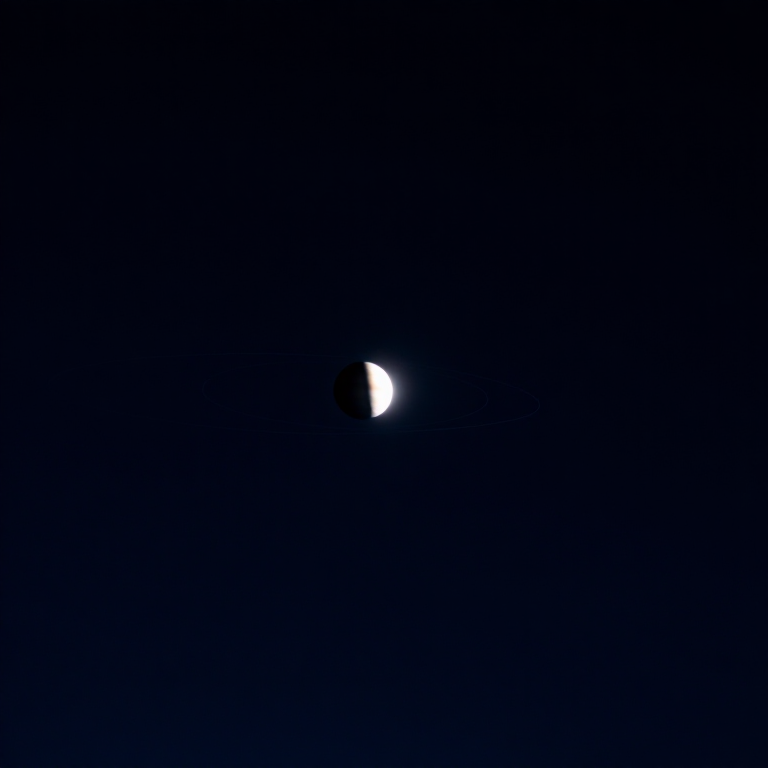
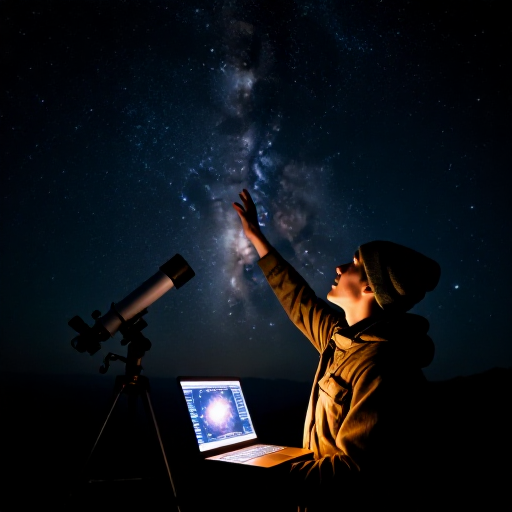

Kepler's Laws — Draw a Planet's Ellipse with Two Pins and a String
A hands-on maths project: pin a loop of string between two points and draw a perfect ellipse -- the true shape of a planet's orbit, with the Sun at one focus. Then check Kepler's law that ties every planet's year to its distance. A Python cell tests it on real planets, and a compendium reaches to Newton and exoplanets.
Principiante
30 minutes
Instrucciones
1
1
Orbits are not circles
Orbits are not circles
Between 1609 and 1619 Johannes Kepler used Tycho Brahe's precise data to prove planets move in ELLIPSES, not perfect circles, with the Sun at one focus. You will draw that exact shape.
2
2
Pin a loop of string
Pin a loop of string
Push two drawing pins into a board a few centimetres apart -- these are the two 'foci'. Tie a loop of string and drop it over both pins. Put a pencil inside the loop and pull it taut.
Materiales para este paso:
 Cartulina1 pieza
 Bramante de algodón para cocina1 pieza
Herramientas necesarias:
 Juego de lápices de grafito
 Chinchetas (caja de 50)
3
3
Draw the ellipse
Draw the ellipse
Keeping the string taut, run the pencil all the way around the two pins. It traces a perfect ellipse. Move the pins closer together and the ellipse gets rounder (closer to a circle); move them apart and it stretches. One pin marks where the Sun sits -- notice it is NOT at the centre. That off-centre Sun is Kepler's first law.
4
4
Test the third law on real planets
Test the third law on real planets
Cargando el cuaderno de Jupyter…
Herramientas necesarias:
 Ordenador de sobremesa
 Calculadora
5
5
Compendium: the harmony of the worlds
Compendium: the harmony of the worlds
What your ellipse teaches. (1) First law: each orbit is an ellipse with the Sun at ONE focus (the other is empty). (2) Second law: a planet sweeps equal AREAS in equal times, so it races when near the Sun and dawdles when far. (3) Third law: the square of the period equals the cube of the average distance, tying every planet's speed to its distance in one clean rule. (4) Kepler found the WHAT; Newton later found the WHY, deriving all three from a single law of gravity. The same laws steer every spacecraft and, today, reveal planets around other stars -- astronomers watch a distant world obey Kepler's second law and know its orbit before they ever see it.
Materiales
3- 1 piezaMarcador de posición
- Marcador de posición
- 1 hojaMarcador de posición
Herramientas requeridas
4- Marcador de posición
- Marcador de posición
- Marcador de posición
- Marcador de posición
Blueprints relacionados
Estos blueprints comparten conocimiento — técnicas, materiales o principios
CC0 Dominio público
Este Blueprint se publica bajo CC0. Eres libre de copiar, modificar, distribuir y usar este trabajo para cualquier propósito, sin pedir permiso.
Apoya al Maker comprando productos a través de su Blueprint, donde gana una Comisión del Maker establecida por los vendedores, o crea una nueva iteración de este Blueprint e inclúyela como conexión en tu propio Blueprint para compartir ingresos.