ARTE
BELLEZA Y BIENESTAR
ARTESANÍA
CULTURA E HISTORIA
ENTRETENIMIENTO
MEDIO AMBIENTE
COMIDA Y BEBIDAS
INGENIERÍA INVERSA
CIENCIAS
DEPORTES
TECNOLOGÍA
TECNOLOGÍA VESTIBLE


Significant Figures: How Much of Your Number Is Actually Real
A calculator will give you fifteen digits for a measurement you made with a ruler. Copying them down does not make the result more precise — it makes it dishonest, because every digit you write is a claim about what you know.
The rule is simple and almost never followed: a calculated result can be no more precise than the worst thing that went into it. One measurement to two digits drags the whole calculation down to two digits, no matter how carefully everything else was measured.
Getting this right is free and it changes what people do with your number. Quoting 49.3 cm3 instead of 49.32175 cm3 tells the next person exactly how much room they have, and stops them building on precision that was never there.
Principiante
2 hours
Instrucciones
1
1
Which digits count, and why zeros are the awkward ones
Which digits count, and why zeros are the awkward ones
Every non-zero digit is significant. Zeros BETWEEN non-zero digits are significant — 1005 has four. Leading zeros never are: 0.0032 has two, because the zeros only place the decimal point.
Trailing zeros are the ambiguous case, and they are ambiguous because of how we write numbers rather than because of anything real. Does 1500 mean "about fifteen hundred" or "exactly 1500"? Written as 1.5 x 10^3 it clearly has two digits; as 1.500 x 10^3 it clearly has four. Scientific notation exists partly to settle this.
Counted things and defined constants are EXACT and have unlimited digits. Twelve bolts is exactly twelve, and 1 inch is exactly 25.4 mm by definition. Neither ever limits a calculation.
Herramientas necesarias:
 Calculadora
 Regla
Regla2
2
What a measurement's last digit is really saying
What a measurement's last digit is really saying
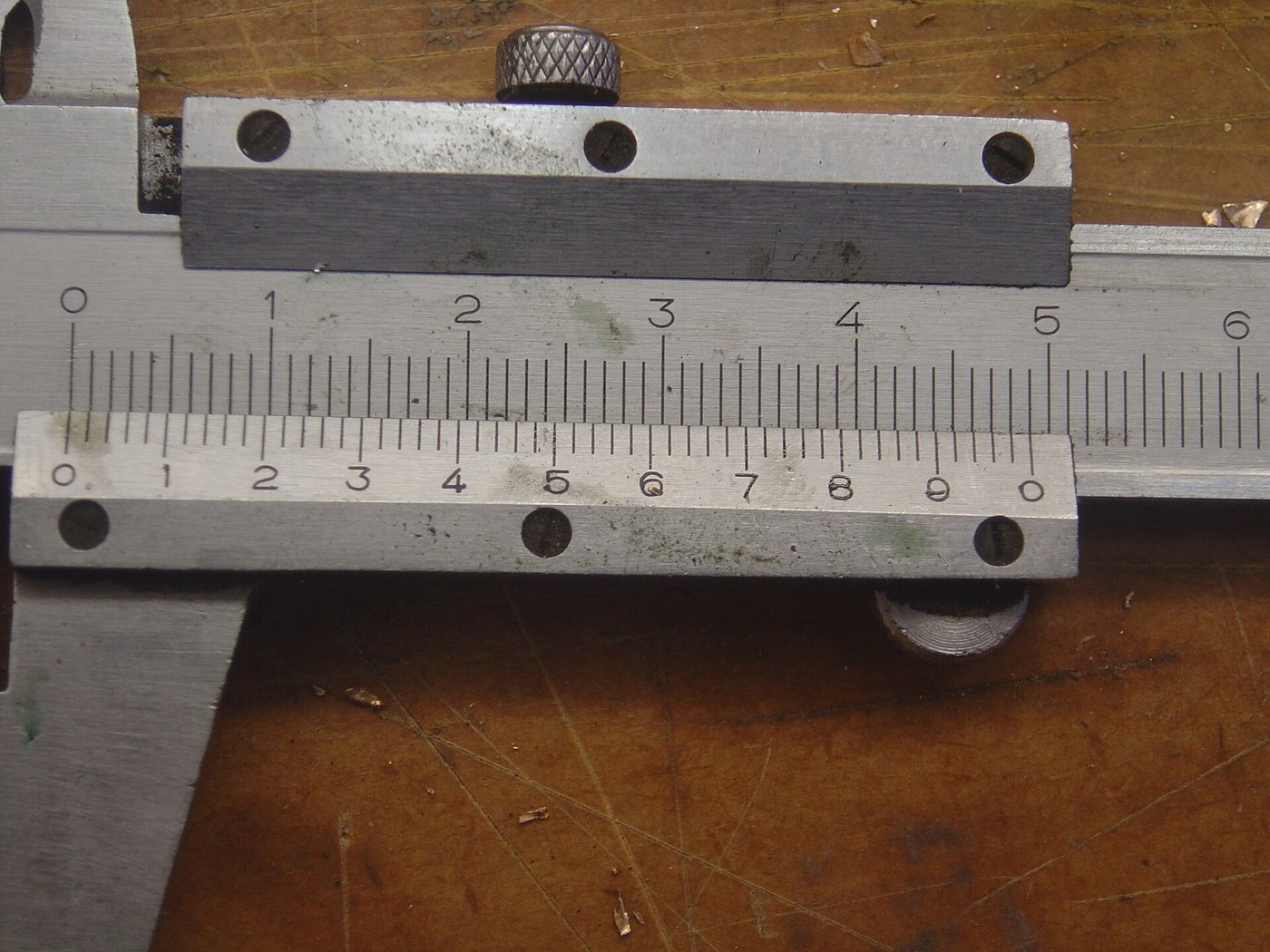
Writing 24.3 mm claims you know the tenths and are unsure in the hundredths. Writing 24.30 mm claims you know the hundredths. They are different measurements made with different instruments, and the trailing zero is doing real work.
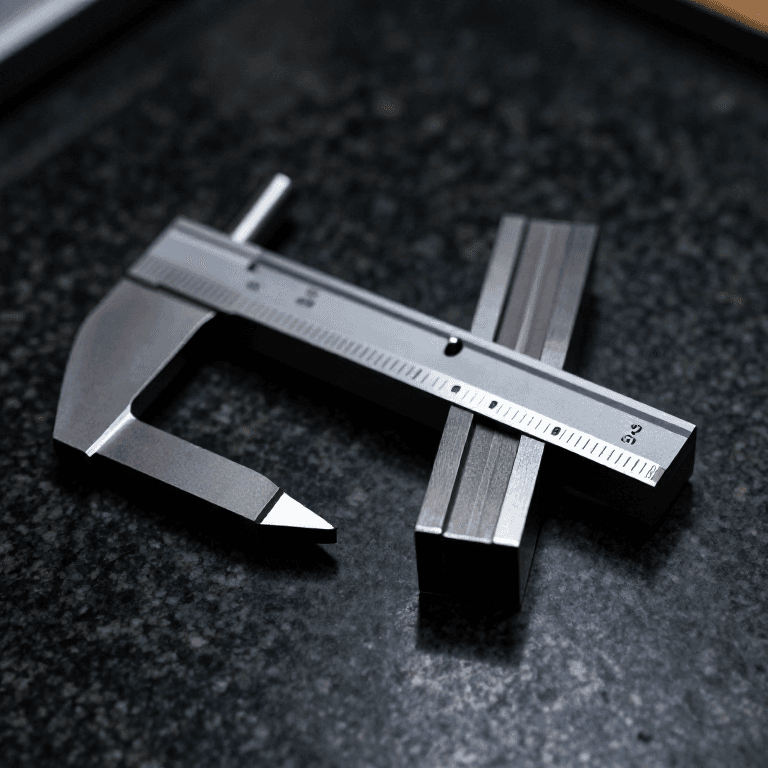
So read your instrument to the smallest division and then ESTIMATE one digit beyond it — halfway between two marks is a real observation, and it is the last honest digit you have. A steel rule marked in millimetres supports tenths of a millimetre estimated by eye; it does not support hundredths.
A digital display looks like it settles this and often does not. A caliper showing 24.31 is displaying hundredths, but if it wanders between 24.29 and 24.33 when you re-close it, the hundredths digit is noise. The repeat spread, not the display, tells you where the real number ends.
Herramientas necesarias:
 Calibre digital de 6 pulgadas
 Calibre vernierRegla
 Lupa de relojero
3
3
Carrying digits through a calculation
Carrying digits through a calculation
Cargando el cuaderno de Jupyter…
Herramientas necesarias:
Calculadora Ordenador de sobremesaCalibre digital de 6 pulgadasRegla
4
4
Write it the way the next person needs to read it
Write it the way the next person needs to read it
Round the uncertainty first, to one or two digits, then round the value to the same decimal place. "49.3 plus or minus 0.4 cm3" is right; "49.32175 plus or minus 0.4" is announcing digits the uncertainty has already denied.
Give the units every time, and use scientific notation when the digit count would otherwise be ambiguous. A number without units is not a measurement, and unit confusion has destroyed real spacecraft.
And keep the RAW readings in the notebook, at full precision, alongside the rounded result. Rounding is for presenting; the raw numbers are the evidence, and somebody — possibly you — will want to recalculate them differently later.
Herramientas necesarias:
CalculadoraBlueprints relacionados
Estos blueprints comparten conocimiento — técnicas, materiales o principios

CC0 Dominio público
Este Blueprint se publica bajo CC0. Eres libre de copiar, modificar, distribuir y usar este trabajo para cualquier propósito, sin pedir permiso.
Apoya al Maker comprando productos a través de su Blueprint, donde gana una Comisión del Maker establecida por los vendedores, o crea una nueva iteración de este Blueprint e inclúyela como conexión en tu propio Blueprint para compartir ingresos.