Smelting Copper from Malachite — From Green Ore to Red Metal
Instrucciones
Comprender la química
Comprender la química
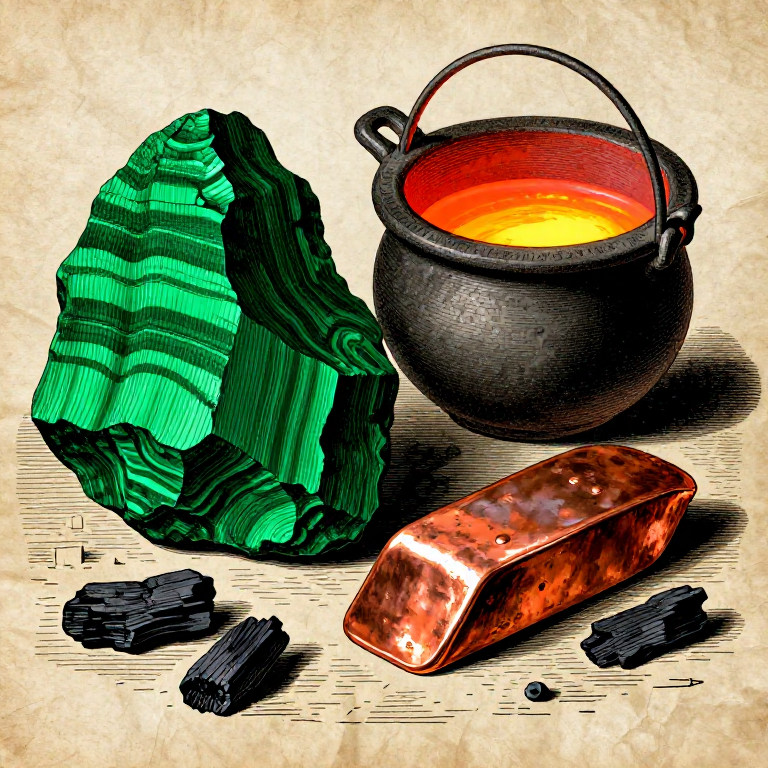
La malaquita se descompone al calentarse: Cu₂CO₃(OH)₂ → 2CuO + CO₂ + H₂O (a ~300°C). El óxido de cobre resultante (CuO) se reduce con monóxido de carbono del carbón vegetal en combustión: CuO + CO → Cu + CO₂. El cobre funde a 1085°C. El rendimiento total de cobre a partir de malaquita pura es aproximadamente 57.5%.
Triturar la malaquita
Triturar la malaquita
Rompa la malaquita en trozos menores de 1 cm usando un martillo y un yunque. Cuanto más fino sea el triturado, más rápida y completa será la reducción. Use un mortero y una mano de mortero para la trituración final si están disponibles. Apunte a fragmentos del tamaño de un guisante o más pequeños.
Materiales para este paso:
 Mineral de malaquita2 kilogram
Herramientas necesarias:
 Martillo de geólogo
 Mortero y mano de mortero
Preparar el crisol
Preparar el crisol
Use un crisol de arcilla que soporte 1200°C o más. Un crisol de grafito-arcilla es ideal. El crisol debe tener una capacidad mínima de 500 ml. Si fabrica el suyo, mezcle arcilla refractaria con arena (proporción 2:1) y cuézalo lentamente en un horno a 1000°C antes de usarlo. Los crisoles precocidos se agrietan menos.
Materiales para este paso:
 Crisol de arcilla refractaria1 pieza
Layer ore and charcoal in the crucible
Layer ore and charcoal in the crucible
Place a 2 cm layer of charcoal pieces at the bottom of the crucible. Add a layer of crushed malachite (2-3 cm). Top with another layer of charcoal. The charcoal both provides carbon for reduction and protects the copper from re-oxidation. Fill to about 2/3 full.
Materiales para este paso:
 Carbón vegetal5 kilogram
Build or prepare the forge
Build or prepare the forge
You need a forge or furnace capable of reaching 1100-1200°C. A simple charcoal forge with forced air (bellows or blower) works well. The crucible sits in a bed of burning charcoal with additional charcoal piled around and above it. The air supply must be controllable.
Materiales para este paso:
 Disco de carbón vegetal20 kilogram
Herramientas necesarias:
 Fuelle
Put on safety equipment
Put on safety equipment
Copper smelting involves extreme heat, toxic fumes, and molten metal. Wear: leather apron, leather gauntlet gloves, face shield, safety boots (no synthetic materials). Work outdoors or in a well-ventilated space. Copper oxide fumes cause metal fume fever if inhaled. Keep a bucket of dry sand nearby for spill containment.
Herramientas necesarias:
 Delantal de cuero
 Guantes de cuero de manopla larga
 Pantalla facial
 Cubo de arena seca
Light the forge and preheat
Light the forge and preheat
Light the forge charcoal and bring it to full heat over 30-45 minutes with gentle bellows action. Place the loaded crucible into the forge once the coals are glowing white-hot. Pack charcoal tightly around the crucible. Increase bellows speed gradually.
Maintain temperature for 2-3 hours
Maintain temperature for 2-3 hours
Keep the forge at 1100-1200°C for 2-3 hours. The malachite first decomposes (green changes to black CuO at ~300°C), then the CuO reduces to copper as temperature climbs. Add charcoal to the forge as needed to maintain heat. The crucible contents will shrink as CO₂ gas escapes.
Check for completion
Check for completion
After 2-3 hours, carefully lift the crucible lid with tongs and peek inside. You should see a bright orange-red pool of molten copper beneath a layer of slag (glassy dark material). If you see unmelted green or black chunks, continue heating for another 30 minutes.
Herramientas necesarias:
 Tenazas de mango largo
Prepare the ingot mold
Prepare the ingot mold
While the copper melts, prepare a sand mold or a flat stone depression for pouring. Preheat the mold with a torch to prevent thermal shock cracking. A simple bar-shaped mold carved into a sandstone block works well. Ensure the mold is completely dry — any moisture causes explosive splattering of molten metal.
Herramientas necesarias:
 Molde de lingote de arenisca
Pour the copper
Pour the copper
Using crucible tongs, lift the crucible from the forge. Tilt slowly to pour molten copper into the mold. The dark glassy slag floats on top and can be held back with a stick while the copper flows under it. Pour steadily — interrupted pours create cold shuts (weak seams).
Herramientas necesarias:
 Tenazas para crisol
Let the ingot cool
Let the ingot cool
Allow the copper ingot to cool in the mold for at least 30 minutes. Do not quench in water — rapid cooling makes copper brittle with internal stresses. Air cooling produces a softer, more workable metal. The copper surface oxidizes to a dark red-brown as it cools.
Remove and clean the ingot
Remove and clean the ingot
Once cool enough to handle (below 100°C), remove the ingot from the mold. Brush off adhering sand and slag with a wire brush. The ingot should have the characteristic salmon-pink color of fresh copper on freshly exposed surfaces. Any dark patches are trapped slag or oxide inclusions.
Herramientas necesarias:
 Juego de cepillos de alambre
Weigh and assess yield
Weigh and assess yield
Weigh the clean copper ingot. From 2 kg of good malachite ore, expect 800-1000 g of copper (40-50% yield, accounting for slag losses and impurities). Pure malachite would yield 1150 g, but field-collected ore is rarely pure. Record the yield for future optimization.
Herramientas necesarias:
 Báscula digital de cocina
Test the copper quality
Test the copper quality
Hammer the edge of the ingot on an anvil. Good copper deforms plastically without cracking — it is one of the most malleable metals. If it cracks, it contains too much slag or oxide. File a small area to expose fresh metal — pure copper is salmon-pink. A green tinge indicates incomplete reduction.
Herramientas necesarias:
 Lima para metal
Store the copper ingot
Store the copper ingot
Copper oxidizes slowly in air (forming green patina over months). For short-term storage, keep dry. For long-term, coat with a thin layer of oil. Label with date, source ore, and weight. This copper is ready for casting, hammering into sheet, or alloying with tin to make bronze.
Materiales
4- 2 kilogramMarcador de posición
- Marcador de posición
- 5 kilogramMarcador de posición
- 20 kilogramMarcador de posición
Herramientas requeridas
15- Marcador de posición
- Marcador de posición
- Marcador de posición
- Marcador de posición
- Marcador de posición
- Marcador de posición
- Marcador de posición
- Marcador de posición
- Marcador de posición
- Marcador de posición
- Marcador de posición
- Marcador de posición
- Marcador de posición
- Marcador de posición
Materiales de Blueprints conectados
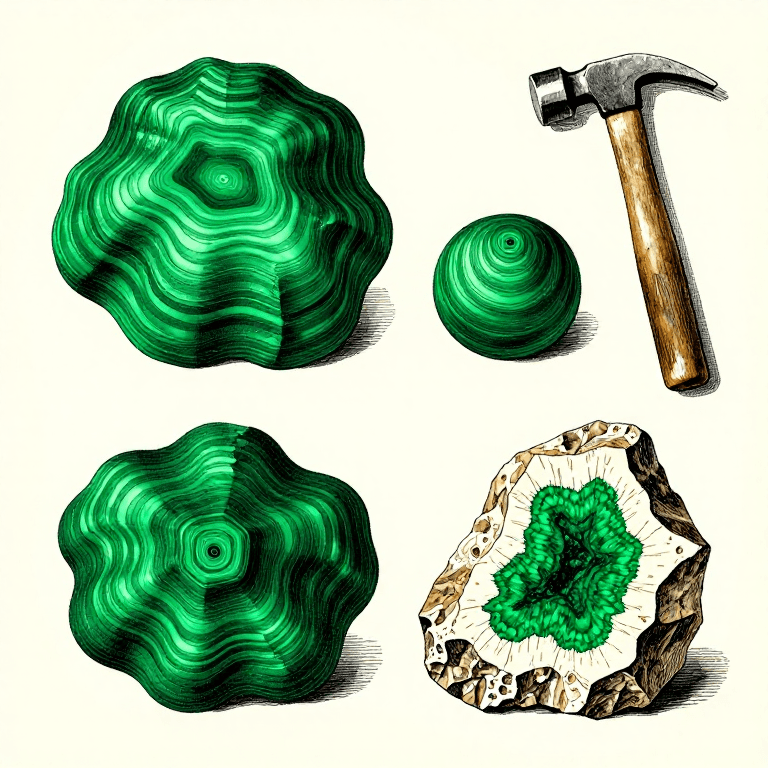
Identifying and Collecting Malachite — Copper Carbonate Ore from the Earth
por Peter
Trabajo en Metal
Recovering Selenium from Copper Refinery Anode Slime — The Photoconductor That Sees Light
por Peter
Minería
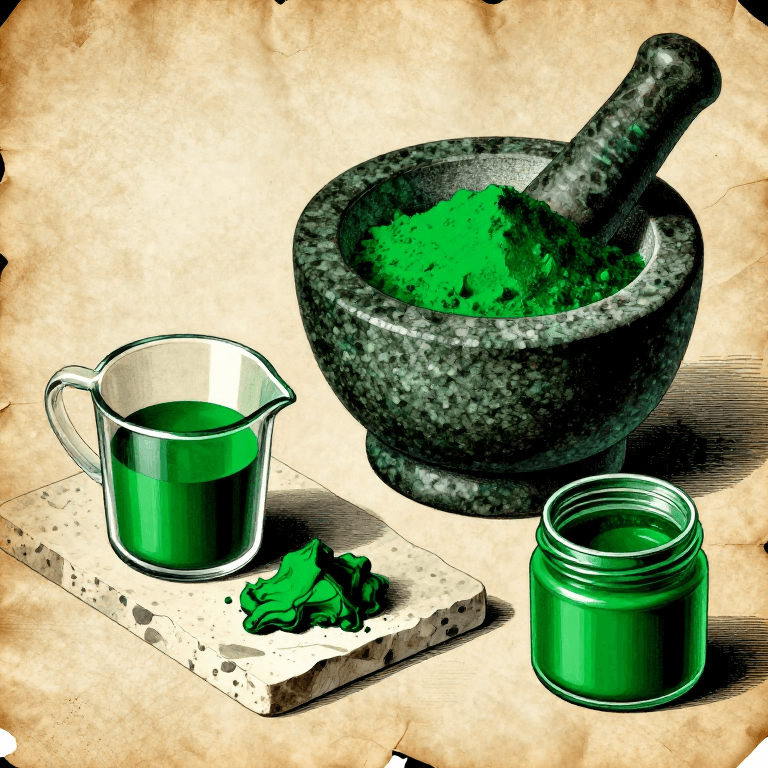
Making Malachite Green Pigment — Grinding the Copper Mineral into Painter's Green
por Charlie
ARTE
Este plano hace

Blueprints relacionados
Estos blueprints comparten conocimiento — técnicas, materiales o principios
CC0 Dominio público
Este Blueprint se publica bajo CC0. Eres libre de copiar, modificar, distribuir y usar este trabajo para cualquier propósito, sin pedir permiso.
Apoya al Maker comprando productos a través de su Blueprint, donde gana una Comisión del Maker establecida por los vendedores, o crea una nueva iteración de este Blueprint e inclúyela como conexión en tu propio Blueprint para compartir ingresos.