ARTE
BELLEZA Y BIENESTAR
ARTESANÍA
CULTURA E HISTORIA
ENTRETENIMIENTO
MEDIO AMBIENTE
COMIDA Y BEBIDAS
INGENIERÍA INVERSA
CIENCIAS
DEPORTES
TECNOLOGÍA
TECNOLOGÍA VESTIBLE
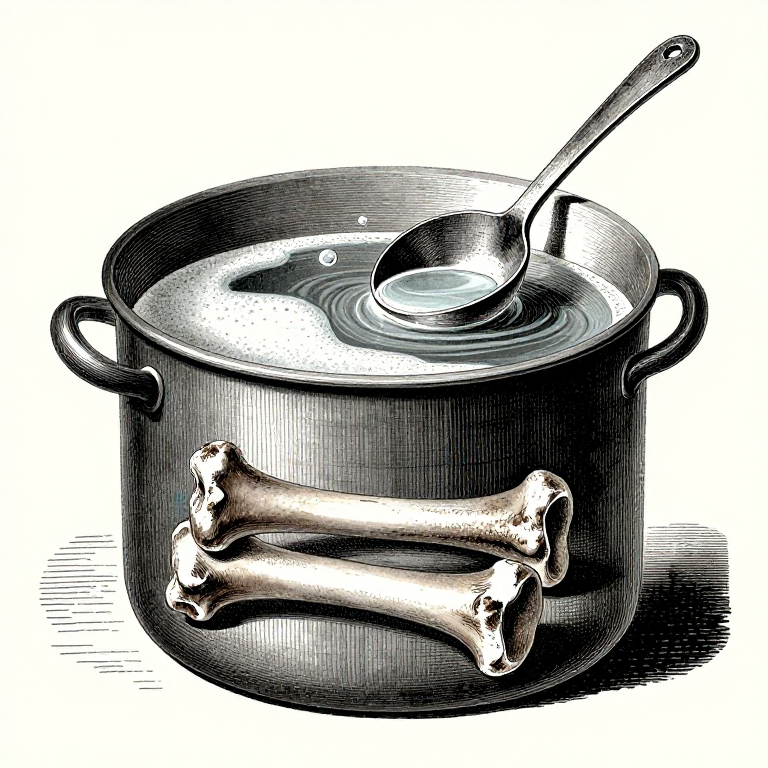
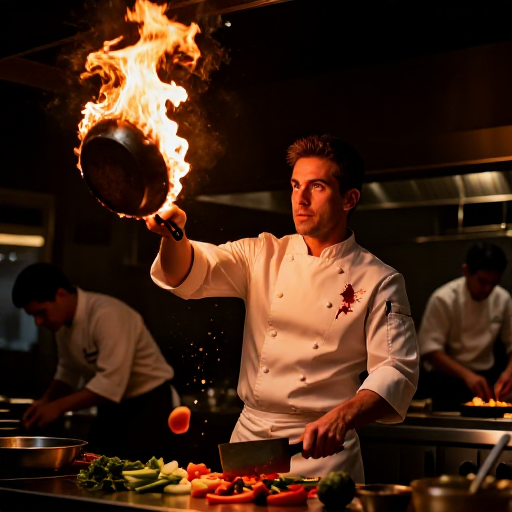

Stock: Why It Must Not Boil, and What the Scum Is
A good stock is clear, and a boiled stock is cloudy. That is not a cosmetic difference — it is the same mechanism that decides whether the stock tastes clean or muddy.
Boiling churns the pot. Fat is smashed into droplets small enough to stay suspended, and coagulated proteins that would have risen as scum are broken up and stirred back through the liquid instead. Both then stay there.
A bare simmer — a bubble breaking every second or two, not a rolling boil — extracts just as much flavour and gelatin, because extraction depends on temperature and time rather than on agitation. It simply does it without wrecking the result.
Intermedio
5 hours
Instrucciones
1
1
Start cold, come up slowly
Start cold, come up slowly
Put the bones and cold water in together and bring the pot up gradually. Proteins that dissolve in cold water have time to migrate out and then coagulate as the temperature rises — which is what forms the scum you can skim off.
Dropping bones into already-boiling water seals the outside instantly, trapping those proteins inside where they cannot be removed. They end up as cloudiness instead.
Roast the bones first if you want a dark stock: that is the Maillard reaction doing the same job it does in a pan, and the brown bits from the roasting tray get deglazed into the pot exactly as they would into a sauce.
Materiales para este paso:
 Hueso de vacuno1 pieza
 Agua1 pieza
Herramientas necesarias:
 Olla alta
 Termómetro de cocina
 Cucharón
2
2
Skim early, and keep skimming
Skim early, and keep skimming
Grey foam rises as the pot approaches a simmer. That is coagulated protein and impurities from the bones, and it is what makes a stock taste muddy if it stays in.
Take it off with a ladle or a fine skimmer, tilting to leave the liquid behind. The first twenty minutes produce most of it, and skimming during that window is worth more than an hour of attention later.
Fat is a separate thing and a later job. It rises as a clear layer, and it is far easier to lift off the chilled stock the next day as a solid cap than to chase it around a hot pot.
Materiales para este paso:
Hueso de vacuno1 piezaHerramientas necesarias:
Cucharón Colador de malla finaOlla alta
3
3
Hold it at a bare simmer for hours
Hold it at a bare simmer for hours
The target is around 85 to 95 degrees: an occasional bubble, a slight shimmer on the surface, and no churning. On most hobs the lowest setting is still too hot, so slide the pot half off the ring or use a heat diffuser.
Time does the work. Collagen converts to gelatin slowly, and that gelatin is what gives a stock body and makes it set when cold — three to four hours for chicken, six to eight for beef bones.
Leave the lid OFF or ajar. A sealed pot traps enough heat to creep up to a boil without anyone touching the dial, and it also stops the reduction that concentrates the flavour.
Materiales para este paso:
Hueso de vacuno1 piezaAgua1 pieza Cebolla1 pieza
Herramientas necesarias:
Olla altaTermómetro de cocinaCucharón4
4
Strain gently, cool fast, and salt later
Strain gently, cool fast, and salt later
Ladle the stock out through a fine strainer rather than tipping the whole pot. Tipping dumps the sediment from the bottom straight into the finished stock, undoing the skimming. Do not press the solids either — pressing forces exactly the particles you have been removing through the mesh.
Cool it quickly, in a shallow container or an ice bath. A deep pot of hot stock spends hours in the temperature range where bacteria multiply fastest, and that is the one genuine safety issue in the whole process.
Do NOT salt the stock. It will be reduced later, perhaps by half, and salt added now is concentrated along with everything else. Season the finished dish, using percentages by weight, when you know how much liquid you actually have.
Materiales para este paso:
Agua1 piezaHerramientas necesarias:
Colador de malla finaCucharón Bol grande de vidrio
 Báscula digital de cocina
Materiales
3- 1 piezaMarcador de posición
- 3 piezasMarcador de posición
- 1 piezaMarcador de posición
Blueprints relacionados
Estos blueprints comparten conocimiento — técnicas, materiales o principios
CC0 Dominio público
Este Blueprint se publica bajo CC0. Eres libre de copiar, modificar, distribuir y usar este trabajo para cualquier propósito, sin pedir permiso.
Apoya al Maker comprando productos a través de su Blueprint, donde gana una Comisión del Maker establecida por los vendedores, o crea una nueva iteración de este Blueprint e inclúyela como conexión en tu propio Blueprint para compartir ingresos.