ARTE
BELLEZA Y BIENESTAR
ARTESANÍA
CULTURA E HISTORIA
ENTRETENIMIENTO
MEDIO AMBIENTE
COMIDA Y BEBIDAS
INGENIERÍA INVERSA
CIENCIAS
DEPORTES
TECNOLOGÍA
TECNOLOGÍA VESTIBLE
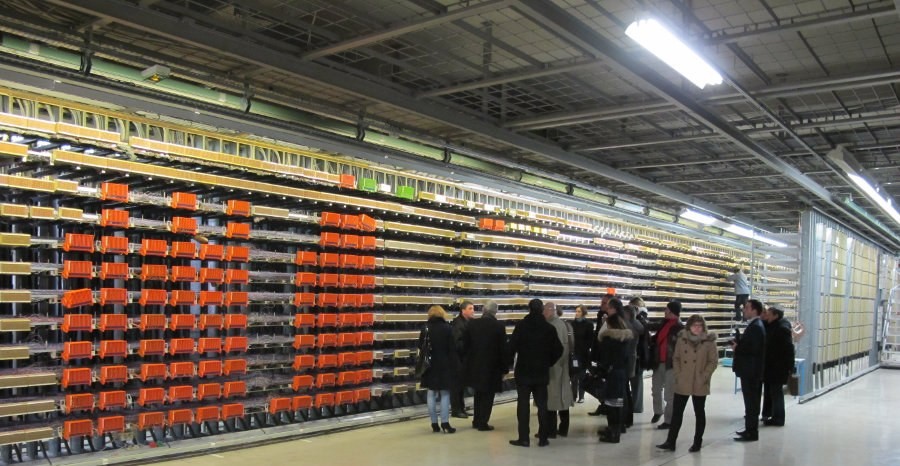


T1 and Time-Division Multiplexing
Bell had a boring and expensive problem in the 1950s. Trunk cables between city exchanges were full, and the only remedy was digging up streets. Each pair carried one conversation, and a conversation used four kilohertz of a pair that could physically carry far more.
The T1 carrier of 1962 was the answer, and it is the moment the telephone network became digital — not for quality, not for computers, but to avoid digging. Sample each voice channel eight thousand times a second, which is twice the four kilohertz the network already promised. Quantise each sample to eight bits, using a logarithmic companding law so that eight bits sound like thirteen on speech. Interleave twenty-four channels, add one framing bit so the far end can tell where a frame begins, and send 193 bits eight thousand times a second. That is 1.544 megabits per second, and it is not a round number anybody chose — it is 8000 × 193.
The decisive property is not capacity, it is REGENERATION. An analogue multiplex accumulates the noise of every mile it crosses. A digital one puts a repeater every eighteen hundred metres that decides whether it saw a one or a zero and emits a clean new pulse. Noise stops accumulating. That single change is what let a signal cross a continent as cleanly as a city, and it is why every number in this blueprint still governs the network underneath a modern phone call.
MODELLED, WITH A BENCH VERSION. Nobody builds a T1 span on a desk. What you can build is the principle at a hundred-thousandth of the rate: four slow channels interleaved onto one wire with a framing marker, and a receiver that has to find the frame before any channel makes sense.
Intermedio
3 hours
Instrucciones
1
1
Multiplex four channels onto one wire
Multiplex four channels onto one wire
Wire four potentiometers to four ADC inputs on one microcontroller — those are your four subscribers. Wire its serial output to a second board.
The transmitter loops forever: send a framing byte, then one sample from each of the four channels, then repeat. Twenty times a second is plenty to watch.
The receiver has one job that is harder than it looks: FIND THE FRAME. It sees a stream of bytes with no markers other than the framing pattern itself, and until it locks on, every channel is reading somebody else's potentiometer. Have it search for the framing byte, confirm it recurs at the right interval, and only then start decoding.
Then unplug and replug the link while it runs. Watch the channels scramble and re-lock. That is frame synchronisation, and it is what T1's single bit in 193 exists to provide.
Materiales para este paso:
 Potenciómetro lineal de 10 kiloohmios1 pieza
 Juego de resistencias1 pieza
Herramientas necesarias:
 Placa de desarrollo ESP32
 Placa de pruebas
 Cables de puente
 Osciloscopio digital
2
2
Build the multiplexer and find the frame
Build the multiplexer and find the frame
Flash ROLE_TX on one board and ROLE_RX on the other. The transmitter sends a framing byte then one sample from each of four potentiometers, twenty times a second.
The receiver's job is the interesting one. It joins the stream mid-frame and has no idea which byte is which, so it hunts for the framing byte and — crucially — refuses to trust it until it has recurred at exactly the frame period three times. Seeing 0x7E once proves nothing, because data can look like anything.
Unplug and replug the link while it runs. Watch it print LOST LOCK, hunt, and re-lock, with the channels scrambled in between. That is what T1's one bit in 193 is buying.
tdm_four_channel.inocpp
Materiales para este paso:
Potenciómetro lineal de 10 kiloohmios1 piezaJuego de resistencias1 piezaHerramientas necesarias:
Placa de desarrollo ESP32Placa de pruebasCables de puenteOsciloscopio digital3
3
Hear what companding does
Hear what companding does
Record a few seconds of speech at 8 kHz on the computer. Then process it three ways and listen to each: uniform 8-bit quantisation, uniform 13-bit, and 8-bit through the µ-law curve from the notebook.
Uniform 8-bit is audibly gritty, and the grit is WORST in the quiet passages — which is exactly backwards from what you want, because quiet passages are where the ear is paying attention. The companded version at the same 8 bits sounds close to the 13-bit one.
That comparison is the argument for 64 kbit/s. Uniform coding of the same quality would need thirteen bits a sample and 104 kbit/s, and Bell would have fitted fifteen channels on the span instead of twenty-four.
Herramientas necesarias:
 Ordenador de sobremesa
 Micrófono
 Altavoz (de laboratorio)
4
4
The frame, the companding law, and the comparison
The frame, the companding law, and the comparison
Cargando el cuaderno de Jupyter…
Herramientas necesarias:
Ordenador de sobremesa5
5
Compendium: the hierarchy built on one number
Compendium: the hierarchy built on one number
BIT-ROBBING, AND WHY IT MATTERED LATER. T1 originally carried signalling — on-hook, off-hook, dialled digits — by stealing the least significant bit of every channel in every sixth frame. Inaudible on speech, which was the point. Catastrophic for data, because a channel that quietly loses one bit in forty-eight is not a 64 kbit/s pipe. That is why a data DS0 was sold as 56 kbit/s for years, and it is a clean example of a compromise made for one traffic type becoming a defect for another.
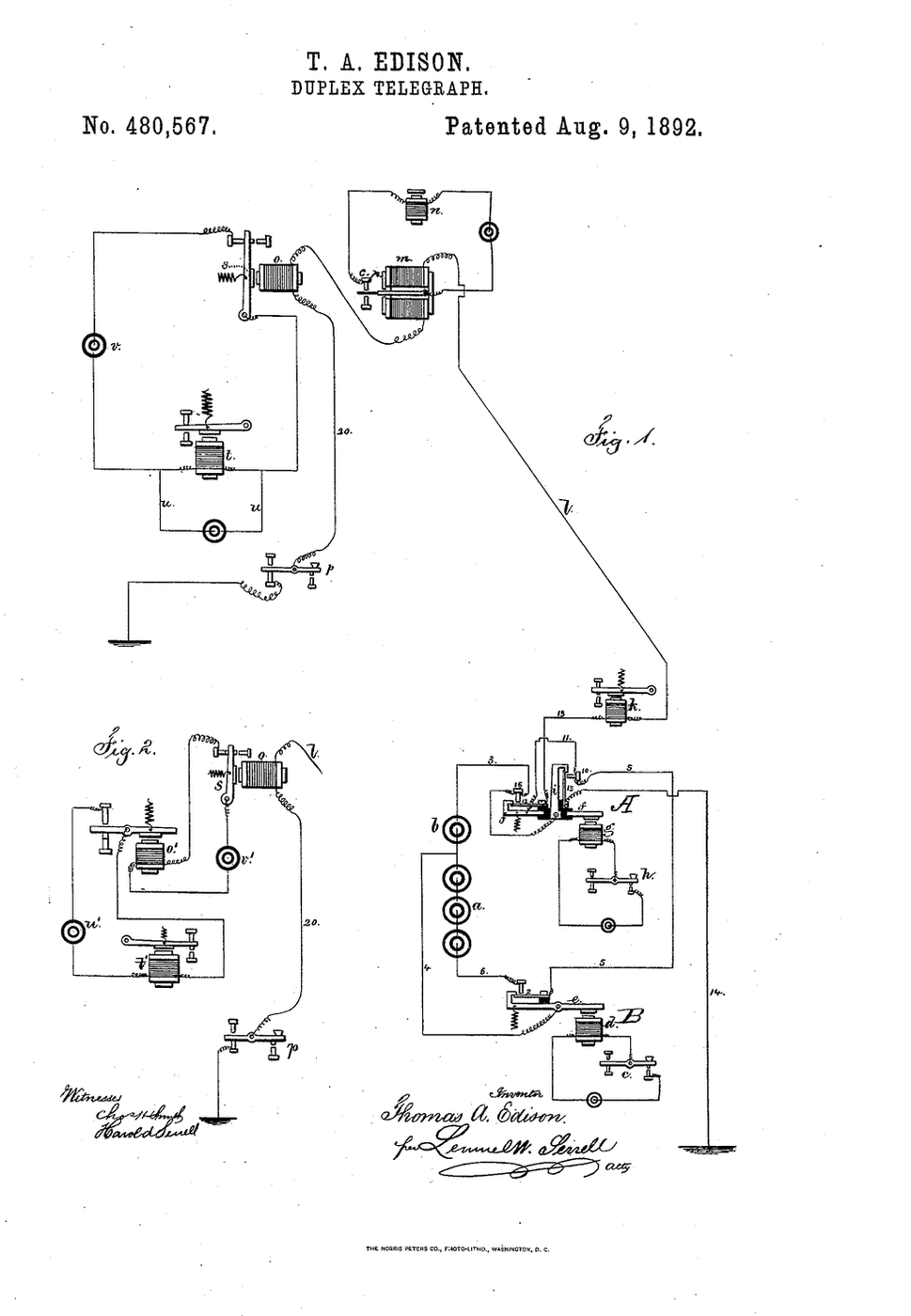
THE SIBLING, MEASURED, against quadruplex telegraphy. Edison, 1874: four channels, divided by current direction and amplitude, analogue, and limited by how many orthogonal axes a wire has. T1, 1962: twenty-four channels divided by time, digital, limited by how fast you can switch — and regenerated at every repeater so noise never accumulates. Both put more conversations on one pair. One is bounded by physics you cannot change, the other by electronics that got faster every year, which is why one is a curiosity and the other is still under your phone call.
WHAT IT PROMISES THE LAYER ABOVE. A fixed 64 kbit/s, always there, whether you speak or not. That guarantee is exactly what the next blueprint attacks: a terminal session uses under five percent of its channel, and a network that reserves capacity for silence is a network paying for silence.
Materiales
2- Marcador de posición
- Marcador de posición
Herramientas requeridas
7- Marcador de posición
- 1 vendor sell this, none ship to you yetMarcador de posición
- 3 vendors sell this, none ship to you yetMarcador de posición
- 1 vendor sell this, none ship to you yetMarcador de posición
- Marcador de posición
- 3 vendors sell this, none ship to you yetMarcador de posición
- Marcador de posición
Blueprints relacionados
Estos blueprints comparten conocimiento — técnicas, materiales o principios


CC0 Dominio público
Este Blueprint se publica bajo CC0. Eres libre de copiar, modificar, distribuir y usar este trabajo para cualquier propósito, sin pedir permiso.
Apoya al Maker comprando productos a través de su Blueprint, donde gana una Comisión del Maker establecida por los vendedores, o crea una nueva iteración de este Blueprint e inclúyela como conexión en tu propio Blueprint para compartir ingresos.