ARTE
BELLEZA Y BIENESTAR
ARTESANÍA
CULTURA E HISTORIA
ENTRETENIMIENTO
MEDIO AMBIENTE
COMIDA Y BEBIDAS
INGENIERÍA INVERSA
CIENCIAS
DEPORTES
TECNOLOGÍA
TECNOLOGÍA VESTIBLE



The Adjustable Try Square: An Eccentric Pin That Trues the Tongue
A try square that has been dropped or has shrunk is no longer square, and the only fix was to file or plane it true again.
Joel Whitney of Winchester, Massachusetts, received US 17,991, dated 11 August 1857, for an adjustment for try-squares "by which They may be Adjusted at Pleasure": the tongue fits over a flattened pin in an oblong hole and over an eccentric pin in a round hole, so that "the tongue of the square can be readily adjusted to the position required, simply by turning the eccentric pin."
This rung works out how the flip test magnifies an error and how far an eccentric corrects it, then builds a square with an eccentric and trues it.
Intermedio
About 3 hours
Instrucciones
1
1
Flip test and eccentric range
Flip test and eccentric range
Cargando el cuaderno de Jupyter…
2
2
Where square comes from
Where square comes from
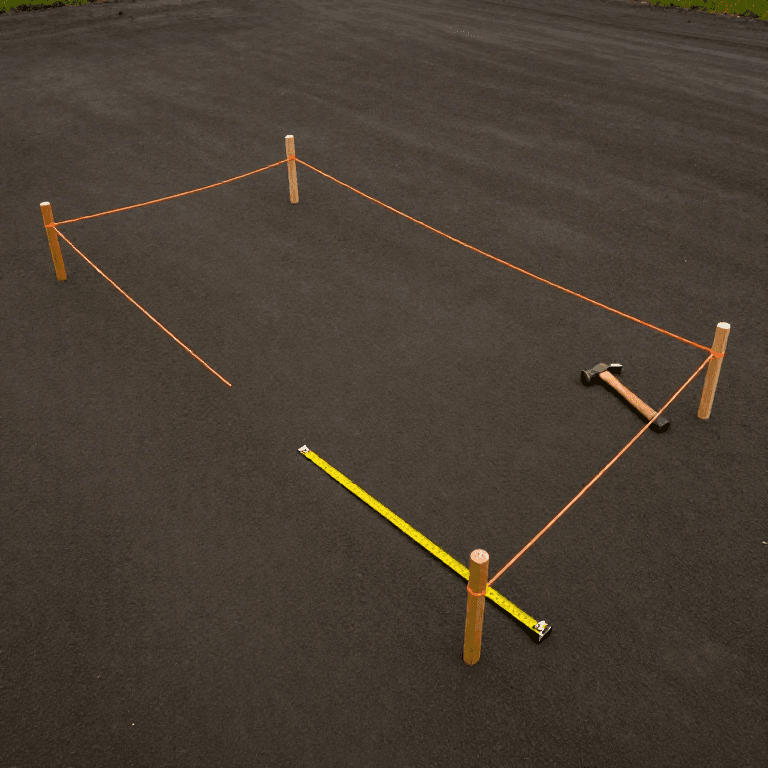
The embedded blueprint sets out a right angle with cords. A try square carries that angle to the bench, and Whitney's eccentric keeps it true.
3
3
Read US 17,991
Read US 17,991
"In the drawings herein referred to, a is the tongue, b is the beam, c is the flattened pin, d is the eccentric pin, e e are the screws which hold the beam together".
"By turning the eccentric pin the tongue will swing or vibrate in proportion to the throw of the eccentric. As the tongue swings, the oblong hole h, allows it to slide on the flattened pin, and the flattened pin being made to fill the hole the narrowest way, will always turn to favor the angle of the tongue."
4
4
Build the square and true it
Build the square and true it
**Beam.** Saw 15 cm of hardwood 30 × 15 mm from hardwood board and saw a slot 3 mm wide and 5 cm deep into one end for the tongue.
**Tongue.** Cut 20 cm of 25 × 3 mm mild steel flat bar and file one long edge dead straight. Near one end drill two 5 mm holes 3 mm apart and file between them into an oblong hole; 30 mm further along drill a 10 mm hole.
**Pins.** File two flats on the shank of an M5 bolt so it fills the oblong hole across its narrow way, and bolt it through the beam's cheeks and the oblong hole. For the eccentric, cut a disc 3 mm thick from 10 mm aluminium rod, drill it 5.5 mm half a millimetre off centre, file a screwdriver slot across its face, and fit it in the 10 mm hole on a second M5 bolt through the beam. Snug both nuts.
**Test.** Hold the beam on a board's straight edge and draw along the tongue. Flip the square and draw again. Measure the gap between the lines at 20 cm with the caliper and compare with the notebook. Turn the eccentric until the two lines coincide, then tighten both nuts. Check it against a bought try square.
Materiales para este paso:
 Tabla de madera dura1 pieza
 Pletina de acero dulce0.2 metro
 Varilla de aluminio0.02 metro
 Surtido de tornillos hexagonales1 pieza
 Tuerca hexagonal2 piezas
Herramientas necesarias:
 Serrucho
 Sierra para metales
 Taladro inalámbrico
 Juego de brocas
 Juego de limas de aguja
 Limas (lima de mano)
 Tornillo de banco
 Juego de destornilladores
 Llave inglesa
 Calibre digital de 6 pulgadas
 Lápiz
Lápiz Escuadra fija
5
5
A square that will not true or will not stay true
A square that will not true or will not stay true
Adjustable try square troubleshooting.
Flow
Loading...
6
6
History and honest limits
History and honest limits
**Joel Whitney** of Winchester, Middlesex County, Massachusetts, received US 17,991, dated 11 August 1857. His beam was a wooden centre piece between two metal plates held by screws, or all metal in two parts; the eccentric's journals were fitted to holes in the plates and slotted for a screwdriver, and radial lines on the plate could guide the tongue to other angles.
**Honest limits.** A hardwood beam with a sawn slot, filed bolts and an aluminium eccentric stand in for his plated beam and journalled pins. The notebook treats the eccentric's swing as a small angle; its lengths and errors are examples. Your flip-test gaps are the result.
Materiales
5- 1 piezaMarcador de posición
- 0.2 metroMarcador de posición
- 0.02 metroMarcador de posición
- Marcador de posición
- 2 piezasMarcador de posición
Herramientas requeridas
12- Marcador de posición
- Marcador de posición
- 1 vendor sell this, none ship to you yetMarcador de posición
- Marcador de posición
- Marcador de posición
- Marcador de posición
- Marcador de posición
- Marcador de posición
- Marcador de posición
- Marcador de posición
- 1 vendor sell this, none ship to you yetMarcador de posición
- Marcador de posición
Este plano hace

Blueprints relacionados
Estos blueprints comparten conocimiento — técnicas, materiales o principios


CC0 Dominio público
Este Blueprint se publica bajo CC0. Eres libre de copiar, modificar, distribuir y usar este trabajo para cualquier propósito, sin pedir permiso.
Apoya al Maker comprando productos a través de su Blueprint, donde gana una Comisión del Maker establecida por los vendedores, o crea una nueva iteración de este Blueprint e inclúyela como conexión en tu propio Blueprint para compartir ingresos.