ARTE
BELLEZA Y BIENESTAR
ARTESANÍA
CULTURA E HISTORIA
ENTRETENIMIENTO
MEDIO AMBIENTE
COMIDA Y BEBIDAS
INGENIERÍA INVERSA
CIENCIAS
DEPORTES
TECNOLOGÍA
TECNOLOGÍA VESTIBLE
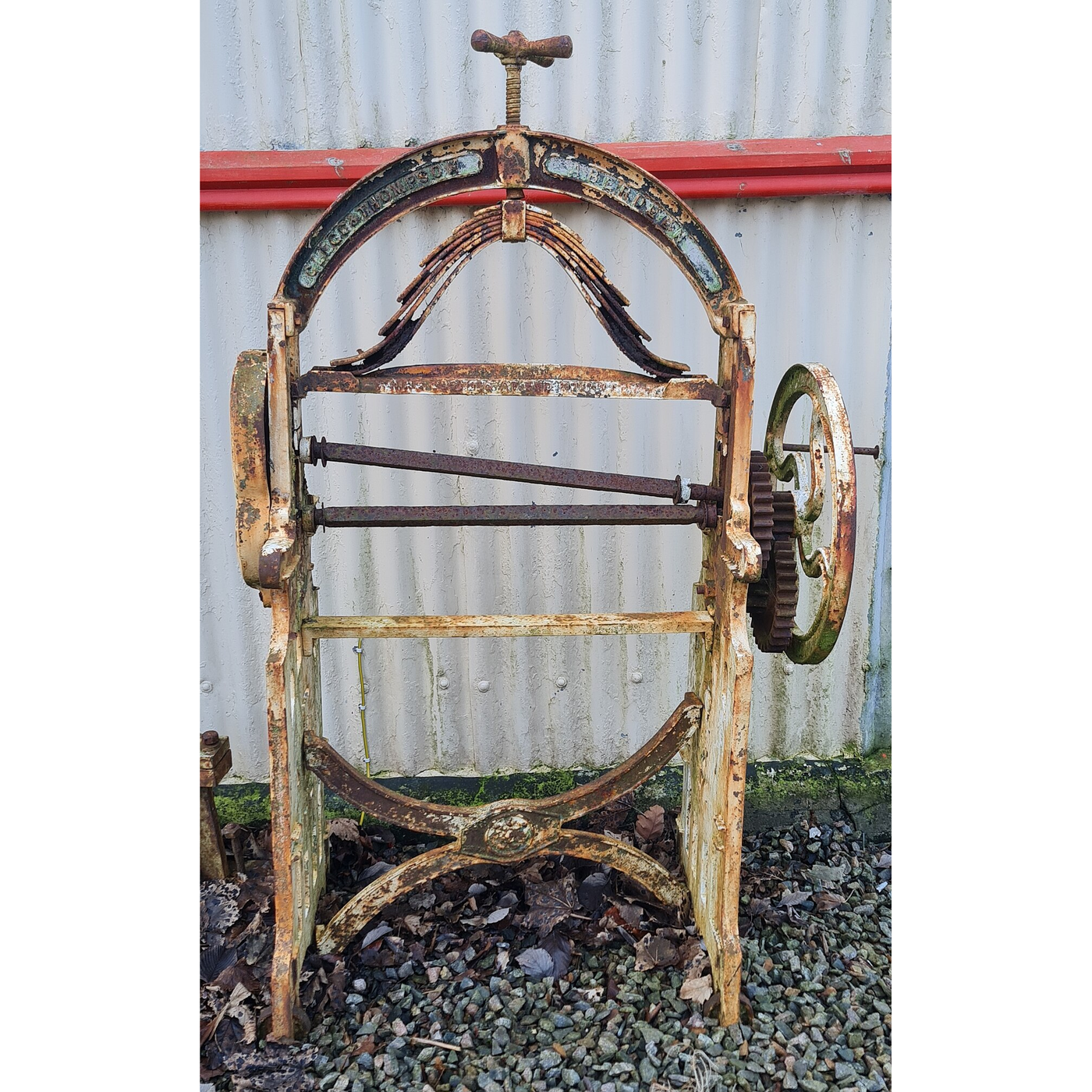

The Clothes Wringer: Two Rollers and a Spring
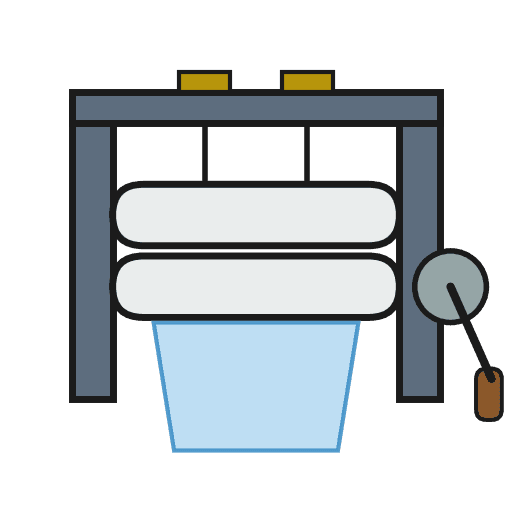
Washing clothes by hand leaves them heavy with water, and wringing a sheet by hand is slow, tiring and hard on the fabric. The wringer — two rubber rollers pressed together by springs and turned by a crank through gears — squeezes the water out as the cloth feeds through. Clamped to a tub or built onto a washing machine, it was in most homes that did their own washing for a century, until spin dryers took its place.
The design is a balance: more spring force takes out more water but needs more effort at the crank, wears the rubber and breaks buttons; the gearing trades speed for effort. And the nip that grips cloth grips fingers too — wringers had a release to spring the rollers apart.
This rung works out the crank effort and gearing and builds a small wringer.
Principiante
About 4 hours
Instrucciones
1
1
Crank effort, gearing and drying
Crank effort, gearing and drying
Cargando el cuaderno de Jupyter…
2
2
Two rollers, a different job
Two rollers, a different job
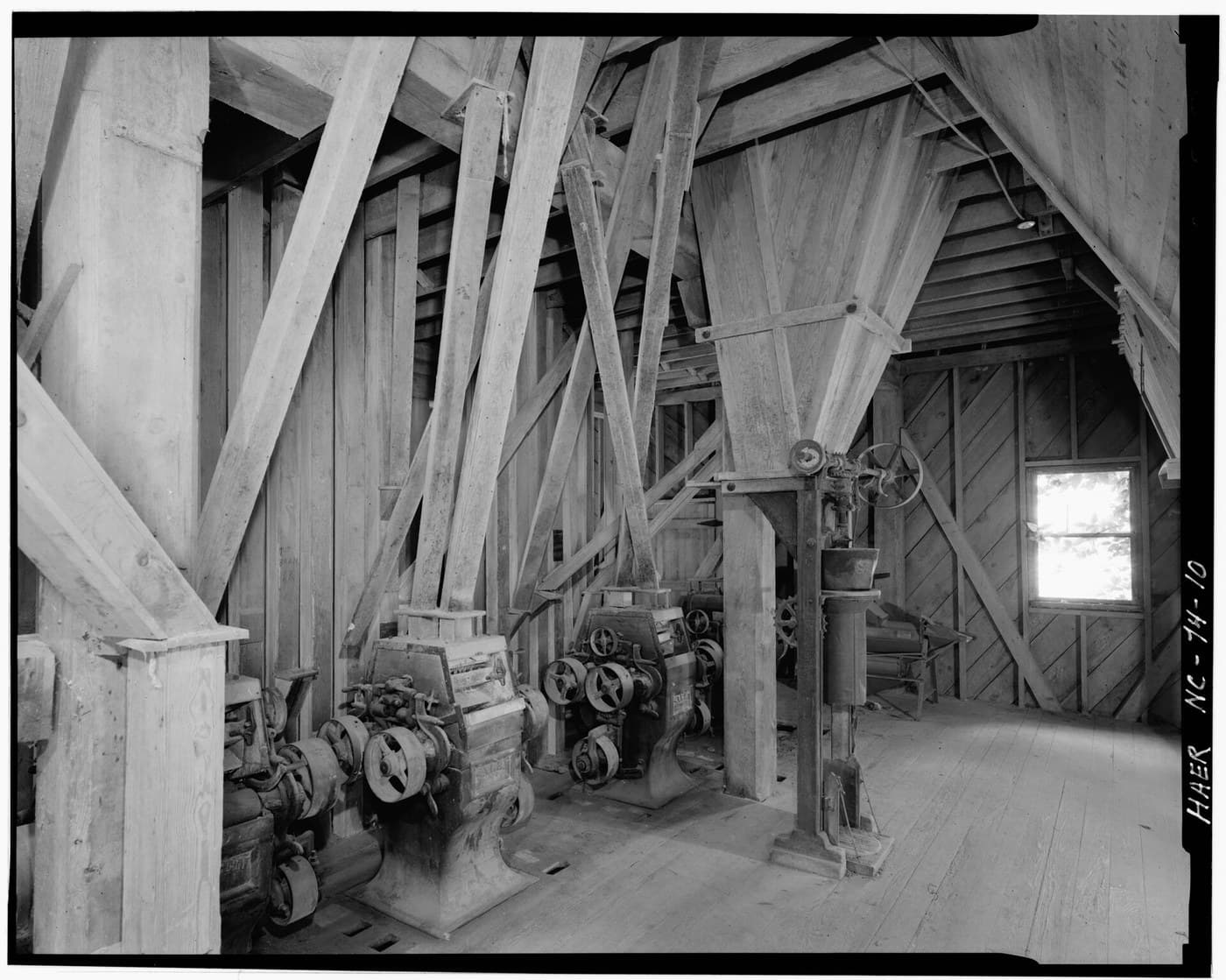
A roller mill crushes grain between rollers set a fixed gap apart; a wringer presses its rollers together with springs. The embedded blueprint shows the mill.
3
3
Build a small wringer
Build a small wringer
Cut two 250 mm lengths of 30 mm PVC pipe and slide each over a length of rubber hose, or wrap it tightly with rubber sheet glued down, to make the rollers. Run each on a steel shaft through holes in two plywood side frames: the bottom roller in fixed holes, the top roller in slots so it can move up.
Press the top shaft down with two compression springs under screw adjusters in the frame tops. Fit a crank to the bottom roller, and drive the top roller by gear or by friction from the bottom one. Add a lever that lifts the top roller's slot blocks against the springs — the safety release.
Soak cotton towels, weigh each wet, pass it through at three spring settings, and weigh again. Keep fingers well back from the nip: it pulls in whatever it grips.
Materiales para este paso:
 Tubo de PVC1 metro
 Plancha de caucho1 pieza
 Barra de acero en bruto2 piezas
 Tablero contrachapado1 pieza
 Surtido de muelles de compresión1 pieza
 Tornillos de máquina8 piezasTubo de PVC1 pieza
Herramientas necesarias:
 Taladro inalámbrico
 Juego de brocas
 Báscula digital de cocina
 Llave inglesa ajustable
 Pistola de cola caliente
4
4
A wringer not wringing
A wringer not wringing
Wringer faults.
Flow
Loading...
5
5
Context and honest limits
Context and honest limits
Hand-cranked wringers and box mangles spread through nineteenth-century homes and laundries; powered wringers sat on top of early electric washing machines until spin drying replaced them in the mid-twentieth century.
**Honest limits.** The notebook's spring force, rolling arm and water contents are illustrative; measure your own. Wringers caused many injuries to hands and hair — keep children away from any wringer, and never reach toward the nip while it turns.
Materiales
6- 1 piezaMarcador de posición
- 1 piezaMarcador de posición
- 2 piezasMarcador de posición
- 1 piezaMarcador de posición
- Marcador de posición
- 8 piezasMarcador de posición
Herramientas requeridas
5- 1 vendor sell this, none ship to you yetMarcador de posición
- Marcador de posición
- Marcador de posición
- Marcador de posición
- Marcador de posición
Este plano hace
Blueprints relacionados
Estos blueprints comparten conocimiento — técnicas, materiales o principios




CC0 Dominio público
Este Blueprint se publica bajo CC0. Eres libre de copiar, modificar, distribuir y usar este trabajo para cualquier propósito, sin pedir permiso.
Apoya al Maker comprando productos a través de su Blueprint, donde gana una Comisión del Maker establecida por los vendedores, o crea una nueva iteración de este Blueprint e inclúyela como conexión en tu propio Blueprint para compartir ingresos.