ARTE
BELLEZA Y BIENESTAR
ARTESANÍA
CULTURA E HISTORIA
ENTRETENIMIENTO
MEDIO AMBIENTE
COMIDA Y BEBIDAS
INGENIERÍA INVERSA
CIENCIAS
DEPORTES
TECNOLOGÍA
TECNOLOGÍA VESTIBLE
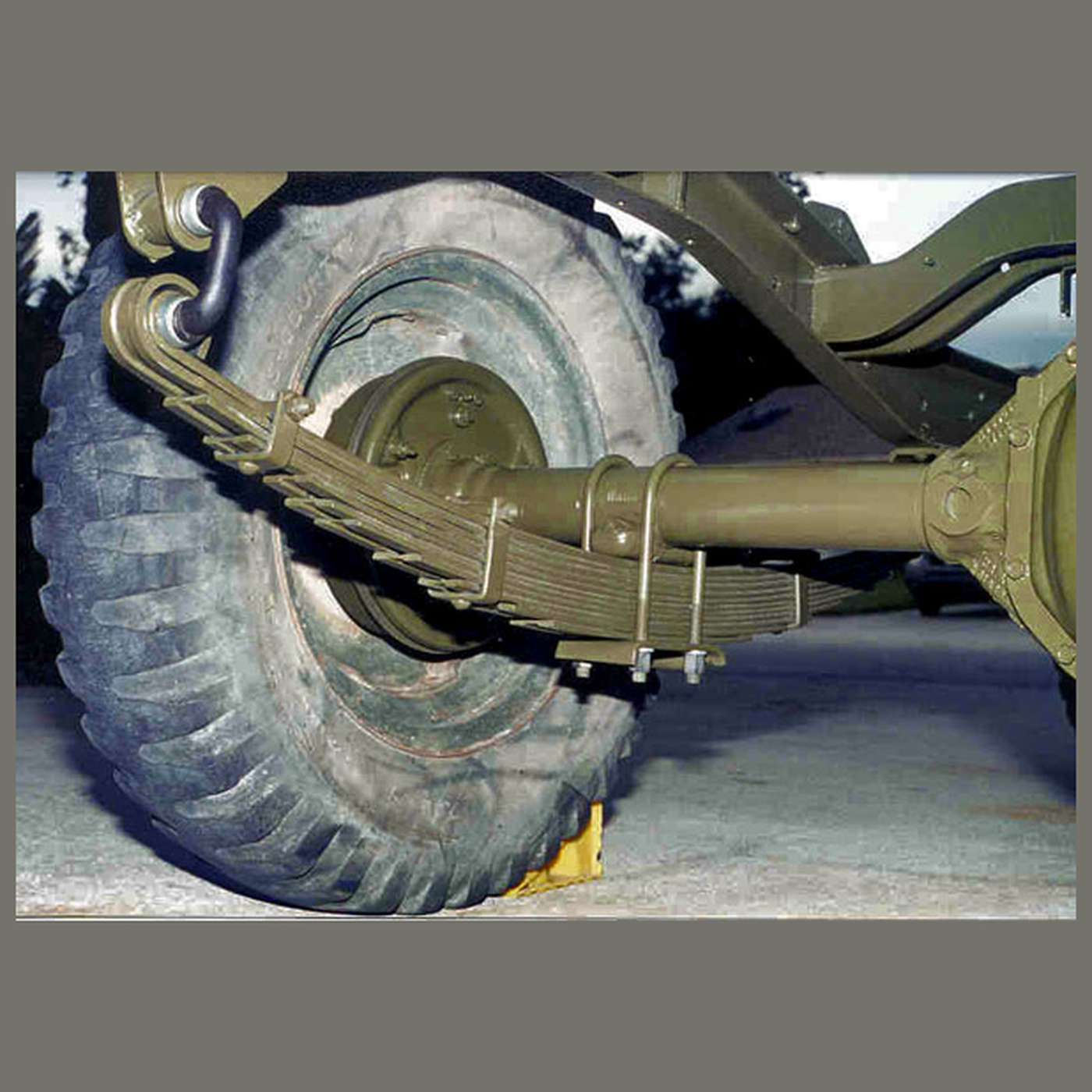

The Leaf Spring: A Beam That Carries the Load and Locates the Axle
Stack strips of spring steel, longest on top and each shorter one below, clamp them at the middle to an axle and hang the ends from the body: that is the leaf spring. It is the carriage spring of the early 1800s — Obadiah Elliott's elliptic spring of 1804 let coaches do away with the heavy perch that held the axles together — and it is still under most lorries and many pick-ups.
It does three jobs at once: it carries the load, it locates the axle so no other links are needed, and the leaves rubbing on each other damp the motion a little.
This rung works out a leaf spring's rate and the ride frequency it gives, and builds one from spring-steel strip to measure.
Principiante
About 3 hours
Instrucciones
1
1
Rate and ride frequency
Rate and ride frequency
Cargando el cuaderno de Jupyter…
2
2
Build a small leaf spring and measure it
Build a small leaf spring and measure it
Cut four strips of spring-steel strip: 300, 240, 180 and 120 mm long. Stack them centred, longest on top, and clamp them together at the middle with a bolt through a small hole (or a clamp). Bend a small eye at each end of the top leaf, or hook it over two dowels set 300 mm apart on a board.
Hang weights from the centre in steps and measure the sag with the steel rule. The slope of load against sag is the rate. Compare with the notebook's formula for your strip's width and thickness (measure them with calipers).
Now remove the two shortest leaves and repeat: the rate falls — and the top leaf now bends into a sharper curve at the centre, where it would crack first.
Materiales para este paso:
 Fleje de acero para muelles1 juego
 Tornillos de máquina2 piezas
 Espigas de madera dura1 juego
 Tablero contrachapado1 hoja
Herramientas necesarias:
 Tornillo de banco
 Calibre digital de 6 pulgadas
 Regla
Regla Dinamómetro (balanza de resorte)
 Guantes de trabajo de cuero
3
3
History and context
History and context
Laminated carriage springs developed through the eighteenth century; **Obadiah Elliott's elliptic spring of 1804** (a British patent) let coaches be built without the perch, and the semi-elliptic form went on to railway wagons and motor vehicles. No patent number is asserted here.
**Honest limits.** A leaf spring is heavy for the energy it stores. The friction between leaves damps small bumps poorly and large ones harshly, and changes as the leaves rust. And because the spring also locates the axle, the axle can wind up under hard acceleration and braking.
Materiales
4- 1 juegoMarcador de posición
- 2 piezasMarcador de posición
- 1 juegoMarcador de posición
- 1 hojaMarcador de posición
Herramientas requeridas
5- Marcador de posición
- Marcador de posición
- Marcador de posición
- Marcador de posición
- Marcador de posición
Este plano hace
Blueprints relacionados
Estos blueprints comparten conocimiento — técnicas, materiales o principios
Spring Rate: The One Number a Spring Is
por Emma
Mecánica
47
0
0
0
0
0

Spring Fatigue: It Is the Swing That Breaks It
por Emma
Trabajo en Metal
37
0
0
0
0
0
Balance: A Tiny Eccentricity Becomes an Enormous Force
por Martin
Ingeniería
43
0
0
0
0
0
Building a Wooden Cart Wheel — Hub, Spokes, and Felloes
por Woody
Carpintería
82
0
0
0
2
0
Ackermann Steering: The Inner Wheel Turns Further
por Martin
Mecánica
34
0
0
0
0
0
CC0 Dominio público
Este Blueprint se publica bajo CC0. Eres libre de copiar, modificar, distribuir y usar este trabajo para cualquier propósito, sin pedir permiso.
Apoya al Maker comprando productos a través de su Blueprint, donde gana una Comisión del Maker establecida por los vendedores, o crea una nueva iteración de este Blueprint e inclúyela como conexión en tu propio Blueprint para compartir ingresos.