ARTE
BELLEZA Y BIENESTAR
ARTESANÍA
CULTURA E HISTORIA
ENTRETENIMIENTO
MEDIO AMBIENTE
COMIDA Y BEBIDAS
INGENIERÍA INVERSA
CIENCIAS
DEPORTES
TECNOLOGÍA
TECNOLOGÍA VESTIBLE
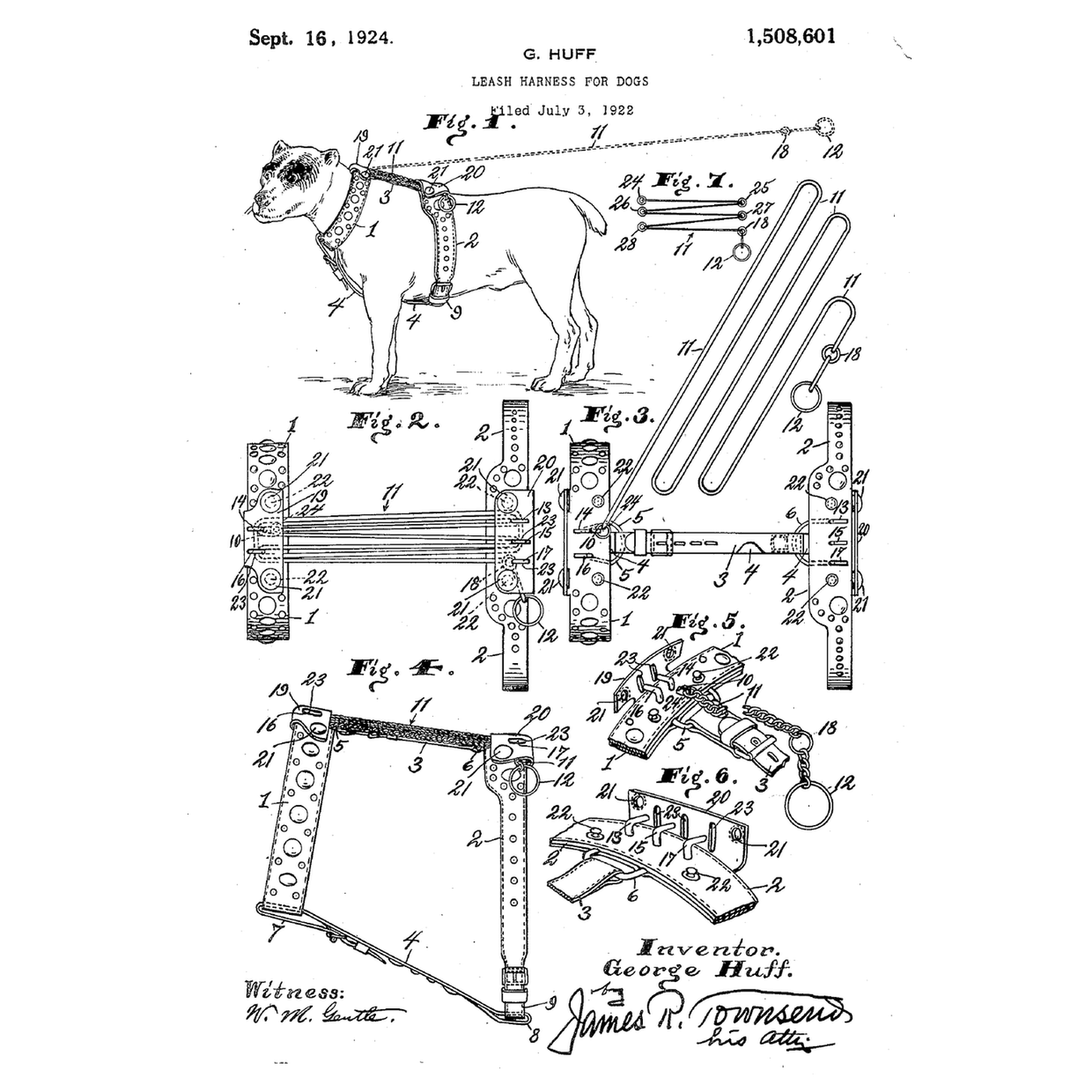


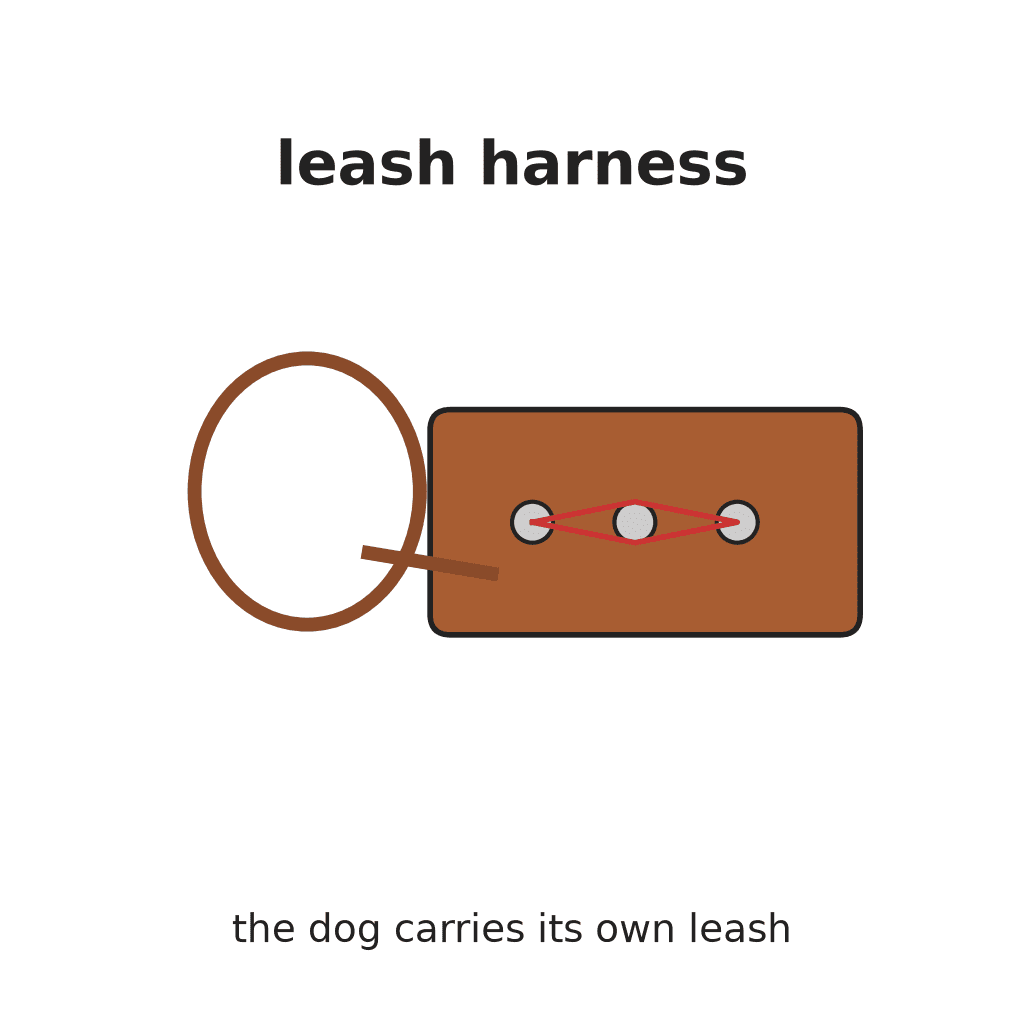
The Leash Harness: The Dog Carries Its Own Leash
A leash taken off to let a dog run has to be carried, and it gets lost; left on, it tangles and catches.
George Huff of Glendale, California, received US 1,508,601, dated 16 September 1924, for a leash harness: a collar and a saddle joined by bands, with the leash line fixed to the collar, and hooks on the collar and saddle on which the line is looped back and forth when the dog is freed, covered by flaps held with sockets and buttons.
This rung works out how much leash the harness can carry, then adds hooks and flaps to a dog harness and stores a cord leash on it.
Intermedio
About 4 hours
Instrucciones
1
1
Leash stored on the harness
Leash stored on the harness
Cargando el cuaderno de Jupyter…
2
2
Harness spreads the load
Harness spreads the load
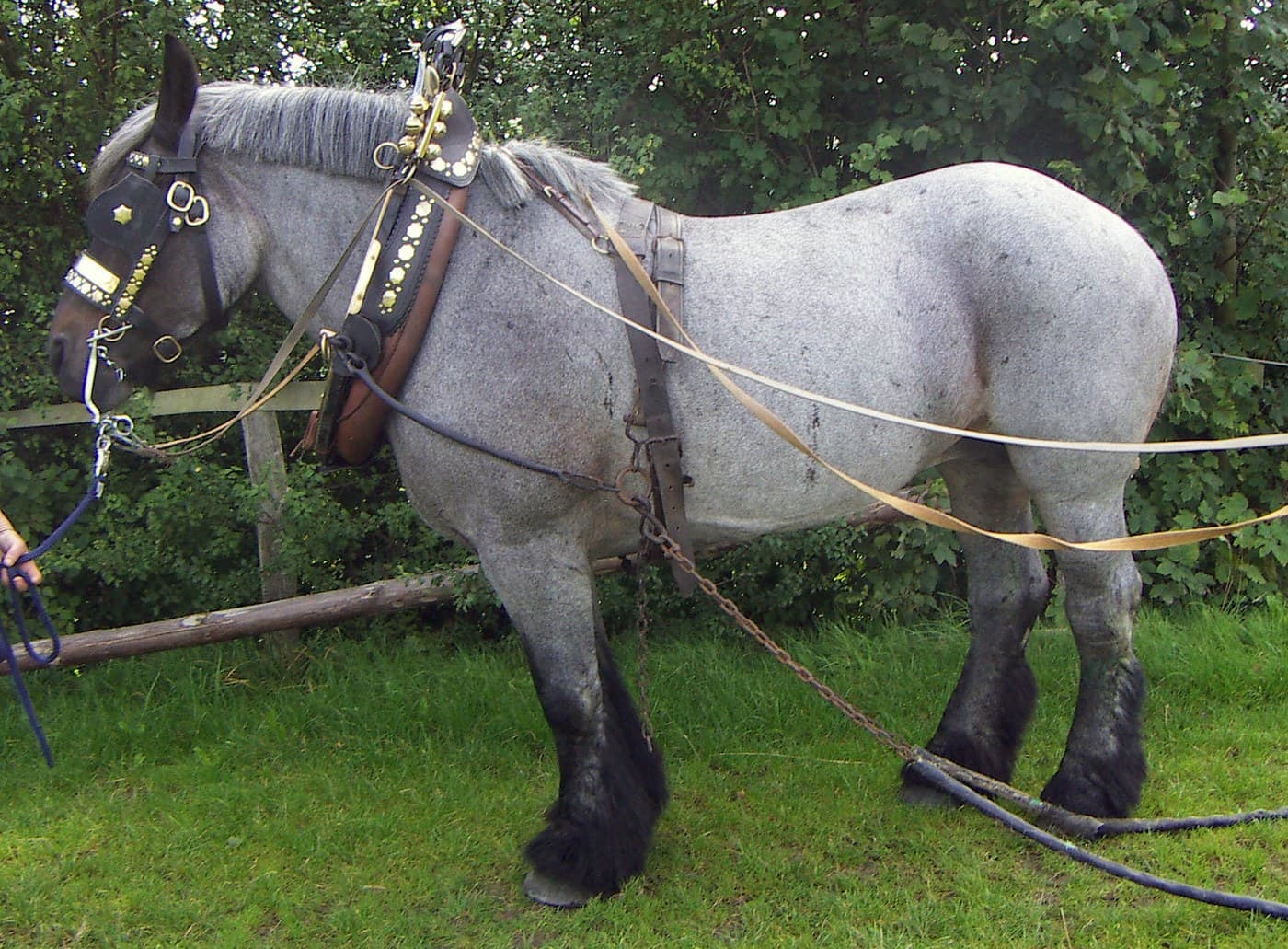
The embedded blueprint spreads a horse's pull over its shoulders. Huff's harness spreads the dog's load over collar and saddle, and uses them to carry the leash too.
3
3
Read US 1,508,601
Read US 1,508,601
"An object of this invention is to provide simple, light, attractive, durable and convenient means for leading, holding and freeing a dog with minimum impediment to the dog either when held or led or when freed."
"The invention comprises a harness for dogs provided with a leash, lead line or chain that can be used to hold a dog, and with means whereby the leash when not in such use may be stored as a part of the harness and will not interfere with free movement of the dog in running and playing".
4
4
Add hooks and flaps, and store the leash
Add hooks and flaps, and store the leash
Measure your dog's harness: the distance from the neck strap to the chest-and-back strap along the back, and across the back. Use the notebook to see how many runs your leash needs.
Bend five small open hooks from steel wire with the round-nose pliers, each with a closed eye at its foot. Sew two to the neck strap, one each side of the top, and three to the back strap, with heavy nylon thread through the eyes.
Cut two cotton flaps, hem them, and sew one above each group of hooks. Set snap fasteners so each flap closes over its hooks.
Fix the leash to the top of the neck strap. Run it back and forth between the collar and saddle hooks, close the flaps, and let the dog walk and play in a fenced yard for 10 minutes under your eye. Count how many runs came loose, and time how long it takes to free the leash for use.
Materiales para este paso:
 Arnés para perro1 pieza
 Correa para perro1 pieza
 Alambre de acero1 pieza
 Tejido de algodón (ligero)1 pieza
 Kit de botones de presión (alta resistencia)1 pieza
 Hilo de nailon1 pieza
Herramientas necesarias:
 Alicates de punta redonda
 Alicates de corte
 Agujas de coser a mano
 Tijeras de sastre
 Cinta métrica
5
5
A stored leash that comes loose or rubs
A stored leash that comes loose or rubs
Leash harness troubleshooting.
Flow
Loading...
6
6
History and honest limits
History and honest limits
**George Huff** of Glendale, California, filed US 1,508,601 on 3 July 1922; it was patented 16 September 1924. He meant it as "a practical substitute for detachable pocket chains" for dogs in crowded places.
**Honest limits.** Snap fasteners stand in for Huff's sockets and buttons. The notebook ignores the slack round each hook. Sizes are examples; your count of loose runs is the result.
Materiales
6- 1 piezaMarcador de posición
- 1 piezaMarcador de posición
- 1 piezaMarcador de posición
- 1 piezaMarcador de posición
- Marcador de posición
- 1 piezaMarcador de posición
Herramientas requeridas
5- Marcador de posición
- Marcador de posición
- Marcador de posición
- Marcador de posición
- 1 vendor sell this, none ship to you yetMarcador de posición
Este plano hace
Blueprints relacionados
Estos blueprints comparten conocimiento — técnicas, materiales o principios


CC0 Dominio público
Este Blueprint se publica bajo CC0. Eres libre de copiar, modificar, distribuir y usar este trabajo para cualquier propósito, sin pedir permiso.
Apoya al Maker comprando productos a través de su Blueprint, donde gana una Comisión del Maker establecida por los vendedores, o crea una nueva iteración de este Blueprint e inclúyela como conexión en tu propio Blueprint para compartir ingresos.