ARTE
BELLEZA Y BIENESTAR
ARTESANÍA
CULTURA E HISTORIA
ENTRETENIMIENTO
MEDIO AMBIENTE
COMIDA Y BEBIDAS
INGENIERÍA INVERSA
CIENCIAS
DEPORTES
TECNOLOGÍA
TECNOLOGÍA VESTIBLE
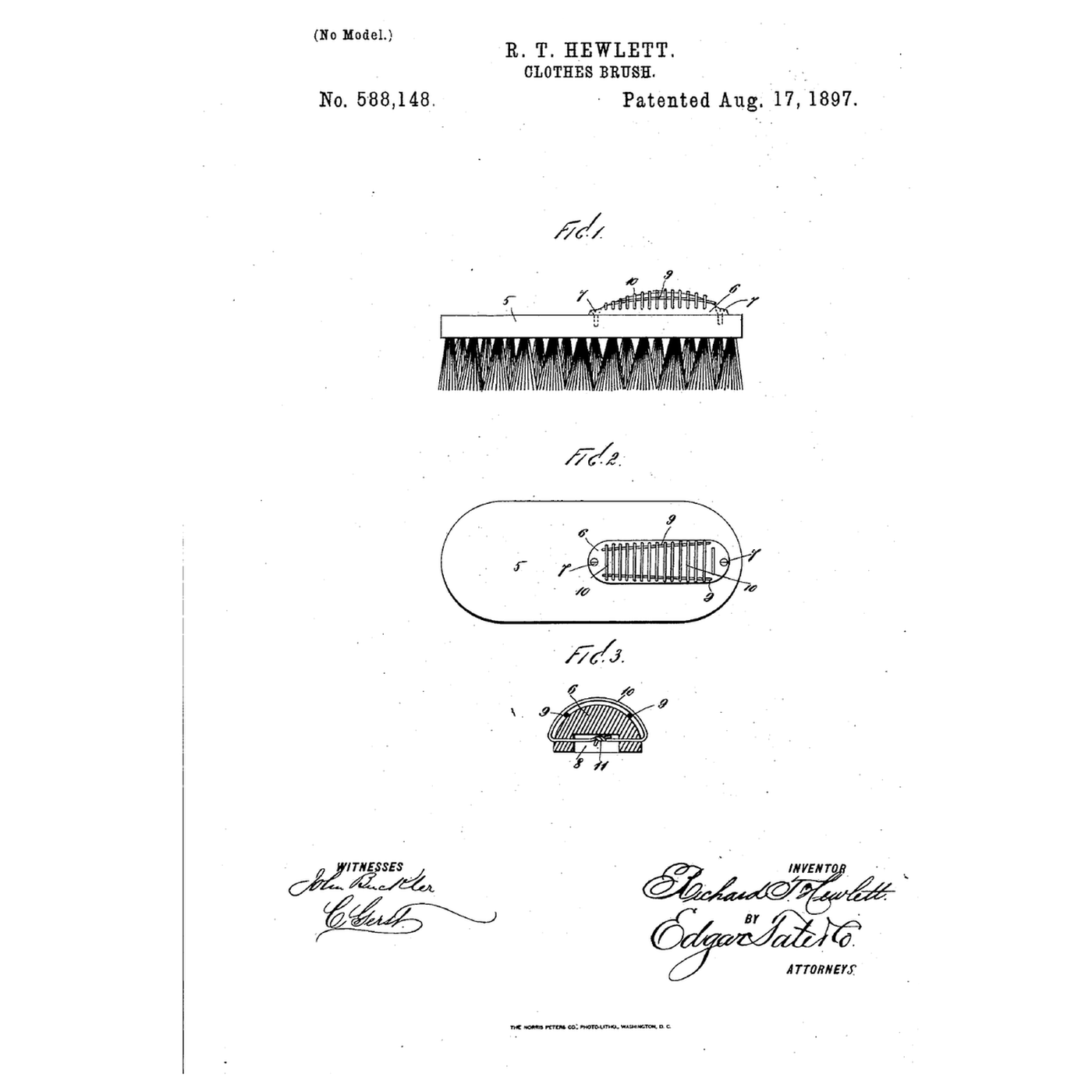


The Mud-Scraper Clothes Brush: Wire on the Back, Bristles on the Front
A clothes brush sweeps loose dust off cloth, but mud that has dried hard needs to be broken up first.
Richard Tanner Hewlett of London received US 588,148, dated 17 August 1897, for a clothes-brush "with an attachment for removing mud and other dirt from clothing after it has become caked or dried thereon": a convex block screwed to the brush's back and wrapped with wire lengthwise and crosswise.
This rung works out how the wires concentrate the push of the hand, then fits a wired block to a clothes brush and tests it on dried mud.
Principiante
About 2 hours, then a day to dry
Instrucciones
1
1
Pressure under the wires
Pressure under the wires
Cargando el cuaderno de Jupyter…
2
2
Ridges loosen dirt
Ridges loosen dirt
The embedded blueprint scrubs cloth over ridges to loosen dirt. Hewlett puts the ridges on the back of the brush and rubs them over the cloth.
3
3
Read US 588,148
Read US 588,148
"This invention relates to brushes for cleaning clothes; and the object thereof is to provide a brush of this class with an attachment for removing mud and other dirt from clothing after it has become caked or dried thereon."
"Whenever it is desired to remove dried mud or other dirt from clothing, the attachment is rubbed thereover, the corrugated surface formed by the wires 9 and 10 operating to loosen and break up the dirt or mud, after which the same may be brushed off in the usual manner."
4
4
Fit a wired block and test it on dried mud
Fit a wired block and test it on dried mud
Cut a block of hardwood the length and width of the brush's back. Sand its face into a gentle curve both ways, and cut a groove along the middle of its flat side. Wrap steel wire round it three times lengthwise and eight times crosswise, pulling each turn tight, and twist the ends together in the groove. Screw the block to the brush's back with its flat side down.
Mix garden soil with water to a thick mud. Smear equal patches on two pieces of cotton fabric and let them dry for a day. Clean one with the brush alone and one with the wired block then the brush, counting the strokes until each is clean.
Materiales para este paso:
 Tabla de madera dura1 pieza
 Alambre de acero1 pieza
 Tornillos para madera2 piezas
 Tejido de algodón (ligero)1 pieza
 Tierra de jardín200 g
 Agua100 ml
Herramientas necesarias:
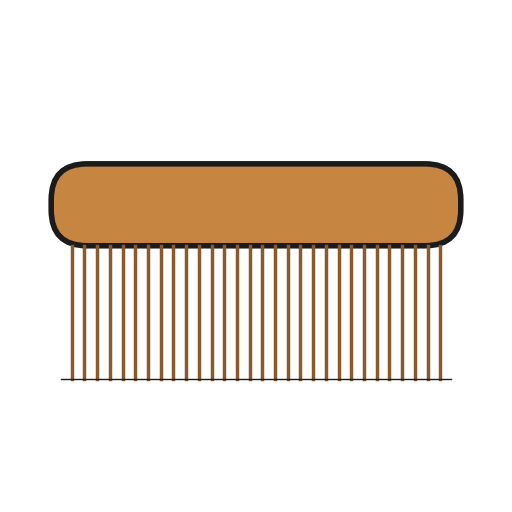 Cepillo para la ropa
 Segueta (sierra de marquetería)
 Papel de lija
 Taladro inalámbrico
 Juego de brocas
 Alicates de punta fina
 Alicates de corte
 Regla
Regla5
5
A scraper that snags the cloth or leaves the mud
A scraper that snags the cloth or leaves the mud
Clothes-brush scraper troubleshooting.
Flow
Loading...
6
6
History and honest limits
History and honest limits
**Richard Tanner Hewlett** of London filed US 588,148 on 25 February 1897; it is dated 17 August 1897. He noted that "any suitable roughened surface" would serve as well as the wires.
**Honest limits.** The notebook assumes each wire presses an even strip and the wood none; a curved block presses harder at its crown. Sizes and counts are examples. Your stroke counts are the measurement.
Materiales
6- 1 piezaMarcador de posición
- 1 piezaMarcador de posición
- 2 piezasMarcador de posición
- 1 piezaMarcador de posición
- 200 gMarcador de posición
- 100 mlMarcador de posición
Herramientas requeridas
8- Marcador de posición
- Marcador de posición
- Marcador de posición
- 1 vendor sell this, none ship to you yetMarcador de posición
- Marcador de posición
- Marcador de posición
- Marcador de posición
- Marcador de posición
Blueprints relacionados
Estos blueprints comparten conocimiento — técnicas, materiales o principios



CC0 Dominio público
Este Blueprint se publica bajo CC0. Eres libre de copiar, modificar, distribuir y usar este trabajo para cualquier propósito, sin pedir permiso.
Apoya al Maker comprando productos a través de su Blueprint, donde gana una Comisión del Maker establecida por los vendedores, o crea una nueva iteración de este Blueprint e inclúyela como conexión en tu propio Blueprint para compartir ingresos.