ARTE
BELLEZA Y BIENESTAR
ARTESANÍA
CULTURA E HISTORIA
ENTRETENIMIENTO
MEDIO AMBIENTE
COMIDA Y BEBIDAS
INGENIERÍA INVERSA
CIENCIAS
DEPORTES
TECNOLOGÍA
TECNOLOGÍA VESTIBLE
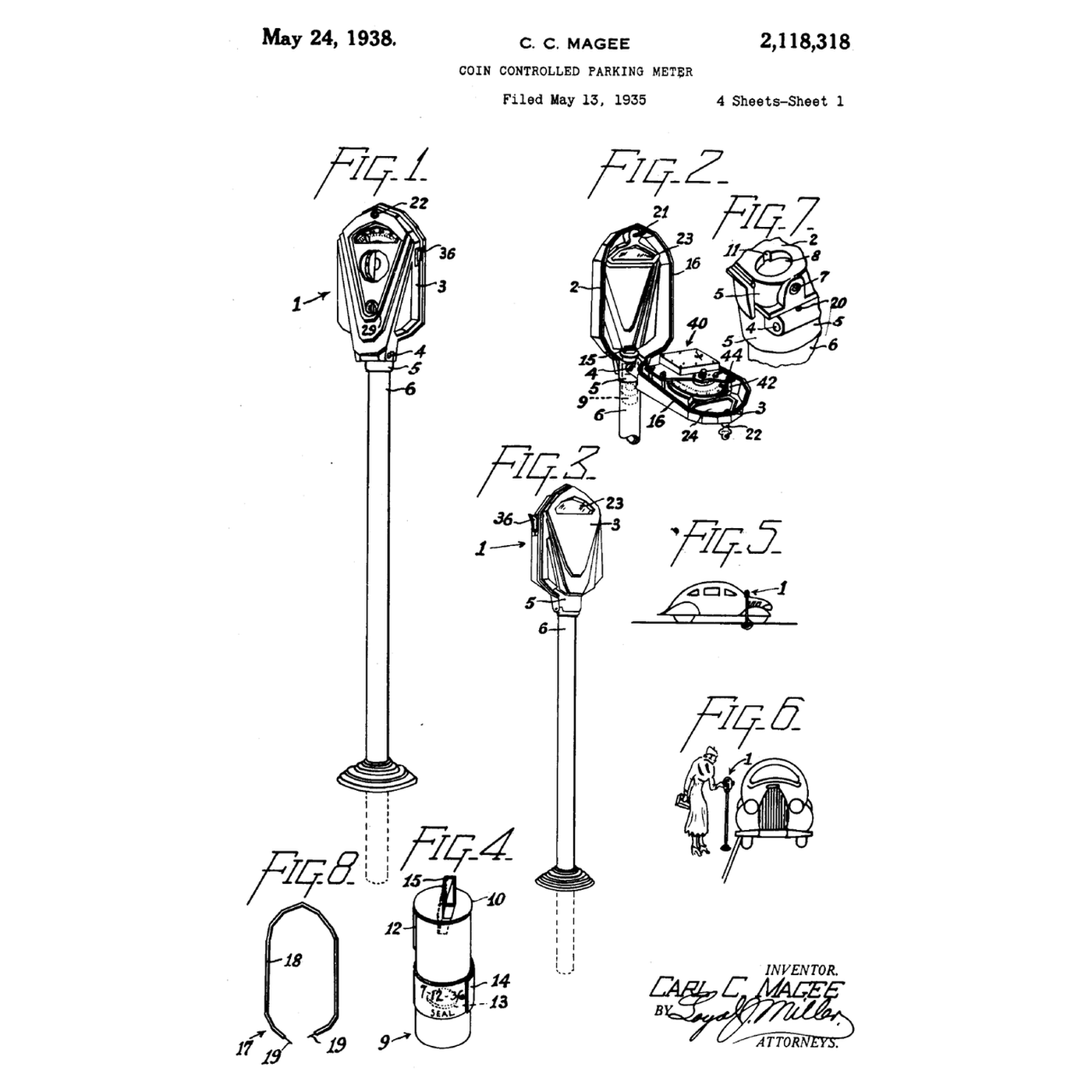


The Parking Meter: A Coin That Unlocks a Clock
By the 1930s city streets were lined with cars parked all day, and shops lost the customers who could not stop. A parking meter rations the kerb: a coin buys a set time, and a signal shows anyone passing when it has run out.
Carl C. Magee of Oklahoma City, assignor to the Dual Parking Meter Company, filed US 2,118,318, *Coin Controlled Parking Meter*, on 13 May 1935; it was granted 24 May 1938. Inside a lockable head on a post, a coin completes the winding mechanism; turning the handle winds a spring; an escapement-governed train runs it down; a signal shows while the time lasts and vanishes when it has elapsed. The last coin shows in a window, and the coins fall into a sealed container so the collections can be checked. Oklahoma City installed Magee's meters in July 1935.
This rung designs the gear train and the spring for a one-hour meter and builds a coin-interlocked timer from a wind-up motor.
Intermedio
About 5 hours
Instrucciones
1
1
Gear ratio and spring energy
Gear ratio and spring energy
Cargando el cuaderno de Jupyter…
2
2
One parking, as the patent describes it
One parking, as the patent describes it
Espacio de trabajo Blockly
Loading Blockly workspace...
3
3
What keeps the time
What keeps the time
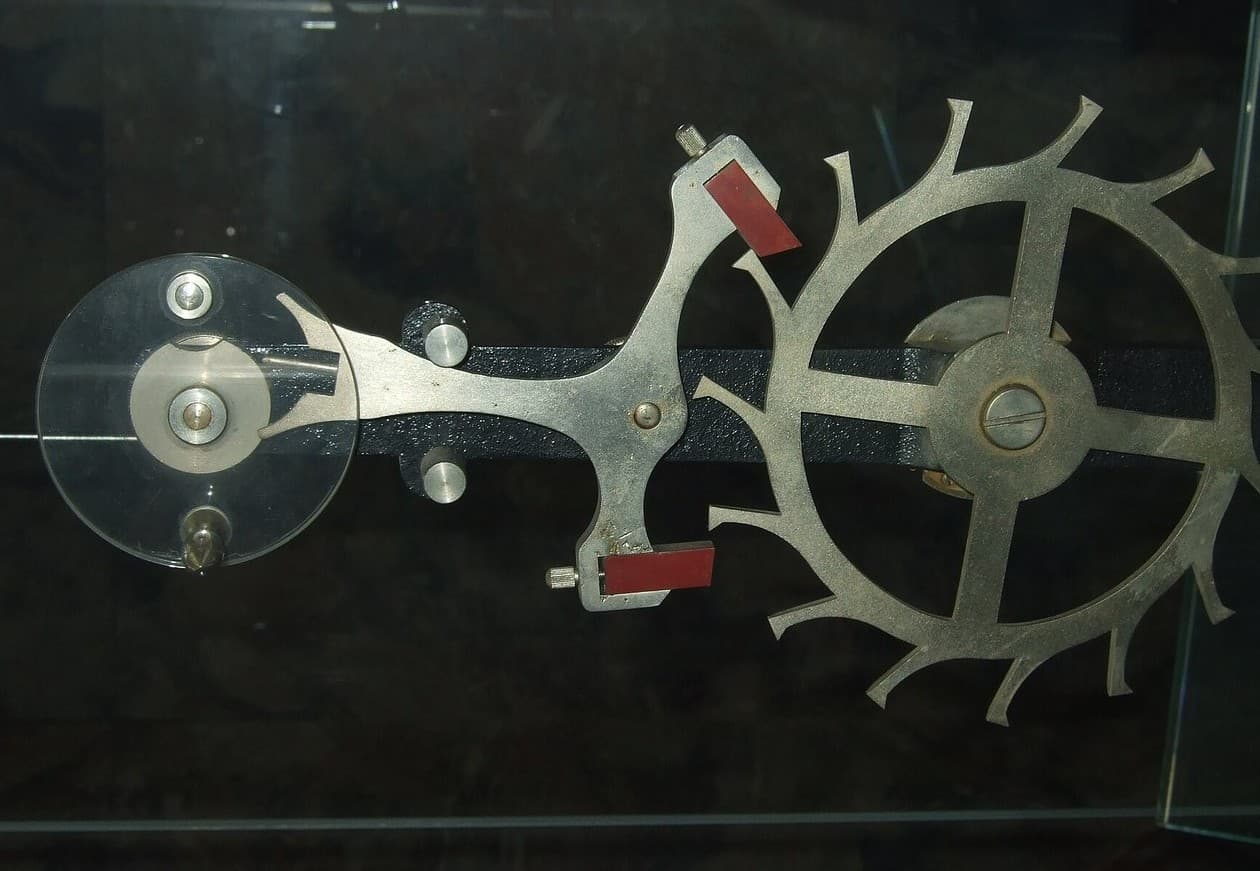
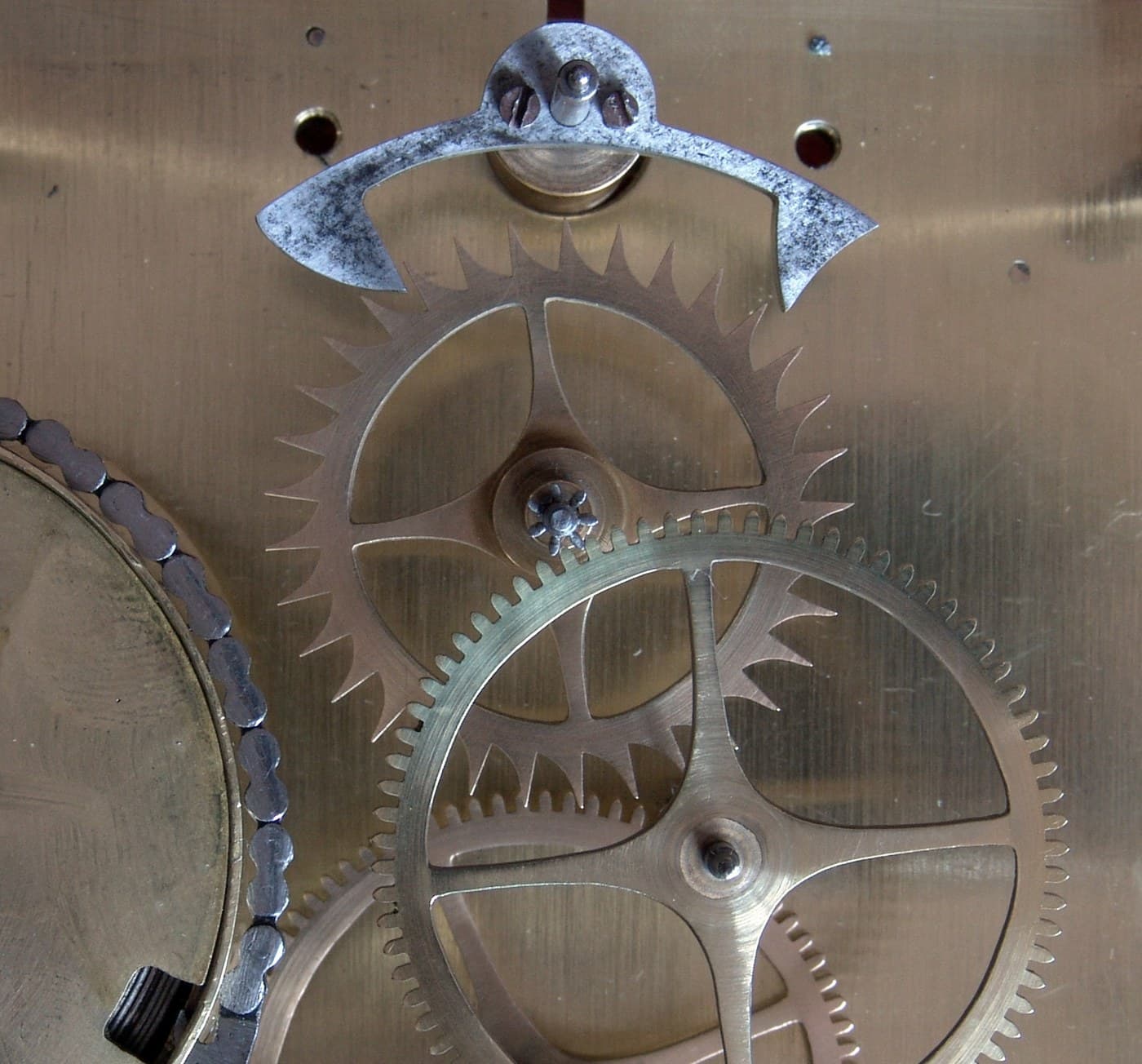
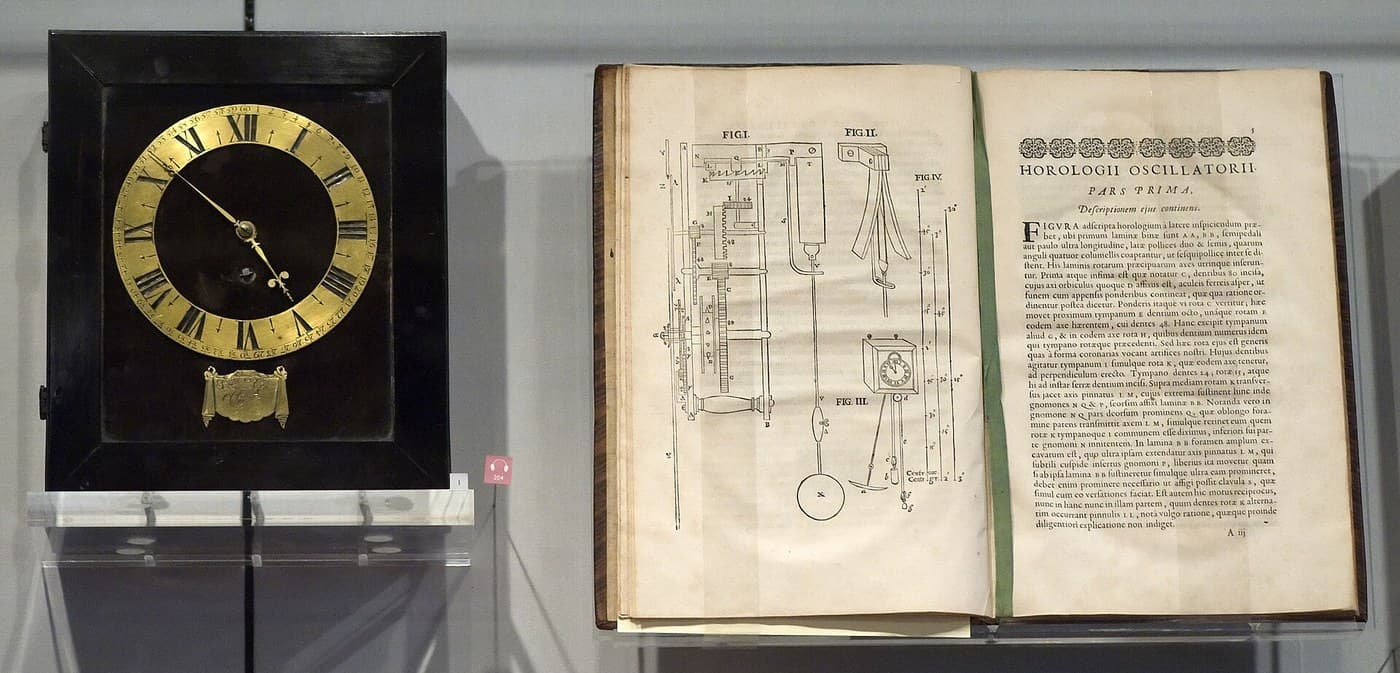
The meter's clockwork is governed by an escapement. The embedded blueprint shows how an escapement releases a gear train one tooth at a time.
4
4
Build a coin-interlocked timer
Build a coin-interlocked timer
Take a wind-up motor mechanism and fit a pointer to its slowest output shaft; mark the run-down time of a full wind on a card dial behind it.
Make the winding key the interlock, as Magee's coin was. 3D-print a crank that drives the winding shaft through a sliding coupling: two halves with a slot between them exactly as wide as the coin. Without a coin the outer half turns freely; drop a coin into the slot and it locks the halves together, so the crank winds the spring. Put a ramp below so that when the crank has turned half a revolution the coin falls out of the slot into a box.
Try it without a coin: the crank spins, nothing winds. With a coin: one wind, the pointer runs down across its dial. Time a full run and compare with the card.
Materiales para este paso:
 Mecanismo de motor de cuerda1 pieza
 Moneda de cobre3 piezas
 Tablero contrachapado1 pieza
 Tornillos de máquina6 piezas
 Espigas de madera dura1 pieza
Herramientas necesarias:
 Impresora 3D de filamento (FDM)
 Filamento PETG
 Taladro inalámbrico
 Juego de brocas
 Calibre digital de 6 pulgadas
 Cronómetro
5
5
A meter that takes the coin but gives no time
A meter that takes the coin but gives no time
Coin-operated timer faults.
Flow
Loading...
6
6
History and honest limits
History and honest limits
**Carl C. Magee** of Oklahoma City filed **US 2,118,318** on 13 May 1935, assigned to the Dual Parking Meter Company; granted 24 May 1938. Oklahoma City installed 150 of his meters along 14 blocks downtown in July 1935, charging five cents an hour; within a few years they spread to cities across the United States and abroad.
**Honest limits.** The notebook's beat rate, train losses and spring figures are illustrative, not Magee's. The printed interlock accepts anything the size of the coin — real meters gauge a coin's diameter, thickness and sometimes its metal.
Materiales
5- Mecanismo de motor de cuerda10% de comisión1 piezaMarcador de posición
- 3 piezasMarcador de posición
- 1 piezaMarcador de posición
- 6 piezasMarcador de posición
- 1 piezaMarcador de posición
Herramientas requeridas
6- Marcador de posición
- Marcador de posición
- 1 vendor sell this, none ship to you yetMarcador de posición
- Marcador de posición
- Marcador de posición
- Marcador de posición
Blueprints relacionados
Estos blueprints comparten conocimiento — técnicas, materiales o principios


CC0 Dominio público
Este Blueprint se publica bajo CC0. Eres libre de copiar, modificar, distribuir y usar este trabajo para cualquier propósito, sin pedir permiso.
Apoya al Maker comprando productos a través de su Blueprint, donde gana una Comisión del Maker establecida por los vendedores, o crea una nueva iteración de este Blueprint e inclúyela como conexión en tu propio Blueprint para compartir ingresos.