ARTE
BELLEZA Y BIENESTAR
ARTESANÍA
CULTURA E HISTORIA
ENTRETENIMIENTO
MEDIO AMBIENTE
COMIDA Y BEBIDAS
INGENIERÍA INVERSA
CIENCIAS
DEPORTES
TECNOLOGÍA
TECNOLOGÍA VESTIBLE
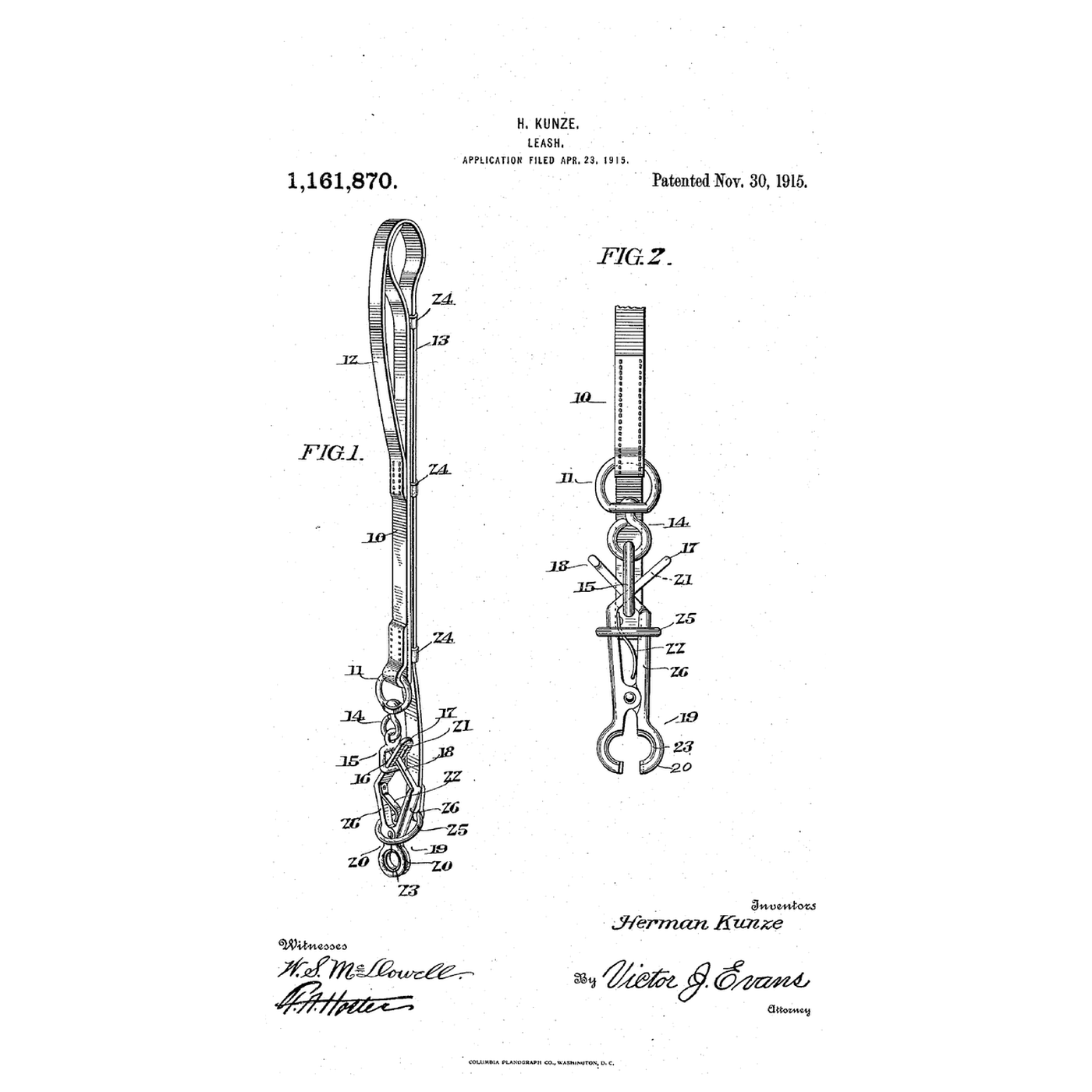


The Ring-Release Snap Hook: Change Your Grip and the Dog Frees Itself
A snap hook holds a leash to a collar no matter how the dog pulls, but that is also why it is hard to open while the dog is pulling.
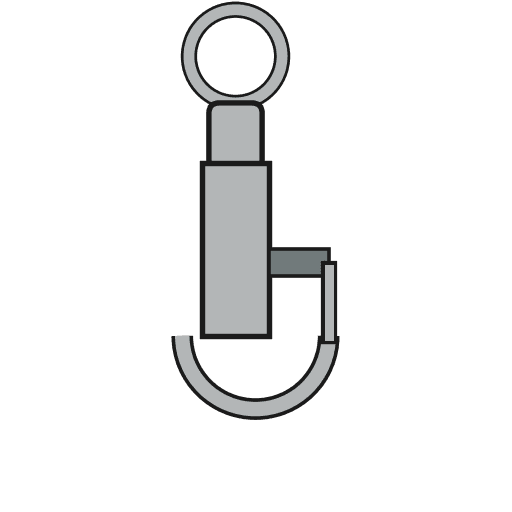
Hermann Kunze of Philadelphia received US 1,161,870, dated 30 November 1915, for a leash whose snap hook has two pivoted jaws kept shut by a spring, with diverging shanks and a ring round them carried on a second strap. Grasping that strap instead of the handle lets the dog's own pull slide the ring up the shanks and open the jaws.
This rung works out the pull that opens the hook, then builds a bench model and measures it.
Intermedio
About 3 hours
Instrucciones
1
1
The ring as a wedge
The ring as a wedge
Cargando el cuaderno de Jupyter…
2
2
Two jaws, one pivot, one spring
Two jaws, one pivot, one spring
The embedded blueprint closes two jaws with a spring and opens them by squeezing the other ends. Kunze's ring does the squeezing.
3
3
Read US 1,161,870
Read US 1,161,870
"An object of the invention is to provide a leash for securing animals, particularly hounds, and which permits of readily releasing the animal from leash."
"When it is desired to suddenly release the animal from leash, the hand is removed from the handle 12 and arranged to grasp the upper end of the supplementary strap 13, thus in view of the pull exerted by the animal causing the actuating member 25 to slide upwardly on the snap hook and bear against the faces of the shanks 26".
"The animal can be released from leash without necessitating any manual operation on the part of the operator other than the changing of the grip of the hand from the handle 12 to the supplementary strap 13."
4
4
Build a bench model and measure the opening pull
Build a bench model and measure the opening pull
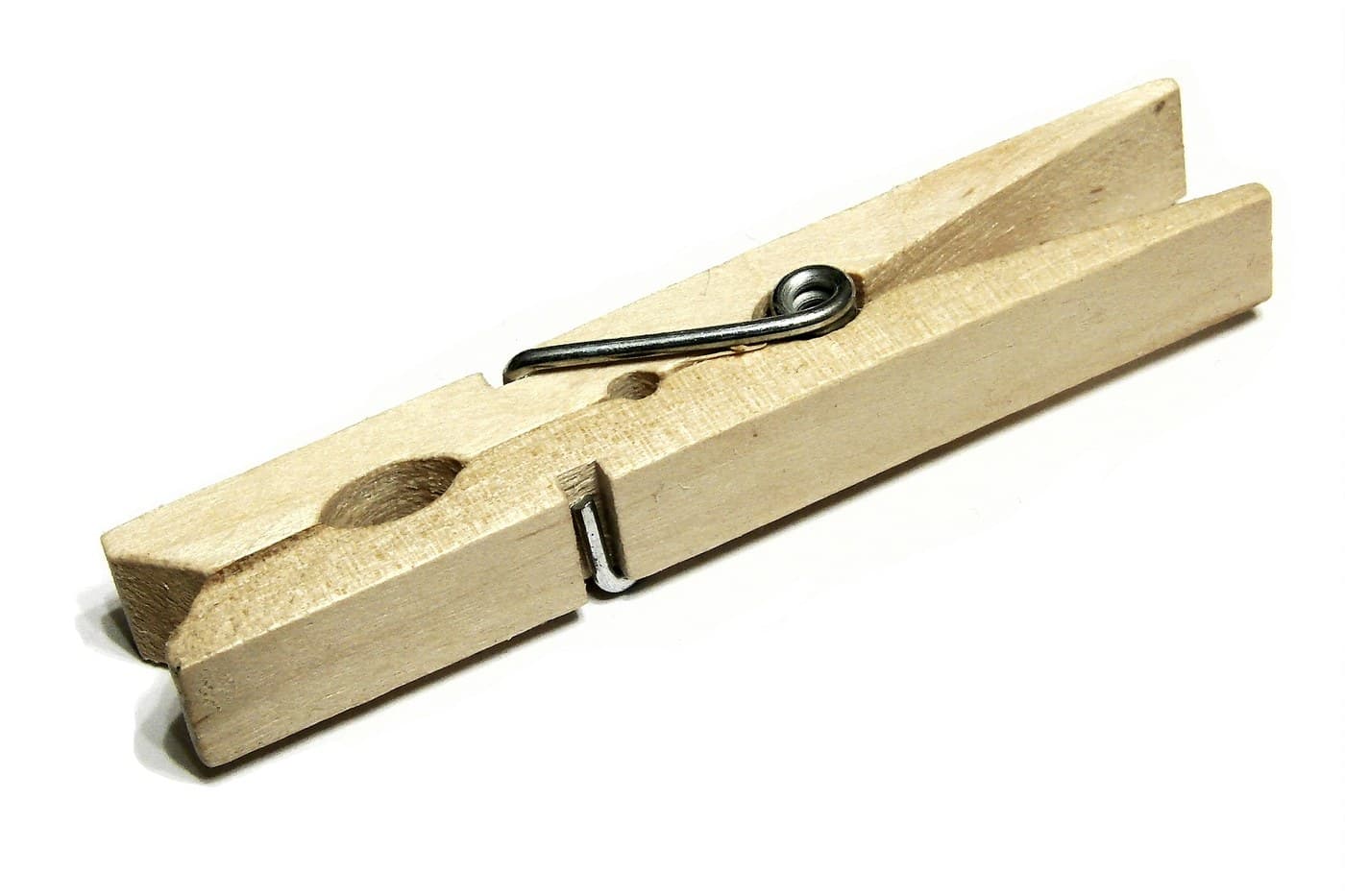
Draw two pieces on plywood, each with a jaw curled inward at the bottom, a shank at the top and a tab reaching to the centre line between them. Cut them with the coping saw and bolt the two tabs together with a washer between, so each piece stays on its own side like the two halves of a clothespin: the jaws meet below the bolt and the shanks spread apart above it at about 10 degrees each. Stretch a rubber band round the jaws so it holds them shut.
Bend steel wire into a ring that slides freely on the shanks just above the bolt. Tie paracord to the ring.
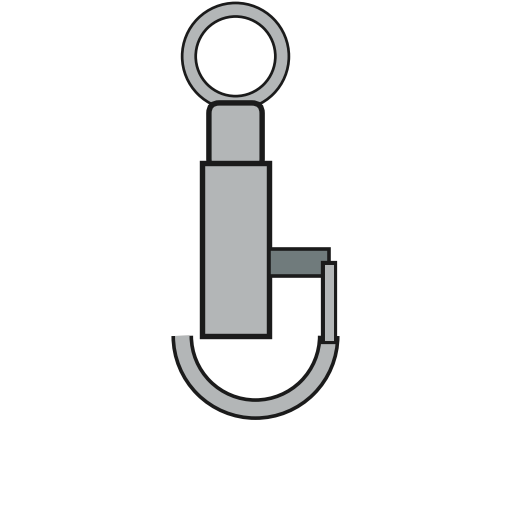
Tie a cord round the bolt and fix it to the bench, and hook a loop of cord in the jaws as the collar. Pull the shanks together with the spring scale to read the force that just opens the jaws. Then pull the ring's cord up the shanks, away from the bolt, with the spring scale and read the pull when the jaws open. Measure the shank angle with the protractor and compare with the notebook. Look at a real snap hook and find its spring and gate.
Materiales para este paso:
 Tablero contrachapado1 pieza
 Surtido de tornillos hexagonales1 pieza
 Arandela plana2 piezas
 Gomas elásticas1 pieza
 Alambre de acero1 pieza
 Paracord1 pieza
Herramientas necesarias:
 Mosquetón
 Segueta (sierra de marquetería)
 Taladro inalámbrico
 Juego de brocas
 Papel de lija
 Alicates de punta fina
 Dinamómetro de muelle
 Transportador de ángulos
 Gato de tornillo en C
5
5
A hook that will not open, or opens by itself
A hook that will not open, or opens by itself
Ring-release snap hook troubleshooting.
Flow
Loading...
6
6
History and honest limits
History and honest limits
**Hermann Kunze** of Philadelphia filed US 1,161,870 on 23 April 1915; it was patented 30 November 1915. He wrote that it was particularly adapted for "what are commonly known as police dogs".
**Honest limits.** The notebook treats the ring as a smooth wedge and the spring force as constant. Angles and forces are examples. Your measured pull is the result.
Materiales
6- 1 piezaMarcador de posición
- Marcador de posición
- 2 piezasMarcador de posición
- 1 piezaMarcador de posición
- 1 piezaMarcador de posición
- 1 piezaMarcador de posición
Herramientas requeridas
9- Marcador de posición
- Marcador de posición
- 1 vendor sell this, none ship to you yetMarcador de posición
- Marcador de posición
- Marcador de posición
- Marcador de posición
- Marcador de posición
- Marcador de posición
- Marcador de posición
Este plano hace
Blueprints relacionados
Estos blueprints comparten conocimiento — técnicas, materiales o principios

CC0 Dominio público
Este Blueprint se publica bajo CC0. Eres libre de copiar, modificar, distribuir y usar este trabajo para cualquier propósito, sin pedir permiso.
Apoya al Maker comprando productos a través de su Blueprint, donde gana una Comisión del Maker establecida por los vendedores, o crea una nueva iteración de este Blueprint e inclúyela como conexión en tu propio Blueprint para compartir ingresos.