ARTE
BELLEZA Y BIENESTAR
ARTESANÍA
CULTURA E HISTORIA
ENTRETENIMIENTO
MEDIO AMBIENTE
COMIDA Y BEBIDAS
INGENIERÍA INVERSA
CIENCIAS
DEPORTES
TECNOLOGÍA
TECNOLOGÍA VESTIBLE
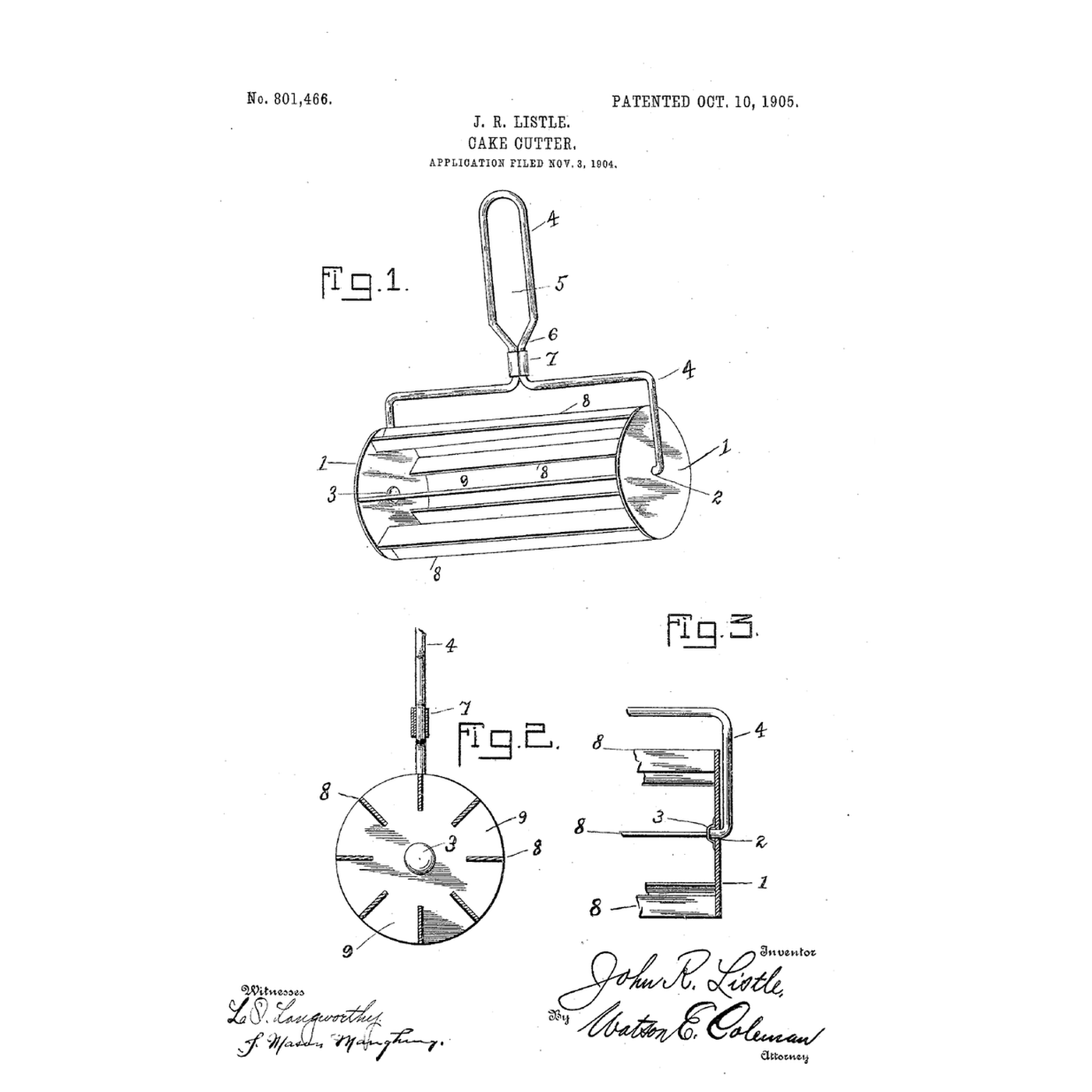


The Rolling Dough Cutter: Pieces That Share Their Edges
Round cutters leave scraps between them, and every scrap must be rolled out and cut again.
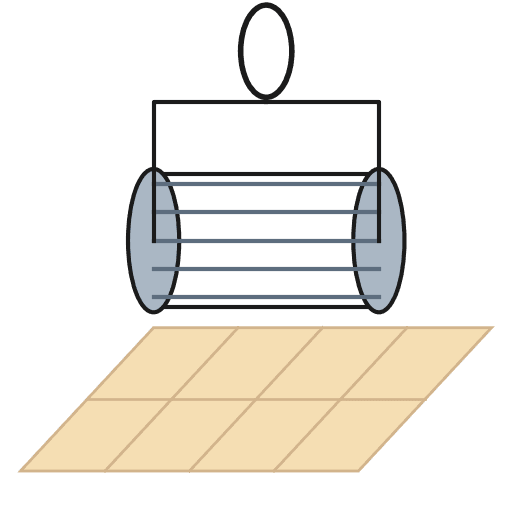
John R. Listle of Kalispell, Montana, received US 801,466, dated 10 October 1905, for a cake-cutter made of two tin disks joined by narrow tin blades set radially between them, rolled over the dough on a wire handle, "leaving a minimum amount of material to be worked over the second time".
This rung works out how much dough round cutters waste, then builds a rolling cutter from tin cans and compares its scraps with a round cutter's.
Intermedio
About 3 hours
Instrucciones
1
1
Scraps: round against rolling
Scraps: round against rolling
Cargando el cuaderno de Jupyter…
2
2
A roller with still handles
A roller with still handles
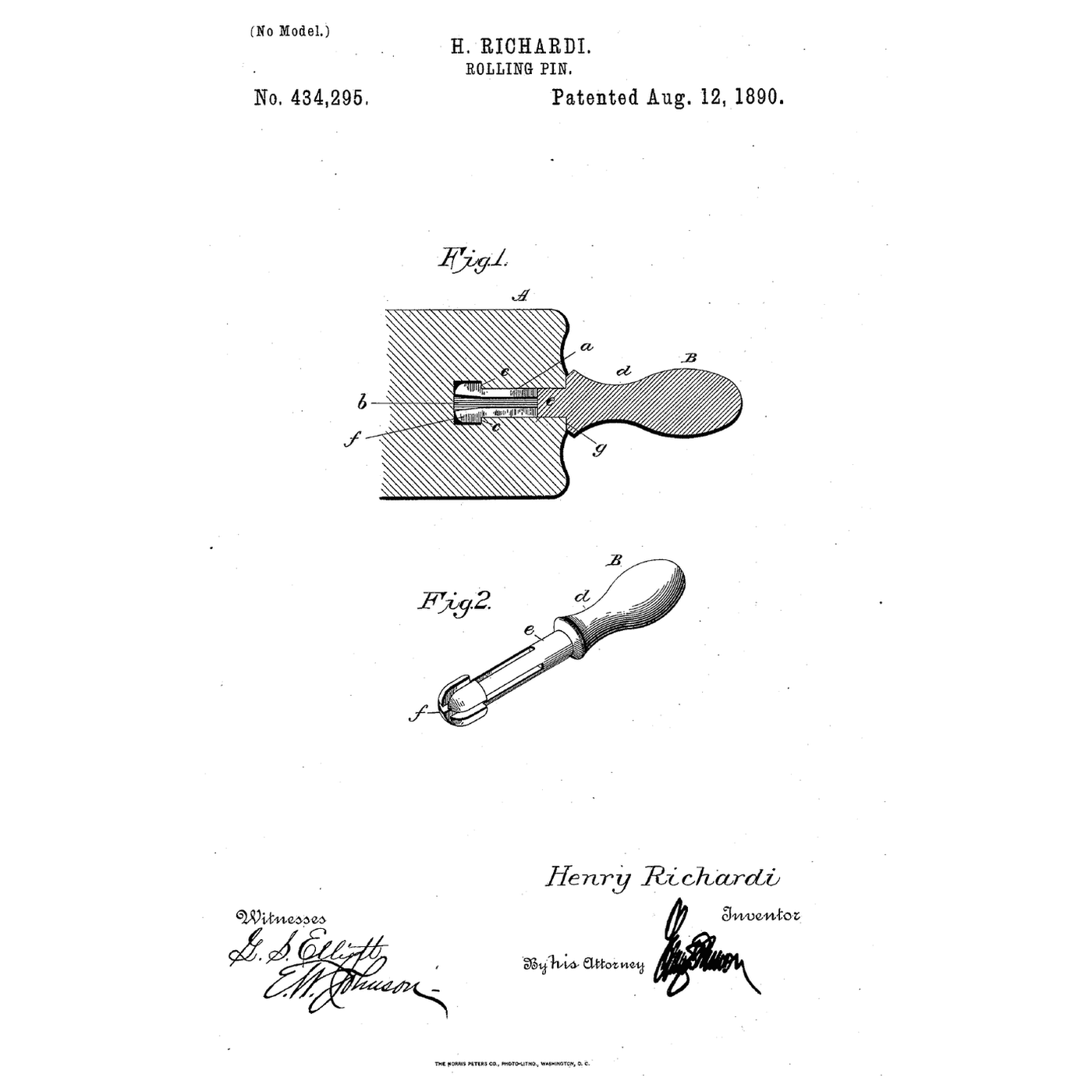
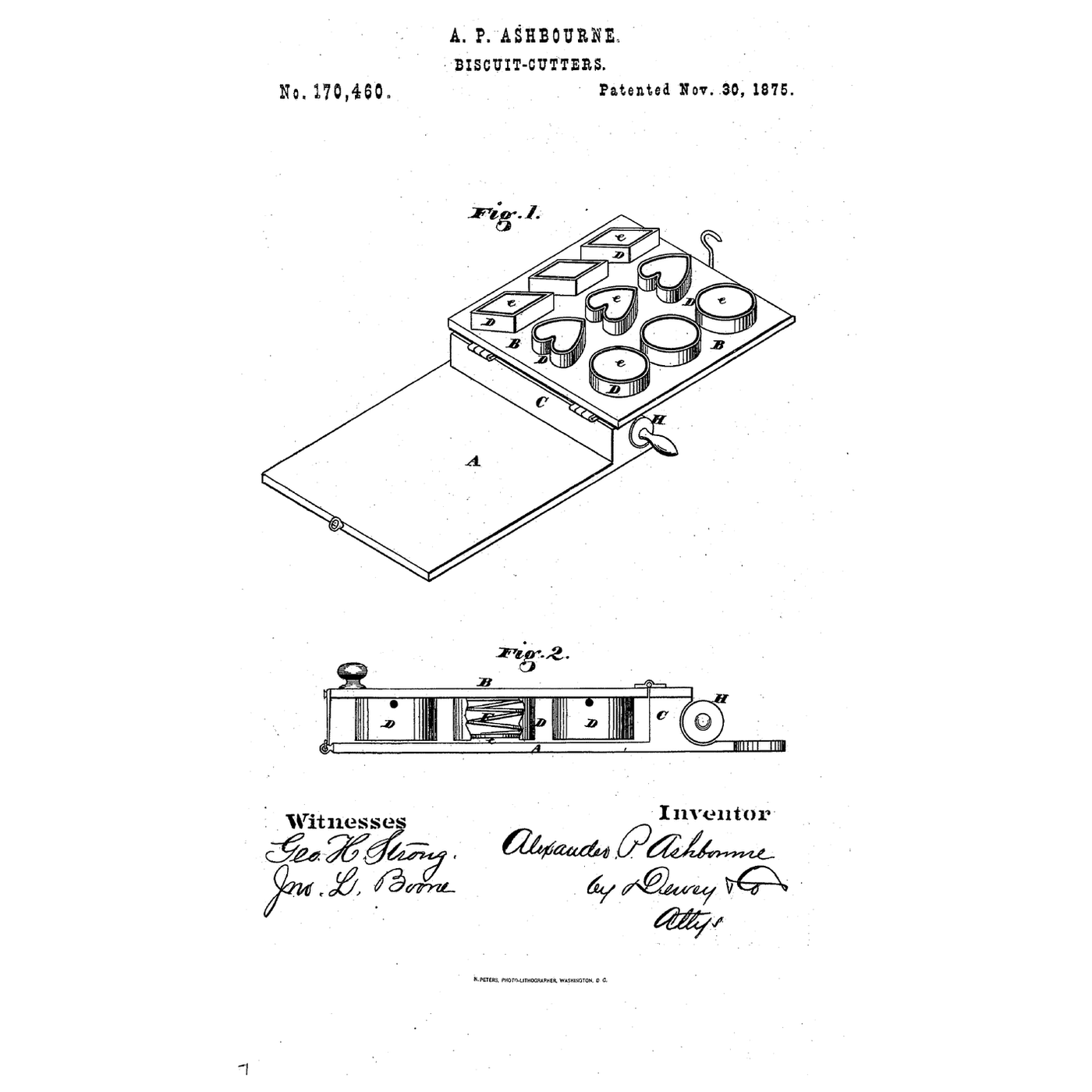
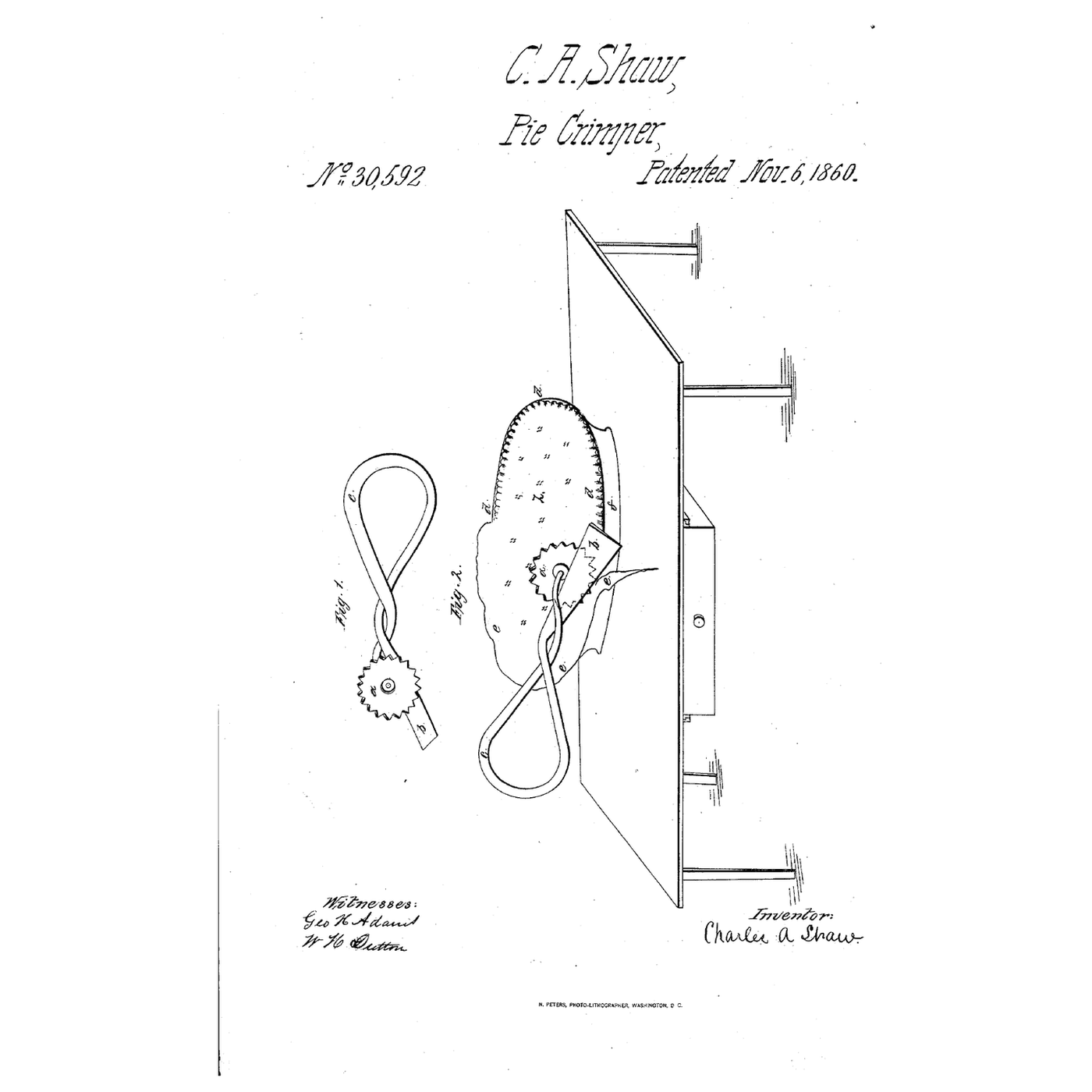
The embedded blueprint rolls dough flat with a pin that turns inside still handles. Listle's drum turns on a wire handle and cuts the sheet the pin has rolled.
3
3
Read US 801,466
Read US 801,466
"A further object is to provide a device by which cakes of a uniform size may be cut from the dough, leaving a minimum amount of material to be worked over the second time".
"The strips of tin being narrow, this arrangement of parts leaves a blank space back of the blades, which is adapted to receive the dough when cut, thus avoiding the difficulty heretofore experienced in cake-cutters of the dough sticking between the blades or in the pocket formed by the rear edges of the blades coming together."
4
4
Build a rolling cutter and cut a sheet
Build a rolling cutter and cut a sheet
Take the lids of two tin cans as the disks and punch a hole in the centre of each. Cut six strips of tin 8 cm long and 1.5 cm wide, with a tab 5 mm long at each end. Cut six short slots round the edge of each disk, evenly spaced and pointing at the centre. Push each strip's tabs through a slot in each disk, with its edge flush with the rims, and fold the tabs flat. File every edge smooth.
Bend steel wire into a long loop for a handle, with its two ends bent inward through the holes in the disks, so the drum turns freely.
Rub 200 g of butter into 300 g of flour with 100 g of sugar and press it into a dough. Roll half into a sheet 24 cm wide, three drum widths, roll the cutter over it and lift the pieces onto a baking sheet. Cut the other half with a round cutter and weigh the scraps from each. Bake at about 180 °C until pale golden.
Materiales para este paso:
 Lata2 piezas
 Alambre de acero1 pieza
 Harina de todo uso300 g
 Mantequilla200 g
 Azúcar granulado100 g
Herramientas necesarias:
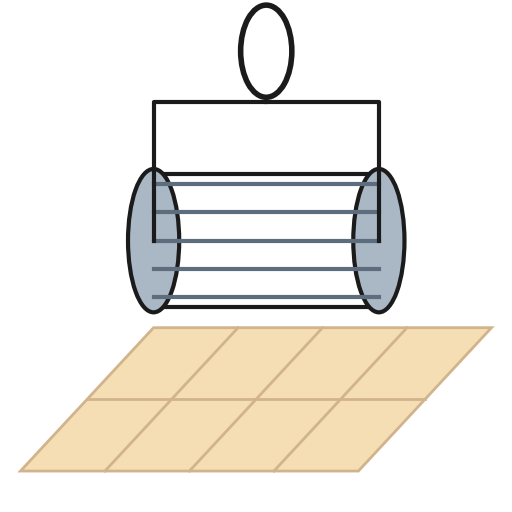 Rodillo cortamasa
 Cortador de galletas
 Tijeras de chapa
 Alicates de punta fina
 Punzón (lezna)
 Martillo
 Lima para metal
 Rodillo de amasar
 Bandeja de horno
 Horno
Horno Báscula digital de cocina
5
5
A rolling cutter that drags, sticks or cuts unevenly
A rolling cutter that drags, sticks or cuts unevenly
Rolling cutter troubleshooting.
Flow
Loading...
6
6
History and honest limits
History and honest limits
**John R. Listle** of Kalispell, Montana, filed US 801,466 on 3 November 1904; it was patented 10 October 1905. His blades were narrow strips of tin rigidly secured at each end to the disks, and his handle a single bent wire whose two strands were held together by a sleeve.
**Honest limits.** The notebook treats the sheet as a perfect rectangle; a rolled sheet has ragged edges, so both methods leave some edge scraps. Sizes are examples. Your two weighings of scraps are the measurement.
Materiales
5- 2 piezasMarcador de posición
- 1 piezaMarcador de posición
- 300 gMarcador de posición
- 200 gMarcador de posición
- 100 gMarcador de posición
Herramientas requeridas
11- Marcador de posición
- Marcador de posición
- Marcador de posición
- Marcador de posición
- Marcador de posición
- Marcador de posición
- Marcador de posición
- Marcador de posición
- Marcador de posición
- Marcador de posición
- Marcador de posición
Este plano hace
Blueprints relacionados
Estos blueprints comparten conocimiento — técnicas, materiales o principios
CC0 Dominio público
Este Blueprint se publica bajo CC0. Eres libre de copiar, modificar, distribuir y usar este trabajo para cualquier propósito, sin pedir permiso.
Apoya al Maker comprando productos a través de su Blueprint, donde gana una Comisión del Maker establecida por los vendedores, o crea una nueva iteración de este Blueprint e inclúyela como conexión en tu propio Blueprint para compartir ingresos.