ARTE
BELLEZA Y BIENESTAR
ARTESANÍA
CULTURA E HISTORIA
ENTRETENIMIENTO
MEDIO AMBIENTE
COMIDA Y BEBIDAS
INGENIERÍA INVERSA
CIENCIAS
DEPORTES
TECNOLOGÍA
TECNOLOGÍA VESTIBLE
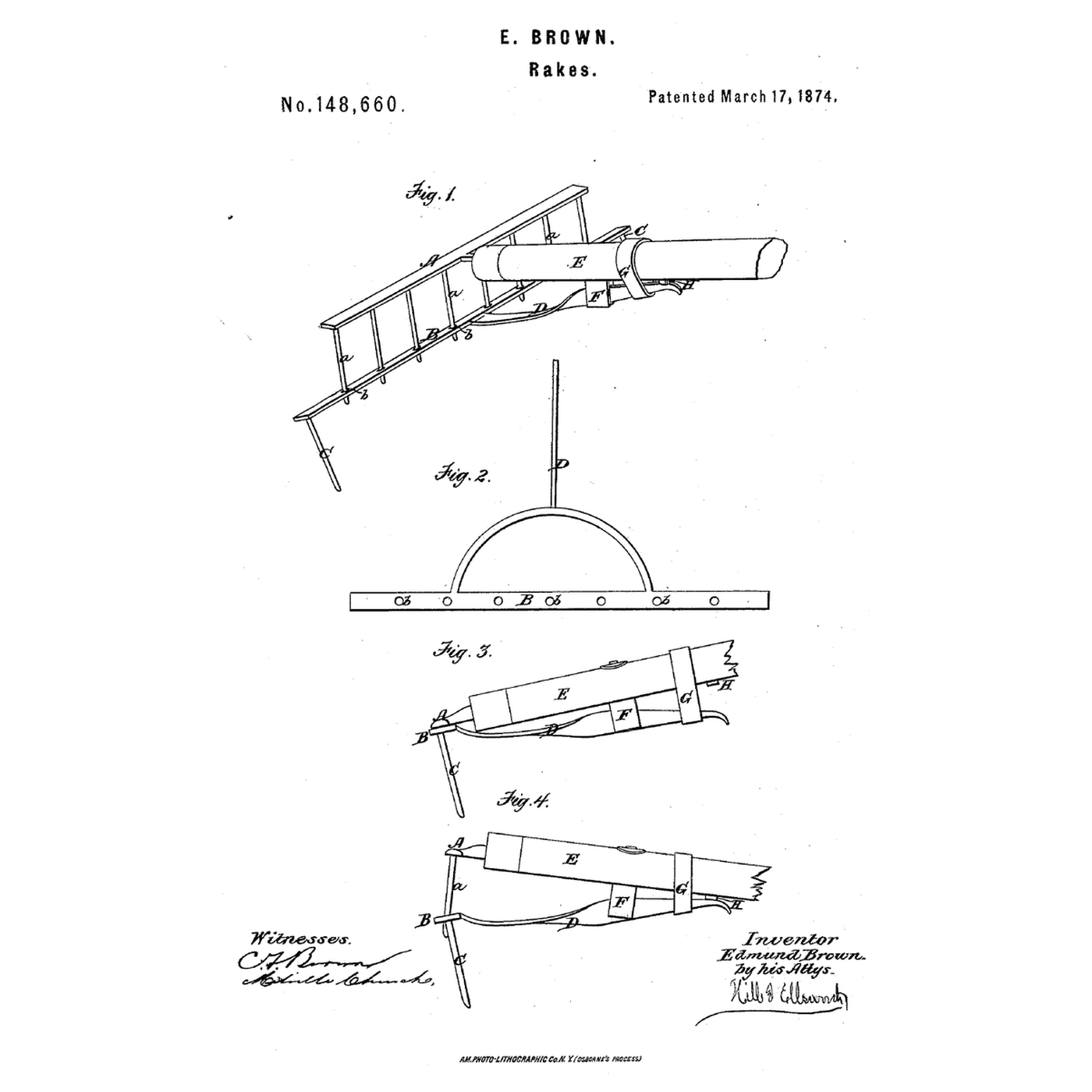


The Self-Clearing Rake: A Stripper Bar and a Rubber Band
An iron-tooth rake for leaves clogs every few strokes, and picking the teeth clean by hand is slow and unpleasant.
Edmund Brown of Burlington, Vermont, received US 148,660, dated 17 March 1874 (filed 24 January 1874), for "an automatically clearing attachment for iron-tooth door-yard rakes, which shall remove all matter that may be collected between the teeth by simply raising the rake from the ground". A perforated bar rides on the teeth, pushed down by "a spring composed of a rubber band".
This rung works out the push a rubber band puts on the bar through the lever, then fits a stripper bar to a rake and rakes leaves with it.
Principiante
About 2 hours
Instrucciones
1
1
Band stretch, lever arm and the push on the bar
Band stretch, lever arm and the push on the bar
Cargando el cuaderno de Jupyter…
2
2
Why a rubber band can be a spring
Why a rubber band can be a spring
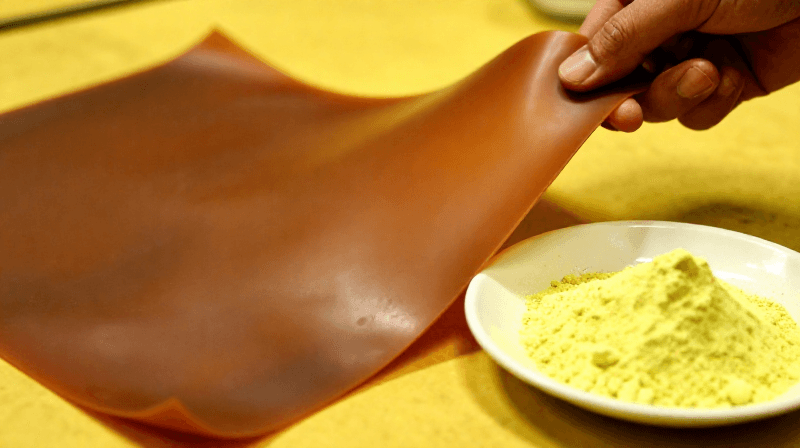
The embedded blueprint vulcanizes rubber so it springs back instead of staying stretched. Brown's clearer runs on that spring.
3
3
Read US 148,660
Read US 148,660
"This invention relates to iron-tooth hand-rakes, such as are commonly used in cleaning leaves and other debris from lawns, door-yards, &c. It is well known that these rakes are continually becoming clogged by the refuse matter which they collect".
"Whenever the teeth become clogged, the operator has only to raise the rake from the ground, when the bar B is forced downward on the teeth, as above stated, and all obstructions are forced out, this operation involving no extra labor, as the rake is naturally lifted after every stroke."
"The spring G may be adjusted by moving along the handle, so as to vary its pressure upon the lever; and, being made of rubber, it is durable and inexpensive, and can be replaced at any time without difficulty."
4
4
Fit a stripper bar and rake leaves
Fit a stripper bar and rake leaves
Take a garden rake with straight iron teeth. Drill a strip of steel sheet or hardwood with holes at the same spacing as the teeth, a little larger, and thread it onto the teeth.
Screw a short lever to the middle of the strip, running back under the handle. Give it a pivot on a small block screwed under the handle. Loop a thick rubber band round the handle and the lever's end.
Rake leaves. Press down: the bar should slide up to the rake head. Lift: it should slide down and push the leaves off. Move the band along the handle until it clears every stroke without dragging. Hook the force meter to the bar to measure its push, and compare with the notebook.
Materiales para este paso:
 Chapa de acero1 pieza
 Gomas elásticas3 piezas
 Tornillos para madera4 piezas
 Listón de madera dura para mangos1 pieza
Herramientas necesarias:
 Rastrillo de jardín
 Taladro inalámbrico
 Juego de brocas
 Lima para metal
 Dinamómetro (balanza de resorte)
 Regla
Regla5
5
A clearer that sticks, drags or does not clear
A clearer that sticks, drags or does not clear
Self-clearing rake troubleshooting.
Flow
Loading...
6
6
History and honest limits
History and honest limits
**Edmund Brown** of Burlington, Chittenden County, Vermont, assignor to himself and Sylvanus Humphrey, filed US 148,660 on 24 January 1874; it is dated 17 March 1874. He notes the bar, teeth and lever may be cast in one piece of malleable iron with the holes punched by a power press.
**Honest limits.** The notebook treats the band as a linear spring and the lever as rigid, and ignores friction on the teeth. The band stiffness, stretches and distances are examples. Your force-meter reading is the measurement.
Materiales
4- 1 piezaMarcador de posición
- 3 piezasMarcador de posición
- 4 piezasMarcador de posición
- Marcador de posición
Herramientas requeridas
6- Marcador de posición
- 1 vendor sell this, none ship to you yetMarcador de posición
- Marcador de posición
- Marcador de posición
- Marcador de posición
- Marcador de posición
Blueprints relacionados
Estos blueprints comparten conocimiento — técnicas, materiales o principios




CC0 Dominio público
Este Blueprint se publica bajo CC0. Eres libre de copiar, modificar, distribuir y usar este trabajo para cualquier propósito, sin pedir permiso.
Apoya al Maker comprando productos a través de su Blueprint, donde gana una Comisión del Maker establecida por los vendedores, o crea una nueva iteración de este Blueprint e inclúyela como conexión en tu propio Blueprint para compartir ingresos.