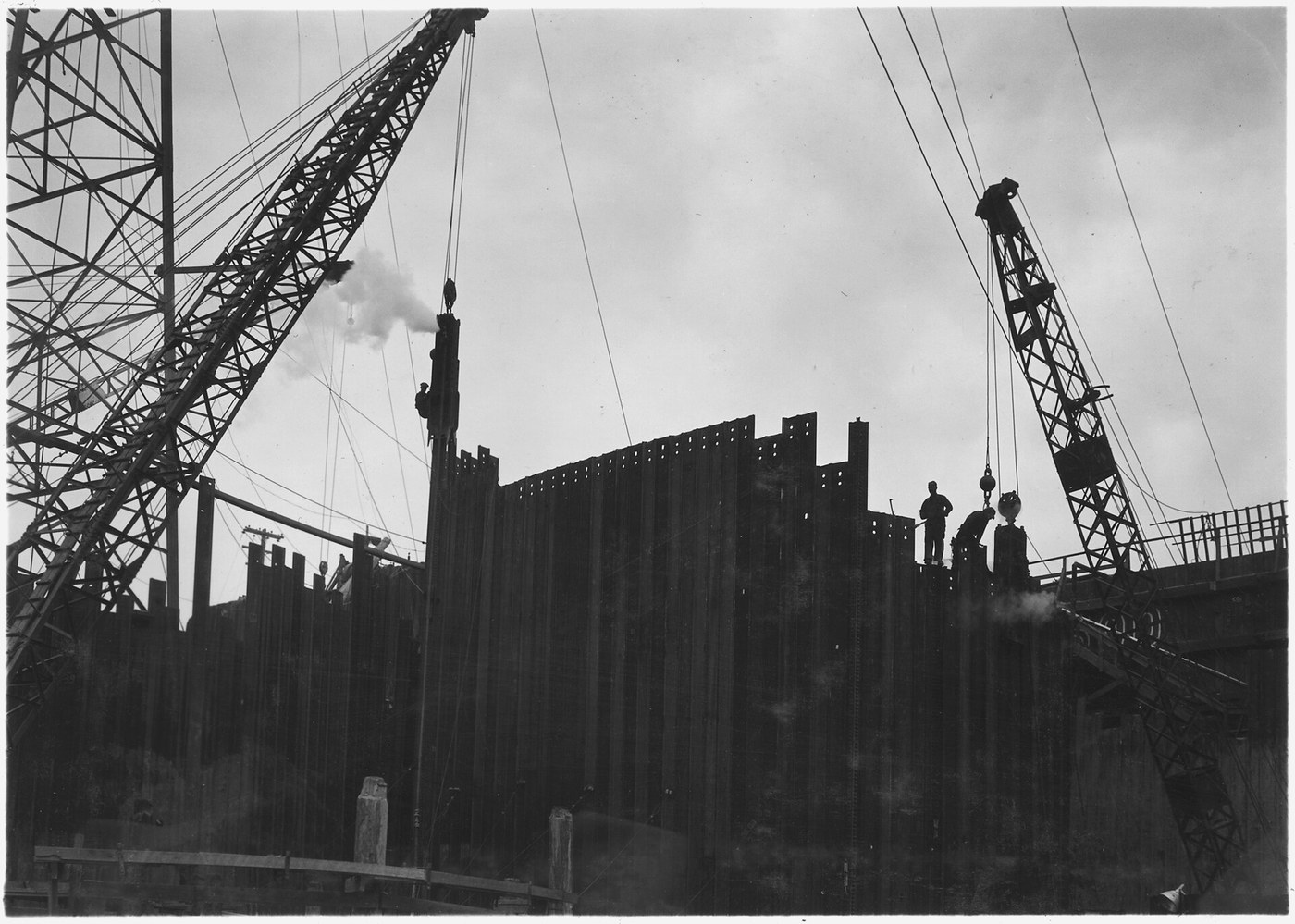


The Steam Pile Driver
Some ground will not carry a building. Silt, soft clay, made ground, the bed of a tidal river — put a footing on it and the footing goes down. The answer is a pile: a long member driven through the soft material until it either reaches something firm or gains enough friction along its sides to carry the load.
The thing nobody expects is that you cannot specify how deep to drive it. Nobody knows where the firm layer is, or whether it is firm everywhere. So piles are not driven to a depth, they are driven to refusal — you count the blows needed for the last unit of penetration, and when that set falls below the specified figure, the pile is done. The measurement is the acceptance test, taken during the work, at every pile.
For centuries the tool was a drop hammer: a weight winched up a pair of guides and released. It hit hard but rarely — a minute or more between blows, most of it spent winching. Between blows the soil grips again, so much of each blow goes into breaking friction the previous blow already broke.
James Nasmyth put his steam hammer on top of the pile. His 1843 patent claimed the invention as a pile driver, and on 3 July 1845 at Devonport the machine drove an 18-inch square, 70-foot pile in four and a half minutes. A team working the conventional way took twelve hours to drive an identical pile in the same ground.
Build a bench driver, measure a set, and find out why speed beats weight.
Instrucciones
Make a ground bed you can repeat
Make a ground bed you can repeat
Fill a deep bucket or box with clean sand. Add water until it is uniformly damp but not standing wet, then compact it in layers with a flat block, the same number of strokes per layer every time.
Level the top.
Every result in this blueprint is a comparison, so the bed has to be reproducible. Remake it identically between tests, and note that a bed left overnight is not the same bed.
Materiales para este paso:
 Arena gruesa (construcción/alfarería)10 kg
Build the leaders and the ram
Build the leaders and the ram
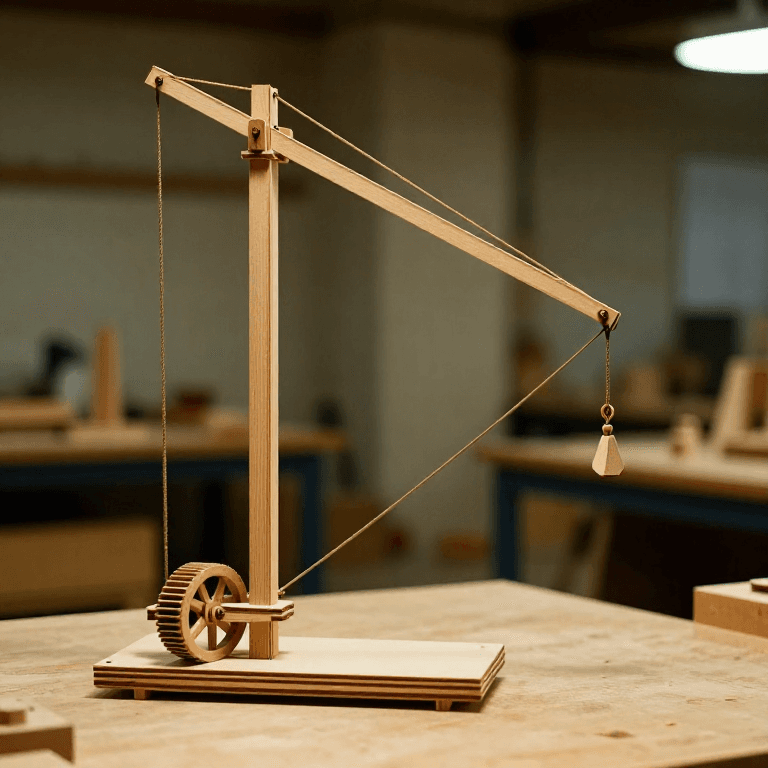
Fix two parallel dowels vertically as guides — the leaders — spaced so a drilled wooden block slides down them freely without rocking.
The block is the ram. Mark a release height on the leaders.
The leaders do one job: keep every blow square and on the pile head. An off-centre blow bends the pile instead of driving it.
Materiales para este paso:
 Surtido de espigas de madera1 juego
 Madera de pino1 pieza
Herramientas necesarias:
 Serrucho
Drive a pile and record the set
Drive a pile and record the set
Stand a marked dowel on the bed as the pile. Drop the ram from the marked height, over and over, counting blows.
Record penetration every 10 blows and plot penetration against blow count.
Expect the curve to flatten: each blow buys less than the last. The set — millimetres per blow — is what you are really measuring, and it is the number a real specification is written in.
Herramientas necesarias:
 Cinta métrica
 Papel milimetrado
Same energy, different delivery
Same energy, different delivery
Compare a heavy ram from a low height against a light ram from a high drop, chosen so the energy per blow is equal (mass x g x height).
Drive an identical pile with each, to the same total energy.
Expect the heavy-and-low ram to drive further for the same energy. A light ram arriving fast puts more of its energy into elastic rebound and into damaging the pile head; a heavy ram moving slowly transfers momentum into the pile instead.
Herramientas necesarias:
 Báscula digital de cocina
Fast blows against slow blows
Fast blows against slow blows
Drive one pile with blows as fast as you can deliver them. Drive an identical pile with the same number of blows, waiting 60 seconds between each.
Compare final penetration.
Expect the rapid-fire pile to go deeper on the same number of identical blows. Left alone, damp sand re-settles around the pile and friction recovers, so each slow blow has to break the grip again before it can move anything.
This is Nasmyth's whole advantage, and it is not more power — it is not letting the ground recover.
Herramientas necesarias:
 Cronómetro
Find refusal, and find a false refusal
Find refusal, and find a false refusal
Bury a flat stone or tile part-way down the bed. Drive a pile straight onto it and watch the set collapse to near zero — apparent refusal.
Now drive alongside it, missing the stone, and keep going.
A pile that stops is not necessarily a pile that has arrived. Obstructions, dense lenses and boulders all mimic bearing stratum, which is why real piling records every pile's driving log and why a pile that reaches set suspiciously early gets re-driven or tested.
History & Context
History & Context
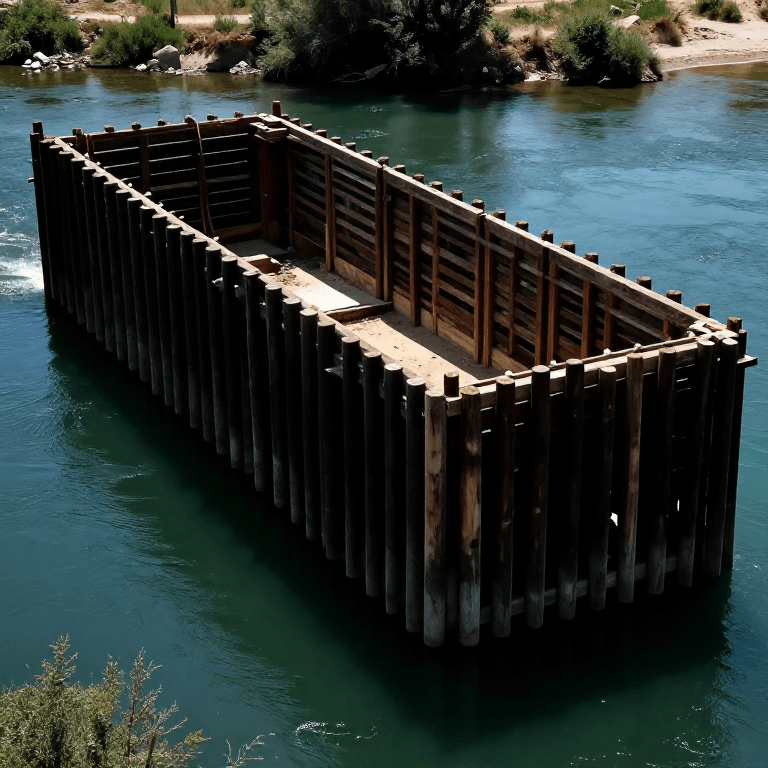
Piling is very old and the principle never changed. Neolithic lake dwellings, Roman bridge foundations driven inside cofferdams, the timber piles under Venice and under Amsterdam — all rely on either reaching a firm layer or gaining enough side friction in a soft one. Timber piles kept permanently below the water table can last a thousand years; the same piles exposed to air rot within decades, which is why falling groundwater levels are a live threat to old cities built this way.
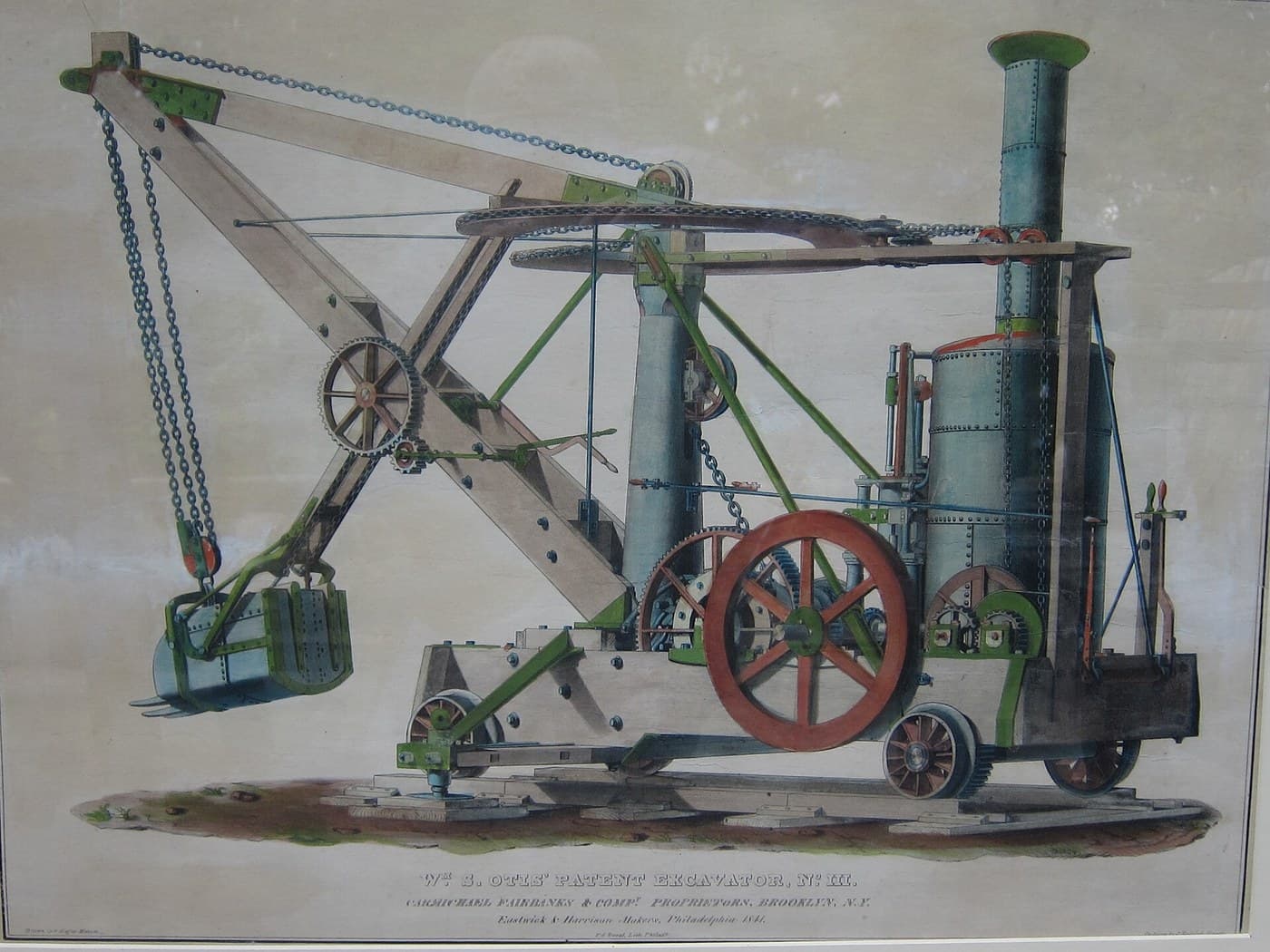
What Nasmyth actually changed was the duty cycle. The steam hammer was patented for forging, but the 1843 patent already claimed its use as a pile driver, and the machine was self-contained: the cylinder sat on the pile head and travelled down with the pile, so no time was lost re-rigging as the pile sank. Instead of one heavy blow a minute, it delivered a rapid succession of blows and the pile was never allowed to stop moving. The Devonport demonstration on 3 July 1845 — an 18-inch, 70-foot pile in four and a half minutes against twelve hours by hand — was staged for the dock contractors Baker and Sons, and it was a sales demonstration that happened to be true.
Driving to refusal is the honest part of the discipline. Foundation design begins with a soil investigation, which samples a few points and interpolates between them. Piling is where that interpolation meets the actual ground. The set recorded at each pile is a measurement of what is really down there, taken at every single location — the only structural test in common practice that is performed on every member, at full load, before the structure is built.
The honest limits. Driven piles are loud and they shake the neighbourhood; in cities they are frequently banned outright in favour of bored or augered piles that make no noise and no vibration but give you no driving record. A pile can be damaged below ground and look perfect at the head — timber brooms, concrete cracks, steel buckles — which is why modern practice adds dynamic testing rather than trusting the blow count alone. Driving displaces soil sideways, which can heave neighbouring piles already placed and lift nearby ground. And refusal is a measurement of resistance, not of safety: a pile can meet set on a boulder that is itself sitting in mud.
Materiales
3- Marcador de posición
- 1 juegoMarcador de posición
- 1 piezaMarcador de posición
Herramientas requeridas
5- Marcador de posición
- 1 vendor sell this, none ship to you yetMarcador de posición
- Marcador de posición
- Marcador de posición
- Marcador de posición
Materiales de Blueprints conectados

Blueprints relacionados
Estos blueprints comparten conocimiento — técnicas, materiales o principios

CC0 Dominio público
Este Blueprint se publica bajo CC0. Eres libre de copiar, modificar, distribuir y usar este trabajo para cualquier propósito, sin pedir permiso.
Apoya al Maker comprando productos a través de su Blueprint, donde gana una Comisión del Maker establecida por los vendedores, o crea una nueva iteración de este Blueprint e inclúyela como conexión en tu propio Blueprint para compartir ingresos.