ARTE
BELLEZA Y BIENESTAR
ARTESANÍA
CULTURA E HISTORIA
ENTRETENIMIENTO
MEDIO AMBIENTE
COMIDA Y BEBIDAS
INGENIERÍA INVERSA
CIENCIAS
DEPORTES
TECNOLOGÍA
TECNOLOGÍA VESTIBLE
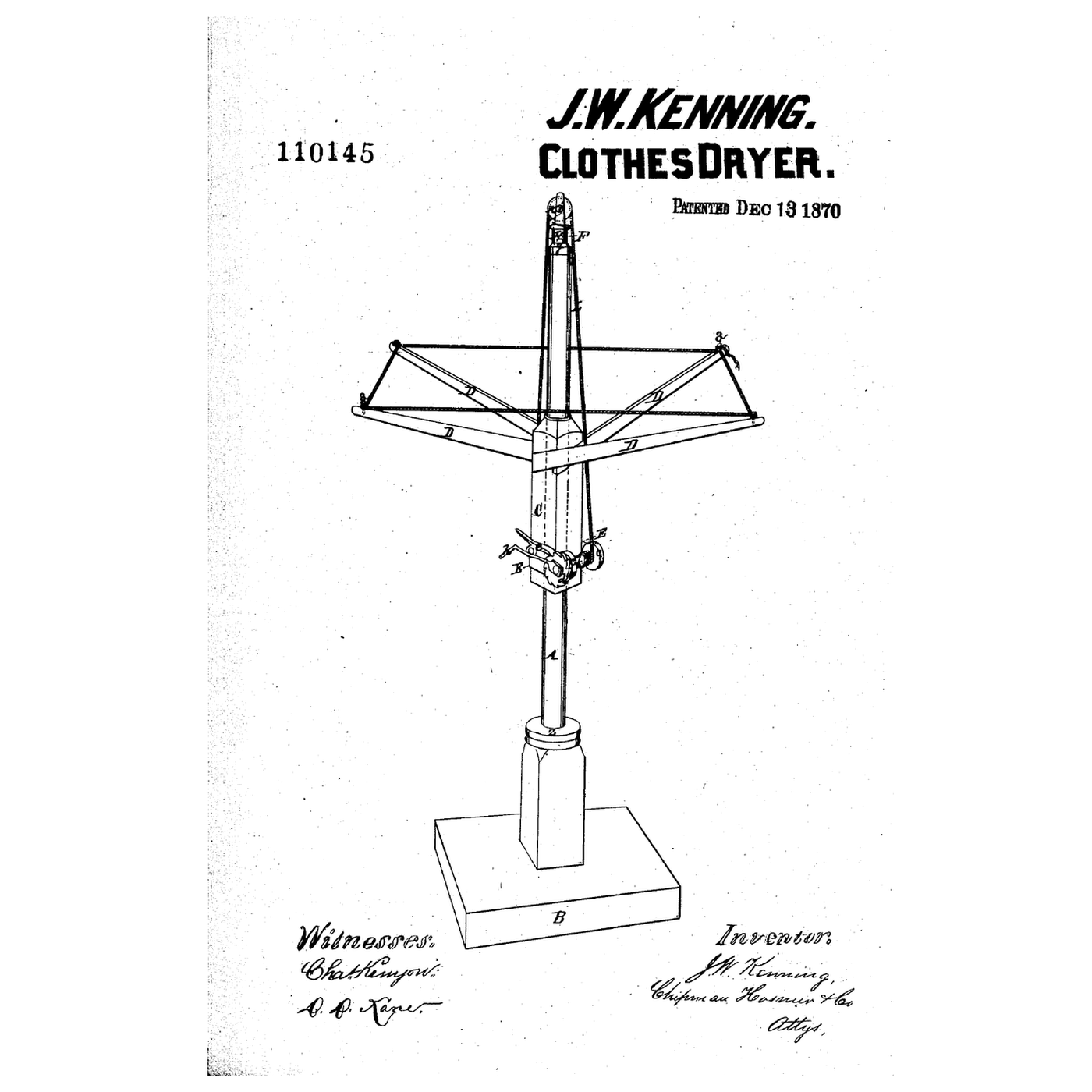


The Windlass Rotary Drier: Lower It to Load, Wind It Up to Dry
Lines strung high catch the wind and keep the wash off the ground, but they are hard to reach with an armful of wet laundry.
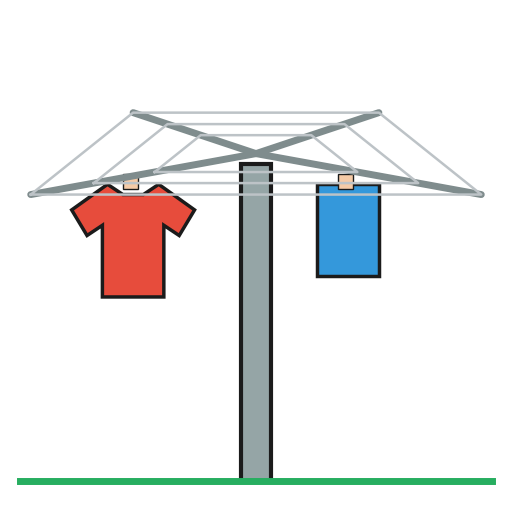
James W. Kenning of Quincy, Michigan, received US 110,145, dated 13 December 1870, for a clothes-drier whose arms are fixed to a box that slides and turns on a post. A rope over a sheave on top of the post runs to a windlass with a crank, ratchet-wheel and pawl, so the whole frame can be let down to load and wound up to dry.
This rung works out the crank force to wind a loaded drier up, then builds a small windlass lift and measures it.
Intermedio
About 4 hours
Instrucciones
1
1
Crank force for a loaded drier
Crank force for a loaded drier
Cargando el cuaderno de Jupyter…
2
2
What holds it up
What holds it up
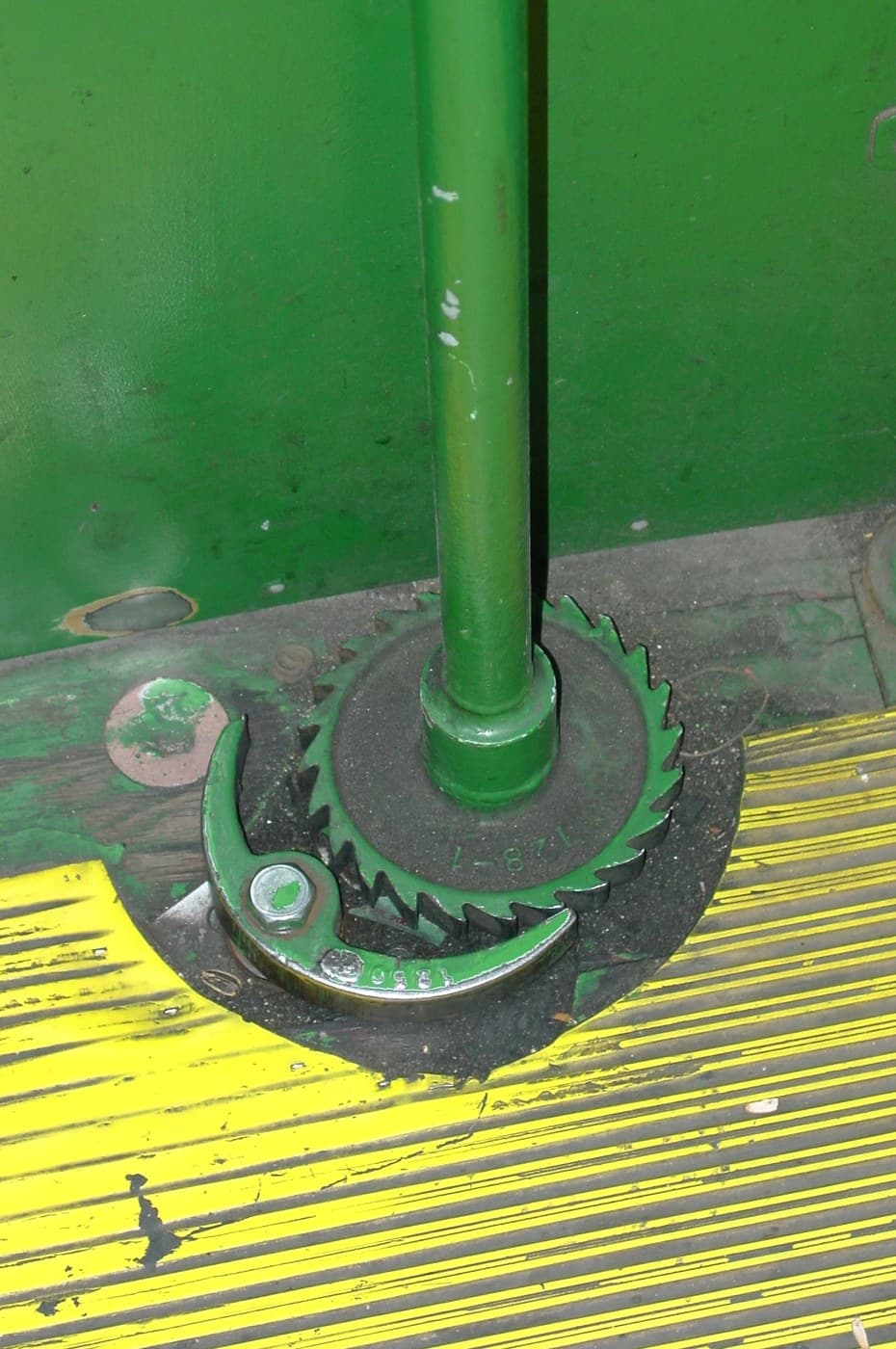
The embedded blueprint explains the ratchet and pawl. Kenning's windlass uses one to hold the drier at any height.
3
3
Read US 110,145
Read US 110,145
"L represents a rope passing over the sheave, the ends being attached to the rotating shaft b and slide-box C."
"The slide-box and arms will then descend by their own weight to the lower part of the post, resting on the shoulder of the base". After loading, they "are then elevated to the desired height upon the post by turning the crank h, which is kept from descending by a ratchet-wheel and pawl".
"After use all the parts can be detached from the base and post in an instant, and removed into a house or any other convenient place from the changes of the weather, thus leaving the post and base only standing out."
4
4
Build a windlass lift and weigh the load
Build a windlass lift and weigh the load
Stand a timber post in a heavy base. Make a square collar that slides on it and fix four short arms to the collar; string clothesline between the arm ends.
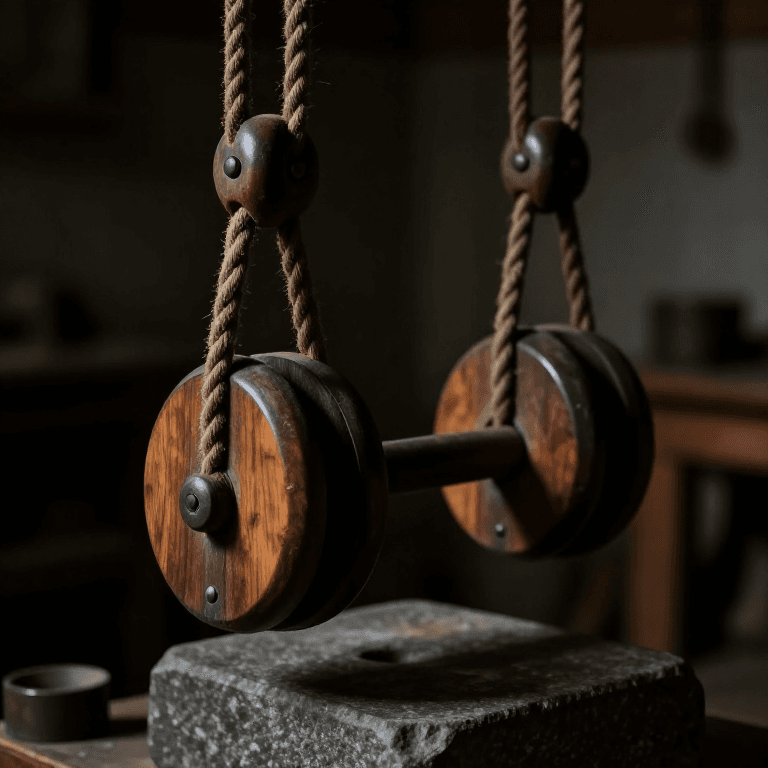
Fix a pulley at the top of the post. Tie cotton rope to the collar, run it up over the pulley and down to a dowel shaft with a crank handle, mounted on the post. Add a ratchet: a notched wheel on the shaft and a hinged wooden pawl that drops into the notches.
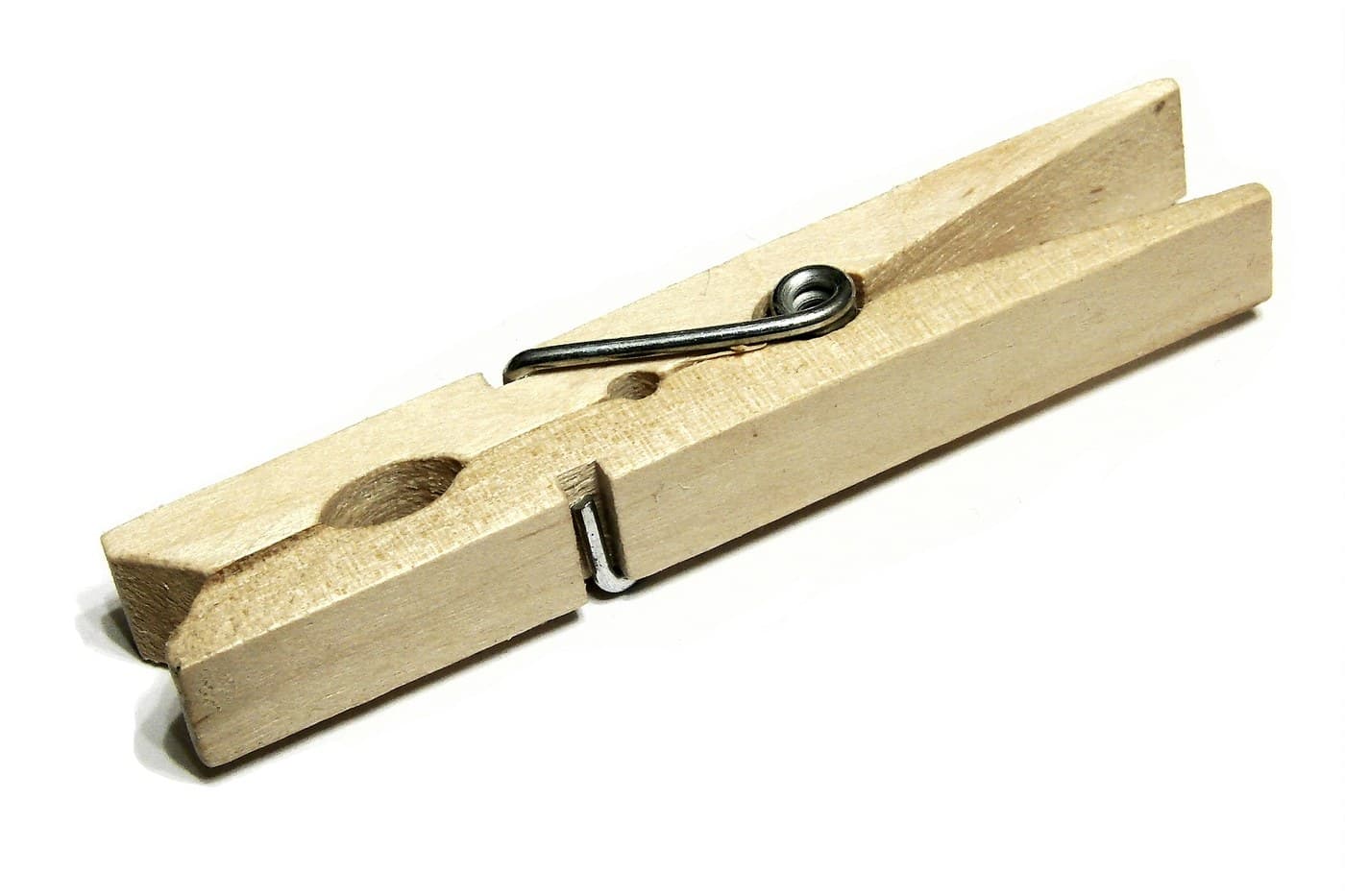
Lower the frame, peg on a weighed load of wet washing, and wind it up. Hook the force meter to the crank handle to read the hand force, and compare with the notebook.
Materiales para este paso:
 Vigas de madera1 pieza
 Tabla de pino1 pieza
 Tendedero1 pieza
 Cuerda de algodón1 pieza
 Espiga de madera1 pieza
 Tornillos para madera16 piezas
 Pinzas de tender de madera1 pieza
Herramientas necesarias:
 Tendedero giratorio
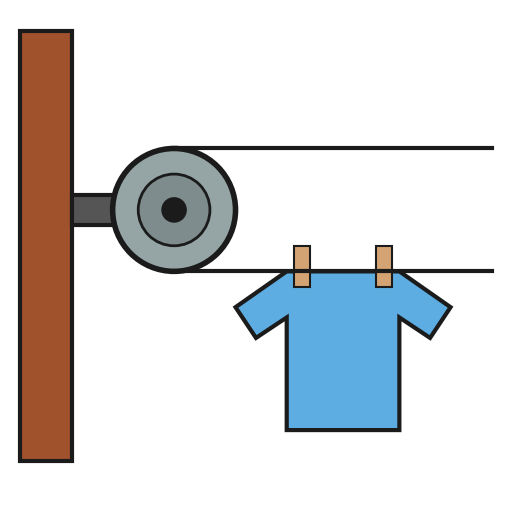 Polea de tendedero
 Serrucho
 Taladro inalámbrico
 Dinamómetro (balanza de resorte)
 Báscula digital de cocina
 Cinta métrica
5
5
A drier that drops, sticks or spins
A drier that drops, sticks or spins
Windlass drier troubleshooting.
Flow
Loading...
6
6
History and honest limits
History and honest limits
**James W. Kenning** of Quincy, Branch County, Michigan, received US 110,145, dated 13 December 1870. The patent prints no filing date.
**Honest limits.** The notebook ignores friction in the collar, the sheave and the shaft, so the real crank force is higher. The masses and radii are examples. Your force-meter reading is the measurement.
Materiales
7- 1 piezaMarcador de posición
- 1 piezaMarcador de posición
- 1 piezaMarcador de posición
- 1 piezaMarcador de posición
- 1 piezaMarcador de posición
- 16 piezasMarcador de posición
- 1 piezaMarcador de posición
Herramientas requeridas
7- Marcador de posición
- Marcador de posición
- Marcador de posición
- 1 vendor sell this, none ship to you yetMarcador de posición
- Marcador de posición
- Marcador de posición
- 1 vendor sell this, none ship to you yetMarcador de posición
Blueprints relacionados
Estos blueprints comparten conocimiento — técnicas, materiales o principios

CC0 Dominio público
Este Blueprint se publica bajo CC0. Eres libre de copiar, modificar, distribuir y usar este trabajo para cualquier propósito, sin pedir permiso.
Apoya al Maker comprando productos a través de su Blueprint, donde gana una Comisión del Maker establecida por los vendedores, o crea una nueva iteración de este Blueprint e inclúyela como conexión en tu propio Blueprint para compartir ingresos.