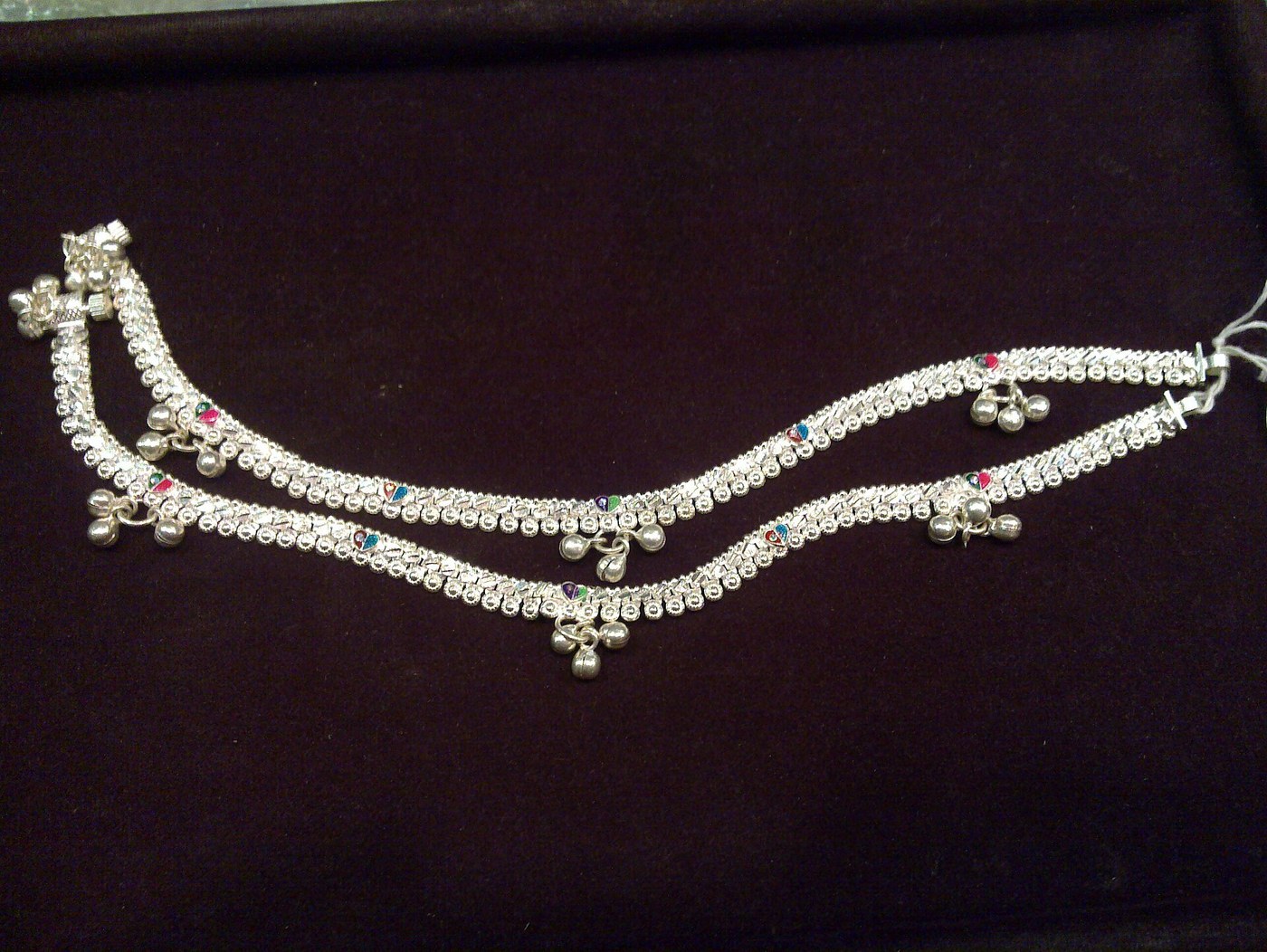

వెండి పట్టీలు — గజ్జెల అందె
అందె వెండితోనే ఎందుకు చేస్తారు? కారణం ఒకటే కాదు. వెండి మెత్తగా ఉంటుంది, కాలికి తగిలినా గీసుకోదు. తుప్పు పట్టదు. ఆపైన — ఇదే ముఖ్యం — వెండి బాగా మోగుతుంది.
అందెకు గజ్జెలు కడతారు. నడిచినప్పుడు అవి మోగుతాయి. ఇంట్లో ఎవరు ఎక్కడ ఉన్నారో శబ్దంతో తెలుస్తుంది — ఇది అలంకారం మాత్రమే కాదు, ఒక సంకేతం కూడా.
ఇక్కడ ఒక విషయం గుర్తుంచుకోండి. మన సంప్రదాయంలో బంగారం నడుము పైన, వెండి నడుము కింద అని ఒక ఆచారం ఉంది. అందుకే కాలికి ఎప్పుడూ వెండే. ఇది ప్రాంతాన్ని బట్టి మారుతుంది, కానీ చాలా చోట్ల ఇదే నియమం.
Instrucciones
కాలి కొలత తీసుకోండి
కాలి కొలత తీసుకోండి
చీలమండ చుట్టూ కొలవండి. దానికి 20 మిల్లీమీటర్లు కలపండి. అందె వదులుగా ఉండాలి — బిగుతుగా ఉంటే నొప్పి, మోగదు కూడా.
వెండి తీగను కాల్చి మెత్తబరచండి
వెండి తీగను కాల్చి మెత్తబరచండి
16 గేజ్ వెండి తీగను మసక వెలుతురులో ఎర్రగా కాలేవరకు వేడి చేయండి — 600 నుంచి 650 డిగ్రీలు. పది సెకన్లు గాలిలో చల్లారనిచ్చి, తర్వాత నీళ్లలో ముంచండి.
Materiales para este paso:
 Alambre de plata de ley0.5 metro
Herramientas necesarias:
 Soplete de propano
 Ladrillos refractarios
ఎర్రగా ఉన్నప్పుడే నీళ్లలో ముంచవద్దు
ఎర్రగా ఉన్నప్పుడే నీళ్లలో ముంచవద్దు
ఎర్రగా ఉండగానే నీళ్లలో వేస్తే వెండి పగిలిపోతుంది. కాస్త చల్లారాక మాత్రమే ముంచాలి.
నిమ్మ ఉప్పు నీళ్లలో శుభ్రం చేయండి
నిమ్మ ఉప్పు నీళ్లలో శుభ్రం చేయండి
ఒక భాగం సిట్రిక్ యాసిడ్, ఐదు భాగాల నీళ్లు. అందులో ఐదు నిమిషాలు ఉంచండి. కాల్చినప్పుడు వచ్చిన నల్లటి పొర పోతుంది.
Materiales para este paso:
 Ácido cítrico100 g
గజ్జెలకు రెండు అర్ధగోళాలు చేయండి
గజ్జెలకు రెండు అర్ధగోళాలు చేయండి
వెండి రేకు నుంచి 8 మిల్లీమీటర్ల గుండ్రని ముక్కలు కోసి, గుంట ఉన్న దిమ్మెలో కొట్టి గిన్నెలా చేయండి. ఒక్కో గజ్జెకు రెండు.
Materiales para este paso:
 Plancha de plata de ley1 hoja
Herramientas necesarias:
 Sierra de joyero
లోపల చిన్న గుండు వేయండి
లోపల చిన్న గుండు వేయండి
ఒక అర్ధగోళంలో చిన్న ఉక్కు గుండు వేయండి. ఇదే లోపల కొట్టుకుని శబ్దం చేస్తుంది.
Materiales para este paso:
 Rodamientos de bolas de acero12 piezas
గజ్జెకు కోత పెట్టండి
గజ్జెకు కోత పెట్టండి
రెండు అర్ధగోళాలు కలిపే ముందు, ఒకదానిలో సన్నని కోత పెట్టండి. మూసిన గజ్జె మోగదు — శబ్దం బయటికి రావాలంటే కోత తప్పనిసరి.
Herramientas necesarias:
 Juego de limas de aguja
రెండు భాగాలు అతికించండి
రెండు భాగాలు అతికించండి
రెండు అర్ధగోళాలను కలిపి వెండి కరుగుతో అతికించండి. తక్కువ వేడితో పని చేయండి — ఎక్కువైతే గజ్జె కరిగిపోతుంది.
Materiales para este paso:
 Soldadura de plata1 juego
 Pasta de flux para soldar (a base de colofonia)1 pieza
Herramientas necesarias:
Soplete de propanoపన్నెండు గజ్జెలు చేయండి
పన్నెండు గజ్జెలు చేయండి
ఇలాగే పన్నెండు గజ్జెలు చేయండి. ఒక్కొక్కటి కాస్త వేరుగా మోగుతుంది — అదే బాగుంటుంది. అన్నీ ఒకేలా మోగితే శబ్దం చప్పగా ఉంటుంది.
తీగను వంచి అందె చేయండి
తీగను వంచి అందె చేయండి
తీగను గుండ్రంగా వంచండి. కొక్కెం, రింగు పెట్టి తెరుచుకునేలా చేయండి. కాలికి పైనుంచి తొడగలేము కాబట్టి తెరుచుకోవడం అవసరం.
Herramientas necesarias:
 Juego de alicates de joyería
గజ్జెలను సమానంగా కట్టండి
గజ్జెలను సమానంగా కట్టండి
చిన్న వెండి రింగులతో గజ్జెలను తీగకు సమాన దూరంలో కట్టండి. ఒకచోట గుమిగూడితే బరువు ఒకవైపు పడి అందె తిరిగిపోతుంది.
మోగించి చూడండి
మోగించి చూడండి
కాలికి పెట్టుకుని నడవండి. ప్రతి అడుగుకూ శబ్దం రావాలి. రాకపోతే గజ్జె బిగుతుగా కట్టి ఉంది — రింగు కాస్త వదులు చేయండి.
చరిత్ర మరియు నేపథ్యం
చరిత్ర మరియు నేపథ్యం
వెండి ఎందుకు, బంగారం ఎందుకు కాదు. భారతదేశంలోని చాలా ప్రాంతాల్లో ఒక ఆచారం ఉంది — బంగారం నడుము పైన ధరించాలి, వెండి నడుము కింద. అందుకే కాలి ఆభరణాలు దాదాపు ఎప్పుడూ వెండివే. దీనికి కారణాలు ప్రాంతాన్ని బట్టి వేర్వేరుగా చెబుతారు, కాబట్టి ఒకే కారణం ఖచ్చితమని చెప్పడం సరికాదు. కానీ ఆచారం మాత్రం విస్తృతంగా ఉంది.
శబ్దమే ముఖ్యం. గజ్జెల అందె కేవలం అలంకారం కాదు. నడిచేటప్పుడు వచ్చే శబ్దం ఇంట్లో ఎవరు ఎక్కడ ఉన్నారో తెలియజేస్తుంది. కొత్త కోడలు ఇంట్లోకి వచ్చినప్పుడు ఆమె కదలికలు వినిపించాలనే ఉద్దేశం ఉందని కొందరు చెబుతారు; పిల్లలకు కట్టడం వెనుక కారణం స్పష్టంగా ఇదే — శబ్దం వినిపిస్తే పిల్లవాడు ఎక్కడ ఉన్నాడో తెలుస్తుంది.
కోత లేకపోతే శబ్దం లేదు. ఏడో అడుగు చాలా ముఖ్యం. పూర్తిగా మూసిన గుండ్రటి గజ్జె లోపల గుండు కొట్టుకున్నా శబ్దం బయటికి రాదు. కోత ఉంటేనే గాలి కంపించి శబ్దం వినిపిస్తుంది. ప్రపంచవ్యాప్తంగా అన్ని గంటలు, గజ్జెలు ఇదే సూత్రంతో పని చేస్తాయి.
వెండి బాగా మోగడానికి కారణం. లోహాల్లో వెండికి కంపనం ఎక్కువసేపు నిలిచే గుణం ఉంది. అందుకే గంటలు, గజ్జెలు వెండితో చేస్తే స్వరం స్పష్టంగా, ఎక్కువసేపు వినిపిస్తుంది. అలంకారం, ఆచారం, శాస్త్రం — మూడూ ఒకే వైపు చూపిస్తున్నాయి.
ఎంతో పాతది. కాలి ఆభరణాలు సింధు నాగరికత కాలం నాటి శిల్పాల్లో కనిపిస్తాయి. ఆకారం, ధరించే విధానం శతాబ్దాలుగా పెద్దగా మారలేదు — ఎందుకంటే సమస్య మారలేదు: కాలికి తగిలేలా మెత్తగా ఉండాలి, మోగాలి, తుప్పు పట్టకూడదు.
Materiales
6- 0.5 metroMarcador de posición
- 100 gMarcador de posición
- 1 hojaMarcador de posición
- 12 piezasMarcador de posición
- 1 juegoMarcador de posición
- Marcador de posición
Herramientas requeridas
5- Marcador de posición
- Marcador de posición
- Marcador de posición
- Marcador de posición
- Marcador de posición
Este plano hace
CC0 Dominio público
Este Blueprint se publica bajo CC0. Eres libre de copiar, modificar, distribuir y usar este trabajo para cualquier propósito, sin pedir permiso.
Apoya al Maker comprando productos a través de su Blueprint, donde gana una Comisión del Maker establecida por los vendedores, o crea una nueva iteración de este Blueprint e inclúyela como conexión en tu propio Blueprint para compartir ingresos.