SENI
KECANTIKAN & KESEJAHTERAAN
KRAFTANGAN
BUDAYA & SEJARAH
HIBURAN
ALAM SEKITAR
MAKANAN & MINUMAN
KEJURUTERAAN TERBALIK
SAINS
SUKAN
TEKNOLOGI
BOLEH PAKAI
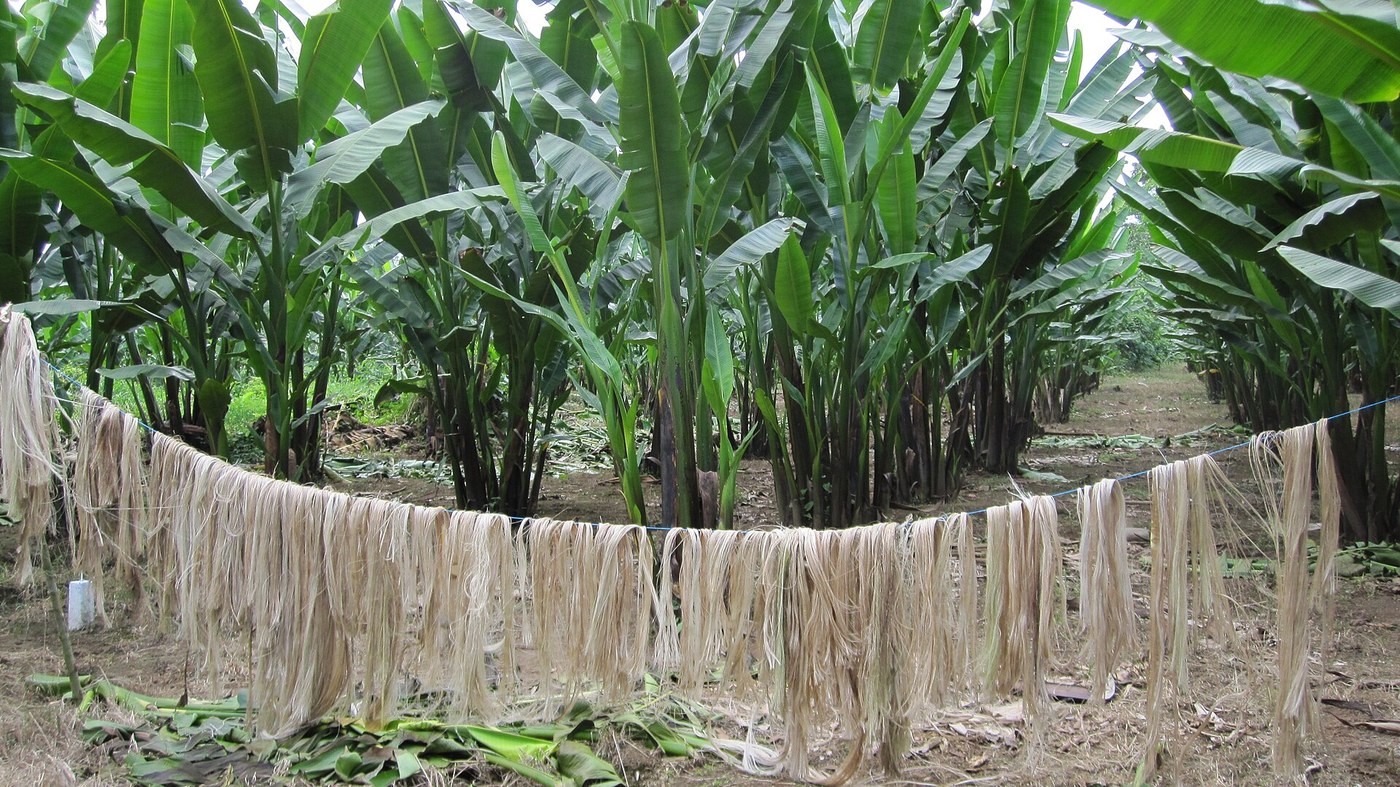


Abaca Twine: Two-Ply Reverse Wrap from Manila Hemp
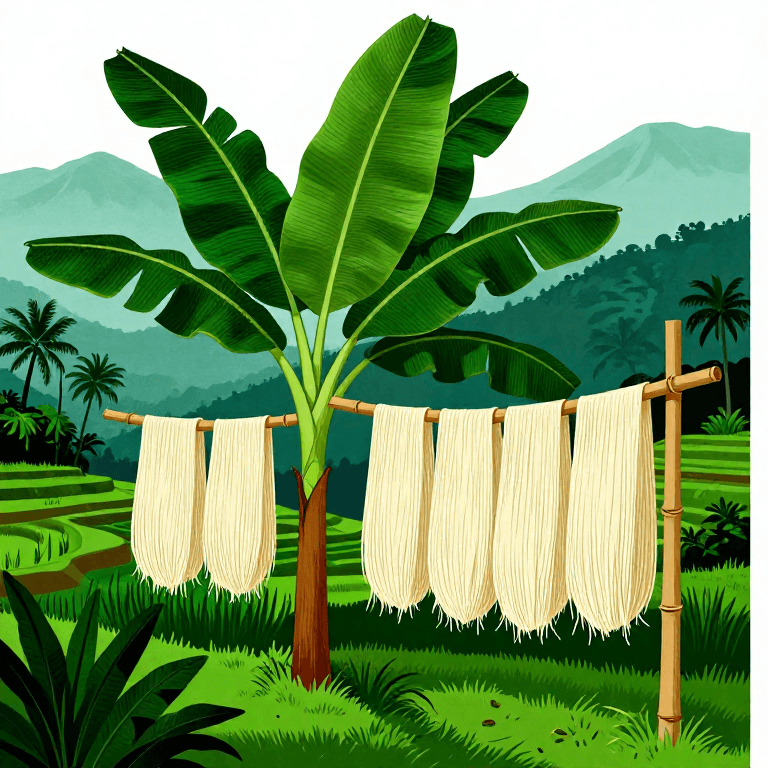
Abaca, Manila hemp, is a banana plant whose leaf-sheath fibre is stronger than hemp and stands up to salt water, which is why ships' ropes were made of it. Its fibres are 1.8 to 3.7 metres long, so a twine twisted from them needs few splices. This twine is made by the same two-ply reverse wrap as our bark rope.
The picture: abaca fibre drying on a line among the plants, Costa Rica.
Pemula
An hour for a few metres
Arahan
1
1
Dampen and split the fibre
Dampen and split the fibre
Dip a hank of abaca fibre in water so it twists without springing back, and split off thin strands, a few fibres each.
Bahan untuk langkah ini:
 Gentian abaka (Musa textilis)50 g
 Air1 as required
Alatan diperlukan:
 Mangkuk
2
2
Reverse-wrap it into two-ply twine
Reverse-wrap it into two-ply twine
Fold a strand bundle at its middle and reverse-wrap it as the bark rope is made: twist one ply away from you until it kinks, wrap it back over the other, and repeat. Splice in new fibre with 5 to 8 cm of overlap, never on both plies at the same point.
3
3
Finish and trim
Finish and trim
Tie an overhand knot at the end, trim the loose fibre ends close and wind the twine into a ball.
Alatan diperlukan:
 Pisau utiliti
Blueprint ini membuat
Blueprint berkaitan
Blueprint ini berkongsi pengetahuan — teknik, bahan atau prinsip


CC0 Domain Awam
Blueprint ini dikeluarkan di bawah CC0. Anda bebas menyalin, mengubah, mengedar, dan menggunakan karya ini untuk sebarang tujuan, tanpa meminta kebenaran.
Sokong Pembuat dengan membeli produk melalui Blueprint mereka di mana mereka memperoleh Komisen Pembuat ditetapkan oleh Penjual, atau cipta iterasi baru Blueprint ini dan sertakan ia sebagai sambungan dalam Blueprint anda sendiri untuk berkongsi hasil.