SENI
KECANTIKAN & KESEJAHTERAAN
KRAFTANGAN
BUDAYA & SEJARAH
HIBURAN
ALAM SEKITAR
MAKANAN & MINUMAN
KEJURUTERAAN TERBALIK
SAINS
SUKAN
TEKNOLOGI
BOLEH PAKAI
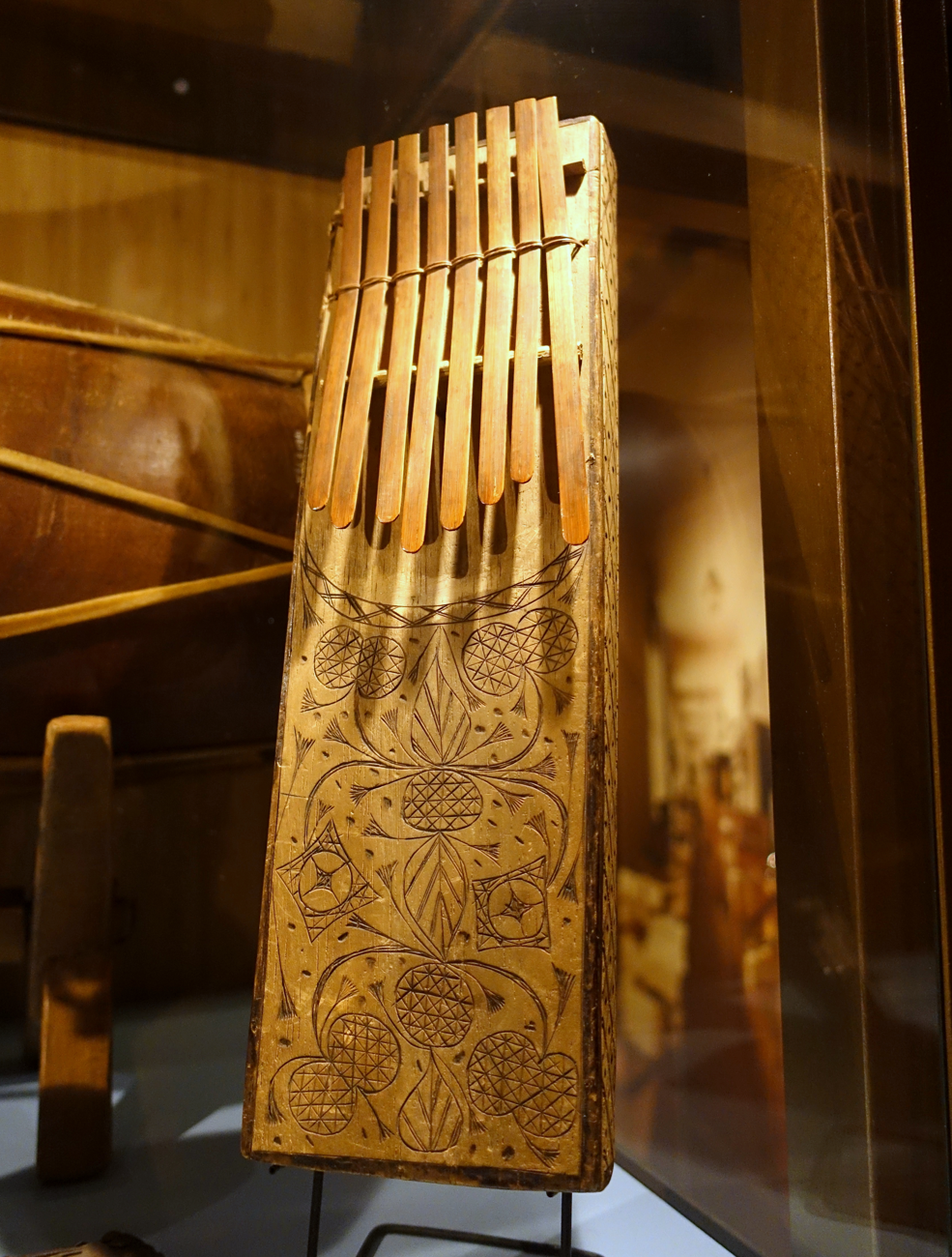
Etnografiska museet, Stockholm · CC0 1.0 (Public Domain Dedication)


Making an Mbira — The African Thumb Piano
Make an mbira: a hardwood board fitted with a row of tuned metal tongues you pluck with your thumbs, often set in a gourd with rattling buzzers. Cut and tune the metal keys, mount them over a bridge, and play. A buildable project in the plucked metal tongue — many jaw-harp tongues made into a keyboard.
Pertengahan
A few hours over a couple of sessions
Arahan
1
1
Tongues you pluck with your thumbs
Tongues you pluck with your thumbs
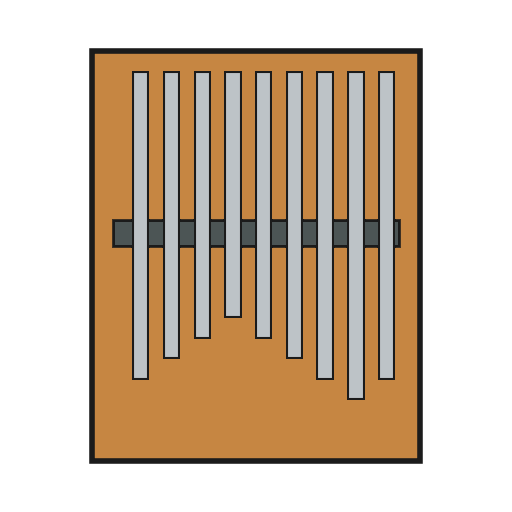
The mbira is a hardwood board carrying a row of tuned metal tongues (keys). You press each key down with a thumb and let it spring back, plucking out the note — many springy tongues laid out like a keyboard.
2
2
Prepare the soundboard
Prepare the soundboard
Shape a flat hardwood soundboard — the harder and more resonant the wood, the brighter the ring.
Bahan untuk langkah ini:
 Papan Kayu Keras1 keping
Alatan diperlukan:
 Pisau Sloyd
3
3
Make the metal keys
Make the metal keys
Cut and flatten springy steel into a set of thin tongues (keys) of graduated length — longer keys for low notes, shorter for high. File the tips smooth.
Bahan untuk langkah ini:
 Jalur keluli spring2 keping
Alatan diperlukan:
 Kikir Logam
4
4
Build the bridge and pressure bar
Build the bridge and pressure bar
Fix a hardwood bridge across the board and a straight pressure bar just above it. The keys clamp between them, held down at one end and free to spring at the other.
Bahan untuk langkah ini:
 Dawai Muzik Keluli 0.032"1 keping
Alatan diperlukan:
 Jara
Jara5
5
Mount and tune the keys
Mount and tune the keys
Slide each key under the pressure bar. Push a key IN (shorter free end) to raise its note, or OUT (longer free end) to lower it — that is how you tune an mbira, by sliding not filing.
6
6
Add a gourd and buzzers
Add a gourd and buzzers
Rest the board in a big hollow gourd to make it louder, and fix loose bottle-caps or shells to the board so they buzz — the shimmering rattle is part of the mbira's voice.
Bahan untuk langkah ini:
 Labu air matang1 keping
7
7
Play with your thumbs
Play with your thumbs
Hold the mbira in both hands and pluck the keys downward with your thumbs (and one key up with a finger), weaving the interlocking patterns of Shona music.
8
8
Compendium — the plucked tongue, multiplied
Compendium — the plucked tongue, multiplied
The mbira is a lamellophone: an instrument of thin tongues (lamellae) fixed at one end and free to vibrate at the other. Pluck a tongue and it springs back and forth at a pitch set by how long, thick and stiff its free part is — short, stiff tongues buzz fast and sound high; long ones vibrate slowly and sound low. That is exactly the tongue of the jaw harp, only here there is a whole tuned SET of them side by side, so instead of one drone you have a keyboard you can play melodies and interlocking parts on. You tune each key not by filing but by sliding it under the pressure bar to lengthen or shorten its free end — longer is lower, shorter is higher. The hardwood board and the gourd it sits in amplify the quiet tongues, and loose buzzers add the shimmering rattle (a deliberate mirliton) that Shona players prize. Made across southern Africa for well over a thousand years — the Shona mbira, the kalimba, the many 'thumb pianos' — it is the ancestor of the modern kalimba, and its cousin is the free reed of the sheng, a tongue set vibrating by breath rather than by a thumb.
Bahan
4- 1 kepingPemegang Tempat
- 2 kepingPemegang Tempat
- 1 kepingPemegang Tempat
- 1 kepingPemegang Tempat
Alatan Diperlukan
3- Pemegang Tempat
- Pemegang Tempat
- Pemegang Tempat
Blueprint ini membuat
Blueprint berkaitan
Blueprint ini berkongsi pengetahuan — teknik, bahan atau prinsip
CC0 Domain Awam
Blueprint ini dikeluarkan di bawah CC0. Anda bebas menyalin, mengubah, mengedar, dan menggunakan karya ini untuk sebarang tujuan, tanpa meminta kebenaran.
Sokong Pembuat dengan membeli produk melalui Blueprint mereka di mana mereka memperoleh Komisen Pembuat ditetapkan oleh Penjual, atau cipta iterasi baru Blueprint ini dan sertakan ia sebagai sambungan dalam Blueprint anda sendiri untuk berkongsi hasil.