SENI
KECANTIKAN & KESEJAHTERAAN
KRAFTANGAN
BUDAYA & SEJARAH
HIBURAN
ALAM SEKITAR
MAKANAN & MINUMAN
KEJURUTERAAN TERBALIK
SAINS
SUKAN
TEKNOLOGI
BOLEH PAKAI
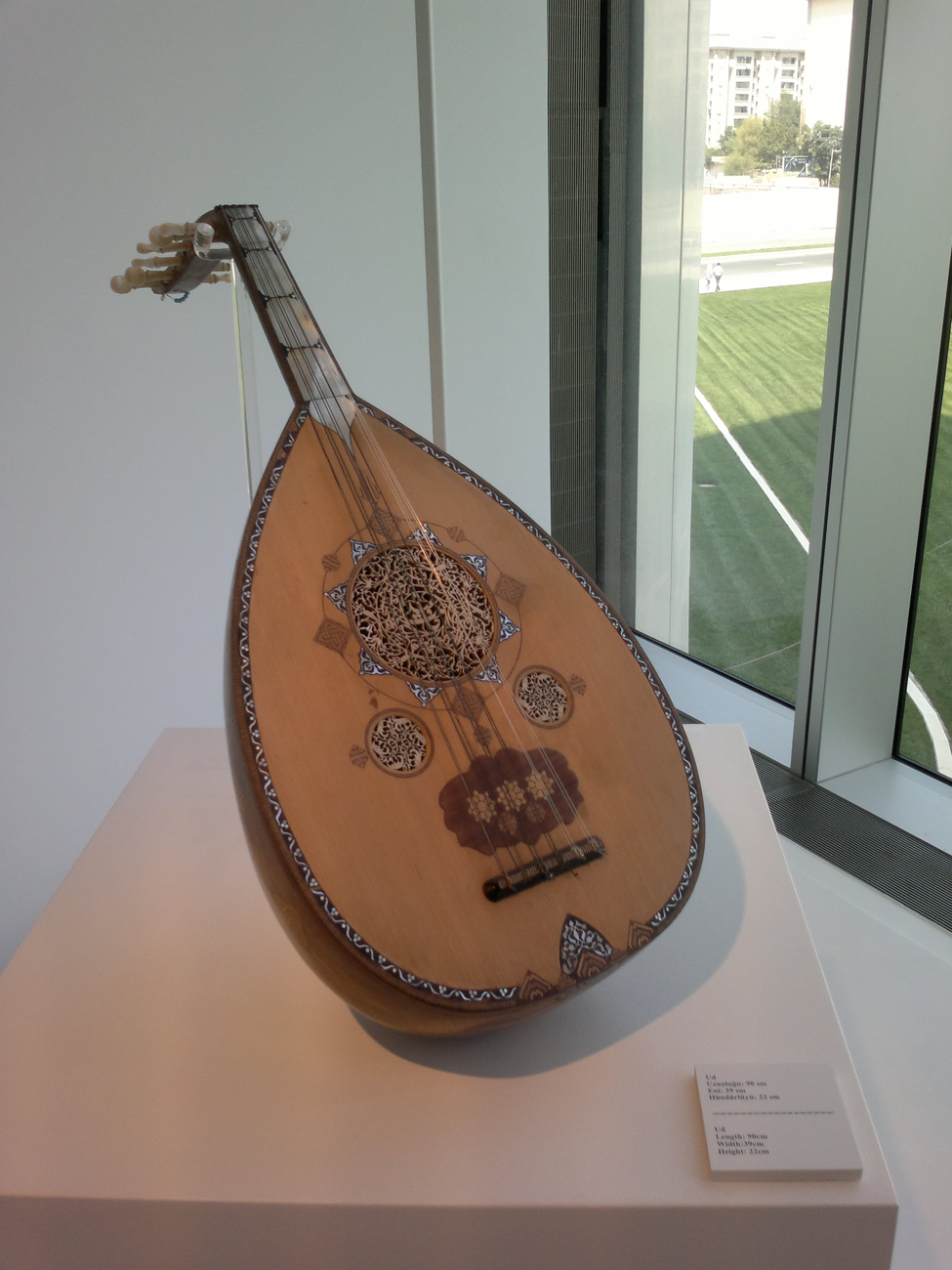


Building an Oud — The Fretless Arabic Lute
Build an oud: the deep-bowled, short-necked lute at the heart of Arabic and Turkish music — and famously FRETLESS, so your fingers can slide to any pitch and play the microtones of maqam. Shape the bowl, fit the bent pegbox, string the courses, and learn why leaving the frets off opens up the notes between the notes. A serious maker build in the fretless plucked string.
Pertengahan
Several hours over several sessions
Arahan
1
1
A lute with no frets
A lute with no frets
The oud is the deep-bowled short-necked lute of Arabic and Turkish music. Unlike a guitar or bağlama it has NO frets, so a player can slide the fingers to any pitch — including the microtones between the Western notes.
2
2
Shape the bowl body
Shape the bowl body
Build a deep, rounded bowl body from many thin wooden staves (ribs) glued edge to edge over a mould. The big bowl gives the oud its warm, resonant voice.
Bahan untuk langkah ini:
 Jalur kayu keras1 keping
 Gam Kayu PVA1 keping
Alatan diperlukan:
 Gergaji Besi
3
3
Fit the soundboard
Fit the soundboard
Glue a thin flat soundboard over the bowl and cut one or more decorative sound-holes (rosettes) in it.
Bahan untuk langkah ini:
 Papan Kayu Lembut Kering1 kepingGam Kayu PVA1 keping
Alatan diperlukan:
 Pisau Sloyd
4
4
Fit the neck and pegbox
Fit the neck and pegbox
Fit a short, SMOOTH neck — no frets at all — ending in a pegbox that bends sharply back from the neck, the oud's signature shape.
Bahan untuk langkah ini:
 Rod Pasak Kayu1 kepingGam Kayu PVA1 keping
5
5
Fit the pegs and string it
Fit the pegs and string it
Fit the pegs and string it with paired courses — bright strings for the high courses and thicker wound strings for the low ones. An oud usually has eleven strings in six courses.
Bahan untuk langkah ini:
 Pemulas Tali6 keping
 Dawai Muzik Keluli 0.032"1 keping
 Dawai gangsa1 keping
Alatan diperlukan:
 Jara
Jara6
6
Tune the courses
Tune the courses
Tune the six courses low to high. Doubling most strings in a course makes the sound fuller and richer.
7
7
Play with a risha
Play with a risha
Pluck the strings with a long thin plectrum (the risha), pressing the strings onto the bare, fretless neck with your other hand.
8
8
Slide the microtones
Slide the microtones
Because there are no frets, slide a finger up or down the smooth neck to glide between notes and land exactly on the in-between pitches that make an Arabic maqam.
9
9
Compendium — why leave the frets off
Compendium — why leave the frets off
A plucked string sounds higher the shorter its vibrating length, and pressing it against the neck is how you shorten it. A FRET is a fixed ridge that stops the string at one exact spot every time, which makes it easy to hit set notes accurately but locks you to those notes. The oud does the opposite on purpose: its neck is left perfectly smooth, so the string is stopped only by the soft pad of your finger, wherever you place it. That means you can land on any pitch at all — including the neutral, in-between microtones that Arabic and Turkish maqam music lives on, which fall in the cracks a fretted guitar can never reach — and slide smoothly from one to the next, bending and ornamenting notes like a singing voice. The price is that intonation is all in the player's ear and fingers, with no frets to guide them. The deep staved bowl and thin soundboard amplify the strings as in any lute, and the sharply back-bent pegbox keeps the short neck balanced. The oud is the direct ancestor of the European LUTE (the very word 'lute' comes from the Arabic al-ʿūd), and a cousin of the fretted bağlama and, distantly, the guitar — the whole family of plucked, soundbox strings whose oldest Youblob ancestor is the lyre.
Bahan
7- 1 kepingPemegang Tempat
- 1 kepingPemegang Tempat
- 1 kepingPemegang Tempat
- 1 kepingPemegang Tempat
- 6 kepingPemegang Tempat
- 1 kepingPemegang Tempat
- 1 kepingPemegang Tempat
Alatan Diperlukan
3- Pemegang Tempat
- Pemegang Tempat
- Pemegang Tempat
Blueprint ini membuat
Blueprint berkaitan
Blueprint ini berkongsi pengetahuan — teknik, bahan atau prinsip
CC0 Domain Awam
Blueprint ini dikeluarkan di bawah CC0. Anda bebas menyalin, mengubah, mengedar, dan menggunakan karya ini untuk sebarang tujuan, tanpa meminta kebenaran.
Sokong Pembuat dengan membeli produk melalui Blueprint mereka di mana mereka memperoleh Komisen Pembuat ditetapkan oleh Penjual, atau cipta iterasi baru Blueprint ini dan sertakan ia sebagai sambungan dalam Blueprint anda sendiri untuk berkongsi hasil.