SENI
KECANTIKAN & KESEJAHTERAAN
KRAFTANGAN
BUDAYA & SEJARAH
HIBURAN
ALAM SEKITAR
MAKANAN & MINUMAN
KEJURUTERAAN TERBALIK
SAINS
SUKAN
TEKNOLOGI
BOLEH PAKAI
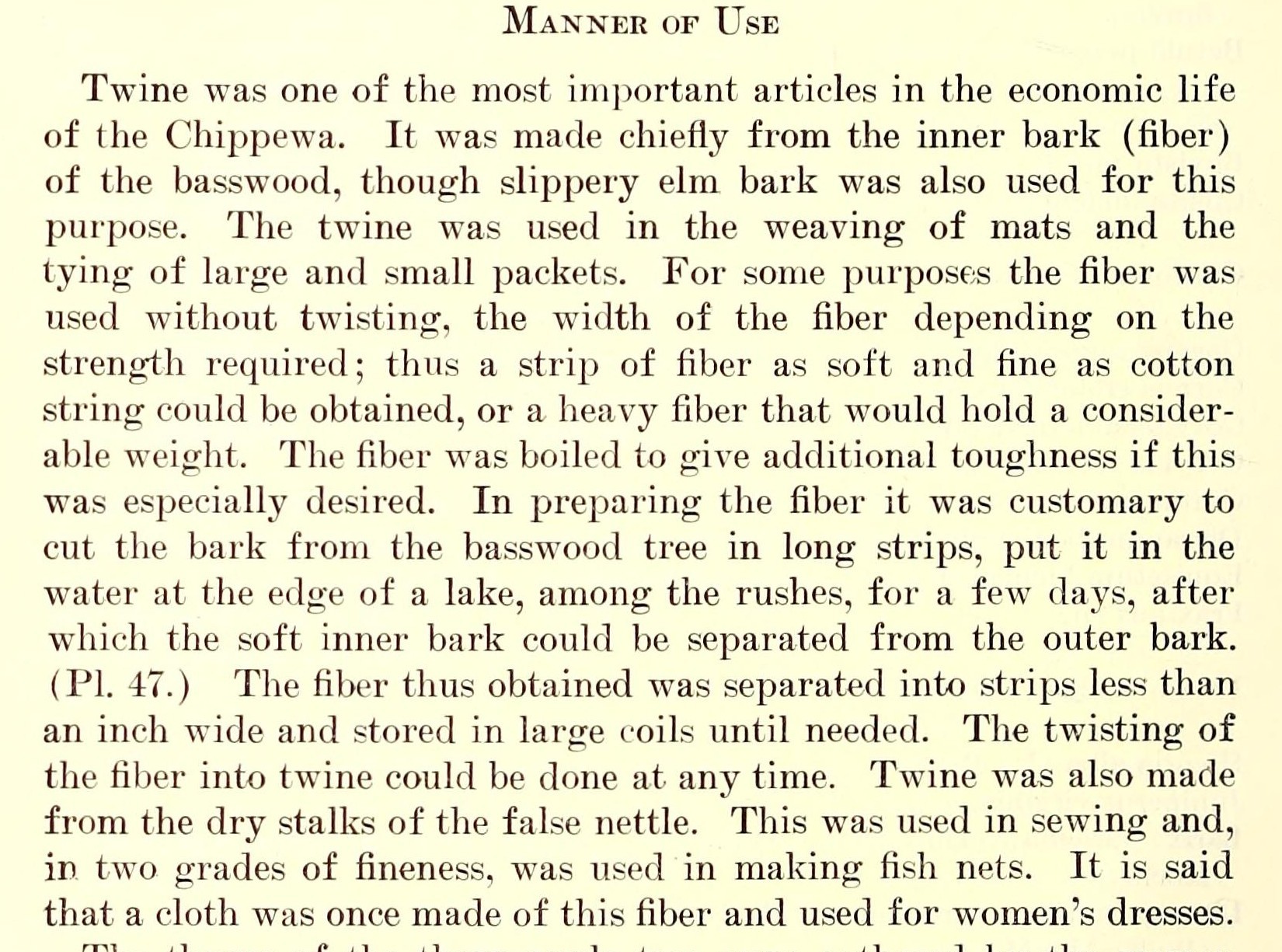


Chippewa Basswood Fiber and Twine: Bark Strips Soaked at the Lake Edge, Inner Bark Peeled and Coiled (Densmore, 1928)
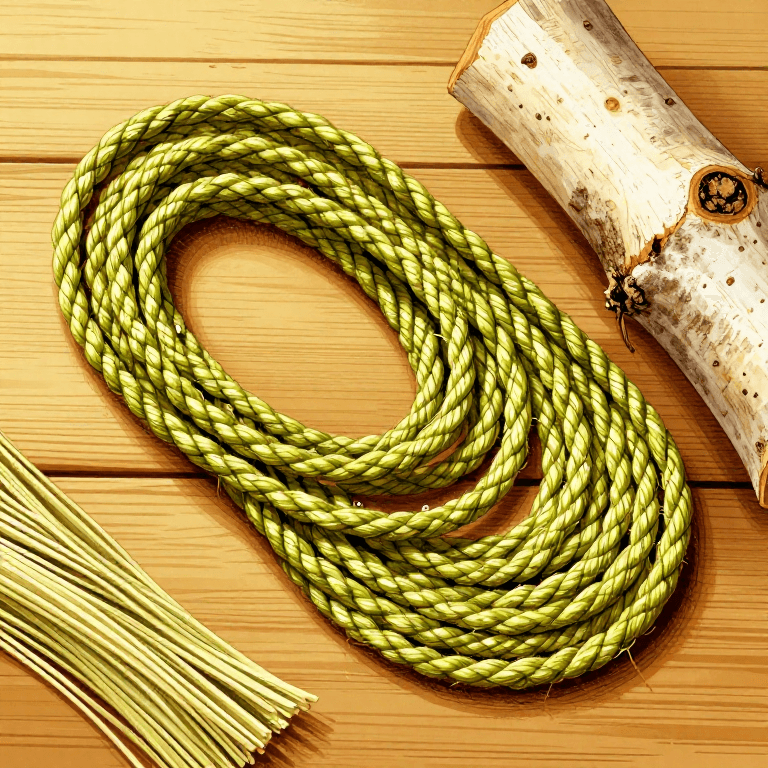
How the Chippewa (Ojibwe) got their most important twine, from Frances Densmore's record: long strips of basswood bark left a few days in the water among the rushes at a lake edge, the soft inner bark peeled off, split into strips under an inch wide and kept in coils, used flat or twisted into twine, and boiled when extra toughness was wanted.
Pemula
A few days of soaking, then an afternoon
Arahan
1
1
Read Densmore
Read Densmore
"Twine was one of the most important articles in the economic life of the Chippewa."
2
2
Cut the bark
Cut the bark
Cut the bark from a basswood tree in long strips. (Slippery elm bark was also used.)
Bahan untuk langkah ini:
 Batang balak basswood (Tilia americana)1 keping
Alatan diperlukan:
 Pisau
3
3
Soak at the lake edge
Soak at the lake edge
Put the strips in the water at the edge of a lake, among the rushes, for a few days.
Bahan untuk langkah ini:
 Air1 keping
Alatan diperlukan:
Pisau4
4
Peel and coil the fiber
Peel and coil the fiber
Separate the soft inner bark from the outer bark. Split the fiber into strips less than an inch (25 mm) wide, narrow for string as soft and fine as cotton, wider for a heavy load. Store it in large coils, somewhat moist, in a dark, cool place.
Alatan diperlukan:
Pisau5
5
Toughen and twist
Toughen and twist
Boil the fiber if you want it extra tough. Use it flat for tying, or twist it into twine whenever you like. She does not say how; ours: roll two strands on the thigh so each twists one way, then let them wind round each other.
Bahan untuk langkah ini:
Air1 kepingAlatan diperlukan:
 Cerek Besi
 Lubang unggun api
6
6
Troubleshooting
Troubleshooting
Basswood fiber troubleshooting.
Flow
Loading...
7
7
History and honest limits
History and honest limits
From Frances Densmore, *Uses of Plants by the Chippewa Indians*, **44th Annual Report of the Bureau of American Ethnology** (1928), pp. 378-379 (checked on the archive.org scan usesofplantsbych00dens). The twine wove bulrush floor mats, passed over and under the rushes on a frame. Soaking time beyond "a few days", the knife, boiling time and the twisting method are not given; ours.
Bahan
2- Pemegang Tempat
- 2 kepingPemegang Tempat
Blueprint ini membuat

Blueprint berkaitan
Blueprint ini berkongsi pengetahuan — teknik, bahan atau prinsip

CC0 Domain Awam
Blueprint ini dikeluarkan di bawah CC0. Anda bebas menyalin, mengubah, mengedar, dan menggunakan karya ini untuk sebarang tujuan, tanpa meminta kebenaran.
Sokong Pembuat dengan membeli produk melalui Blueprint mereka di mana mereka memperoleh Komisen Pembuat ditetapkan oleh Penjual, atau cipta iterasi baru Blueprint ini dan sertakan ia sebagai sambungan dalam Blueprint anda sendiri untuk berkongsi hasil.