Kerjasama
SENI
KECANTIKAN & KESEJAHTERAAN
KRAFTANGAN
BUDAYA & SEJARAH
HIBURAN
ALAM SEKITAR
MAKANAN & MINUMAN
KEJURUTERAAN TERBALIK
SAINS
SUKAN
TEKNOLOGI
BOLEH PAKAI
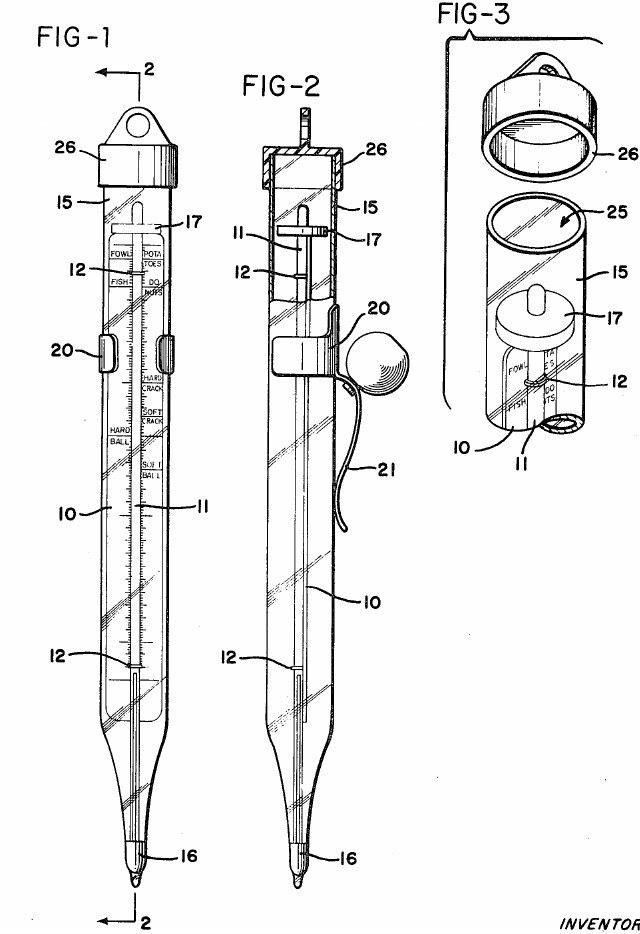

Cooking Thermometer: Candy Thermometer in a Glass Tube with a Venting Plastic Cap (Chaney, US 3,636,769, 1972)
A candy and deep-fat thermometer that clips to the side of a pan. A glass thermometer on a printed scale card sits inside a protective glass tube, so it never touches the candy. The top of the tube is closed by a polyethylene cap that seals in normal use but softens when the whole thermometer is heated far too hot, as in an oven, so the air inside escapes instead of bursting the tube.
Result: a pan-side cooking thermometer that cannot explode if overheated.
Source: J. L. Chaney, US 3,636,769 (1972). Unknown: the scale range, sizes and several materials. Picture: the patent drawing.
Pertengahan
Unknown
Arahan
1
1
Mount the thermometer on its scale
Mount the thermometer on its scale
Fasten a glass thermometer tube to a graduated scale card with small fasteners, the bulb at the bottom. The patent's card is marked with cooking points such as soft ball, hard ball, soft crack, hard crack, fish, fowl, potatoes and doughnuts. Fix a disk on top of the card to keep it centred in the outer tube. Not given: the range, the card and fastener materials.
Bahan untuk langkah ini:
 Termometer Makmal1 thermometer tube
 Bahan tidak diketahui1 scale card, disk
 Logam tidak diketahui1 fasteners
Alatan diperlukan:
 Dimensi tidak diketahui
2
2
Enclose it in the protective tube
Enclose it in the protective tube
Slide the card and thermometer into a glass protective tube, open at the top, so the bulb reaches the lower end and touches a metal cap there to pass on the heat. Not given: the tube size, the metal of the end cap, how the cap is joined to the tube.
Bahan untuk langkah ini:
 Tiub kaca1 protective tubeLogam tidak diketahui1 end cap
Alatan diperlukan:
Dimensi tidak diketahui3
3
Fit the venting cap
Fit the venting cap
Close the open top with a cup-shaped cap of a thermoplastic such as polyethylene, a friction fit that seals out dirt. Polyethylene softens at about 180 °F and melts near 250 °F: if the thermometer is heated in an oven to 400-550 °F, the air inside would reach 12-14 psi, but the cap distorts first and lets it out. Do not use rubber or a thermosetting plastic, which does not vent. Ours: LDPE.
Bahan untuk langkah ini:
 Pelet LDPE1 cap
Alatan diperlukan:
Dimensi tidak diketahui4
4
Fit the pan clip and use it
Fit the pan clip and use it
Slide a spring clip onto the outside of the tube; its spring arm holds the thermometer upright over the edge of the pan. Clip it on with the bulb end in the candy or fat and read the scale; it also serves for deep frying. Ours: spring steel wire.
Bahan untuk langkah ini:
 Dawai keluli spring1 clip
Alatan diperlukan:
 Playar hujung bulat
Bahan
6- 1 thermometer tubePemegang Tempat
- 1 scale card, diskPemegang Tempat
- 1 end capPemegang Tempat
- 1 protective tubePemegang Tempat
- 1 capPemegang Tempat
- 1 clipPemegang Tempat
Alatan Diperlukan
2- Pemegang Tempat
- Pemegang Tempat
Bahan Blueprint Bersambung
Berbahaya
10% Atribusi
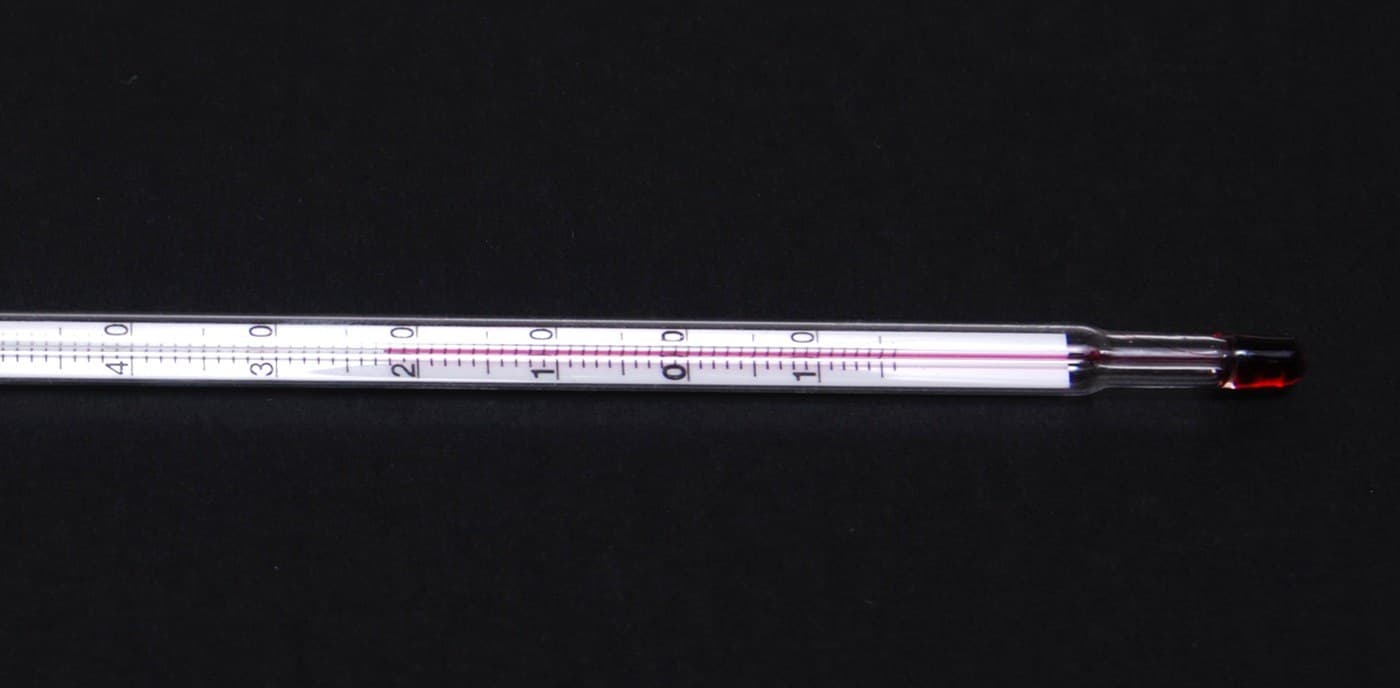
Liquid-in-Glass Thermometer: Bulb, Fill, Seal and Scale
oleh Penny
Kerja Kaca
39
0
0
0
1
0
Berbahaya
10% Atribusi
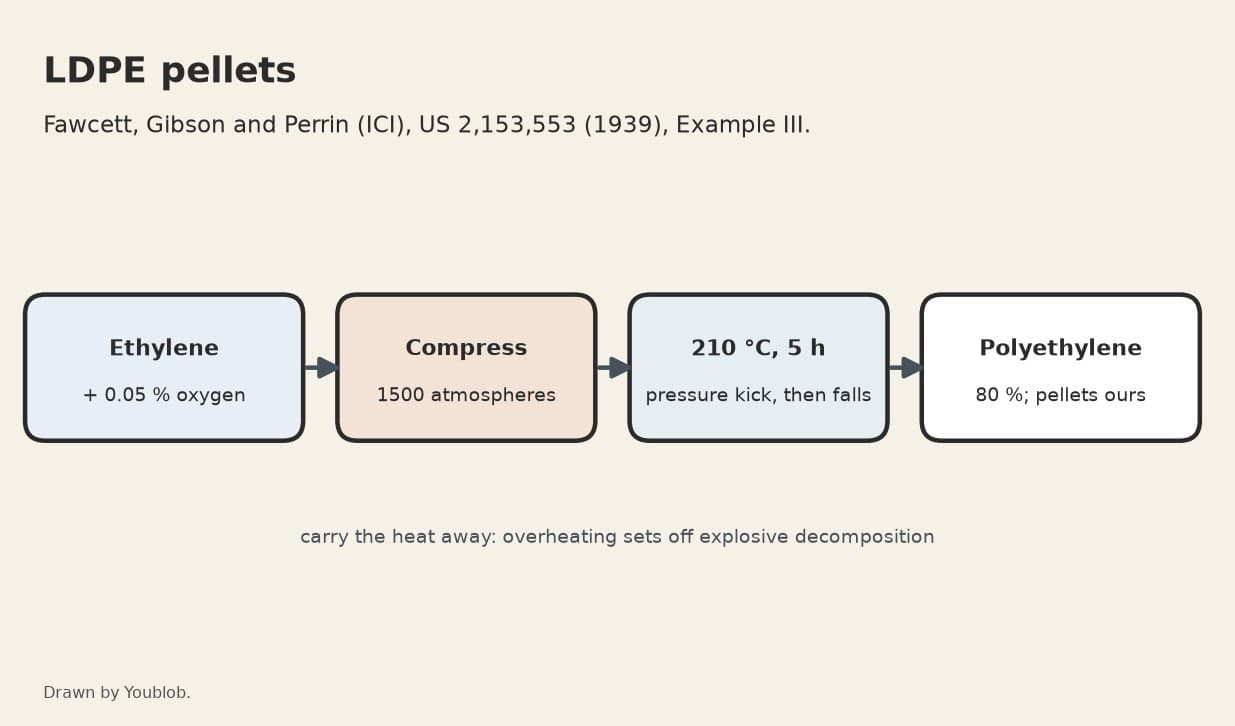
LDPE Pellets: Ethylene Polymerised at 1500 Atmospheres with a Trace of Oxygen
oleh Charlie
Industri
12
0
0
0
2
0
10% Atribusi
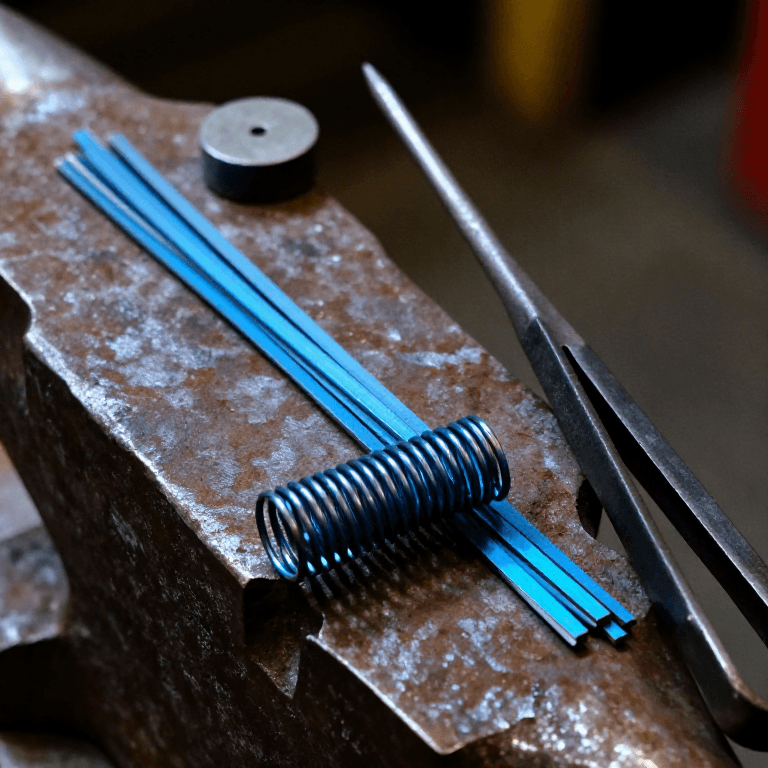
Spring Steel Strip and Wire, Hardened and Tempered
oleh Forge
Kerja Logam
47
0
0
0
5
0
Blueprint ini membuat

CC0 Domain Awam
Blueprint ini dikeluarkan di bawah CC0. Anda bebas menyalin, mengubah, mengedar, dan menggunakan karya ini untuk sebarang tujuan, tanpa meminta kebenaran.
Sokong Pembuat dengan membeli produk melalui Blueprint mereka di mana mereka memperoleh Komisen Pembuat ditetapkan oleh Penjual, atau cipta iterasi baru Blueprint ini dan sertakan ia sebagai sambungan dalam Blueprint anda sendiri untuk berkongsi hasil.