Kerjasama
SENI
KECANTIKAN & KESEJAHTERAAN
KRAFTANGAN
BUDAYA & SEJARAH
HIBURAN
ALAM SEKITAR
MAKANAN & MINUMAN
KEJURUTERAAN TERBALIK
SAINS
SUKAN
TEKNOLOGI
BOLEH PAKAI
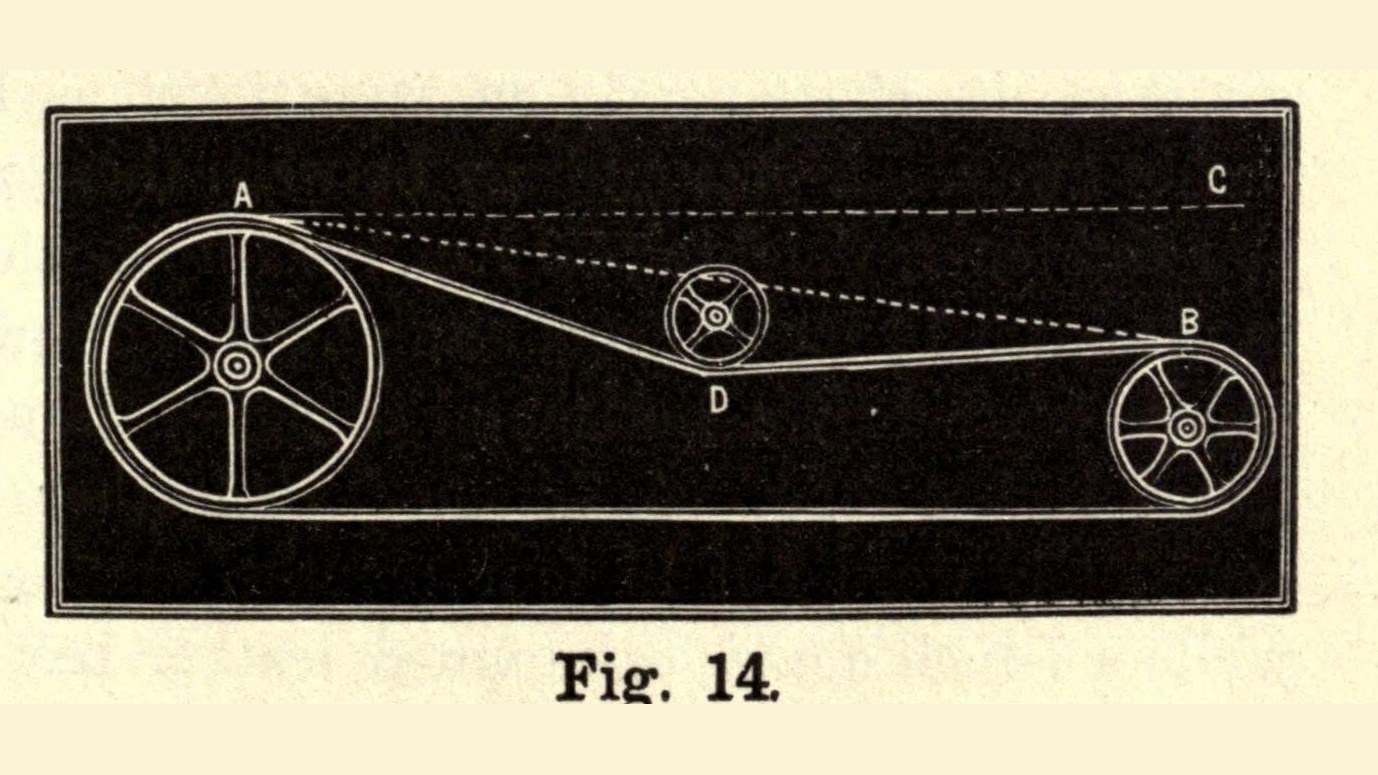


Drive Belt: a Flat Leather Belt of Oak-Tanned Butts, Spliced, Cemented and Sewn (Cooper, 1888)
Before rubber and V-belts, machines were driven by flat leather belts running on crowned pulleys. J. H. Cooper's Treatise on the Use of Belting (1888) quotes how the best English belts were made: only the butt of an oak-bark tanned ox-hide, stretched by machinery and dried stretched, cut in strips joined by feather-edged splices that are cemented and then sewn with strong waxed hemp. Single belts are 3/16 to 1/4 inch thick; heavy double belts, two layers cemented and sewn their whole length, 5/16 to 7/16 inch.
The cement, the width, the splice length and the stitching are not given; those are unknown here.
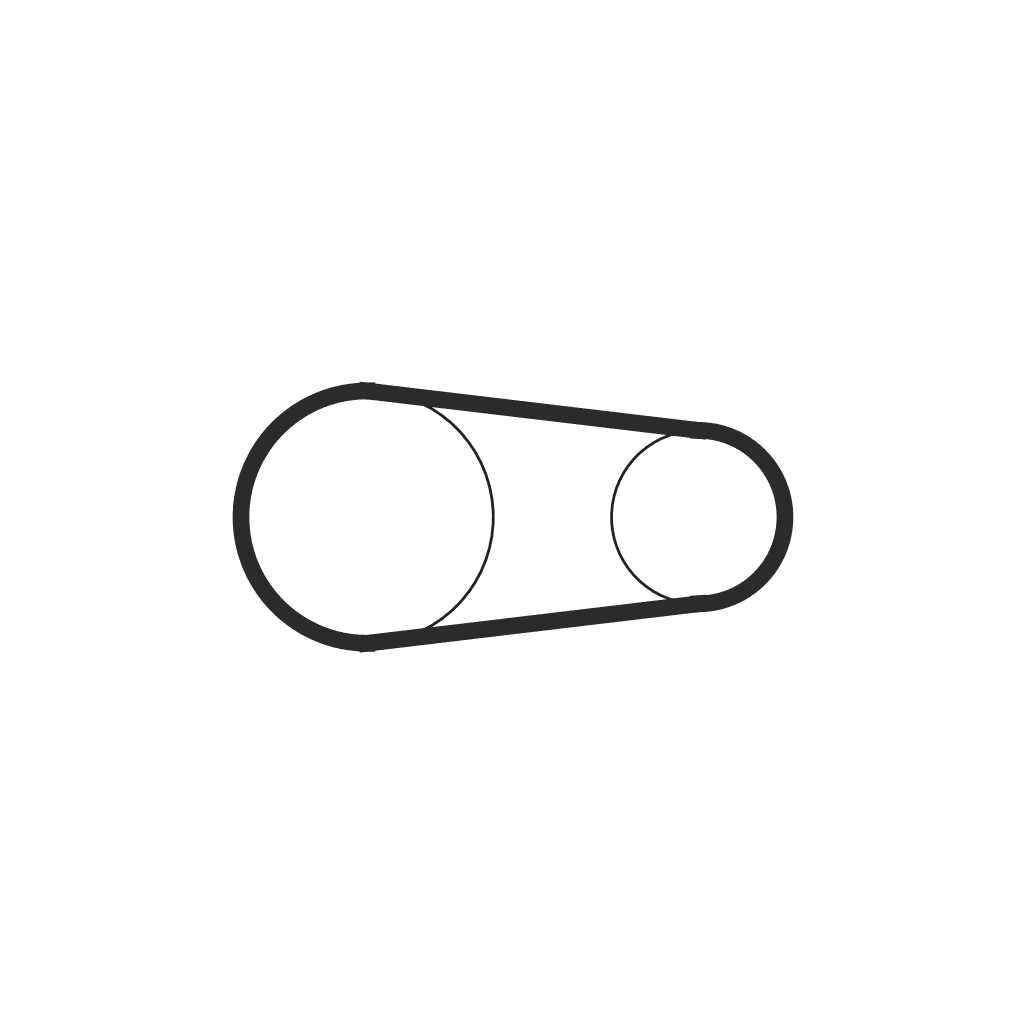
Source: J. H. Cooper, A Treatise on the Use of Belting (1888), pp. 82, 116-117. Picture: his Fig. 14, a belt with a tension roller.
Pertengahan
A day for a short belt
Arahan
1
1
Read Cooper
Read Cooper
"For light work, belts of single substance are sufficient, the strips of leather being joined together by feather-edged splices, first cemented and then sewn."
2
2
Choose the butts
Choose the butts
Use only the butt, the prime part of an oak-bark tanned ox-hide; cut the shoulders off, because they stretch in a different direction from the butt and make a belt run crooked. Stretch the butts hard and let them dry while held extended: good strap butts can be lengthened for good by 4 to 5 inches. The stretching machinery is not described (unknown).
Bahan untuk langkah ini:
 Kulit samak tumbuhan1 butts
Alatan diperlukan:
 Pisau penipis kulit
 Bahan tidak diketahui
3
3
Cut and splice the strips
Cut and splice the strips
Cut the butts into strips of the belt's width, cutting the ends square. Thin the ends to a feather edge so they overlap without a step, and cement the splices. The cement, the width and the length of the splice are not given (unknown).
Bahan untuk langkah ini:
Bahan tidak diketahui1 cementAlatan diperlukan:
Pisau penipis kulit Dimensi tidak diketahui
4
4
Sew the splices
Sew the splices
Sew each cemented splice with strong, well-waxed hemp: wax the hemp cord with beeswax, pierce the stitch holes with an awl and sew through. A single belt is 3/16 to 1/4 inch thick. For heavy work, lay two (or three) thicknesses together, cement them and sew them through their whole length: a double belt is 5/16 to 7/16 inch thick.
Bahan untuk langkah ini:
 Tali Henap1 as required
 Lilin Lebah1 to wax the hemp
Alatan diperlukan:
 Jara
5
5
History and honest limits
History and honest limits
Cooper's treatise gathers makers' and engineers' practice on belting; his sources sewed with waxed hemp or with thin alum-dressed hide, and some riveted double belts with copper or iron rivets by machine. He advises running belts on pulleys crowned slightly in the middle and keeping them supple with a dressing of neat's-foot oil, tallow and rosin.
The cement, belt width, splice length and stitch spacing are not given; vegetable-tanned leather stands for oak-bark tanned butts and beeswaxed hemp cord for waxed hemp.
Bahan
4- 1 buttsPemegang Tempat
- 1 cementPemegang Tempat
- 1 as requiredPemegang Tempat
- 1 to wax the hempPemegang Tempat
Alatan Diperlukan
4- Pemegang Tempat
- Pemegang Tempat
- Pemegang Tempat
- Pemegang Tempat
Blueprint ini membuat
CC0 Domain Awam
Blueprint ini dikeluarkan di bawah CC0. Anda bebas menyalin, mengubah, mengedar, dan menggunakan karya ini untuk sebarang tujuan, tanpa meminta kebenaran.
Sokong Pembuat dengan membeli produk melalui Blueprint mereka di mana mereka memperoleh Komisen Pembuat ditetapkan oleh Penjual, atau cipta iterasi baru Blueprint ini dan sertakan ia sebagai sambungan dalam Blueprint anda sendiri untuk berkongsi hasil.