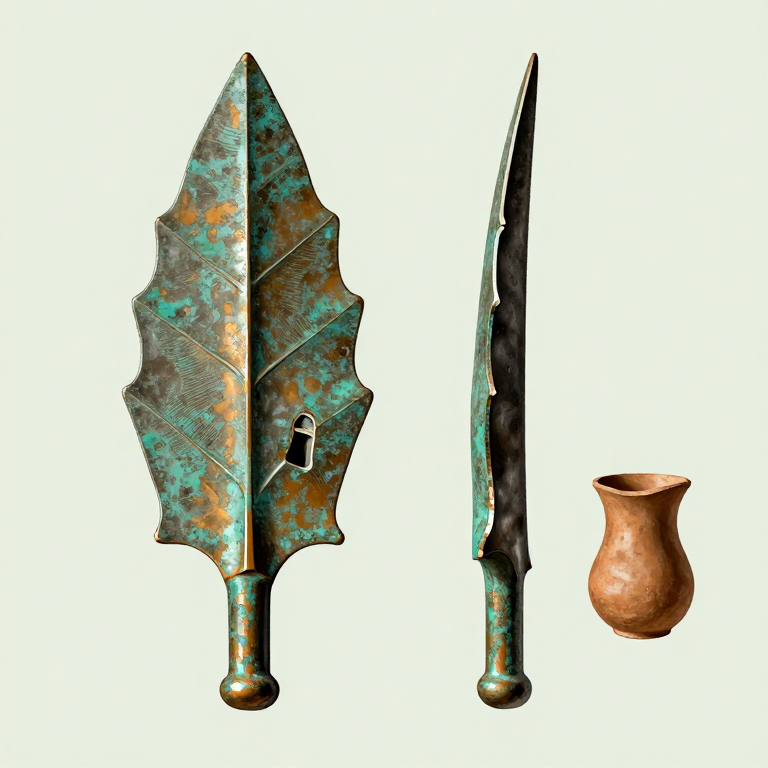

Greek Bronze Spearhead — Casting a Greek Bronze Spearhead
Arahan
Model the Spearhead in Wax
Model the Spearhead in Wax
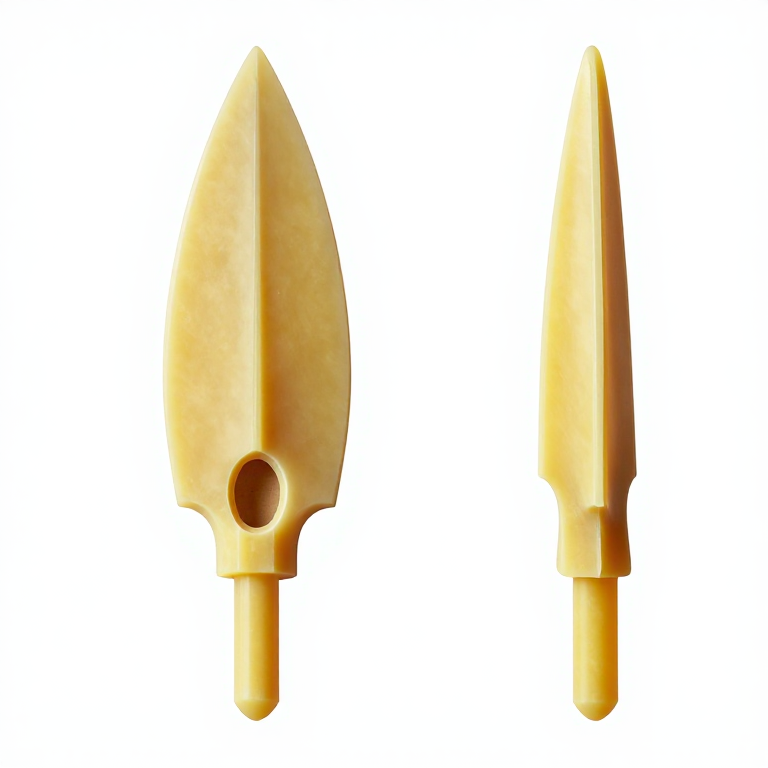
Carve a spearhead model from beeswax approximately 20-30 cm long with a leaf-shaped blade tapering to a point, a raised central midrib running the length of the blade for structural stiffness, and a hollow conical socket at the base for mounting on a wooden shaft. The socket is formed by building the wax around a clay core that will remain inside the mold after the wax is melted out, creating the hollow interior. Greek spearheads were typically 20-40 cm long with blade widths of 3-5 cm. The midrib is structurally critical — without it, the flat blade would bend on impact. Attach wax rods (sprues and vents) to the model to create channels for metal entry and air escape during casting.
Build the Investment Mold
Build the Investment Mold
Apply successive layers of fine clay slip over the wax model, allowing each layer to dry before adding the next. The first coat should be the finest clay to capture blade edge details and midrib profile. Build up to 1-2 cm total wall thickness with coarser clay-sand layers for structural strength. Insert small bronze pins through the mold wall and into the clay socket core — these chaplets hold the core in position after the wax melts away, ensuring the socket cavity remains centered. Allow the completed mold to dry thoroughly. Greek bronze-smiths were highly skilled — excavated workshop sites at Olympia and Athens reveal sophisticated furnace installations and vast quantities of mold fragments.
Bahan untuk langkah ini:
 Pelet Lilin Lebah150-200 g g
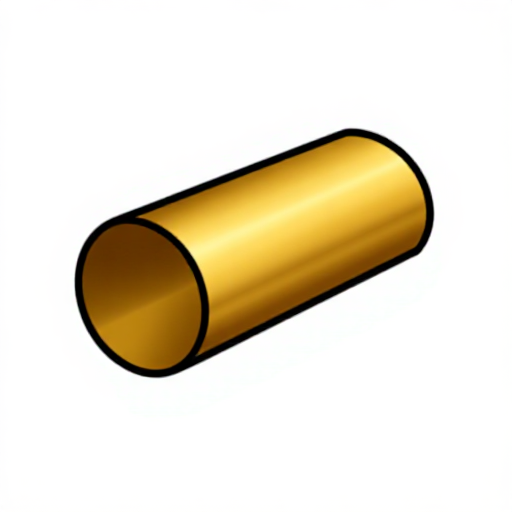 Bar bulat gangsa300-500 g g
 Tanah Liat2-3 kg kg
 Arang Dihancurkan5 kg kg
Burn Out the Wax and Pour the Bronze
Burn Out the Wax and Pour the Bronze
Heat the mold inverted in a kiln at 300-400 degrees Celsius to melt and burn out all wax, then raise to 600-700 degrees to fire the clay shell. Meanwhile, melt bronze (approximately 90% copper, 10% tin) in a ceramic crucible to approximately 1000-1050 degrees Celsius. Pour the molten bronze steadily into the hot mold through the sprue channel. The metal must fill the thin blade section completely, which requires both a hot mold (to prevent premature solidification) and adequate sprue size (to maintain flow). Air escapes through the vent channels. Allow to cool slowly for at least one hour before breaking the mold.
Break Out and Clean the Casting
Break Out and Clean the Casting
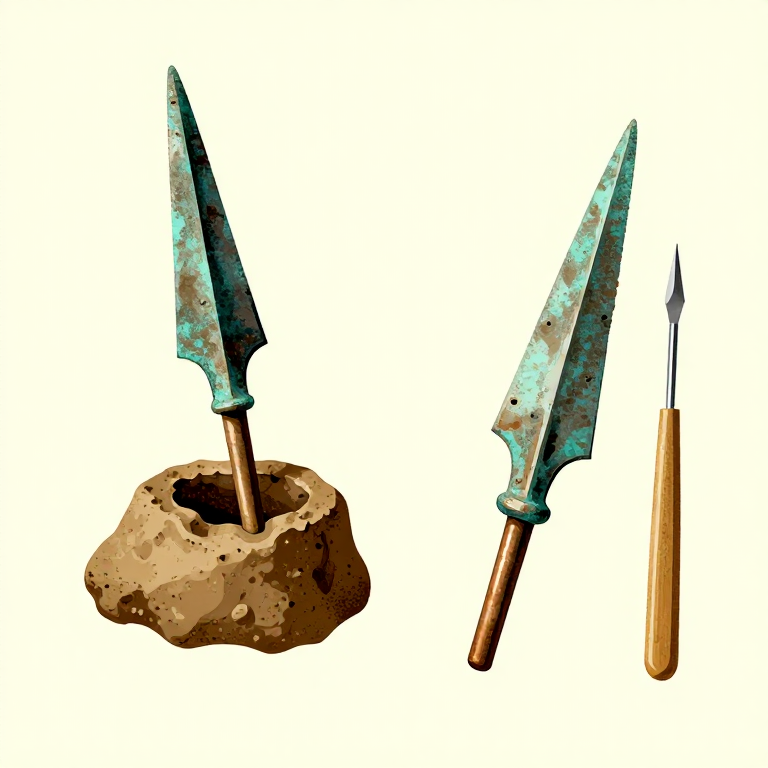
Break away the clay mold with a hammer to reveal the bronze spearhead. Remove the clay core from the socket cavity using a pick or by soaking in water to soften it. Cut off the sprue and vent stubs with a hacksaw or chisel and file the stubs flush. Examine the casting for defects — porosity (small holes from trapped gas), cold shuts (seams where metal streams failed to fuse), or incomplete filling of thin sections. Minor porosity can be repaired by peening (hammering) the surface to compress the metal. File off any casting flash (thin fins of metal at mold joint lines) and refine the overall shape with coarse files.
Sharpen and Finish the Blade
Sharpen and Finish the Blade
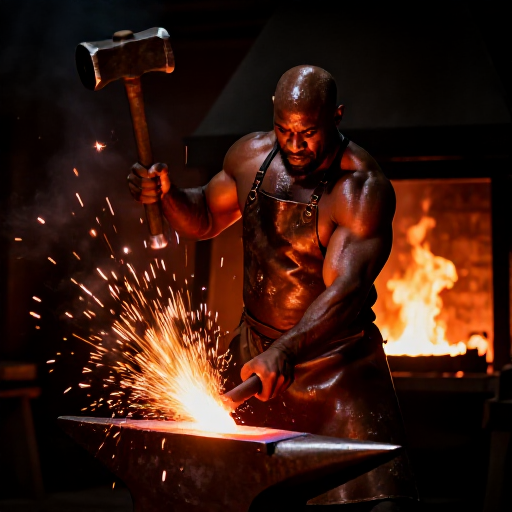
Grind the blade edges on progressively finer whetstones to create a sharp cutting edge. The blade should taper from the midrib thickness of 4-5 mm to a keen edge of less than 1 mm. Work-harden the cutting edges by carefully hammering them on an anvil — this cold-working compresses the crystal structure of the bronze, increasing hardness from approximately 80-100 HV (Vickers) to 150-200 HV. A well-hardened bronze edge can be sharpened to near steel-level keenness. Polish the blade surface with fine abrasive to the characteristic golden-bronze finish. To mount, insert a wooden ash or cornel-wood shaft (approximately 2.5 m long, 2.5 cm diameter) into the socket and secure with a bronze rivet through a pre-drilled hole in the socket wall. The Greek hoplite spear typically had a bronze butt-spike (sauroter) on the opposite end for balance and as a secondary weapon.
Bahan
5- 150-200 g gPemegang Tempat
- 300-500 g gPemegang Tempat
- 2-3 kg kgPemegang Tempat
- 5 kg kgPemegang Tempat
- 150-200 g kepingPemegang Tempat
Alatan Diperlukan
11- Pemegang Tempat
- Pemegang Tempat
- Pemegang Tempat
- Pemegang Tempat
- Pemegang Tempat
- Pemegang Tempat
- Pemegang Tempat
- Pemegang Tempat
- Pemegang Tempat
- Pemegang Tempat
- Pemegang Tempat
Blueprint ini membuat
CC0 Domain Awam
Blueprint ini dikeluarkan di bawah CC0. Anda bebas menyalin, mengubah, mengedar, dan menggunakan karya ini untuk sebarang tujuan, tanpa meminta kebenaran.
Sokong Pembuat dengan membeli produk melalui Blueprint mereka di mana mereka memperoleh Komisen Pembuat ditetapkan oleh Penjual, atau cipta iterasi baru Blueprint ini dan sertakan ia sebagai sambungan dalam Blueprint anda sendiri untuk berkongsi hasil.