

Iron Lung
Breathing is not sucking. The diaphragm drops, the chest cavity gets bigger, the pressure inside it falls below the pressure of the room — and the atmosphere pushes air down the airway. The lungs are passive. They are inflated from outside, by ordinary air pressure, through a hole in your face.
If the muscles that do that stop working, the mechanism is still intact. Polio paralysed the diaphragm and intercostals in thousands of patients whose lungs were perfectly healthy. They suffocated with working lungs, an open airway and air all around them, because nothing was left to make the cavity bigger.
An iron lung does the enlarging from the outside. Seal the body from the neck down in a rigid tank, pump the pressure in the tank below atmospheric, and the chest expands because the room is now pushing harder on the face than the tank is on the ribs. Air flows in through the mouth. Let the pressure back up and the chest recoils. It is not a machine that pushes air into a patient — it is a machine that makes a patient's own chest work.
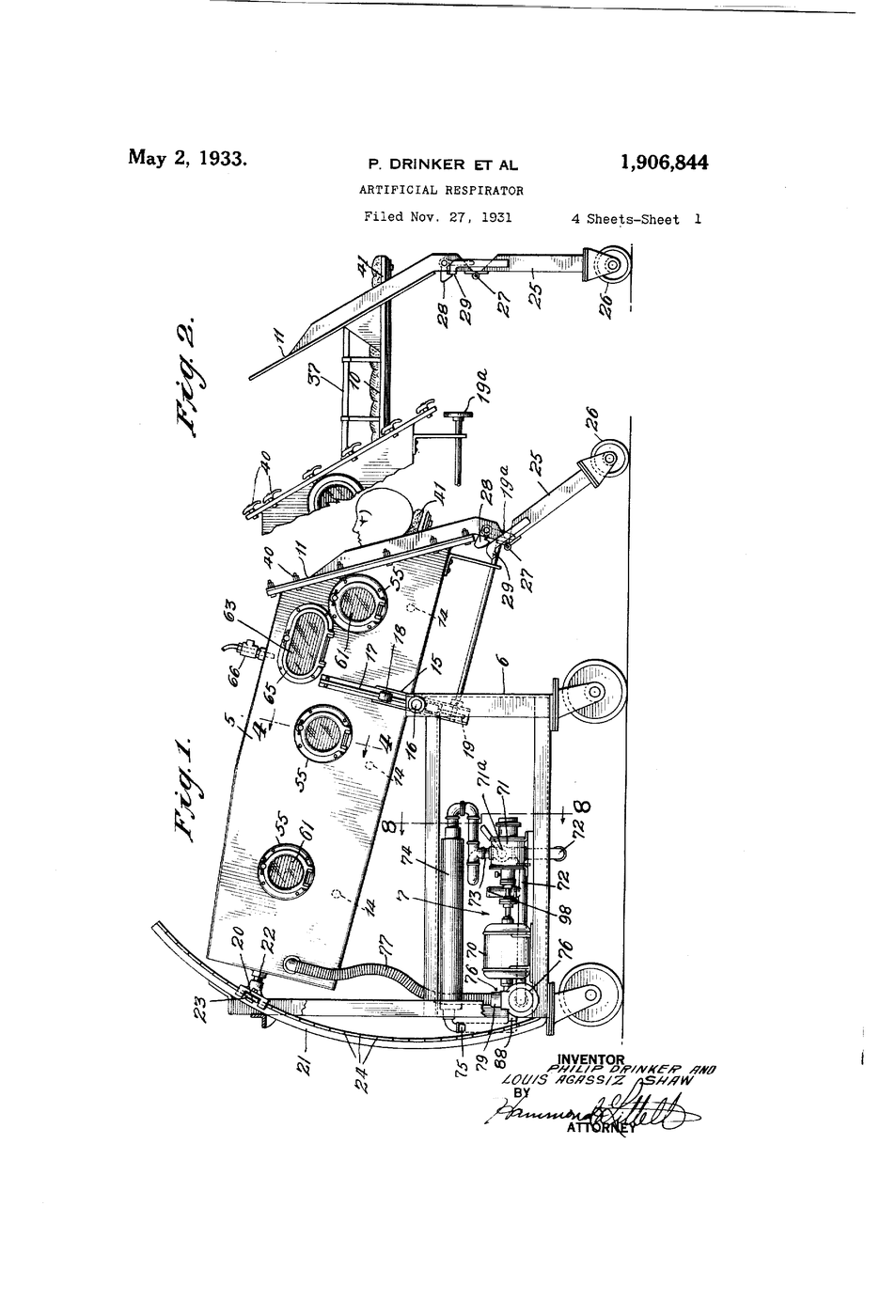
US Patent 1,906,844, "Artificial respirator", filed 27 November 1931 and granted 2 May 1933 to Philip Drinker and Louis Agassiz Shaw — two inventors, and the patent it produced was later struck down in full.
Arahan
Feel your own diaphragm working
Feel your own diaphragm working
Put a hand flat below your ribs and breathe in. It moves out, not in. You are enlarging a cavity, not pulling air.
Read US 1,906,844 and note the ports
Read US 1,906,844 and note the ports
Drinker and Shaw claim a wheeled airtight casing with arm ports sealed by flexible rubber and an adjustable neck collar, so nurses can reach the patient without breaking the seal.
Cut the base off a clear jar
Cut the base off a clear jar
Use a clear rigid jar or bottle with the bottom removed. Rigid is essential — a soft container collapses instead of changing the pressure inside.
Bahan untuk langkah ini:
 Balang Kaca Bertutup1 keping
Fit a tube through the lid
Fit a tube through the lid
Make a hole in the lid and push a rigid tube through it. Seal around it completely. This tube is the trachea and it is the only way air may enter.
Tie a balloon onto the inner end
Tie a balloon onto the inner end
Fix a small balloon over the inside end of the tube. This is the lung, and it is open to the outside air through the tube.
Bahan untuk langkah ini:
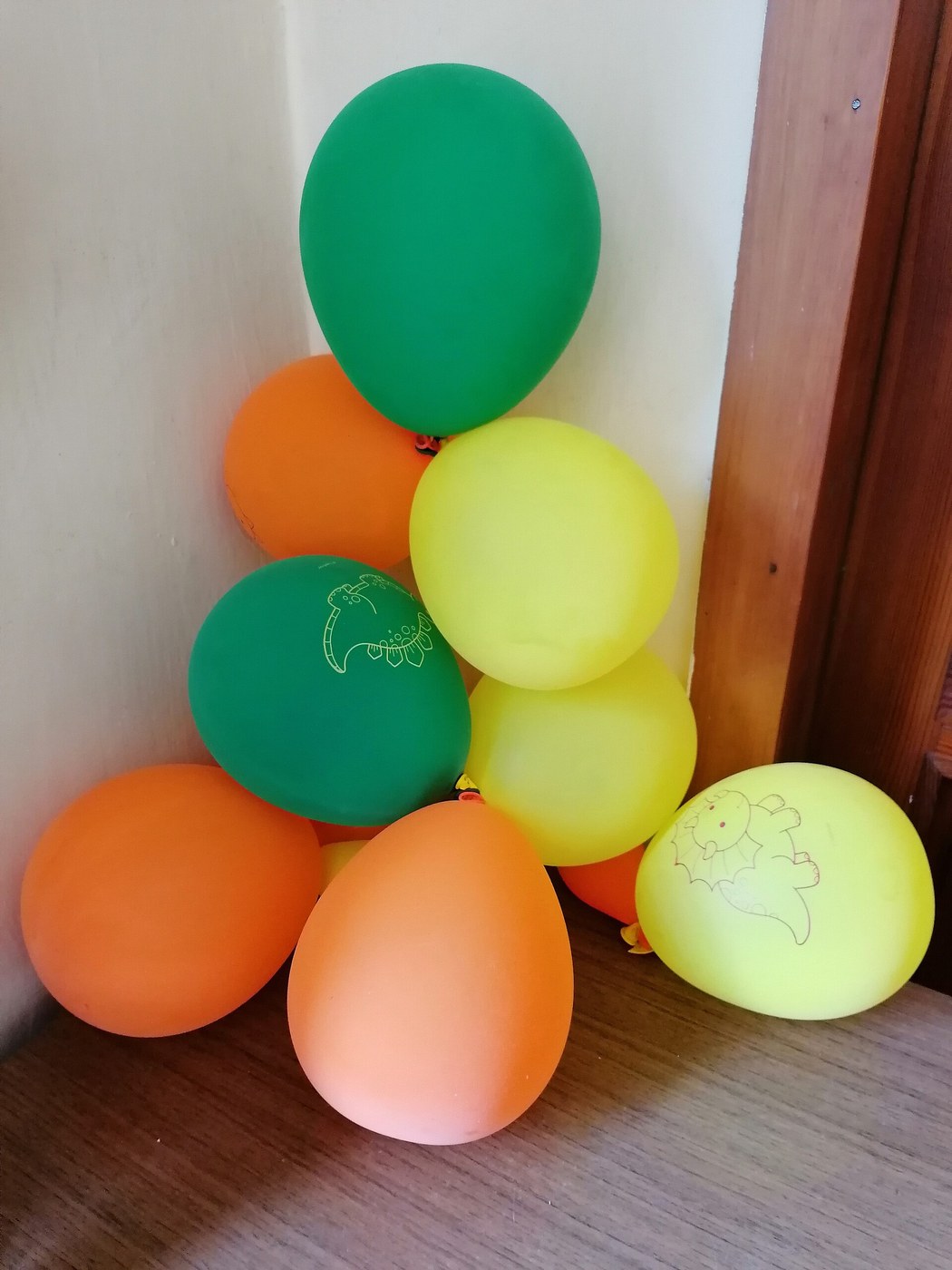 Belon4 keping
Screw the lid on and check the seal
Screw the lid on and check the seal
Fit the lid with the balloon hanging inside. The jar must be airtight everywhere except through the tube.
Stretch a second balloon over the open base
Stretch a second balloon over the open base
Cut a balloon open and stretch it flat across the cut base, holding it with a band. This sheet is the diaphragm — and, in the real machine, the pump.
Blow into the tube and watch it fail
Blow into the tube and watch it fail
Try to inflate the lung by blowing down the tube. It works — but note that this is positive pressure, and it is not what a body does or what this patent does.
Now pull the diaphragm down instead
Now pull the diaphragm down instead
Grip the centre of the stretched sheet and pull it downwards. The balloon inside inflates — with nobody blowing into it.
Work out what actually pushed the air in
Work out what actually pushed the air in
Pulling the sheet enlarged the sealed space, dropping the pressure around the balloon. Room air at ordinary pressure then pushed down the tube. The atmosphere did the work.
Release the diaphragm and watch exhalation
Release the diaphragm and watch exhalation
Let the sheet return. Pressure in the jar rises, the balloon empties. Exhalation is passive recoil, which is why the machine only needs to do half the cycle.
Cycle it at 15 breaths per minute
Cycle it at 15 breaths per minute
Pull and release rhythmically, about once every 4 seconds — a normal adult rate. This is exactly what the pump on a real iron lung is timed to do.
Break the seal and try again
Break the seal and try again
Loosen the lid slightly and repeat step 9. The balloon barely moves — air leaks into the jar instead of down the tube. The seal is the machine.
Make an arm port and test it
Make an arm port and test it
Cut a small hole in the jar wall and seal a balloon sleeve over it. Push a finger through the sleeve and re-run step 12 — respiration continues while you reach inside, which is Drinker and Shaw's claimed advance.
History & Context — the patent that was cancelled
History & Context — the patent that was cancelled
The patent. US 1,906,844, "Artificial respirator", filed 27 November 1931 and granted 2 May 1933 to Philip Drinker AND Louis Agassiz Shaw — both names, always. Drinker was an industrial hygienist at Harvard, Shaw a physiologist. Their respirator was developed in 1928 and became known as the Drinker respirator before the press settled on "iron lung".
Drinker sued John Haven Emerson, and lost everything. In 1931 Emerson built a version that was cheaper, lighter, quieter and easier to service, and Drinker sued him for infringement. Emerson's defence was not that he had designed around the patent but that there was nothing there to infringe: every element of Drinker's claims — the sealed chamber, the neck collar, the bellows, the alternating pressure — had already been used or published by others before 1928. The court agreed. Emerson won, and Drinker's entire panel of patents was declared invalid. It is a rare outcome and a hard one, and it is the honest ending of this story. Emerson's design went on to be the one that served through the great polio epidemics.
Negative pressure versus positive pressure, and why it matters. Almost every ventilator in a hospital today works the opposite way round: it pushes pressurised air down a tube into the lungs. That is easier to build, easier to move and needs only the airway sealed rather than the whole body. But it is also not how breathing works, and it has costs — pushing air in raises pressure inside the chest, which impedes blood returning to the heart and can injure lung tissue. The iron lung inflates the lungs by the same route and the same pressure difference the body itself uses. Step 8 and step 9 are the entire comparison, done with one balloon and a bit of pulling: both inflate the lung, only one of them is breathing.
What the machine cost the people inside it. An iron lung sealed the patient from the neck down, and patients who did not recover diaphragm function stayed in one — some for decades, lying on their backs, reading via a mirror angled above the head. The arm ports in step 14 exist because opening the tank to attend to a patient meant stopping their breathing; a nurse could not simply reach in. It is worth holding both facts at once: the device was confining and grim, and it kept alive thousands of people whose lungs were healthy and who had no other option. Polio vaccination, not a better respirator, is what emptied the wards.
Why the school bell-jar model is the real thing. This build is usually presented as a demonstration of the diaphragm, and it is — but it is also a working iron lung at small scale, because they are the same mechanism seen from opposite sides. In your body the diaphragm is inside and does the pulling. In Drinker and Shaw's tank the patient's diaphragm is paralysed, so a pump outside changes the pressure instead. The lung does not know the difference, and that indifference is precisely what makes the machine possible.
Blueprint berkaitan
Blueprint ini berkongsi pengetahuan — teknik, bahan atau prinsip

CC0 Domain Awam
Blueprint ini dikeluarkan di bawah CC0. Anda bebas menyalin, mengubah, mengedar, dan menggunakan karya ini untuk sebarang tujuan, tanpa meminta kebenaran.
Sokong Pembuat dengan membeli produk melalui Blueprint mereka di mana mereka memperoleh Komisen Pembuat ditetapkan oleh Penjual, atau cipta iterasi baru Blueprint ini dan sertakan ia sebagai sambungan dalam Blueprint anda sendiri untuk berkongsi hasil.