
Gawe Malam Batik Jawa — Racikan Lilin Klowong lan Tembokan Tradisional
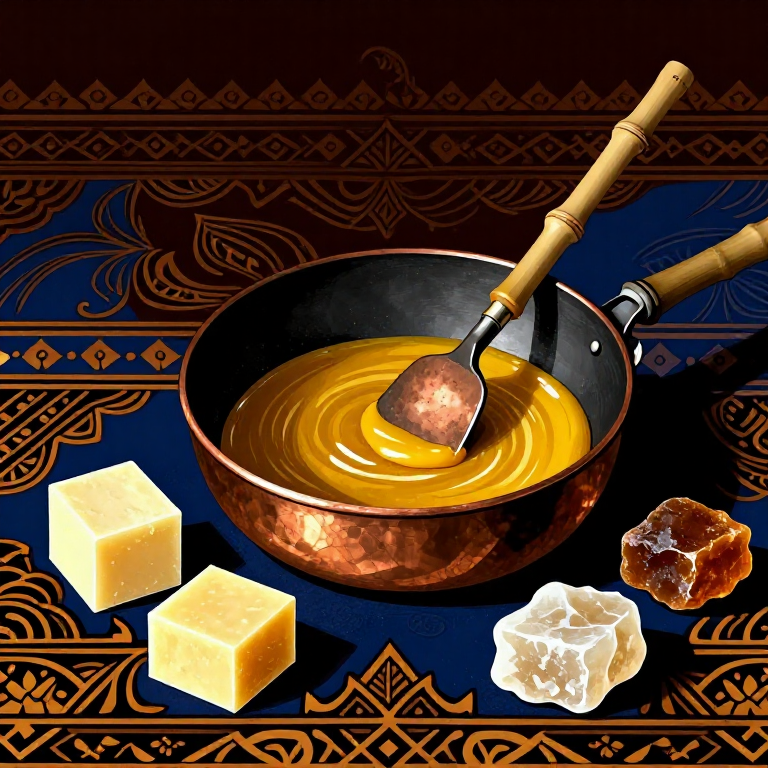
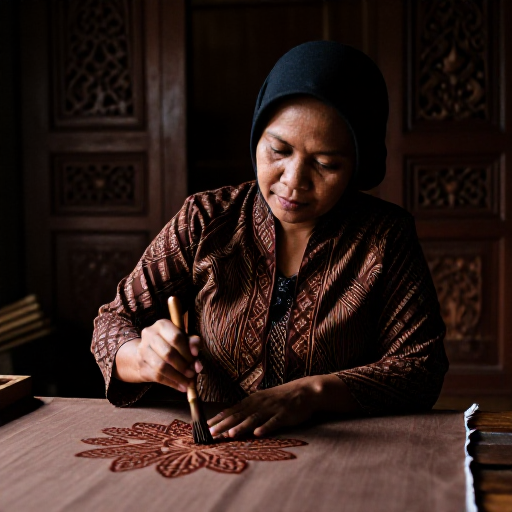
Pandhuan lengkap gawe malam (lilin batik) kanggo batik tulis Jawa tradisional. Malam batik yaiku campuran lilin tawon (beeswax), parafin, lan gondorukem (damar resin) kanthi resep tartamtu kanggo efek resist sing beda-beda. Malam klowong (kanggo garis-garis/outline) nggunakake luwih akeh lilin tawon supaya lentur lan ora gampang pecah. Malam tembokan (kanggo nutup area gedhe) nggunakake luwih akeh parafin supaya garing lan gampang retak — retakan iki sing nggawe efek 'crackle' sing khas ing batik. Suhu kontrol kritis banget: 60-70°C kanggo aplikasi nganggo canting, yen kedhuwuren lilin mbleber lan ora rapi, yen kedhuwuran lilin ora nembus kain. Batik tulis Jawa wis diakoni UNESCO minangka Warisan Budaya Takbenda Manungsa wiwit taun 2009.
Arahan
Ngerti bab malam batik lan fungsi-ne
Ngerti bab malam batik lan fungsi-ne
Malam (lilin batik) yaiku bahan resist sing dienggo nutupi kain supaya pewarna ora bisa nembus bagian sing ditutupi. Teknik iki diarani 'wax-resist dyeing' — prinsip sing wis dienggo ing Jawa luwih saka 1.000 taun. Malam batik dudu lilin biasa, nanging campuran tartamtu saka pirang-pirang bahan kanthi sifat sing beda-beda. Bahan utama yaiku lilin tawon (beeswax), parafin, lan gondorukem (damar resin, saka wit Shorea sp.). Saben bahan duwe peran: lilin tawon nggawe malam lentur lan nempel kuat ing kain; parafin nggawe malam luwih atos lan gampang retak (kanggo efek crackle); gondorukem nggawe malam luwih keras lan nambah daya tahan kanggo proses pencelupan sing suwi. Proporsi campuran beda-beda gumantung jinis malam sing dikarepake — malam klowong, malam tembokan, lan malam biron.
Milih lan nyiapake lilin tawon (beeswax)
Milih lan nyiapake lilin tawon (beeswax)
Lilin tawon (beeswax) yaiku bahan utama malam batik sing paling penting. Lilin tawon asli saka tawon madu (Apis cerana utawa Apis mellifera) wernane kuning enom nganti kuning tuwa, ambu-ne sethithik kaya madu. Titik leleh lilin tawon yaiku 62-64°C. Pilih lilin tawon sing resik, ora kecampuran kotoran kaya lemah utawa rereged tawon. Lilin tawon mentah biasane teka ing wujud blok utawa lempengan. Sadurunge dicampur, lilin tawon kudu dicairake lan disaring nganggo kain saring kanggo mbuwang kotoran cilik. Lilin tawon nggawe malam batik dadi lentur (flexible) — yen malam mung saka parafin thok, gampang pecah nalika kain dilipet. Kanggo malam klowong, lilin tawon bisa nganti 60-70% saka campuran. Yen angel golek lilin tawon murni, aja nganti nganggo lilin sing dicampur stearin — stearin nggawe malam dadi ora nempel ing kain.
Bahan untuk langkah ini:
 Blok lilin lebah (tulen, kuning)2 kg
Alatan diperlukan:
 Penimbang Dapur Digital
Nyiapake parafin
Nyiapake parafin
Parafin yaiku lilin saka minyak bumi (petroleum wax) sing wernane putih, ora ambu, lan titik leleh-e 46-68°C gumantung jinis-e. Kanggo batik, pilih parafin sing titik leleh-e sedhengan yaiku 52-58°C (fully refined paraffin wax). Parafin biasane didol ing wujud blok utawa butiran (pellet). Parafin nggawe malam dadi luwih atos lan gampang retak (brittle) — sifat iki penting kanggo malam tembokan, sing retakan-e nggawe efek garis-garis tipis (crackle effect) nalika proses pencelupan. Parafin uga luwih murah tinimbang lilin tawon, dadi bisa ngurangi biaya produksi. Nanging yen parafin keakehen, malam dadi ora nempel kuat ing kain lan gampang lepas nalika proses pencelupan. Kanggo malam tembokan, parafin bisa nganti 50-70% saka campuran.
Bahan untuk langkah ini:
 Lilin parafin tapisan penuh2 kg
Alatan diperlukan:
Penimbang Dapur DigitalNyiapake gondorukem (damar resin)
Nyiapake gondorukem (damar resin)
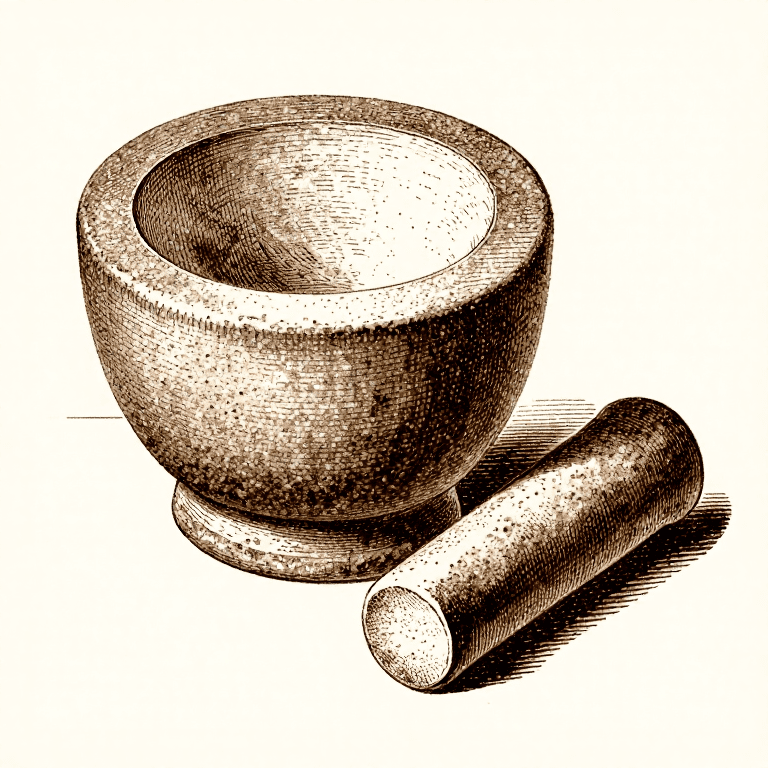
Gondorukem (utawa damar) yaiku getah wit saka genus Shorea (famili Dipterocarpaceae), asal saka alas tropis Asia Tenggara. Wernane kuning bening nganti coklat enom, wujude keras lan gampang pecah (glassy/brittle). Titik lunake (softening point) sekitar 75-85°C. Gondorukem nggawe malam batik dadi luwih keras, nambah daya rekat (adhesion) ing kain, lan nambah ketahanan marang rendaman pencelupan sing suwi. Sadurunge dicampur, gondorukem kudu ditumbuk nganti dadi bubuk kasar — potongan gedhe suwi banget leleh-e lan ora rata nyampur-e. Tumbuk gondorukem ing lesung utawa bungkus nganggo kain banjur gepuk nganggo palu nganti pecah dadi potongan cilik (ukuran 5-10 mm). Yen gondorukem keakehen, malam dadi banget keras lan angel dienggo nganggo canting — biasane proporsi gondorukem mung 5-15% saka total campuran.
Bahan untuk langkah ini:
 Damar500 gram
Alatan diperlukan:
 Lesung dan Alu BatuPenimbang Dapur Digital
Resep malam klowong (kanggo garis outline)
Resep malam klowong (kanggo garis outline)
Malam klowong dienggo kanggo nggambar garis-garis utama (outline) motif batik nganggo canting tulis. Malam iki kudu lentur, nempel kuat, lan ora gampang retak supaya pewarna ora bocor liwat retakan. Resep malam klowong tradisional Jawa Tengah (Solo/Yogyakarta): lilin tawon 60-70%, parafin 20-25%, gondorukem 10-15%. Contoh kanggo 1 kg malam klowong: lilin tawon 650 gram, parafin 200 gram, gondorukem 150 gram. Cairake lilin tawon dhisik ing wajan (titik leleh paling dhuwur), banjur tambahake parafin (leleh luwih cepet), pungkasan tambahake bubuk gondorukem sethithik-sethithik karo diaduk rata. Gondorukem sing ditambahake pisan akeh bisa nggawe malam mumbul (berbusa). Total suhu campuran ora kena luwih saka 100°C — yen nganti mendidih, lilin tawon rusak lan malam dadi gampang gosong.
Bahan untuk langkah ini:
Blok lilin lebah (tulen, kuning)650 gramLilin parafin tapisan penuh200 gramDamar150 gramAlatan diperlukan:
 Periuk lilin loyang
 Kayu pengacau
 Dapur arang
Resep malam tembokan (kanggo nutup area gedhe)
Resep malam tembokan (kanggo nutup area gedhe)
Malam tembokan dienggo kanggo nutupi area gedhe ing kain sing ora arep diwarnai. Beda karo malam klowong, malam tembokan sengaja digawe luwih atos lan gampang retak supaya nggawe efek crackle (garis-garis retakan tipis sing dadi ciri khas batik tulis). Resep malam tembokan tradisional: parafin 50-60%, lilin tawon 25-35%, gondorukem 10-15%. Contoh kanggo 1 kg malam tembokan: parafin 550 gram, lilin tawon 300 gram, gondorukem 150 gram. Proses nyampur padha karo malam klowong — cairake lilin tawon dhisik, tambahake parafin, pungkasan gondorukem. Yen pengin efek crackle sing luwih akeh, tambahake proporsi parafin nganti 65-70%. Yen pengin malam tembokan sing luwih halus tanpa crackle (kanggo batik halus kelas dhuwur), kurangi parafin lan tambahake lilin tawon.
Bahan untuk langkah ini:
Lilin parafin tapisan penuh550 gramBlok lilin lebah (tulen, kuning)300 gramDamar150 gramAlatan diperlukan:
Periuk lilin loyangKayu pengacauDapur arangProses nyairake lan nyampur malam
Proses nyairake lan nyampur malam
Pasang anglo (kompor arang) lan urubake arang kayu nganti abang rata — geni kudu stabil, ora gedhe banget. Selehake wajan kuningan (wajan malam) ing ndhuwur anglo. Lebokake potongan lilin tawon dhisik — iki bahan sing titik leleh-e paling dhuwur (62-64°C), dadi butuh wektu paling suwi kanggo cair. Aduk pelan-pelan nganggo sunduk kayu (aja nganggo logam — logam ngandhutake panas lan bisa nggawe lilin gosong ing pinggir wajan). Sawise lilin tawon cair kabeh, tambahake potongan parafin — parafin cair luwih cepet (46-58°C). Aduk terus nganti rata. Pungkasan, tambahake bubuk gondorukem sethithik-sethithik — aja langsung akeh, gondorukem bisa nggawe campuran mumbul (berbusa) yen ditambahake pisan akeh. Aduk pelan nganti gondorukem larut kabeh lan campuran rata tanpa gumpalan. Total waktu nyampur sekitar 20-30 menit.
Bahan untuk langkah ini:
 Arang ketul (kayu keras)2 kg
Alatan diperlukan:
Dapur arangPeriuk lilin loyangKayu pengacau Termometer Masakan
Ngatur suhu malam kanggo aplikasi canting
Ngatur suhu malam kanggo aplikasi canting
Kontrol suhu yaiku kunci sukses batik tulis. Malam sing wis cair kudu dijaga ing suhu 60-70°C kanggo aplikasi nganggo canting tulis. Nganggo termometer masak, ukur suhu malam kanthi rutin. Yen suhu kurang saka 55°C: malam dadi kental, ora mili lancar saka canting, lan ora nembus kain — asile mung nempel ing permukaan thok lan gampang lepas nalika dicelup. Yen suhu luwih saka 80°C: malam dadi banget encer, mbleber ing kain (garis dadi ora rapi/blurred), lan bisa nggawe kain gosong. Yen suhu luwih saka 100°C: malam bisa mbul asap lan bisa murub (flash point lilin tawon sekitar 204°C, nanging asap wis metu ing 100-120°C — iki mbebayani kanggo kesehatan). Kanggo njaga suhu stabil, atur jarak wajan saka geni — yen kedhuwuren, angkat sethithik; yen kedhuwuran, turunake luwih cedhak.
Alatan diperlukan:
Termometer MasakanDapur arangNguji malam ing kain sampel
Nguji malam ing kain sampel
Sadurunge nganggo malam ing kain batik asli, tes dhisik ing potongan kain katun cilik (sampel). Celupake ujung canting ing malam sing wis cair, banjur goresake ing kain katun. Perhatikake: malam kudu nembus kain nganti katon ing sisih mburi (tembus bolak-balik) — iki tandha suhu lan konsistensi sing bener. Yen malam mung nempel ing permukaan ndhuwur thok (ora tembus), suhu kurang dhuwur utawa kain kurang resik (ana kanji/sizing). Yen malam mbleber banget nganti garis dadi lebar, suhu kedhuwuren — enteni sedhela nganti suhu mudhun. Yen malam gampang retak nalika kain dilipet, parafin keakehen — tambahake sethithik lilin tawon. Yen malam banget lengket lan ora garing, lilin tawon keakehen — tambahake sethithik parafin. Tes iki penting banget — ngirit bahan lan wektu tinimbang langsung nganggo ing kain batik sing larang.
Bahan untuk langkah ini:
 Sampel kain kapas (gred primissima)3 keping
Alatan diperlukan:
 Canting tembaga - muncung lebar
Nyimpen malam sing wis dadi
Nyimpen malam sing wis dadi
Malam sing wis dicampur bisa disimpen kanggo dienggo maneh. Mateni geni anglo lan aja malam ing wajan nganti atis dhewe — aja disiram banyu kanggo nyepetake proses atise, iki bisa nggawe malam retak lan pecah ora rata. Sawise malam wis atos ing wajan, cungkil nganggo sunduk kayu lan pecahake dadi potongan-potongan cilik (ukuran kepalan tangan). Simpen potongan malam ing wadah plastik utawa karung goni ing panggonan sing garing, atis, lan ora kena srengenge langsung. Malam sing disimpen kanthi bener bisa tahan pirang-pirang taun tanpa owah kualitas-e. Yen arep dienggo maneh, mung perlu dicairake maneh ing wajan. Saben-saben dienggo maneh, malam bisa sethithik owah sifat-e — tambahake sethithik bahan anyar (lilin tawon utawa gondorukem) kanggo mbenerake konsistensi-ne.
Bahan untuk langkah ini:
 Bekas simpanan plastik (kedap udara)2 keping
Alatan diperlukan:
Kayu pengacauNgrecycle malam bekas (malam lorodan)
Ngrecycle malam bekas (malam lorodan)
Malam bekas saka proses ngelorod (mbuwang malam saka kain sawise pencelupan) bisa direcycle. Proses ngelorod nggunakake banyu panas mendidih kanggo nyairake malam saka kain. Malam sing mili ing permukaan banyu panas dikumpulake nganggo enthong utawa sendok gedhe. Malam lorodan iki isih kecampuran pewarna, kotoran, lan kanji kain. Kanggo ngrecycle: cairake maneh malam lorodan ing wajan, banjur saring nganggo kain saring kasar kanggo mbuwang kotoran gedhe. Malam hasil recycle wernane luwih peteng (kecampuran pewarna) lan sifat-e sethithik owah — biasane luwih keras lan kurang lentur. Malam recycle cocog kanggo campuran malam tembokan (sing ora butuh kualitas paling dhuwur). Kanggo malam klowong kualitas dhuwur, tetep nganggo campuran bahan anyar.
Bahan untuk langkah ini:
 Lilin batik terpakai (malam lorodan)1 kg
 Kain penapis kapas kasar1 keping
Alatan diperlukan:
Periuk lilin loyang Senduk logamDapur arang
Nyiapake peralatan canting lan wajan kanggo mbatik
Nyiapake peralatan canting lan wajan kanggo mbatik
Sawise malam wis siyap, siapake peralatan kanggo proses mbatik. Canting yaiku piranti tembaga cilik kanthi gagang pring (bambu) sing dienggo kanggo nggambar motif nganggo malam cair. Ana pirang-pirang jinis canting miturut ukuran cucuk-e (spout): canting cecek (cucuk cilik, kanggo titik-titik lan detail halus, diameter 0.5-1 mm), canting klowong (cucuk sedhengan, kanggo garis utama/outline, diameter 1-2 mm), lan canting tembokan (cucuk gedhe, kanggo nutupi area lebar, diameter 2-4 mm). Resikake cucuk canting kanthi kawat tipis kanggo mbuwang sisa malam sing beku ing njero. Siapake kain lap kanggo ngelap tetesan malam saka canting sadurunge nggores ing kain. Selehake wajan malam ing anglo kanthi geni stabil, isi malam potongan, lan enteni nganti cair rata ing suhu 60-70°C. Saiki wis siyap kanggo miwiti mbatik.
Bahan untuk langkah ini:
 Kain buruk kapas3 keping
Alatan diperlukan:
 Canting tembaga - muncung halus
 Canting tembaga - muncung sederhanaCanting tembaga - muncung lebar
 Dawai loyang halusDapur arangPeriuk lilin loyang
Bahan
10- 950 gramPemegang Tempat
- 750 gramPemegang Tempat
- 800 gramPemegang Tempat
- Pemegang Tempat
- Pemegang Tempat
- Pemegang Tempat
- Pemegang Tempat
- 1 kepingPemegang Tempat
- 3 kepingPemegang Tempat
- 2 kgPemegang Tempat
Alatan Diperlukan
11- Pemegang Tempat
- Pemegang Tempat
- Pemegang Tempat
- Pemegang Tempat
- Pemegang Tempat
- Pemegang Tempat
- Pemegang Tempat
- Pemegang Tempat
- Pemegang Tempat
- Pemegang Tempat
- Pemegang Tempat
Blueprint berkaitan
Blueprint ini berkongsi pengetahuan — teknik, bahan atau prinsip

CC0 Domain Awam
Blueprint ini dikeluarkan di bawah CC0. Anda bebas menyalin, mengubah, mengedar, dan menggunakan karya ini untuk sebarang tujuan, tanpa meminta kebenaran.
Sokong Pembuat dengan membeli produk melalui Blueprint mereka di mana mereka memperoleh Komisen Pembuat ditetapkan oleh Penjual, atau cipta iterasi baru Blueprint ini dan sertakan ia sebagai sambungan dalam Blueprint anda sendiri untuk berkongsi hasil.