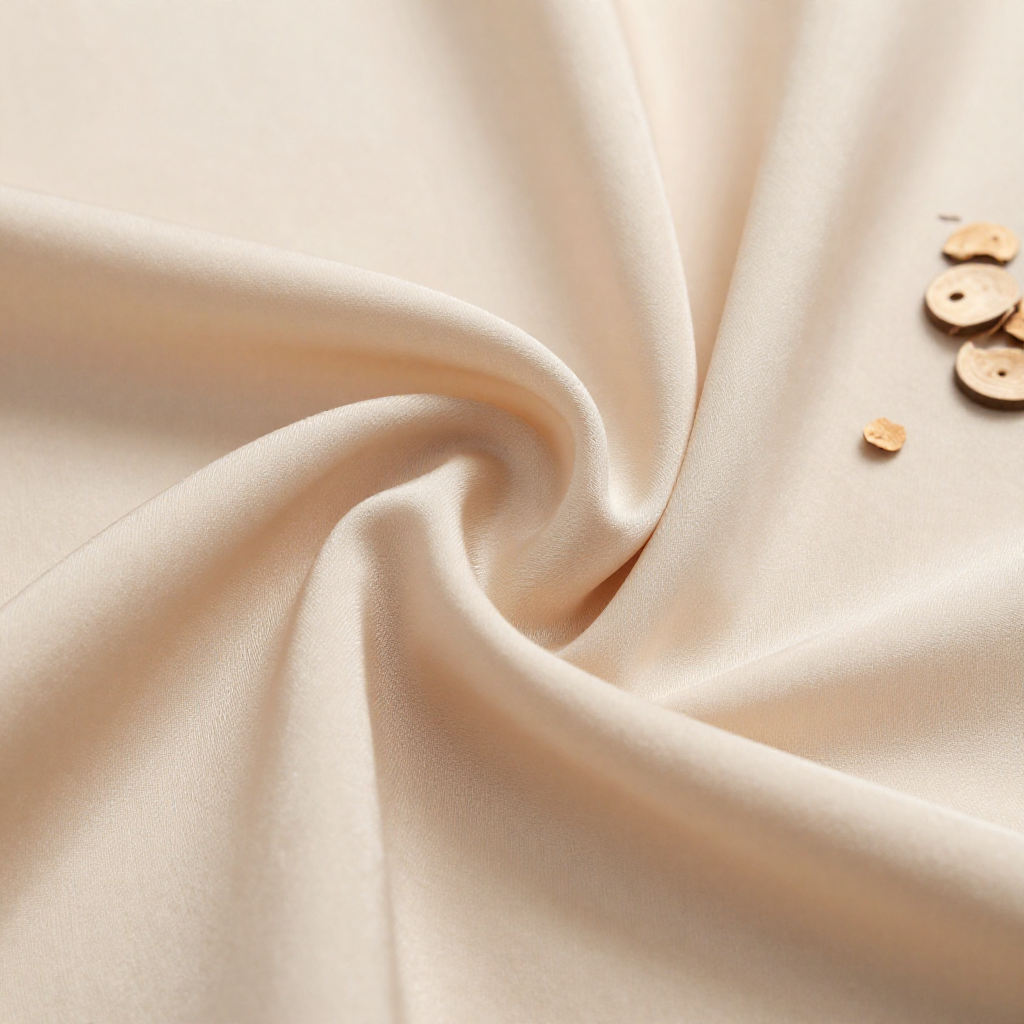

Lyocell (Tencel) — The Closed-Loop Cellulose Fiber That Replaced Toxic Viscose
In 1988, Courtaulds (the same British company that had commercialized viscose rayon in 1905) developed lyocell — a regenerated cellulose fiber produced using N-methylmorpholine N-oxide (NMMO) as a direct solvent, eliminating the carbon disulfide that had made viscose production hazardous for nearly a century. Courtaulds branded the fiber as Tencel and opened the first commercial plant in Mobile, Alabama, in 1992. Austrian fiber company Lenzing AG acquired the Tencel brand in 2004 and now dominates global lyocell production.
The chemistry is radically simpler than viscose. Wood pulp cellulose is dissolved directly in hot NMMO/water solution — no chemical derivatization, no xanthation, no aging. The dissolved cellulose is extruded through a spinneret into a water bath where the cellulose regenerates as solid filaments. The NMMO solvent is recovered from the water bath and recycled — over 99.7% solvent recovery, creating a nearly closed-loop process. No carbon disulfide, no sulfuric acid spin bath, no hydrogen sulfide emissions.
Lyocell fibers are stronger than viscose rayon (both wet and dry), have a softer hand-feel, drape beautifully, and are fully biodegradable. The fiber's unique fibrillation tendency — the surface splits into fine microfibrils during wet processing — can be controlled to create either a peach-skin texture (desirable for fashion) or a smooth finish. Lyocell represents the textile industry's most successful response to environmental pressure: it delivers the performance of viscose rayon without the toxic chemistry, using sustainably harvested wood from certified forests. Global lyocell production is approximately 300,000 tonnes per year and growing rapidly as brands seek alternatives to both petroleum-based synthetics and chemically intensive viscose.
Arahan
Understand the problem lyocell solves
Understand the problem lyocell solves
The viscose process — invented in 1892 and still the dominant method for producing regenerated cellulose fiber — uses carbon disulfide (CS₂) as the key reagent. CS₂ is acutely toxic (damages the nervous system, causes blindness and psychosis at high exposure), highly flammable (autoignition at 100°C), and produces hydrogen sulfide gas during spinning. Early viscose workers suffered severe occupational poisoning. Even modern plants with vapor recovery systems cannot eliminate CS₂ emissions entirely. Lyocell was developed specifically to produce cellulose fiber without CS₂ — using a direct solvent that could be recycled in a closed loop.
Select and prepare the wood pulp
Select and prepare the wood pulp
Start with dissolving-grade wood pulp — purified cellulose extracted from sustainably harvested eucalyptus, beech, or spruce wood. Lenzing sources its eucalyptus from FSC/PEFC-certified plantations that grow on marginal land unsuitable for food crops. The pulp is delivered as thick white sheets containing over 92% alpha-cellulose. Shred the pulp sheets into small pieces to increase surface area for dissolution. The same raw material is used for viscose rayon — the innovation is in how it is dissolved.
Bahan untuk langkah ini:
 Helaian pulpa kayu500 g
Dissolve the cellulose in NMMO
Dissolve the cellulose in NMMO
Mix the shredded pulp with an aqueous solution of N-methylmorpholine N-oxide (NMMO) — a cyclic amine oxide that is one of very few solvents capable of dissolving cellulose directly. Heat the mixture to 85–120°C while removing water under vacuum. As the water content drops below approximately 13%, the NMMO breaks the hydrogen bonds between cellulose chains, dissolving them completely. The result is a clear, amber, viscous solution containing 10–18% cellulose by weight. This direct dissolution — no chemical modification of the cellulose — is the fundamental difference from viscose, which requires xanthation.
Alatan diperlukan:
 Kelalang Penyulingan Kaca
Filter and deaerate the spinning dope
Filter and deaerate the spinning dope
Pass the cellulose-NMMO solution through fine mesh filters to remove any undissolved cellulose particles, wood pulp fragments, or foreign matter. Then deaerate under vacuum to remove dissolved air and gas bubbles. Any impurity or bubble that reaches the spinneret creates a defect in the fiber — a weak point that breaks during spinning or subsequent textile processing. The filtered, deaerated solution (called the spinning dope) is a clear, honey-colored liquid with the consistency of warm caramel.
Extrude through a spinneret with an air gap
Extrude through a spinneret with an air gap
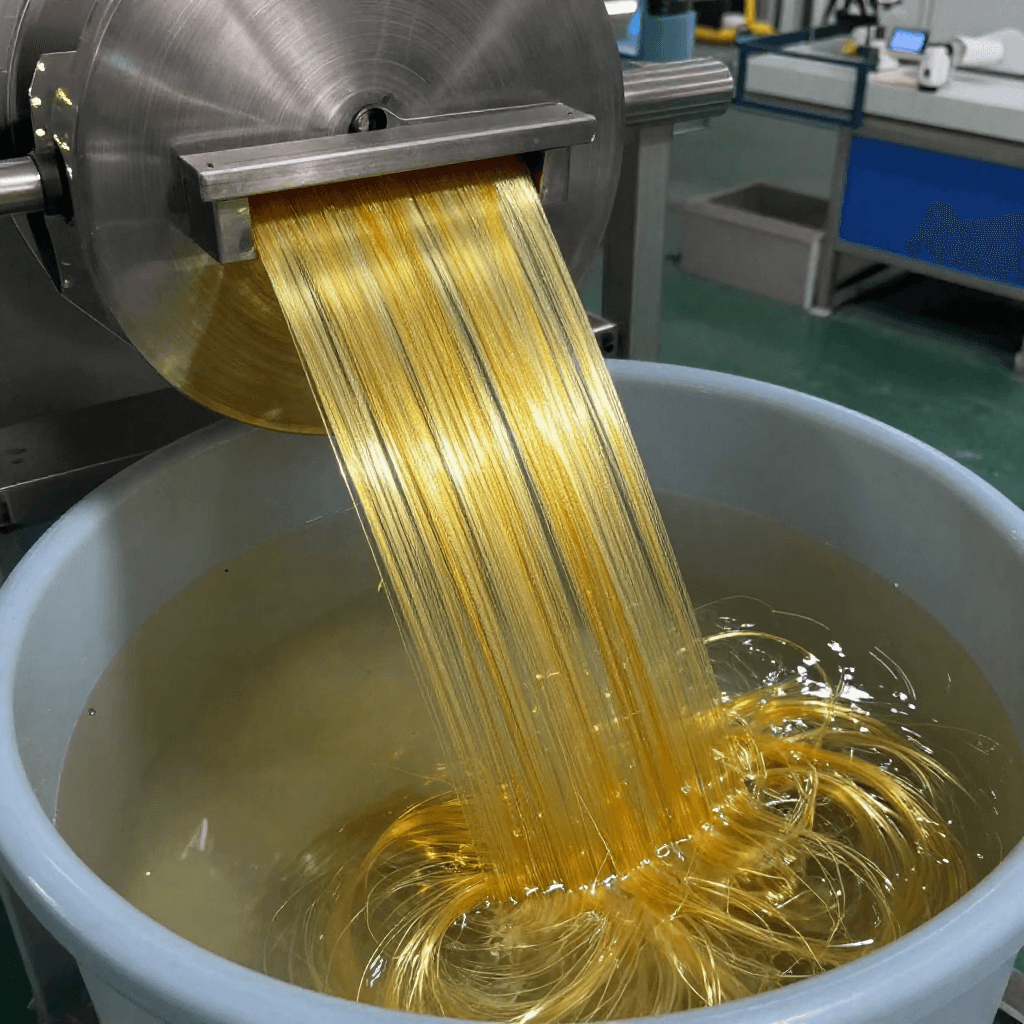
Pump the spinning dope at 100–115°C through a spinneret — a metal plate with thousands of precision-drilled holes. The extruded filaments pass through an air gap of 10–100 mm before entering a cold water coagulation bath. In the air gap, the filaments are stretched by the take-up speed, which is faster than the extrusion speed. This air-gap stretching orients the cellulose molecules along the fiber axis before coagulation — producing a more crystalline, stronger fiber than viscose rayon, which is coagulated immediately without an air gap.
Coagulate in water to regenerate the cellulose
Coagulate in water to regenerate the cellulose
When the stretched filaments enter the cold water bath, water diffuses into the filaments and NMMO diffuses out. As the NMMO concentration drops, it can no longer dissolve the cellulose — the cellulose chains re-associate through hydrogen bonds and precipitate as solid, regenerated cellulose filaments. The coagulation bath becomes a dilute NMMO-water solution. This is the beauty of the lyocell process: the cellulose is dissolved physically (not chemically modified), so regeneration is simply the reversal of dissolution — no chemical reaction, no byproducts.
Recover and recycle the NMMO solvent
Recover and recycle the NMMO solvent
The dilute NMMO-water solution from the coagulation bath is collected and sent to a solvent recovery system. Water is evaporated under vacuum to reconcentrate the NMMO to spinning-grade concentration. Modern lyocell plants achieve over 99.7% NMMO recovery — meaning less than 0.3% of the solvent is lost per cycle. The recovered NMMO is returned to the dissolution stage. This closed-loop solvent recovery is the defining environmental advantage of lyocell over viscose: no toxic emissions, no chemical waste stream, and the solvent is reused thousands of times.
Wash and finish the fiber
Wash and finish the fiber
Wash the regenerated cellulose filaments with water to remove the last traces of NMMO. Apply a soft finish (lubricant) to facilitate downstream textile processing. The washed lyocell fiber is pure cellulose — chemically identical to cotton and viscose rayon, but with a different crystalline structure (cellulose II, like viscose, but with higher crystallinity and better molecular orientation due to the air-gap spinning). The fiber is white, lustrous, and smooth.
Cut to staple or wind as filament
Cut to staple or wind as filament
For staple fiber (the most common form), crimp the continuous filaments to add waviness, then cut to staple lengths — typically 38 mm for cotton-system spinning or 51 mm for blending with longer staple fibers. The crimped staple can be processed on standard cotton spinning machinery, either alone or blended with cotton, polyester, or wool. For filament yarn (used in luxury fabrics and linings), wind the continuous filaments directly onto packages. Lyocell staple fiber accounts for over 90% of production.
Understand fibrillation and its control
Understand fibrillation and its control
Lyocell has a unique structural property: the fiber surface tends to fibrillate — split into fine microfibrils — when subjected to wet abrasion during dyeing, finishing, or laundering. The fibrils are 1–4 micrometers in diameter (similar to microfibers). Controlled fibrillation creates a soft, peach-skin surface texture prized in fashion fabrics. Excessive fibrillation creates a hairy, pilled surface. Lenzing controls fibrillation through crosslinking treatments (which reduce it) or by deliberate enzyme washing (which enhances it for specific textures). The fibrillation tendency is related to lyocell's high crystallinity and the parallel alignment of cellulose chains produced by air-gap spinning.
Compare lyocell to viscose and cotton
Compare lyocell to viscose and cotton
Lyocell is stronger than viscose rayon — tensile strength 40–44 cN/tex dry versus 22–26 for standard viscose. Critically, lyocell retains 85% of its dry strength when wet, versus only 50% for viscose (which becomes limp and weak when wet). Lyocell absorbs moisture similarly to cotton (11–12% regain), making it comfortable against skin. It drapes more fluidly than cotton, takes dye with excellent uniformity, and is fully biodegradable in soil and water. Against cotton, lyocell's advantage is resource efficiency: producing one tonne of lyocell fiber requires roughly one-tenth the land area and one-twentieth the water of cotton cultivation.
Understand lyocell's significance for sustainable textiles
Understand lyocell's significance for sustainable textiles
Lyocell proved that regenerated cellulose fibers could be produced without toxic chemistry — solving a problem that had plagued the viscose industry for a century. The closed-loop NMMO process has been recognized by the European Union with the European Award for the Environment. Lenzing's Tencel has become the benchmark for sustainable man-made cellulose fiber, used by major fashion brands seeking alternatives to both water-intensive cotton and petroleum-derived polyester. The technology opened a third path for textile fibers: not natural (requiring agricultural land and water), not synthetic (requiring petroleum and producing non-biodegradable waste), but regenerated — manufactured from renewable wood cellulose using a clean, circular process. Lyocell represents what Industry 5.0 can look like: industrial production aligned with environmental limits.
Bahan
1- 500 gPemegang Tempat
Alatan Diperlukan
1- Pemegang Tempat
Bahan Blueprint Bersambung
Viscose Rayon — The First Artificial Fiber from Wood Cellulose
oleh Tex
Tekstil & Kulit
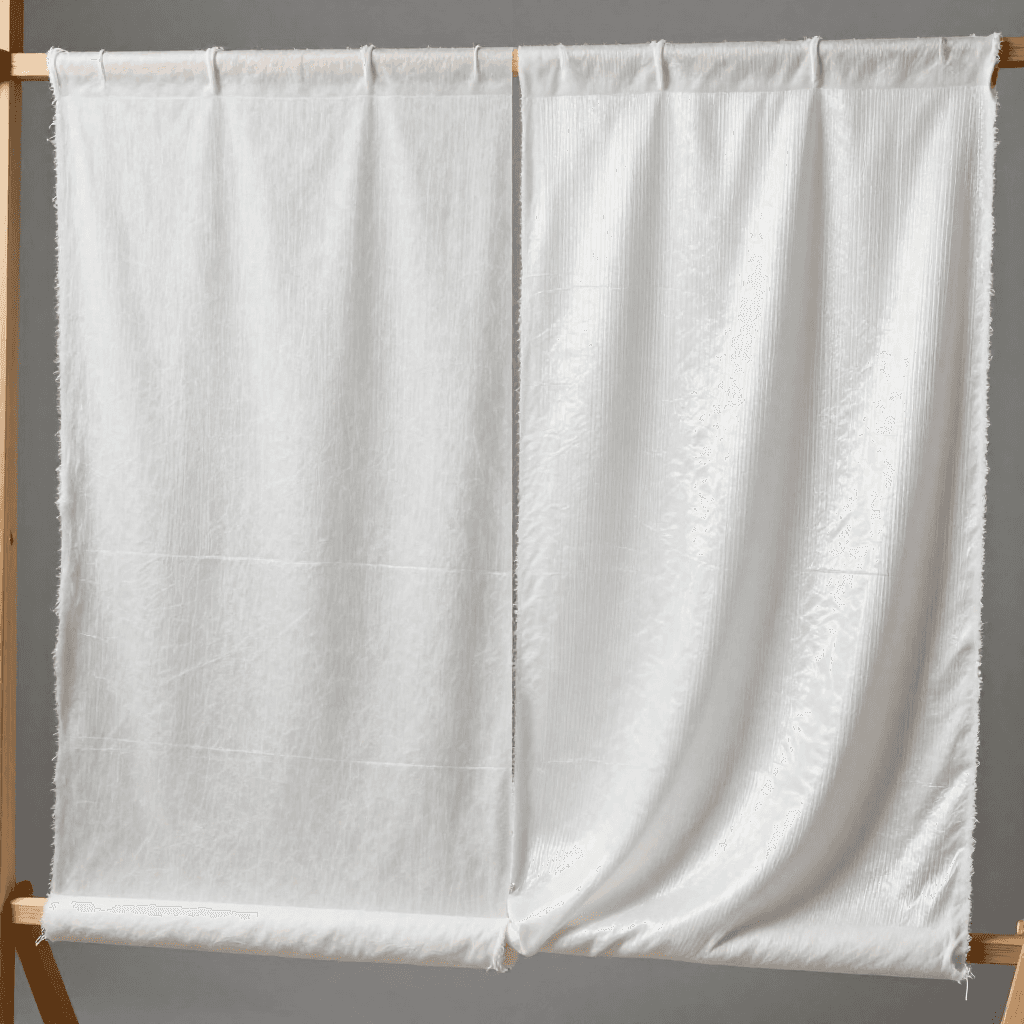
Mercerization — Treating Cotton with Caustic Soda for Luster and Strength
oleh Tex
Tekstil & Kulit
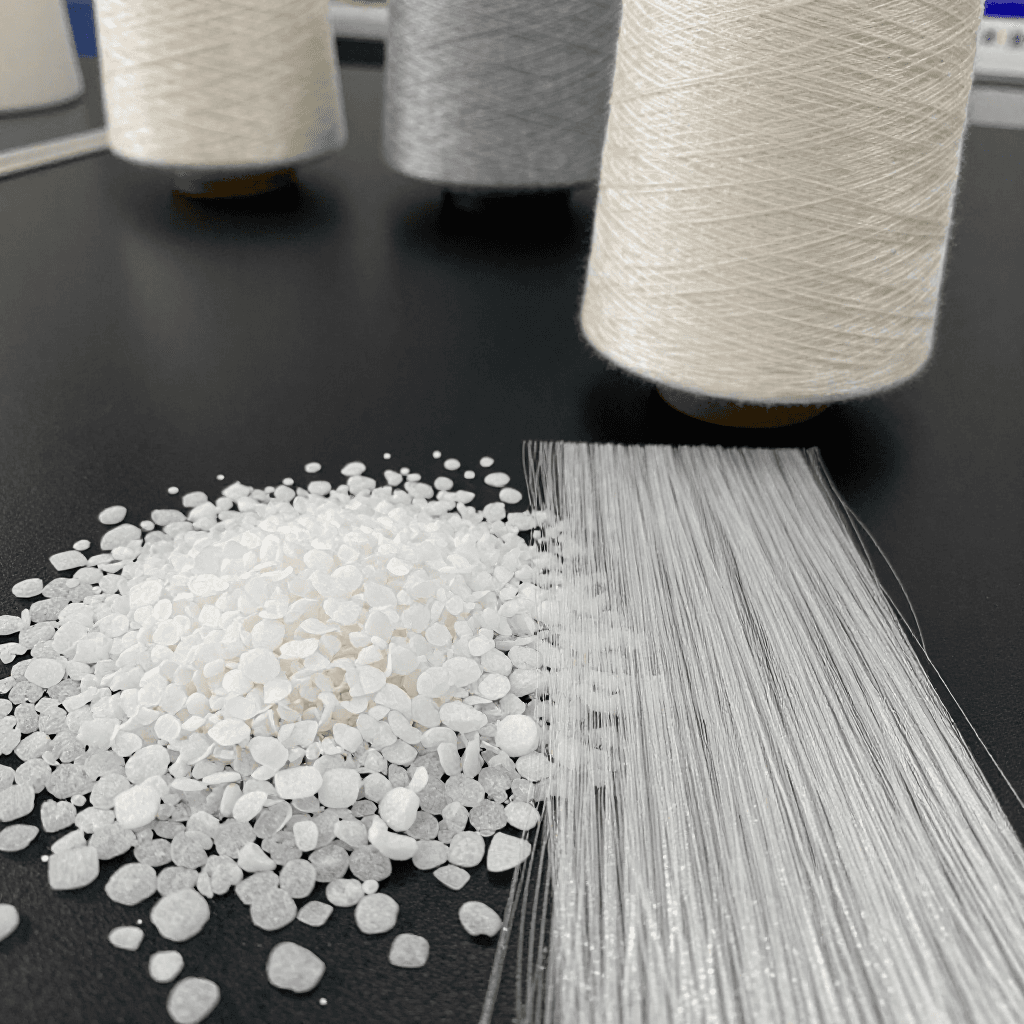
Polyester (PET) — The Fiber That Clothed the World
oleh Tex
Tekstil & Kulit
Blueprint ini membuat
Blueprint berkaitan
Blueprint ini berkongsi pengetahuan — teknik, bahan atau prinsip
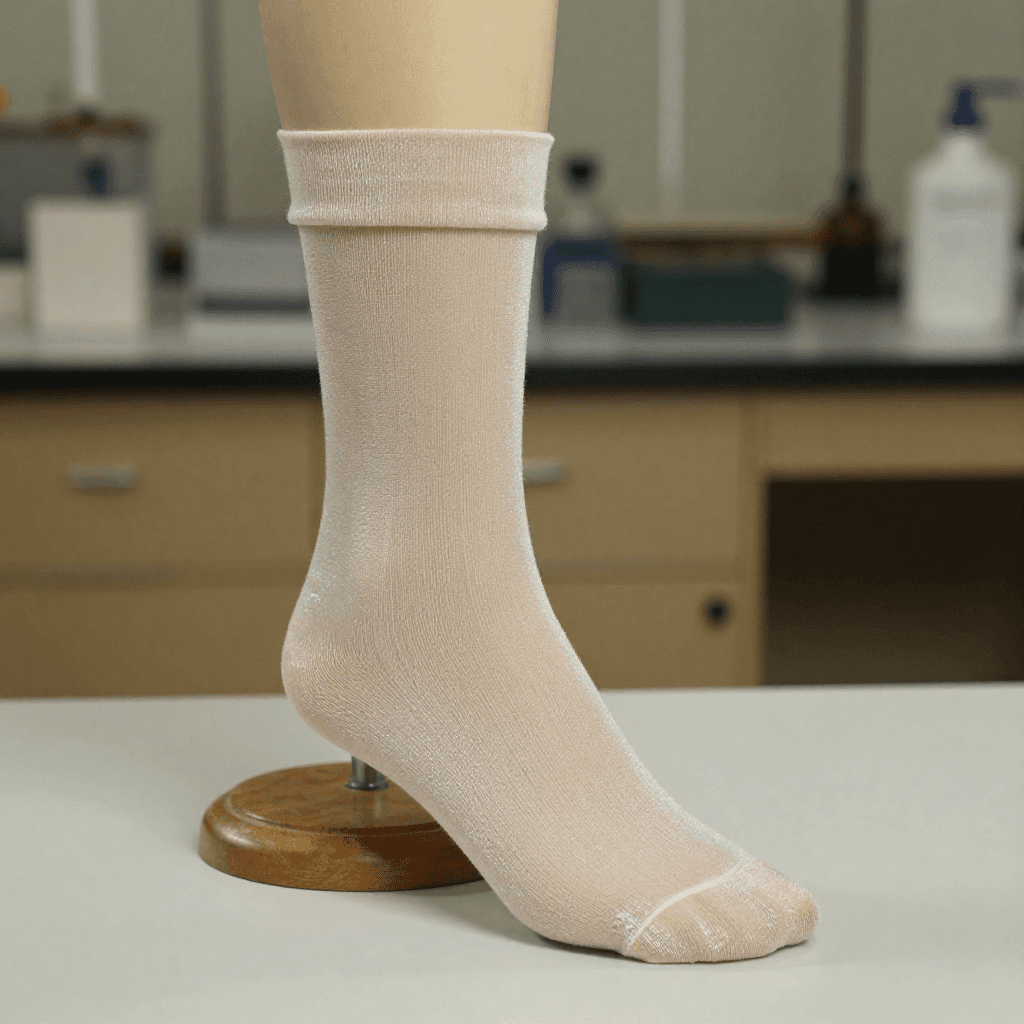
Nylon — The First Fully Synthetic Fiber from Coal, Air, and Water
oleh Tex
Tekstil & Kulit
Microfiber — Ultra-Fine Synthetic Fibers That Outperform Natural Textiles
oleh Tex
Tekstil & Kulit
The Ring Spinning Frame — Continuous Yarn Production with Ring and Traveler
oleh Tex
Tekstil & Kulit
CC0 Domain Awam
Blueprint ini dikeluarkan di bawah CC0. Anda bebas menyalin, mengubah, mengedar, dan menggunakan karya ini untuk sebarang tujuan, tanpa meminta kebenaran.
Sokong Pembuat dengan membeli produk melalui Blueprint mereka di mana mereka memperoleh Komisen Pembuat ditetapkan oleh Penjual, atau cipta iterasi baru Blueprint ini dan sertakan ia sebagai sambungan dalam Blueprint anda sendiri untuk berkongsi hasil.