

Making Aged Farmhouse Cheese in a Cheese Press — Medieval Dairy Craft
Arahan
Ripen and Set the Milk
Ripen and Set the Milk
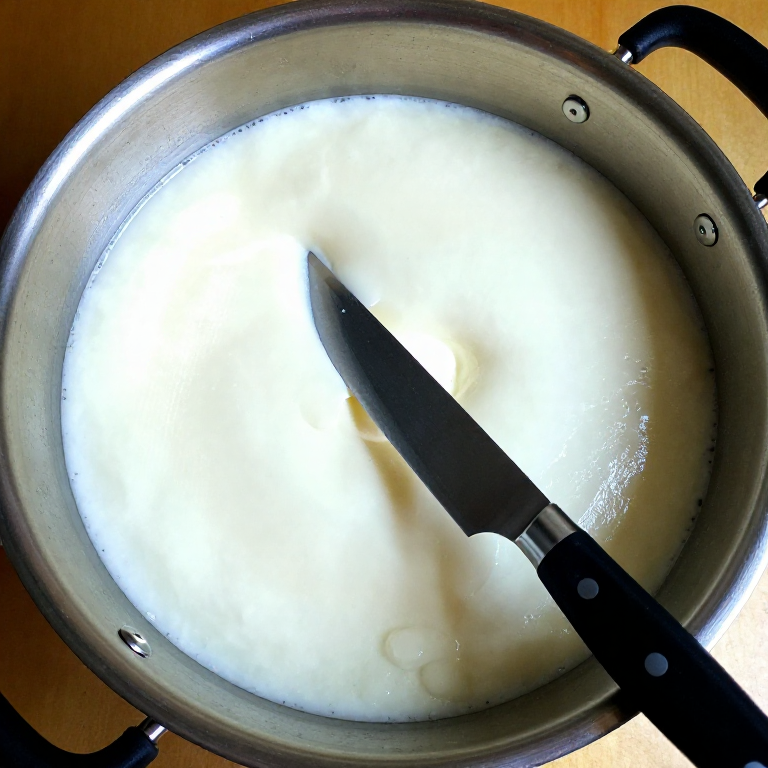
Warm the milk slowly to 32 degrees Celsius in a large pot, stirring gently. If using raw milk (as medieval producers would have), the natural bacteria present will begin acidifying the milk. If using pasteurised milk, add a mesophilic starter culture and allow 45 to 60 minutes for ripening. Dilute the rennet in a small cup of cool water and stir it into the warmed milk using gentle up-and-down strokes for exactly 30 seconds, then stop stirring completely. Cover the pot and leave undisturbed for 45 to 60 minutes. The rennet enzyme (chymosin) cleaves the kappa-casein protein that keeps milk proteins in suspension, causing the casein to aggregate into a solid gel — the curd. The milk should set into a firm, yoghurt-like mass that breaks cleanly when cut.
Bahan untuk langkah ini:
 Susu skim10 litres keping
 Renet1/4 teaspoon liquid or 1/4 tablet keping
 Garam Laut Halus30-40 grams keping
Alatan diperlukan:
 Periuk Besar
 Termometer Ketuhar
 Pisau pemotong dadih
 Acuan keju
 Mesin tekan keju
 Kain Muslin Keju
Cut, Cook, and Stir the Curds
Cut, Cook, and Stir the Curds
Using a long knife, cut the curd mass into approximately 1 cm cubes by making vertical cuts in one direction, then rotating 90 degrees and cutting again, then making horizontal cuts at an angle. Allow the cut curds to rest for 5 minutes — whey will begin to seep from the cut surfaces. Slowly raise the temperature to 38-39 degrees Celsius over 30 minutes while gently stirring the curds. This cooking step expels more whey from the curds and firms them. The higher the cooking temperature and the longer the stirring, the drier and harder the final cheese will be. For a semi-hard farmhouse style, cook at 38 degrees Celsius with gentle stirring for 30 to 45 minutes until the curds feel firm and slightly springy when squeezed — they should not smear or stick together when pressed between your fingers.
Drain, Mill, and Salt the Curds
Drain, Mill, and Salt the Curds
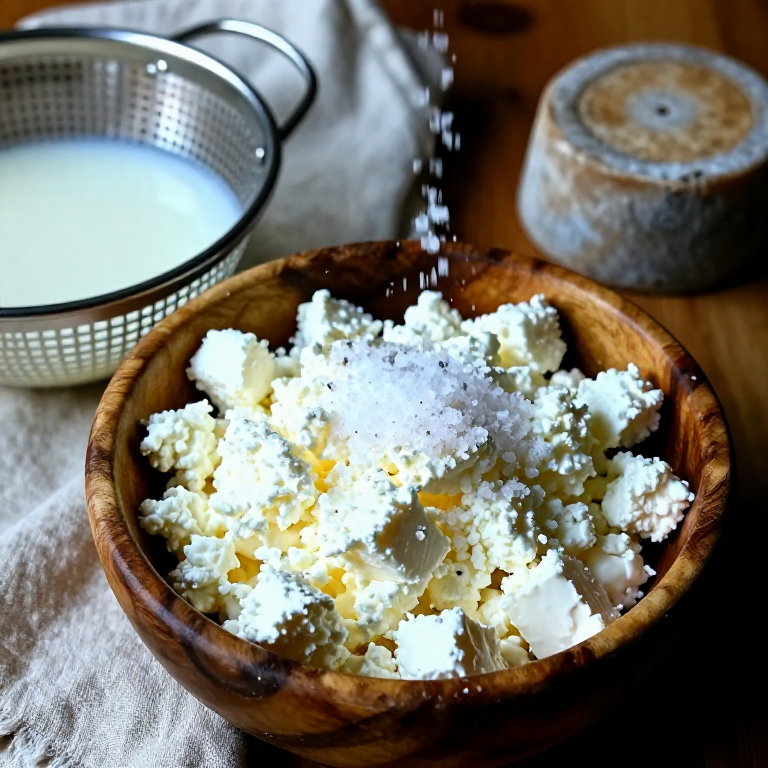
Drain off the whey through a colander, collecting it for other uses (whey can be fed to pigs, as medieval farmers commonly did, or used in bread-making). Allow the curds to mat together in the colander for 15 to 20 minutes, forming a cohesive slab. Break this slab apart into walnut-sized pieces — this is called milling. Sprinkle the salt over the milled curds and mix gently but thoroughly. The salt serves three functions: it seasons the cheese, it draws out additional whey (firming the curds further), and it inhibits the growth of undesirable bacteria on the surface during ageing. Medieval cheeses were often salted more heavily than modern preferences — up to 3 percent of the curd weight — to extend their keeping quality in the absence of refrigeration.
Press the Cheese
Press the Cheese
Line a cheese mould (a cylindrical container with drainage holes) with damp cheesecloth and pack the salted curds into it firmly, pressing out air pockets. Fold the cloth over the top and place the follower (a disc that fits inside the mould) on top. Apply light pressure (approximately 5 kg) for 30 minutes, then remove the cheese, unwrap, flip it over, re-wrap in fresh cloth, and return to the mould. Increase pressure to approximately 15 to 20 kg and press for 12 to 24 hours. The pressing consolidates the curds into a solid wheel and expels the final whey. Medieval cheese presses used a lever arm with a stone counterweight, or a simple screw mechanism. After pressing, the cheese should be a firm, smooth-sided wheel that holds its shape when unmoulded.
Age the Cheese
Age the Cheese
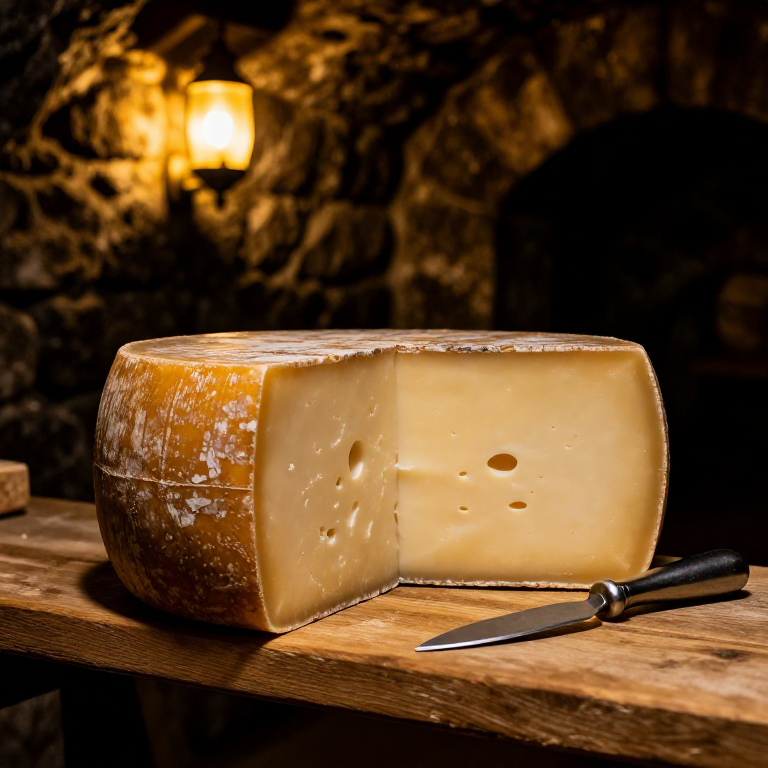
Unmould the cheese and air-dry it on a wooden board at room temperature for 2 to 3 days, turning daily, until the surface feels dry to the touch and begins to form a natural rind. Move the cheese to a cool, humid ageing cellar or cave (10-13 degrees Celsius, 80-85 percent humidity) — the conditions found in medieval monastery cellars and farmhouse root cellars. Turn the cheese every few days and wipe the surface with a brine-dampened cloth if unwanted mould appears. Over weeks and months, enzymes from the rennet and bacteria continue breaking down proteins and fats, developing flavour complexity. A minimum of 2 months ageing produces a mild semi-hard cheese; 6 to 12 months produces a sharper, more crumbly aged cheese. The natural rind that forms during ageing protects the interior while allowing the cheese to breathe and lose moisture slowly.
Bahan
4- 10 litres kepingPemegang Tempat
- 1/4 teaspoon liquid or 1/4 tablet kepingPemegang Tempat
- 30-40 grams kepingPemegang Tempat
- 30-40 grams kepingPemegang Tempat
Alatan Diperlukan
9- Pemegang Tempat
- Pemegang Tempat
- Pemegang Tempat
- Pemegang Tempat
- Pemegang Tempat
- Pemegang Tempat
- Pemegang Tempat
- Pemegang Tempat
- Pemegang Tempat
Blueprint ini membuat


Air dadih
Free
CC0 Domain Awam
Blueprint ini dikeluarkan di bawah CC0. Anda bebas menyalin, mengubah, mengedar, dan menggunakan karya ini untuk sebarang tujuan, tanpa meminta kebenaran.
Sokong Pembuat dengan membeli produk melalui Blueprint mereka di mana mereka memperoleh Komisen Pembuat ditetapkan oleh Penjual, atau cipta iterasi baru Blueprint ini dan sertakan ia sebagai sambungan dalam Blueprint anda sendiri untuk berkongsi hasil.